
Animal field guide
Australian Sea Lion
Neophoca cinerea
Found only on Australian coasts, this sea lion feeds almost entirely on the sea floor. Adults dive again and again to the seabed of the continental shelf, often to 60 metres or more, working the bottom through long foraging trips that can last a day or more.
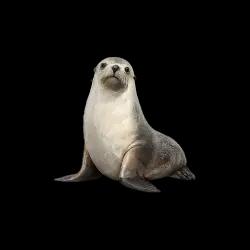
Australian Sea Lion at a glance
Mammal · Australia & Oceania · Sandy beaches · Rare
Known for: Small, Blunt, Hind flippers turned forward to walk on land, Short
Its Power
Sea-Lion Practice
Turn rough water into a playground for skill.
Play strengthens the body when curiosity keeps repeating the movement.
“Practice in surf.”
Capture a Australian Sea Lion, and it's yours when you finish one step it gives you.
Biological basis
Australian Sea Lions are social marine mammals that forage at sea, rest and breed on land, and show playful behavior in coastal environments.
Put it into practice
You get better by making practice feel active enough to return to.
What does the Australian sea lion symbolize?
The Australian sea lion symbolizes sea-lion practice: turn rough water into a playground for skill. It represents playfulness, learning and curiosity. Its AnimalDex motto: "Practice in surf."
The Australian sea lion as a spirit animal
If the Australian sea lion is your spirit animal, the AnimalDex reading is Sea-Lion Practice: play strengthens the body when curiosity keeps repeating the movement. It suggests a strength in playfulness and learning, and a reminder to use it on purpose.
What can the Australian sea lion help you with in life?
The Australian sea lion is a guide for playfulness, learning and curiosity. Its lesson applies wherever playfulness matters: play strengthens the body when curiosity keeps repeating the movement.
- Playfulness
- Learning
- Curiosity
In practice: You get better by making practice feel active enough to return to.
What can we learn from the Australian Sea Lion?What does it mean to dream about or encounter a wild Australian sea lion?
A wild Australian sea lion, whether in a dream or in front of you, tends to show up when playfulness or learning is on your mind. In AnimalDex, the Australian sea lion's principle is Sea-Lion Practice: turn rough water into a playground for skill. Read the moment through its core lesson: Play strengthens the body when curiosity keeps repeating the movement.
Neither good nor bad on its own. How the Australian sea lion acts matters: at ease, it reflects playfulness; hostile, it flags playfulness out of balance.
Spotting an Australian sea lion in the wild
If an Australian sea lion crosses your path, take it as a cue to look at where playfulness fits your day. Its AnimalDex motto: "Practice in surf."
An Australian sea lion that keeps appearing
Seeing the Australian sea lion again and again, in dreams or outside, suggests playfulness is a theme you have not settled yet.
Dreaming of being chased by an Australian sea lion
A chase often means a demand for playfulness is catching up with you. The Australian sea lion's lesson, "Play strengthens the body when curiosity keeps repeating the movement", is the part you may be running from.
Dreaming that an Australian sea lion attacks you
An aggressive Australian sea lion can mirror a conflict where playfulness has become a weapon rather than a strength.
A calm or friendly Australian sea lion
A relaxed Australian sea lion near you, in a dream or in person, reads as readiness: Sea-Lion Practice is available to you now, as its motto puts it, "Practice in surf.".
A dead or injured Australian sea lion
Seeing the Australian sea lion hurt may point to learning that has been neglected. Ask what it would take to restore it.
These readings are reflective prompts drawn from how the Australian sea lion really lives, not predictions. If you meet one in the wild, watch from a distance and leave it undisturbed.
Capture your own Australian Sea Lion
Photograph or film one in the wild, at a zoo or at home with the app. It becomes yours: it remembers you, gives you steps, and can debate your problems with your other animals.
Animal field guide
Australian Sea Lion
Sign in to hear this read by a natural AI voice instead of your browser's.
Found only on Australian coasts, this sea lion feeds almost entirely on the sea floor. Adults dive again and again to the seabed of the continental shelf, often to 60 metres or more, working the bottom through long foraging trips that can last a day or more.
Native range
Natural range, not this capture location
Sandy beaches, rocky shores and low coastal islands of South Australia and Western Australia, from the Houtman Abrolhos in the west to The Pages Islands east of Kangaroo Island, with feeding in shelf waters offshore.
Search near meAnimalDex stats
Size scale
Understand the animal
Understand the Australian Sea Lion
Factual biology first: what this animal is like, where it lives, how it survives, and why those traits exist.
01
Introduction to Australian Sea Lion
Found only on Australian coasts, this sea lion feeds almost entirely on the sea floor. Adults dive again and again to the seabed of the continental shelf, often to 60 metres or more, working the bottom through long foraging trips that can last a day or more.
How to identify a Australian Sea Lion
- Small, tightly rolled external ear flaps
- Blunt, rounded snout and broad head
- Hind flippers turned forward to walk on land
- Short, coarse coat with little underfur
- Pups born dark chocolate brown
Why Australian Sea Lion are interesting
- Most of its breeding colonies are on small offshore islands rather than on the mainland coast.
- Females almost always breed at the colony where they were born, so colonies not far apart can be genetically distinct.
- It is listed as Endangered, and many colonies produce only a few dozen pups or fewer each breeding cycle.
- Sealers killed large numbers in the 1800s, and the species is thought never to have regained its former numbers or range.
02
Adaptations and biological abilities
03
Why does Australian Sea Lion behave this way?
- Small, tightly rolled external ear flaps
- Blunt, rounded snout and broad head
- Hind flippers turned forward to walk on land
- Short, coarse coat with little underfur
- Pups born dark chocolate brown
Foraging trips at sea, by day and night, alternate with rest ashore. Resting animals sleep on sand and rock ledges and sometimes climb well back from the beach into dunes and low coastal scrub.
04
Why Sandy beaches?
Habitat: Sandy beaches, rocky shores and low coastal islands of South Australia and Western Australia, from the Houtman Abrolhos in the west to The Pages Islands east of Kangaroo Island, with feeding in shelf waters offshore.
Native range: Australia & Oceania, Australia Coastal
Native range
Natural range, not this specific capture location.
Sandy beaches, rocky shores and low coastal islands of South Australia and Western Australia, from the Houtman Abrolhos in the west to The Pages Islands east of Kangaroo Island, with feeding in shelf waters offshore.
05
Why this diet?
Australian Sea Lion mainly uses fish, squid, octopus, cuttlefish, and benthic marine prey.
06
Activity, rest, and lifespan
Foraging trips at sea, by day and night, alternate with rest ashore. Resting animals sleep on sand and rock ledges and sometimes climb well back from the beach into dunes and low coastal scrub.
Females are thought to live to about 25 years and males somewhat less, but records of known-age animals are few.
07
Australian Sea Lion reproduction
Breeding runs on an unusual cycle of about 17 to 18 months, with the timing differing between colonies. A single pup is born each cycle and nursed for well over a year as the mother alternates trips at sea with returns to feed it.
Adult males are far larger, up to about 300 kg against roughly 100 kg for females, and dark chocolate brown with a pale crown and nape. Females are silvery grey to fawn above and creamy below.
08
Predators, threats, and defense
Great white sharks, orcas, entanglement, pollution, and human disturbance pressure Australian Sea Lion.
09
Conservation and rarity
Rarity: Rare · 78/100. AnimalDex canonical rarity score: 78/100, maintained by the live indexed species profile.
- Observe from a respectful distance and avoid changing the animal's behavior.
- Do not block feeding, shelter, nesting, or travel routes.
- Use a live camera capture without handling or staging wildlife.
Talk to it
Talk to the Australian Sea Lion
It answers as itself: ask about how it lives, or bring it something of yours and hear what it would do, from its own Power.
Anonymous: 6/day. Signed-in: 10/day. Pro: 100/day.
Side by side
The Australian Sea Lion, side by side
Nothing written side by side for the Australian Sea Lion yet. Pick any animal to compare it with. Compare with any animal →
Where to find them
Where to find Australian Sea Lion
To find Australian Sea Lion in the wild, focus on the exact habitat patches that match its body design and daily behavior, not just the broad country where it exists. You usually do better by working one good piece of habitat inside australia & Oceania, Australia Coastal than by covering too much ground.
- Headlands, reef edges, island colonies, tidal channels, or productive coastal water
- Protected habitat blocks within australia & Oceania, Australia Coastal
In the Ark
No Australian Sea Lion is aboard yet.
None have come aboard or left since November 17.
The Ark is a live, shared animal world. Animals come aboard when people capture them, and live there by rules based on their field guides.
Scientific name
Neophoca cinerea
Category
Mammal
Habitat
Sandy beaches, rocky shores and low coastal islands of South Australia and Western Australia, from the Houtman Abrolhos in the west to The Pages Islands east of Kangaroo Island, with feeding in shelf waters offshore.
Rarity
Rare · 78/100
Native range
Australia & Oceania, Australia Coastal
Take the encyclopedia outside
AnimalDex helps you scan real animals, identify species, collect cards, and learn from nature wherever you are.