Animal field guide
Buff-necked Ibis
Theristicus caudatus
A large South American ibis of open country, it spends much of its day walking over dry grassland and pasture rather than wading. The long, down-curved bill works as a probe, pushed into soil, grass tussocks and soft mud to find insects and larvae hidden below the surface.
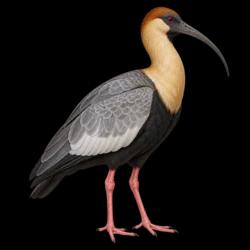
Buff-necked Ibis at a glance
Animal · South America · Open grassland · Relatively common
Known for: Buff head and neck with a cinnamon crown, Bare black skin on the face around the eye, Grey back and pale wing patch contrasting with, Black belly below a buff breast
Its Power
Wetland Forage
Adapt your approach to the environment you're in.
The Buff-necked Ibis thrives by adjusting its foraging methods to suit different wetland environments, demonstrating the value of situational adaptability.
“Probe the shifting mud.”
Capture a Buff-necked Ibis, and it's yours when you finish one step it gives you.
Biological basis
Buff-necked Ibises are known for their adaptability in foraging, using their long bills to probe mud and shallow water for food in diverse wetland habitats.
Put it into practice
In a new job role, Alex modifies their communication style to align with the team's collaborative culture, leading to successful project outcomes.
What does the buff-necked ibis symbolize?
The buff-necked ibis symbolizes wetland forage: adapt your approach to the environment you're in. It represents adaptability, versatility and sharp observation. Its AnimalDex motto: "Probe the shifting mud."
The buff-necked ibis as a spirit animal
If the buff-necked ibis is your spirit animal, the AnimalDex reading is Wetland Forage: the Buff-necked Ibis thrives by adjusting its foraging methods to suit different wetland environments, demonstrating the value of situational adaptability. It suggests a strength in adaptability and versatility, and a reminder to use it on purpose.
What can the buff-necked ibis help you with in life?
The buff-necked ibis is a guide for adaptability, versatility and sharp observation. Its lesson applies wherever adaptability matters: the Buff-necked Ibis thrives by adjusting its foraging methods to suit different wetland environments, demonstrating the value of situational adaptability.
- Adaptability
- Versatility
- Sharp Observation
In practice: In a new job role, Alex modifies their communication style to align with the team's collaborative culture, leading to successful project outcomes.
What can we learn from the Buff-necked Ibis?What does it mean to dream about or encounter a wild buff-necked ibis?
A wild buff-necked ibis, whether in a dream or in front of you, tends to show up when adaptability or versatility is on your mind. In AnimalDex, the buff-necked ibis's principle is Wetland Forage: adapt your approach to the environment you're in. Read the moment through its core lesson: The Buff-necked Ibis thrives by adjusting its foraging methods to suit different wetland environments, demonstrating the value of situational adaptability.
It depends on how the buff-necked ibis behaved. Calm or close by, it reads as versatility within reach; aggressive or fleeing, it points to adaptability you are resisting.
Spotting a buff-necked ibis in the wild
If a buff-necked ibis crosses your path, take it as a cue to look at where adaptability fits your day. Its AnimalDex motto: "Probe the shifting mud."
A buff-necked ibis that keeps appearing
Seeing the buff-necked ibis again and again, in dreams or outside, suggests adaptability is a theme you have not settled yet.
Dreaming of being chased by a buff-necked ibis
If the buff-necked ibis pursues you, look at where versatility is being asked of you and you are stepping away instead of meeting it.
Dreaming that a buff-necked ibis attacks you
An attack points to adaptability turned against you: someone using it on you, or your own adaptability overused until it costs you.
A calm or friendly buff-necked ibis
A relaxed buff-necked ibis near you, in a dream or in person, reads as readiness: Wetland Forage is available to you now, as its motto puts it, "Probe the shifting mud.".
A dead or injured buff-necked ibis
Seeing the buff-necked ibis hurt may point to versatility that has been neglected. Ask what it would take to restore it.
These readings are reflective prompts drawn from how the buff-necked ibis really lives, not predictions. If you meet one in the wild, watch from a distance and leave it undisturbed.
Capture your own Buff-necked Ibis
Photograph or film one in the wild, at a zoo or at home with the app. It becomes yours: it remembers you, gives you steps, and can debate your problems with your other animals.
Animal field guide
Buff-necked Ibis
Sign in to hear this read by a natural AI voice instead of your browser's.
A large South American ibis of open country, it spends much of its day walking over dry grassland and pasture rather than wading. The long, down-curved bill works as a probe, pushed into soil, grass tussocks and soft mud to find insects and larvae hidden below the surface.
Native range
Natural range, not this capture location
Open grassland, savanna, cattle pasture and farmland with scattered trees, often near marshes, flooded fields and pond edges. It occurs mainly in the lowlands across much of South America east of the Andes, including the llanos, the cerrado and the Pantanal.
Search near meAnimalDex stats
Size scale
Understand the animal
Understand the Buff-necked Ibis
Factual biology first: what this animal is like, where it lives, how it survives, and why those traits exist.
01
Introduction to Buff-necked Ibis
A large South American ibis of open country, it spends much of its day walking over dry grassland and pasture rather than wading. The long, down-curved bill works as a probe, pushed into soil, grass tussocks and soft mud to find insects and larvae hidden below the surface.
How to identify a Buff-necked Ibis
- Buff head and neck with a cinnamon crown
- Bare black skin on the face around the eye
- Grey back and pale wing patch contrasting with black flight feathers
- Black belly below a buff breast
- Short reddish legs on a heavy, upright body
Why Buff-necked Ibis are interesting
- The Black-faced Ibis of the southern Andes and Patagonia was once treated as part of this species but is now usually considered separate.
- It is sometimes seen foraging alongside grazing cattle, taking insects disturbed by the animals as they move through the grass.
- Like other ibises it flies with the neck stretched out, alternating stiff wingbeats with short glides.
- In Brazil it is widely known by the common name curicaca.
02
Adaptations and biological abilities
03
Why does Buff-necked Ibis behave this way?
- Buff head and neck with a cinnamon crown
- Bare black skin on the face around the eye
- Grey back and pale wing patch contrasting with black flight feathers
- Black belly below a buff breast
- Short reddish legs on a heavy, upright body
Active by day. At dusk birds fly to roost in tall trees, often dead or isolated ones, where several may gather before settling for the night.
04
Why Open grassland?
Habitat: Open grassland, savanna, cattle pasture and farmland with scattered trees, often near marshes, flooded fields and pond edges. It occurs mainly in the lowlands across much of South America east of the Andes, including the llanos, the cerrado and the Pantanal.
Native range: South America
Native range
Natural range, not this specific capture location.
Open grassland, savanna, cattle pasture and farmland with scattered trees, often near marshes, flooded fields and pond edges. It occurs mainly in the lowlands across much of South America east of the Andes, including the llanos, the cerrado and the Pantanal.
05
Why this diet?
Mostly insects and their larvae, especially beetles and grasshoppers, along with spiders, snails, frogs and small lizards. It walks steadily and snaps up prey it sees or flushes from the grass.
06
Activity, rest, and lifespan
Active by day. At dusk birds fly to roost in tall trees, often dead or isolated ones, where several may gather before settling for the night.
Field lifespan data for Theristicus caudatus appear unpublished; it probes dry grassland and pasture more often than open water.
07
Buff-necked Ibis reproduction
Pairs build a bulky stick nest high in a tree or palm, alone or in loose groups. Clutches are usually about 2 to 3 eggs, and both parents incubate and feed the young.
The sexes look alike in plumage and cannot reliably be told apart in the field.
08
Predators, threats, and defense
Predation on this ibis is poorly documented; large raptors and nest-raiding mammals are likely threats, especially to eggs and chicks. Adults are wary in open country and fly off to a distant tree or stretch of ground when approached.
09
Conservation and rarity
Rarity: Relatively common · 40/100. AnimalDex canonical rarity score: 40/100, maintained by the live indexed species profile.
- Observe from a respectful distance and avoid changing the animal's behavior.
- Do not block feeding, shelter, nesting, or travel routes.
- Use a live camera capture without handling or staging wildlife.
Talk to it
Talk to the Buff-necked Ibis
It answers as itself: ask about how it lives, or bring it something of yours and hear what it would do, from its own Power.
Anonymous: 6/day. Signed-in: 10/day. Pro: 100/day.
Side by side
The Buff-necked Ibis, side by side
Nothing written side by side for the Buff-necked Ibis yet. Pick any animal to compare it with. Compare with any animal →
Where to find them
Where to find Buff-necked Ibis
To find Buff-necked Ibis in the wild, focus on the exact habitat patches that match its body design and daily behavior, not just the broad country where it exists. You usually do better by working one good piece of habitat inside south America than by covering too much ground.
- Quiet marsh edges, reedbeds, river bends, or shallow wetland margins
- Open grassland edges, lightly wooded plains, or raised ground where you can scan long distances
- Protected habitat blocks within south America
Scientific name
Theristicus caudatus
Category
Animal
Habitat
Open grassland, savanna, cattle pasture and farmland with scattered trees, often near marshes, flooded fields and pond edges. It occurs mainly in the lowlands across much of South America east of the Andes, including the llanos, the cerrado and the Pantanal.
Rarity
Relatively common · 40/100
Native range
South America
Take the encyclopedia outside
AnimalDex helps you scan real animals, identify species, collect cards, and learn from nature wherever you are.