Animal field guide
Common Bed Bug
Cimex lectularius
A flat, wingless bug that lives alongside people almost worldwide and feeds only on blood. Adults are about 4 to 7 millimetres long, hide in cracks near sleeping places by day, and emerge at night to feed. Numbers have risen since the 1990s, helped by widespread insecticide resistance.
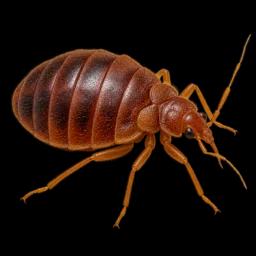
Common Bed Bug at a glance
Animal · Cracks and seams of mattresses · Relatively common
Known for: Flat, Body swells and darkens after a blood meal, Tiny wing pads only, Short
Its Power
Patient Shelter
Stay protected between brief visits to a necessary resource.
“Feed briefly, then retreat.”
Capture a Common Bed Bug, and it's yours when you finish one step it gives you.
Biological basis
Cimex lectularius shelters in cracks, seams and mattress edges close to where people sleep, emerging mainly at night for a blood meal lasting about five to ten minutes. It then returns to hiding, and adults can survive months between meals.
Put it into practice
A researcher books ten-minute slots on the crowded shared microscope during quiet hours, captures the images she needs, then goes straight back to her own desk to analyse them.
What does the common bed bug symbolize?
The common bed bug symbolizes patient shelter: stay protected between brief visits to a necessary resource. It represents safe shelter, caution and quiet strategy. Its AnimalDex motto: "Feed briefly, then retreat."
The common bed bug as a spirit animal
If the common bed bug is your spirit animal, the AnimalDex reading is Patient Shelter: stay protected between brief visits to a necessary resource. It suggests a strength in safe shelter and caution, and a reminder to use it on purpose.
What can the common bed bug help you with in life?
The common bed bug is a guide for safe shelter, caution and quiet strategy. Its lesson applies wherever safe shelter matters: stay protected between brief visits to a necessary resource.
- Safe Shelter
- Caution
- Quiet Strategy
In practice: A researcher books ten-minute slots on the crowded shared microscope during quiet hours, captures the images she needs, then goes straight back to her own desk to analyse them.
What can we learn from the Common Bed Bug?What does it mean to dream about or encounter a wild common bed bug?
Meeting a wild common bed bug, asleep or awake, is often a nudge toward safe shelter, the quality the common bed bug is built around. In AnimalDex, the common bed bug's principle is Patient Shelter: stay protected between brief visits to a necessary resource. Read the moment through its core lesson: Stay protected between brief visits to a necessary resource.
It depends on how the common bed bug behaved. Calm or close by, it reads as caution within reach; aggressive or fleeing, it points to safe shelter you are resisting.
Spotting a common bed bug in the wild
A real encounter is the plainest version of the sign: notice what the common bed bug was doing. Stay protected between brief visits to a necessary resource. That is the safe shelter worth borrowing today.
A common bed bug that keeps appearing
A common bed bug that keeps turning up points to caution you keep circling back to. The repetition is the message.
Dreaming of being chased by a common bed bug
If the common bed bug pursues you, look at where caution is being asked of you and you are stepping away instead of meeting it.
Dreaming that a common bed bug attacks you
When the common bed bug attacks, the dream may be about pressure: caution or quiet strategy applied too hard, by you or by someone close to you.
A calm or friendly common bed bug
Meeting a peaceful common bed bug is usually encouraging: caution and quiet strategy are within reach.
A dead or injured common bed bug
Seeing the common bed bug hurt may point to caution that has been neglected. Ask what it would take to restore it.
These readings are reflective prompts drawn from how the common bed bug really lives, not predictions. If you meet one in the wild, watch from a distance and leave it undisturbed.
Capture your own Common Bed Bug
Photograph or film one in the wild, at a zoo or at home with the app. It becomes yours: it remembers you, gives you steps, and can debate your problems with your other animals.
Animal field guide
Common Bed Bug
Sign in to hear this read by a natural AI voice instead of your browser's.
A flat, wingless bug that lives alongside people almost worldwide and feeds only on blood. Numbers have risen since the 1990s, helped by widespread insecticide resistance.
AnimalDex stats
Size scale
Understand the animal
Understand the Common Bed Bug
Factual biology first: what this animal is like, where it lives, how it survives, and why those traits exist.
01
Introduction to Common Bed Bug
A flat, wingless bug that lives alongside people almost worldwide and feeds only on blood. Adults are about 4 to 7 millimetres long, hide in cracks near sleeping places by day, and emerge at night to feed. Numbers have risen since the 1990s, helped by widespread insecticide resistance.
How to identify a Common Bed Bug
- Flat, oval, reddish-brown body about 4 to 7 millimetres long
- Body swells and darkens after a blood meal
- Tiny wing pads only; cannot fly
- Short, broad head with four-segmented antennae
- Nymphs smaller and pale straw-coloured until they feed
Why Common Bed Bug are interesting
- Males mate by traumatic insemination, piercing the female's body wall with a needle-like organ instead of using her genital opening.
- Adults can survive for months without feeding, especially in cool conditions.
- It is not known to transmit disease to people, although bites can cause itchy welts and heavy infestations disturb sleep.
- Its closest relatives feed on bats and birds, and it is thought to have first fed on humans in caves shared with bats.
02
Adaptations and biological abilities
03
Why does Common Bed Bug behave this way?
- Flat, oval, reddish-brown body about 4 to 7 millimetres long
- Body swells and darkens after a blood meal
- Tiny wing pads only; cannot fly
- Short, broad head with four-segmented antennae
- Nymphs smaller and pale straw-coloured until they feed
Nocturnal, usually feeding in the hours before dawn. By day it clusters in cracks, seams and crevices near beds. There is no true seasonal dormancy, but in cool conditions it slows down and can survive months without feeding.
04
Why Cracks and seams of mattresses?
Habitat: Cracks and seams of mattresses, bed frames, headboards, skirting and luggage in heated buildings; hides by day beside sleeping places and feeds at night.
Native range: Cracks and seams of mattresses, bed frames, headboards, skirting and luggage in heated buildings; hides by day beside sleeping places and feeds at night.
05
Why this diet?
Feeds only on blood, mainly from humans, but also from bats, birds and other mammals. It pierces the skin with slender mouthparts, feeds for several minutes, then retreats to its hiding place for some days to digest.
06
Activity, rest, and lifespan
Nocturnal, usually feeding in the hours before dawn. By day it clusters in cracks, seams and crevices near beds. There is no true seasonal dormancy, but in cool conditions it slows down and can survive months without feeding.
Adults commonly live several months, sometimes about a year, depending on temperature and access to blood meals.
07
Common Bed Bug reproduction
The male mates by piercing the female's abdomen directly. She then lays a few eggs a day, a few hundred over her life, glued in cracks. Nymphs hatch in about one to two weeks and need a blood meal before each of five moults.
Males have a narrower, pointed abdomen tip with a curved mating organ, while females have a broader, rounded abdomen and are slightly larger.
08
Predators, threats, and defense
Few enemies are recorded. House spiders, centipedes, some ants and the masked hunter assassin bug are known to eat it. Its main defence is hiding in narrow cracks, and disturbed bugs release a strong-smelling alarm scent.
09
Conservation and rarity
Rarity: Relatively common · 8/100. AnimalDex canonical rarity score: 8/100, maintained by the live indexed species profile.
- Observe from a respectful distance and avoid changing the animal's behavior.
- Do not block feeding, shelter, nesting, or travel routes.
- Use a live camera capture without handling or staging wildlife.
Talk to it
Talk to the Common Bed Bug
It answers as itself: ask about how it lives, or bring it something of yours and hear what it would do, from its own Power.
Anonymous: 6/day. Signed-in: 10/day. Pro: 100/day.
Side by side
The Common Bed Bug, side by side
Nothing written side by side for the Common Bed Bug yet. Pick any animal to compare it with. Compare with any animal →
Where to find them
Where to find Common Bed Bug
To find Common Bed Bug in the wild, focus on the exact habitat patches that match its body design and daily behavior, not just the broad country where it exists. You usually do better by working one good piece of habitat inside cracks and seams of mattresses, bed frames, headboards, skirting and luggage in heated buildings; hides by day beside sleeping places and feeds at night. than by covering too much ground.
- Headlands, reef edges, island colonies, tidal channels, or productive coastal water
- Protected habitat blocks within cracks and seams of mattresses, bed frames, headboards, skirting and luggage in heated buildings; hides by day beside sleeping places and feeds at night.
In the Ark
No Common Bed Bug is aboard yet.
The Ark is a live, shared animal world. Animals come aboard when people capture them, and live there by rules based on their field guides.
See the ArkScientific name
Cimex lectularius
Category
Animal
Habitat
Cracks and seams of mattresses, bed frames, headboards, skirting and luggage in heated buildings; hides by day beside sleeping places and feeds at night.
Rarity
Relatively common · 8/100
Native range
Cracks and seams of mattresses, bed frames, headboards, skirting and luggage in heated buildings; hides by day beside sleeping places and feeds at night.
Take the encyclopedia outside
AnimalDex helps you scan real animals, identify species, collect cards, and learn from nature wherever you are.