
Animal field guide
Common Carpet Moth
Epirrhoe alternata
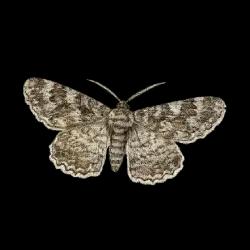
Bold bands of blackish brown and white cross the forewings of this small geometrid moth, so that at a glance the wing looks broken into separate light and dark blocks. Against leaves, stems and shadow, that alternating pattern is thought to help break up the outline of the wings.
Common Carpet Moth at a glance
Invertebrate · Europe · Gardens · Relatively common
Known for: Dark patch at the base of each forewing, White band near the edge split by a grey line, Wingspan roughly 2 to 3 centimetres, Hindwings paler grey with faint wavy cross-lines
Its Power
Adaptive Camouflage Pattern
Banded-Wing Outline Break
The Common Carpet Moth uses its intricate wing patterns to blend seamlessly into its environment, avoiding predators and thriving in diverse habitats.
“Spread flat, vanish.”
Capture a Common Carpet Moth, and it's yours when you finish one step it gives you.
Biological basis
The Common Carpet Moth's wing patterns mimic the textures and colors of its surroundings, providing effective camouflage from predators.
Put it into practice
A new volunteer copies the group's habits and pace, and is soon treated like an old hand.
What does the common carpet moth symbolize?
The common carpet moth symbolizes adaptive camouflage pattern: banded-Wing Outline Break. It represents blending in, caution and stillness. Its AnimalDex motto: "Spread flat, vanish."
The common carpet moth as a spirit animal
If the common carpet moth is your spirit animal, the AnimalDex reading is Adaptive Camouflage Pattern: the Common Carpet Moth uses its intricate wing patterns to blend seamlessly into its environment, avoiding predators and thriving in diverse habitats. It suggests a strength in blending in and caution, and a reminder to use it on purpose.
What can the common carpet moth help you with in life?
The common carpet moth is a guide for blending in, caution and stillness. Its lesson applies wherever blending in matters: the Common Carpet Moth uses its intricate wing patterns to blend seamlessly into its environment, avoiding predators and thriving in diverse habitats.
- Blending In
- Caution
- Stillness
In practice: A new volunteer copies the group's habits and pace, and is soon treated like an old hand.
What can we learn from the Common Carpet Moth?What does it mean to dream about or encounter a wild common carpet moth?
Dreaming about a wild common carpet moth, or coming across one, usually points to blending in and caution: the qualities the common carpet moth lives by. In AnimalDex, the common carpet moth's principle is Adaptive Camouflage Pattern: banded-Wing Outline Break. Read the moment through its core lesson: The Common Carpet Moth uses its intricate wing patterns to blend seamlessly into its environment, avoiding predators and thriving in diverse habitats.
Neither good nor bad on its own. How the common carpet moth acts matters: at ease, it reflects blending in; hostile, it flags blending in out of balance.
Spotting a common carpet moth in the wild
If a common carpet moth crosses your path, take it as a cue to look at where blending in fits your day. Its AnimalDex motto: "Spread flat, vanish."
A common carpet moth that keeps appearing
Seeing the common carpet moth again and again, in dreams or outside, suggests blending in is a theme you have not settled yet.
Dreaming of being chased by a common carpet moth
Being chased suggests you are avoiding the Adaptive Camouflage Pattern the common carpet moth stands for: the Common Carpet Moth uses its intricate wing patterns to blend seamlessly into its environment, avoiding predators and thriving in diverse habitats. Ask what you keep postponing that needs blending in.
Dreaming that a common carpet moth attacks you
When the common carpet moth attacks, the dream may be about pressure: caution or stillness applied too hard, by you or by someone close to you.
A calm or friendly common carpet moth
Meeting a peaceful common carpet moth is usually encouraging: caution and stillness are within reach.
A dead or injured common carpet moth
A dead or injured common carpet moth, dreamed or found, can mark blending in you have let lapse, or a phase built on Adaptive Camouflage Pattern coming to an end.
These readings are reflective prompts drawn from how the common carpet moth really lives, not predictions. If you meet one in the wild, watch from a distance and leave it undisturbed.
Capture your own Common Carpet Moth
Photograph or film one in the wild, at a zoo or at home with the app. It becomes yours: it remembers you, gives you steps, and can debate your problems with your other animals.
Animal field guide
Common Carpet Moth
Sign in to hear this read by a natural AI voice instead of your browser's.
Bold bands of blackish brown and white cross the forewings of this small geometrid moth, so that at a glance the wing looks broken into separate light and dark blocks. Against leaves, stems and shadow, that alternating pattern is thought to help break up the outline of the wings.
Native range
Natural range, not this capture location
Gardens, hedgerows, woodland rides and edges, rough grassland, waste ground and stream banks, wherever bedstraws and cleavers grow among taller vegetation. It is common in lowland areas.
Search near meAnimalDex stats
Size scale
Understand the animal
Understand the Common Carpet Moth
Factual biology first: what this animal is like, where it lives, how it survives, and why those traits exist.
01
Introduction to Common Carpet Moth
Bold bands of blackish brown and white cross the forewings of this small geometrid moth, so that at a glance the wing looks broken into separate light and dark blocks. Against leaves, stems and shadow, that alternating pattern is thought to help break up the outline of the wings.
How to identify a Common Carpet Moth
- Dark patch at the base of each forewing
- White band near the edge split by a grey line
- Wingspan roughly 2 to 3 centimetres
- Hindwings paler grey with faint wavy cross-lines
Why Common Carpet Moth are interesting
- Its caterpillar is a looper, walking by drawing its rear end up to its front legs so the body arches into a loop.
- It is one of the most widespread and frequently recorded carpet moths in Britain.
- It spends the winter as a pupa in the soil, so the first moths of the year do not appear until spring.
- It comes readily to light, and is often among the commonest moths in garden moth traps in summer.
02
Adaptations and biological abilities
03
Why does Common Carpet Moth behave this way?
- Dark patch at the base of each forewing
- White band near the edge split by a grey line
- Wingspan roughly 2 to 3 centimetres
- Hindwings paler grey with faint wavy cross-lines
Mostly nocturnal: flight begins around dusk and carries on after dark, busiest in the first hours of the night. Daylight hours are passed at rest in the same low cover it flies over.
04
Why Gardens?
Habitat: Gardens, hedgerows, woodland rides and edges, rough grassland, waste ground and stream banks, wherever bedstraws and cleavers grow among taller vegetation. It is common in lowland areas.
Native range: Europe
Native range
Natural range, not this specific capture location.
Gardens, hedgerows, woodland rides and edges, rough grassland, waste ground and stream banks, wherever bedstraws and cleavers grow among taller vegetation. It is common in lowland areas.
05
Why this diet?
Caterpillars feed on the leaves of bedstraws, especially cleavers. Adults are thought to visit flowers for nectar at dusk.
06
Activity, rest, and lifespan
Mostly nocturnal: flight begins around dusk and carries on after dark, busiest in the first hours of the night. Daylight hours are passed at rest in the same low cover it flies over.
The adult moth probably lives for a few weeks; its lifespan has not been measured closely.
07
Common Carpet Moth reproduction
Females lay their eggs on bedstraws. The caterpillars feed through the summer, then pupate in a flimsy cocoon in the soil. The number of eggs a female lays is not well documented.
The sexes look alike and cannot be reliably told apart in the field.
08
Predators, threats, and defense
Like other small moths, it is hunted by bats at night and by birds by day, and its caterpillars are parasitised by small wasps. It relies on staying motionless and on its broken wing pattern rather than on speed.
09
Conservation and rarity
Rarity: Relatively common · 9/100. AnimalDex canonical rarity score: 9/100, maintained by the live indexed species profile.
- Observe from a respectful distance and avoid changing the animal's behavior.
- Do not block feeding, shelter, nesting, or travel routes.
- Use a live camera capture without handling or staging wildlife.
Talk to it
Talk to the Common Carpet Moth
It answers as itself: ask about how it lives, or bring it something of yours and hear what it would do, from its own Power.
Anonymous: 6/day. Signed-in: 10/day. Pro: 100/day.
Side by side
The Common Carpet Moth, side by side
Nothing written side by side for the Common Carpet Moth yet. Pick any animal to compare it with. Compare with any animal →
Where to find them
Where to find Common Carpet Moth
To find Common Carpet Moth in the wild, focus on the exact habitat patches that match its body design and daily behavior, not just the broad country where it exists. You usually do better by working one good piece of habitat inside europe than by covering too much ground.
- Forest edge, canopy gaps, fruiting trees, or shaded trails where cover and food meet
- Open grassland edges, lightly wooded plains, or raised ground where you can scan long distances
- Protected habitat blocks within europe
Where explorers saw it
- Jausa, Hiiu maakond, EstoniaJul · 1 sighting
Guides to seeing Common Carpet Moth
In the Ark
1 Common Carpet Moth is aboard right now.
Since November 5: 1 came aboard.
The Ark is a live, shared animal world. Animals come aboard when people capture them, and live there by rules based on their field guides.
Scientific name
Epirrhoe alternata
Category
Invertebrate
Habitat
Gardens, hedgerows, woodland rides and edges, rough grassland, waste ground and stream banks, wherever bedstraws and cleavers grow among taller vegetation. It is common in lowland areas.
Rarity
Relatively common · 9/100
Native range
Europe
Take the encyclopedia outside
AnimalDex helps you scan real animals, identify species, collect cards, and learn from nature wherever you are.