Animal field guide
Common Wood Pigeon
Columba palumbus
The largest pigeon in Europe, a heavy-bodied, long-tailed bird of woods, farmland and towns. In autumn, birds from the north and east of Europe move south-west in huge flocks, and very large numbers cross the western Pyrenees on peak days.
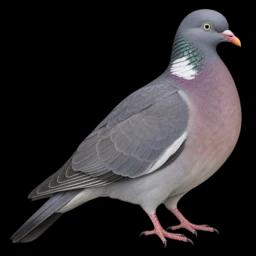
Common Wood Pigeon at a glance
Bird · Europe · Woodland of all kinds · Relatively common
Known for: White patch on each side of the neck, Broad white bar across the wing in flight, Grey body with pinkish-purple breast, Pale yellow eye
Its Power
Woodland Commute
Fill fast in the field, digest in the wood.
Gather quickly where exposure is high, then do the slow processing somewhere safe.
“Feed fast, digest safe.”
Capture a Common Wood Pigeon, and it's yours when you finish one step it gives you.
Biological basis
Columba palumbus flies between woodland roosts and open farmland, rapidly filling its crop with grain, clover, brassica leaves and seeds on exposed ground, then retreating to trees to digest in safety.
Put it into practice
A journalist spends an intense hour at a press conference collecting quotes and documents, then returns to a quiet office to check facts and write the story.
What does the common wood pigeon symbolize?
The common wood pigeon symbolizes woodland commute: fill fast in the field, digest in the wood. It represents mode switching, healthy routine and caution. Its AnimalDex motto: "Feed fast, digest safe."
The common wood pigeon as a spirit animal
If the common wood pigeon is your spirit animal, the AnimalDex reading is Woodland Commute: gather quickly where exposure is high, then do the slow processing somewhere safe. It suggests a strength in mode switching and healthy routine, and a reminder to use it on purpose.
What can the common wood pigeon help you with in life?
The common wood pigeon is a guide for mode switching, healthy routine and caution. Its lesson applies wherever mode switching matters: gather quickly where exposure is high, then do the slow processing somewhere safe.
- Mode Switching
- Healthy Routine
- Caution
In practice: A journalist spends an intense hour at a press conference collecting quotes and documents, then returns to a quiet office to check facts and write the story.
What can we learn from the Common Wood Pigeon?What does it mean to dream about or encounter a wild common wood pigeon?
A wild common wood pigeon, whether in a dream or in front of you, tends to show up when mode switching or healthy routine is on your mind. In AnimalDex, the common wood pigeon's principle is Woodland Commute: fill fast in the field, digest in the wood. Read the moment through its core lesson: Gather quickly where exposure is high, then do the slow processing somewhere safe.
Neither good nor bad on its own. How the common wood pigeon acts matters: at ease, it reflects mode switching; hostile, it flags mode switching out of balance.
Spotting a common wood pigeon in the wild
If a common wood pigeon crosses your path, take it as a cue to look at where mode switching fits your day. Its AnimalDex motto: "Feed fast, digest safe."
A common wood pigeon that keeps appearing
Seeing the common wood pigeon again and again, in dreams or outside, suggests mode switching is a theme you have not settled yet.
Dreaming of being chased by a common wood pigeon
Being chased suggests you are avoiding the Woodland Commute the common wood pigeon stands for: gather quickly where exposure is high, then do the slow processing somewhere safe. Ask what you keep postponing that needs mode switching.
Dreaming that a common wood pigeon attacks you
When the common wood pigeon attacks, the dream may be about pressure: healthy routine or caution applied too hard, by you or by someone close to you.
A calm or friendly common wood pigeon
Meeting a peaceful common wood pigeon is usually encouraging: healthy routine and caution are within reach.
A dead or injured common wood pigeon
Seeing the common wood pigeon hurt may point to healthy routine that has been neglected. Ask what it would take to restore it.
These readings are reflective prompts drawn from how the common wood pigeon really lives, not predictions. If you meet one in the wild, watch from a distance and leave it undisturbed.
Capture your own Common Wood Pigeon
Photograph or film one in the wild, at a zoo or at home with the app. It becomes yours: it remembers you, gives you steps, and can debate your problems with your other animals.
Animal field guide
Common Wood Pigeon
Sign in to hear this read by a natural AI voice instead of your browser's.
The largest pigeon in Europe, a heavy-bodied, long-tailed bird of woods, farmland and towns. In autumn, birds from the north and east of Europe move south-west in huge flocks, and very large numbers cross the western Pyrenees on peak days.
Native range
Natural range, not this capture location
Woodland of all kinds, farmland with hedgerows and copses, parks, gardens and town centres, from the lowlands into the mountains. It needs trees for nesting and roosting and open ground or crops for feeding.
Search near meAnimalDex stats
Size scale
Understand the animal
Understand the Common Wood Pigeon
Factual biology first: what this animal is like, where it lives, how it survives, and why those traits exist.
01
Introduction to Common Wood Pigeon
The largest pigeon in Europe, a heavy-bodied, long-tailed bird of woods, farmland and towns. In autumn, birds from the north and east of Europe move south-west in huge flocks, and very large numbers cross the western Pyrenees on peak days.
How to identify a Common Wood Pigeon
- White patch on each side of the neck
- Broad white bar across the wing in flight
- Grey body with pinkish-purple breast
- Pale yellow eye
- Long grey tail with a dark band at the tip
Why Common Wood Pigeon are interesting
- Young birds lack the white neck patches until they moult into adult plumage.
- In display flight a male climbs steeply, claps its wings, then glides down.
- Millions are shot each year across Europe, making it one of the continent's most hunted birds.
- It has become a serious crop pest on farmland in parts of Europe.
02
Adaptations and biological abilities
03
Why does Common Wood Pigeon behave this way?
- White patch on each side of the neck
- Broad white bar across the wing in flight
- Grey body with pinkish-purple breast
- Pale yellow eye
- Long grey tail with a dark band at the tip
Active by day. It roosts at night in trees, often in large communal roosts in woodland during winter, and rests in cover through the middle of hot days.
04
Why Woodland of all kinds?
Habitat: Woodland of all kinds, farmland with hedgerows and copses, parks, gardens and town centres, from the lowlands into the mountains. It needs trees for nesting and roosting and open ground or crops for feeding.
Native range: Europe, North Africa & Middle East
Native range
Natural range, not this specific capture location.
Woodland of all kinds, farmland with hedgerows and copses, parks, gardens and town centres, from the lowlands into the mountains. It needs trees for nesting and roosting and open ground or crops for feeding.
05
Why this diet?
Grain, seeds, clover, the leaves of oilseed rape and other brassicas, buds, acorns, beech nuts and ivy berries. It feeds on the ground and in trees, filling its crop fast and digesting later in safety.
06
Activity, rest, and lifespan
Active by day. It roosts at night in trees, often in large communal roosts in woodland during winter, and rests in cover through the middle of hot days.
Typically about 3 years in the wild; British ringing records include birds of more than 15 years.
07
Common Wood Pigeon reproduction
A flimsy twig platform in a tree or hedge holds 2 white eggs, incubated by both parents for about 17 days. Both feed the chicks on crop milk, and they fledge at about four to five weeks. Several broods a year are common.
The sexes look alike and cannot be reliably told apart in the field.
08
Predators, threats, and defense
09
Conservation and rarity
Rarity: Relatively common · 5/100. AnimalDex canonical rarity score: 5/100, maintained by the live indexed species profile.
- Observe from a respectful distance and avoid changing the animal's behavior.
- Do not block feeding, shelter, nesting, or travel routes.
- Use a live camera capture without handling or staging wildlife.
Talk to it
Talk to the Common Wood Pigeon
It answers as itself: ask about how it lives, or bring it something of yours and hear what it would do, from its own Power.
Anonymous: 6/day. Signed-in: 10/day. Pro: 100/day.
Side by side
The Common Wood Pigeon, side by side
Nothing written side by side for the Common Wood Pigeon yet. Pick any animal to compare it with. Compare with any animal →
Where to find them
Where to find Common Wood Pigeon
To find Common Wood Pigeon in the wild, focus on the exact habitat patches that match its body design and daily behavior, not just the broad country where it exists. You usually do better by working one good piece of habitat inside europe, North Africa & Middle East than by covering too much ground.
- Forest edge, canopy gaps, fruiting trees, or shaded trails where cover and food meet
- Rocky slopes, ridge lines, cliff ledges, or open mountain meadows with a wide view
- Protected habitat blocks within europe, North Africa & Middle East
Where explorers saw it
- Torino, Piemonte, ItalieOct · 1 sighting
- Vlaardingen, Zuid-Holland, NederlandOct · 1 sighting
- Tullow, County Carlow, IrelandOct · 1 sighting
Guides to seeing Common Wood Pigeon
In the Ark
No Common Wood Pigeon is aboard yet.
The Ark is a live, shared animal world. Animals come aboard when people capture them, and live there by rules based on their field guides.
See the ArkScientific name
Columba palumbus
Category
Bird
Habitat
Woodland of all kinds, farmland with hedgerows and copses, parks, gardens and town centres, from the lowlands into the mountains. It needs trees for nesting and roosting and open ground or crops for feeding.
Rarity
Relatively common · 5/100
Native range
Europe, North Africa & Middle East
Take the encyclopedia outside
AnimalDex helps you scan real animals, identify species, collect cards, and learn from nature wherever you are.