
Animal field guide
Crab Spider
Thomisidae
Crab spiders are laterigrade ambush spiders that often wait on flowers, bark, or foliage for prey.
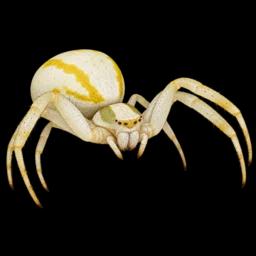
Crab Spider at a glance
Arachnid · Australia & Oceania · Flowers · Two long front leg pairs · Relatively common
Known for: Two long front leg pairs, Sideways crab-like stance, Flattened body, No prey-catching web
Its Power
Positioned Patience
Choose the right position, then let the opportunity approach.
“Wait where they come.”
Capture a Crab Spider, and it's yours when you finish one step it gives you.
Biological basis
Crab spiders use sideways movement, camouflage, and long front legs to seize visiting insects without a capture web.
Put it into practice
Instead of chasing the ice-cream van around the park, you wait at the corner where it always stops.
What does the crab spider symbolize?
The crab spider symbolizes positioned patience: choose the right position, then let the opportunity approach. It represents strategy, readiness and stillness. Its AnimalDex motto: "Wait where they come."
The crab spider as a spirit animal
If the crab spider is your spirit animal, the AnimalDex reading is Positioned Patience: choose the right position, then let the opportunity approach. It suggests a strength in strategy and readiness, and a reminder to use it on purpose.
What can the crab spider help you with in life?
The crab spider is a guide for strategy, readiness and stillness. Its lesson applies wherever strategy matters: choose the right position, then let the opportunity approach.
- Strategy
- Readiness
- Stillness
In practice: Instead of chasing the ice-cream van around the park, you wait at the corner where it always stops.
What can we learn from the Crab Spider?What does it mean to dream about or encounter a wild crab spider?
Dreaming about a wild crab spider, or coming across one, usually points to strategy and readiness: the qualities the crab spider lives by. In AnimalDex, the crab spider's principle is Positioned Patience: choose the right position, then let the opportunity approach. Read the moment through its core lesson: Choose the right position, then let the opportunity approach.
Mostly a prompt rather than a warning. A calm crab spider suggests strategy you already have; a threatening one suggests strategy is being tested or pushed too far.
Spotting a crab spider in the wild
A real encounter is the plainest version of the sign: notice what the crab spider was doing. Choose the right position, then let the opportunity approach. That is the strategy worth borrowing today.
A crab spider that keeps appearing
Seeing the crab spider again and again, in dreams or outside, suggests strategy is a theme you have not settled yet.
Dreaming of being chased by a crab spider
Being chased suggests you are avoiding the Positioned Patience the crab spider stands for: choose the right position, then let the opportunity approach. Ask what you keep postponing that needs strategy.
Dreaming that a crab spider attacks you
An attack points to strategy turned against you: someone using it on you, or your own strategy overused until it costs you.
A calm or friendly crab spider
A relaxed crab spider near you, in a dream or in person, reads as readiness: Positioned Patience is available to you now, as its motto puts it, "Wait where they come.".
A dead or injured crab spider
A dead or injured crab spider, dreamed or found, can mark strategy you have let lapse, or a phase built on Positioned Patience coming to an end.
These readings are reflective prompts drawn from how the crab spider really lives, not predictions. If you meet one in the wild, watch from a distance and leave it undisturbed.
Capture your own Crab Spider
Photograph or film one in the wild, at a zoo or at home with the app. It becomes yours: it remembers you, gives you steps, and can debate your problems with your other animals.
Animal field guide
Crab Spider
Sign in to hear this read by a natural AI voice instead of your browser's.
Crab spiders are laterigrade ambush spiders that often wait on flowers, bark, or foliage for prey.
Native range
Natural range, not this capture location
Flowers, leaves, bark, grass, and leaf litter.
Search near meAnimalDex stats
Size scale
Understand the animal
Understand the Crab Spider
Factual biology first: what this animal is like, where it lives, how it survives, and why those traits exist.
01
Introduction to Crab Spider
Crab spiders are laterigrade ambush spiders that often wait on flowers, bark, or foliage for prey.
How to identify a Crab Spider
- Two long front leg pairs
- Sideways crab-like stance
- Flattened body
- No prey-catching web
Why Crab Spider are interesting
- Some flower crab spiders, such as the goldenrod crab spider, can slowly change between white and yellow over several days.
- They overpower prey much larger than themselves, such as bees and butterflies, using fast-acting venom.
- Silk is used for safety lines and egg retreats rather than capture webs.
- The family is large, with more than 2,000 described species found around the world.
02
Adaptations and biological abilities
03
Why does Crab Spider behave this way?
04
Why Flowers?
Habitat: Flowers, leaves, bark, grass, and leaf litter.
Native range: Australia & Oceania, Central Asia, East Asia, Europe, North Africa & Middle East, North America, South America, South Asia, Southeast Asia, Sub-Saharan Africa
Native range
Natural range, not this specific capture location.
Flowers, leaves, bark, grass, and leaf litter.
05
Why this diet?
Bees, flies, moths, and other insects captured by ambush.
06
Activity, rest, and lifespan
Often waits motionless by day or night according to species and prey activity.
Usually around one year, varying with climate.
07
Crab Spider reproduction
Females guard silk egg sacs placed in folded leaves or sheltered sites.
Males are often smaller, slimmer, and more mobile than females.
08
Predators, threats, and defense
09
Conservation and rarity
Rarity: Relatively common · 12/100. AnimalDex canonical rarity score: 12/100, maintained by the live indexed species profile.
- Observe from a respectful distance and avoid changing the animal's behavior.
- Do not block feeding, shelter, nesting, or travel routes.
- Use a live camera capture without handling or staging wildlife.
Talk to it
Talk to the Crab Spider
It answers as itself: ask about how it lives, or bring it something of yours and hear what it would do, from its own Power.
Anonymous: 6/day. Signed-in: 10/day. Pro: 100/day.
Side by side
The Crab Spider, side by side
Nothing written side by side for the Crab Spider yet. Pick any animal to compare it with. Compare with any animal →
Where to find them
Where to find Crab Spider
To find Crab Spider in the wild, focus on the exact habitat patches that match its body design and daily behavior, not just the broad country where it exists. You usually do better by working one good piece of habitat inside australia & Oceania, Central Asia, East Asia, Europe, North Africa & Middle East, North America, South America, South Asia, Southeast Asia, Sub-Saharan Africa than by covering too much ground.
- Flowers, leaves, bark
- Protected habitat blocks within australia & Oceania, Central Asia, East Asia, Europe, North Africa & Middle East, North America, South America, South Asia, Southeast Asia, Sub-Saharan Africa
In the Ark
4 Crab Spiders are aboard right now.
Since November 6: 4 came aboard.
The Ark is a live, shared animal world. Animals come aboard when people capture them, and live there by rules based on their field guides.
Scientific name
Thomisidae
Category
Arachnid
Habitat
Flowers, leaves, bark, grass, and leaf litter.
Rarity
Relatively common · 12/100
Native range
Australia & Oceania, Central Asia, East Asia, Europe, North Africa & Middle East, North America, South America, South Asia, Southeast Asia, Sub-Saharan Africa
Take the encyclopedia outside
AnimalDex helps you scan real animals, identify species, collect cards, and learn from nature wherever you are.