Animal field guide
Drain Fly
Clogmia albipunctata
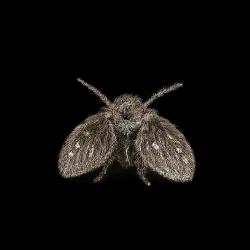
A tiny, furry-winged moth fly of the family Psychodidae, now found in buildings almost worldwide. Its larvae grow in the slimy film lining sink drains, shower traps and sewage systems, which is why adults so often appear on bathroom walls.
Drain Fly at a glance
Invertebrate · North America · Moist drains · Relatively common
Known for: Only about 4 to 5 millimetres long, Broad, Small tufts of white hairs along the wing edges, Wings held roof-like over the body at rest
Its Power
Overlooked Corners
Take the place nobody is competing for.
Small, unnoticed efforts can quietly thrive in overlooked corners of the world.
“Thrive where nobody looks.”
Capture a Drain Fly, and it's yours when you finish one step it gives you.
Biological basis
Drain fly larvae live in the gelatinous film inside drains, sewage filter beds and water-filled tree holes, feeding on bacteria and decaying matter in wet, oxygen-poor pockets almost nothing else will occupy.
Put it into practice
A cleaner takes the night contracts no firm bids for and builds a steady business from them.
What does the drain fly symbolize?
The drain fly symbolizes overlooked corners: take the place nobody is competing for. It represents finding hidden value, humility and contribution. Its AnimalDex motto: "Thrive where nobody looks."
The drain fly as a spirit animal
If the drain fly is your spirit animal, the AnimalDex reading is Overlooked Corners: small, unnoticed efforts can quietly thrive in overlooked corners of the world. It suggests a strength in finding hidden value and humility, and a reminder to use it on purpose.
What can the drain fly help you with in life?
The drain fly is a guide for finding hidden value, humility and contribution. Its lesson applies wherever finding hidden value matters: small, unnoticed efforts can quietly thrive in overlooked corners of the world.
- Finding Hidden Value
- Humility
- Contribution
In practice: A cleaner takes the night contracts no firm bids for and builds a steady business from them.
What can we learn from the Drain Fly?What does it mean to dream about or encounter a wild drain fly?
Meeting a wild drain fly, asleep or awake, is often a nudge toward finding hidden value, the quality the drain fly is built around. In AnimalDex, the drain fly's principle is Overlooked Corners: take the place nobody is competing for. Read the moment through its core lesson: Small, unnoticed efforts can quietly thrive in overlooked corners of the world.
Mostly a prompt rather than a warning. A calm drain fly suggests finding hidden value you already have; a threatening one suggests finding hidden value is being tested or pushed too far.
Spotting a drain fly in the wild
If a drain fly crosses your path, take it as a cue to look at where finding hidden value fits your day. Its AnimalDex motto: "Thrive where nobody looks."
A drain fly that keeps appearing
Seeing the drain fly again and again, in dreams or outside, suggests finding hidden value is a theme you have not settled yet.
Dreaming of being chased by a drain fly
A chase often means a demand for finding hidden value is catching up with you. The drain fly's lesson, "Small, unnoticed efforts can quietly thrive in overlooked corners of the world", is the part you may be running from.
Dreaming that a drain fly attacks you
An aggressive drain fly can mirror a conflict where finding hidden value has become a weapon rather than a strength.
A calm or friendly drain fly
A relaxed drain fly near you, in a dream or in person, reads as readiness: Overlooked Corners is available to you now, as its motto puts it, "Thrive where nobody looks.".
A dead or injured drain fly
Seeing the drain fly hurt may point to humility that has been neglected. Ask what it would take to restore it.
These readings are reflective prompts drawn from how the drain fly really lives, not predictions. If you meet one in the wild, watch from a distance and leave it undisturbed.
Capture your own Drain Fly
Photograph or film one in the wild, at a zoo or at home with the app. It becomes yours: it remembers you, gives you steps, and can debate your problems with your other animals.
Animal field guide
Drain Fly
Sign in to hear this read by a natural AI voice instead of your browser's.
A tiny, furry-winged moth fly of the family Psychodidae, now found in buildings almost worldwide. Its larvae grow in the slimy film lining sink drains, shower traps and sewage systems, which is why adults so often appear on bathroom walls.
Native range
Natural range, not this capture location
Moist drains, sewage works, plant pots, and shaded sites with decaying organic sludge where larvae feed in gelatinous biofilms.
Search near meAnimalDex stats
Dominance
4
Speed
9
Size
2
Intelligence
6
Rarity
6%
Total
27
Size scale
Understand the animal
Understand the Drain Fly
Factual biology first: what this animal is like, where it lives, how it survives, and why those traits exist.
01
Introduction to Drain Fly
A tiny, furry-winged moth fly of the family Psychodidae, now found in buildings almost worldwide. Its larvae grow in the slimy film lining sink drains, shower traps and sewage systems, which is why adults so often appear on bathroom walls.
How to identify a Drain Fly
- Only about 4 to 5 millimetres long
- Broad, oval wings densely covered in grey-brown hairs
- Small tufts of white hairs along the wing edges
- Wings held roof-like over the body at rest, giving a moth-like outline
- Long antennae made of bead-like segments ringed with hairs
Why Drain Fly are interesting
- Larvae feed on gelatinous biofilms of decaying organic matter that build up in household drains.
- Adults are weak fliers, often resting on bathroom walls near their breeding sites.
- A female may lay hundreds of eggs on damp sludge around sewage and drainage.
- From egg to adult takes roughly three to five weeks under warm, humid conditions.
02
Adaptations and biological abilities
03
Why does Drain Fly behave this way?
- Only about 4 to 5 millimetres long
- Broad, oval wings densely covered in grey-brown hairs
- Small tufts of white hairs along the wing edges
- Wings held roof-like over the body at rest, giving a moth-like outline
- Long antennae made of bead-like segments ringed with hairs
Adults sit still on walls and ceilings near drains by day and become more active in the evening and at night. Indoors it breeds all year; outdoors activity stops in cold weather.
04
Why Moist drains?
Habitat: Moist drains, sewage works, plant pots, and shaded sites with decaying organic sludge where larvae feed in gelatinous biofilms.
Native range: North America, South America, Europe, Sub-Saharan Africa, South Asia, Southeast Asia, East Asia, Australia & Oceania
Native range
Natural range, not this specific capture location.
Moist drains, sewage works, plant pots, and shaded sites with decaying organic sludge where larvae feed in gelatinous biofilms.
05
Why this diet?
Larvae feed on bacteria, fungi, algae and decaying organic matter in the gelatinous film inside drains, sewage filters and wet rotting material. Adults feed little, probably sipping liquids.
06
Activity, rest, and lifespan
Adults sit still on walls and ceilings near drains by day and become more active in the evening and at night. Indoors it breeds all year; outdoors activity stops in cold weather.
Adults usually live about two weeks. In warm conditions the whole cycle from egg to adult can take only two to three weeks.
07
Drain Fly reproduction
The female lays clusters of tiny eggs, sometimes a hundred or more, on the slime film in drains and other wet organic places. Larvae hatch within a few days and feed for one to two weeks before pupating in the same film. There is no parental care.
The sexes look alike to the naked eye. Under a hand lens the male shows clasping organs at the tip of the abdomen, which the female lacks.
08
Predators, threats, and defense
Its predators have not been studied in detail. House spiders catch adults on walls, and other insects in drains and sewage beds probably eat larvae. The hairy, water-repellent body sheds splashes, and adults escape with a short hop and flutter.
09
Conservation and rarity
Rarity: Relatively common · 6/100. AnimalDex canonical rarity score: 6/100, maintained by the live indexed species profile.
- Observe from a respectful distance and avoid changing the animal's behavior.
- Do not block feeding, shelter, nesting, or travel routes.
- Use a live camera capture without handling or staging wildlife.
Talk to it
Talk to the Drain Fly
It answers as itself: ask about how it lives, or bring it something of yours and hear what it would do, from its own Power.
Anonymous: 3/day. Signed-in: 10/day. Pro: 100/day.
Side by side
The Drain Fly, side by side
Nothing written side by side for the Drain Fly yet. Pick any animal to compare it with. Compare with any animal →
Where to find them
Where to find Drain Fly
To find Drain Fly in the wild, focus on the exact habitat patches that match its body design and daily behavior, not just the broad country where it exists. You usually do better by working one good piece of habitat inside north America, South America, Europe, Sub-Saharan Africa, South Asia, Southeast Asia, East Asia, Australia & Oceania than by covering too much ground.
- Moist drains, sewage works, plant pots
- Protected habitat blocks within north America, South America, Europe, Sub-Saharan Africa, South Asia, Southeast Asia, East Asia, Australia & Oceania
Where explorers saw it
- Jerteh, Terengganu, MalaysiaAug · 1 sighting
- Riverside, Washington County, United StatesAug · 1 sighting
Guides to seeing Drain Fly
Scientific name
Clogmia albipunctata
Category
Invertebrate
Habitat
Moist drains, sewage works, plant pots, and shaded sites with decaying organic sludge where larvae feed in gelatinous biofilms.
Rarity
Relatively common · 6/100
Native range
North America, South America, Europe, Sub-Saharan Africa, South Asia, Southeast Asia, East Asia, Australia & Oceania
Take the encyclopedia outside
AnimalDex helps you scan real animals, identify species, collect cards, and learn from nature wherever you are.