Animal field guide
Eupterote Fabia Moth
Eupterote fabia
Eupterote fabia is a South and Southeast Asian lappet moth whose conspicuously hairy larva becomes a broad-winged, warm-brown adult.
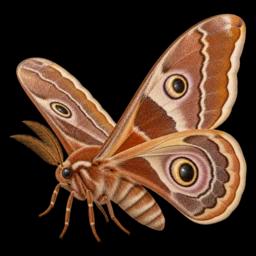
Eupterote Fabia Moth at a glance
Invertebrate · South Asia · Forest edges · Relatively common
Known for: Densely hairy caterpillar, Broad rounded adult wings, Warm brown and ochre wing pattern
Its Power
Stage Change
Build what the present stage needs, then let the next stage use a different form.
A successful transition does not have to preserve the shape that made the beginning successful.
“Change the form.”
Capture a Eupterote Fabia Moth, and it's yours when you finish one step it gives you.
Biological basis
The leaf-eating, densely haired larva pupates and reorganizes into a winged nocturnal adult whose main work is dispersal and reproduction.
Put it into practice
A team can retire a useful prototype after it has taught them what the production system must become.
What does the eupterote fabia moth symbolize?
The eupterote fabia moth symbolizes stage change: build what the present stage needs, then let the next stage use a different form. It represents transformation, letting go and renewal. Its AnimalDex motto: "Change the form."
The eupterote fabia moth as a spirit animal
If the eupterote fabia moth is your spirit animal, the AnimalDex reading is Stage Change: a successful transition does not have to preserve the shape that made the beginning successful. It suggests a strength in transformation and letting go, and a reminder to use it on purpose.
What can the eupterote fabia moth help you with in life?
The eupterote fabia moth is a guide for transformation, letting go and renewal. Its lesson applies wherever transformation matters: a successful transition does not have to preserve the shape that made the beginning successful.
- Transformation
- Letting Go
- Renewal
In practice: A team can retire a useful prototype after it has taught them what the production system must become.
What can we learn from the Eupterote Fabia Moth?What does it mean to dream about or encounter a wild eupterote fabia moth?
Meeting a wild eupterote fabia moth, asleep or awake, is often a nudge toward transformation, the quality the eupterote fabia moth is built around. In AnimalDex, the eupterote fabia moth's principle is Stage Change: build what the present stage needs, then let the next stage use a different form. Read the moment through its core lesson: A successful transition does not have to preserve the shape that made the beginning successful.
Mostly a prompt rather than a warning. A calm eupterote fabia moth suggests transformation you already have; a threatening one suggests transformation is being tested or pushed too far.
Spotting an eupterote fabia moth in the wild
Coming across an eupterote fabia moth in person asks for attention more than interpretation. Watch it for a minute; the eupterote fabia moth's way of working is Stage Change, and the lesson is: a successful transition does not have to preserve the shape that made the beginning successful.
An eupterote fabia moth that keeps appearing
Repeated sightings of an eupterote fabia moth usually mean the Stage Change lesson is still open: a successful transition does not have to preserve the shape that made the beginning successful.
Dreaming of being chased by an eupterote fabia moth
A chase often means a demand for transformation is catching up with you. The eupterote fabia moth's lesson, "A successful transition does not have to preserve the shape that made the beginning successful", is the part you may be running from.
Dreaming that an eupterote fabia moth attacks you
An aggressive eupterote fabia moth can mirror a conflict where transformation has become a weapon rather than a strength.
A calm or friendly eupterote fabia moth
Meeting a peaceful eupterote fabia moth is usually encouraging: letting go and renewal are within reach.
A dead or injured eupterote fabia moth
A dead or injured eupterote fabia moth, dreamed or found, can mark transformation you have let lapse, or a phase built on Stage Change coming to an end.
These readings are reflective prompts drawn from how the eupterote fabia moth really lives, not predictions. If you meet one in the wild, watch from a distance and leave it undisturbed.
Capture your own Eupterote Fabia Moth
Photograph or film one in the wild, at a zoo or at home with the app. It becomes yours: it remembers you, gives you steps, and can debate your problems with your other animals.
Animal field guide
Eupterote Fabia Moth
Sign in to hear this read by a natural AI voice instead of your browser's.
Eupterote fabia is a South and Southeast Asian lappet moth whose conspicuously hairy larva becomes a broad-winged, warm-brown adult.
Native range
Natural range, not this capture location
Forest edges, wooded gardens and other vegetated habitats across tropical Asia where larvae have host foliage and adults can shelter by day.
Search near meAnimalDex stats
Size scale
Understand the animal
Understand the Eupterote Fabia Moth
Factual biology first: what this animal is like, where it lives, how it survives, and why those traits exist.
01
Introduction to Eupterote Fabia Moth
Eupterote fabia is a South and Southeast Asian lappet moth whose conspicuously hairy larva becomes a broad-winged, warm-brown adult.
How to identify a Eupterote Fabia Moth
- Densely hairy caterpillar
- Broad rounded adult wings
- Warm brown and ochre wing pattern
Why Eupterote Fabia Moth are interesting
- It belongs to the family Eupterotidae, a group of stout, often hairy moths sometimes called monkey moths.
- Its densely hairy caterpillar looks radically different from the broad-winged adult moth.
- Adults are nocturnal and are often recorded at lights.
- It was scientifically described by the Dutch entomologist Pieter Cramer in the late eighteenth century.
02
Adaptations and biological abilities
03
Why does Eupterote Fabia Moth behave this way?
- Densely hairy caterpillar
- Broad rounded adult wings
- Warm brown and ochre wing pattern
Adults rest by day and fly mainly at night.
04
Why Forest edges?
Habitat: Forest edges, wooded gardens and other vegetated habitats across tropical Asia where larvae have host foliage and adults can shelter by day.
Native range: South Asia, Southeast Asia
Native range
Natural range, not this specific capture location.
Forest edges, wooded gardens and other vegetated habitats across tropical Asia where larvae have host foliage and adults can shelter by day.
05
Why this diet?
Larvae eat leaves; adults rely on reserves and any available liquid food during their short reproductive stage.
06
Activity, rest, and lifespan
Adults rest by day and fly mainly at night.
The adult stage is brief; most of the life cycle is spent as egg, larva or pupa.
07
Eupterote Fabia Moth reproduction
Females lay batches of eggs on or near suitable host plants; the larvae feed and grow through several moults before pupating.
Females are generally larger-bodied; males have more strongly feathered antennae for detecting mates.
08
Predators, threats, and defense
Birds, parasitoid wasps and other insect predators take the immature stages; dense larval hairs discourage handling by many attackers.
09
Conservation and rarity
Rarity: Relatively common · 15/100. AnimalDex canonical rarity score: 15/100, maintained by the live indexed species profile.
- Observe from a respectful distance and avoid changing the animal's behavior.
- Do not block feeding, shelter, nesting, or travel routes.
- Use a live camera capture without handling or staging wildlife.
Talk to it
Talk to the Eupterote Fabia Moth
It answers as itself: ask about how it lives, or bring it something of yours and hear what it would do, from its own Power.
Anonymous: 6/day. Signed-in: 10/day. Pro: 100/day.
Side by side
The Eupterote Fabia Moth, side by side
Nothing written side by side for the Eupterote Fabia Moth yet. Pick any animal to compare it with. Compare with any animal →
Where to find them
Where to find Eupterote Fabia Moth
To find Eupterote Fabia Moth in the wild, focus on the exact habitat patches that match its body design and daily behavior, not just the broad country where it exists. You usually do better by working one good piece of habitat inside south Asia, Southeast Asia than by covering too much ground.
- Forest edge, canopy gaps, fruiting trees, or shaded trails where cover and food meet
- Protected habitat blocks within south Asia, Southeast Asia
In the Ark
No Eupterote Fabia Moth is aboard yet.
The Ark is a live, shared animal world. Each animal comes aboard after a step that worked, and lives there by rules based on its field guide.
See the ArkScientific name
Eupterote fabia
Category
Invertebrate
Habitat
Forest edges, wooded gardens and other vegetated habitats across tropical Asia where larvae have host foliage and adults can shelter by day.
Rarity
Relatively common · 15/100
Native range
South Asia, Southeast Asia
Take the encyclopedia outside
AnimalDex helps you scan real animals, identify species, collect cards, and learn from nature wherever you are.