
Animal field guide
European Stick Insect
Bacillus rossius
A wingless stick insect of southern Europe around the Mediterranean. A nymph caught by a leg can shed it at a weak point near the base, and a smaller replacement grows back over later moults, so a short leg often marks an individual that escaped. Adults no longer moult and cannot replace a lost leg.
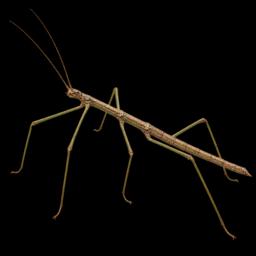
European Stick Insect at a glance
Invertebrate · Europe · Favors dry · Relatively common
Known for: Slender, Freezes with forelegs outstretched when disturbed, Slow, Eggs resembling small plant seeds scattered on the
Its Power
Branch Stillness
When visibility is costly, go still and let the moment pass you by.
Like the European stick insect that freezes and sways like a twig to avoid notice, choose stillness and low movement when attention would only bring risk or drain your energy.
“Hide in plain pause.”
Capture a European Stick Insect, and it's yours when you finish one step it gives you.
Biological basis
Bacillus rossius is a wingless, twig-shaped insect that feeds on bramble and rose mostly at night; when touched it freezes rigid, may sway like a twig or drop to the litter, and nymphs can shed a seized leg and regrow it.
Put it into practice
In a tense meeting, she stops arguing, keeps her face neutral, and lets two colleagues debate until the manager quietly moves on.
What does the European stick insect symbolize?
The European stick insect symbolizes branch stillness: when visibility is costly, go still and let the moment pass you by. It represents stillness, blending in and discernment. Its AnimalDex motto: "Hide in plain pause."
The European stick insect as a spirit animal
If the European stick insect is your spirit animal, the AnimalDex reading is Branch Stillness: like the European stick insect that freezes and sways like a twig to avoid notice, choose stillness and low movement when attention would only bring risk or drain your energy. It suggests a strength in stillness and blending in, and a reminder to use it on purpose.
What can the European stick insect help you with in life?
The European stick insect is a guide for stillness, blending in and discernment. Its lesson applies wherever stillness matters: like the European stick insect that freezes and sways like a twig to avoid notice, choose stillness and low movement when attention would only bring risk or drain your energy.
- Stillness
- Blending In
- Discernment
In practice: In a tense meeting, she stops arguing, keeps her face neutral, and lets two colleagues debate until the manager quietly moves on.
What can we learn from the European Stick Insect?What does it mean to dream about or encounter a wild European stick insect?
Meeting a wild European stick insect, asleep or awake, is often a nudge toward stillness, the quality the European stick insect is built around. In AnimalDex, the European stick insect's principle is Branch Stillness: when visibility is costly, go still and let the moment pass you by. Read the moment through its core lesson: Like the European stick insect that freezes and sways like a twig to avoid notice, choose stillness and low movement when attention would only bring risk or drain your energy.
Neither good nor bad on its own. How the European stick insect acts matters: at ease, it reflects stillness; hostile, it flags stillness out of balance.
Spotting an European stick insect in the wild
If an European stick insect crosses your path, take it as a cue to look at where stillness fits your day. Its AnimalDex motto: "Hide in plain pause."
An European stick insect that keeps appearing
An European stick insect that keeps turning up points to blending in you keep circling back to. The repetition is the message.
Dreaming of being chased by an European stick insect
A chase often means a demand for stillness is catching up with you. The European stick insect's lesson, "Like the European stick insect that freezes and sways like a twig to avoid notice, choose stillness and low movement when attention would only bring risk or drain your energy", is the part you may be running from.
Dreaming that an European stick insect attacks you
When the European stick insect attacks, the dream may be about pressure: blending in or discernment applied too hard, by you or by someone close to you.
A calm or friendly European stick insect
A relaxed European stick insect near you, in a dream or in person, reads as readiness: Branch Stillness is available to you now, as its motto puts it, "Hide in plain pause.".
A dead or injured European stick insect
An injured European stick insect often reflects stillness under strain; rest and repair come before pushing again.
These readings are reflective prompts drawn from how the European stick insect really lives, not predictions. If you meet one in the wild, watch from a distance and leave it undisturbed.
Capture your own European Stick Insect
Photograph or film one in the wild, at a zoo or at home with the app. It becomes yours: it remembers you, gives you steps, and can debate your problems with your other animals.
Animal field guide
European Stick Insect
Sign in to hear this read by a natural AI voice instead of your browser's.
A wingless stick insect of southern Europe around the Mediterranean. Adults no longer moult and cannot replace a lost leg.
Native range
Natural range, not this capture location
Favors dry, shrubby vegetation on calcareous or rocky soils, especially low Mediterranean scrub, hedgerows, field margins, and sunny woodland edges with dense bushes and brambles.
Search near meAnimalDex stats
Size scale
Understand the animal
Understand the European Stick Insect
Factual biology first: what this animal is like, where it lives, how it survives, and why those traits exist.
01
Introduction to European Stick Insect
A wingless stick insect of southern Europe around the Mediterranean. A nymph caught by a leg can shed it at a weak point near the base, and a smaller replacement grows back over later moults, so a short leg often marks an individual that escaped. Adults no longer moult and cannot replace a lost leg.
How to identify a European Stick Insect
- Slender, twig-like body with muted green or brown tones
- Freezes with forelegs outstretched when disturbed
- Slow, rocking gait that mimics a twig in the breeze
- Eggs resembling small plant seeds scattered on the ground
Why European Stick Insect are interesting
- Often reproduces parthenogenetically, with females producing viable eggs without mating, so entire local populations may consist only of females.
- Newly hatched nymphs already show twig-like shapes and behavior, climbing immediately onto low vegetation to begin feeding on young leaves.
- When gently blown by wind or disturbed, individuals may sway rhythmically, enhancing their resemblance to a twig moving in a breeze.
- Eggs are remarkably tough and can withstand winter cold and dryness, remaining dormant in soil or leaf litter until suitable spring conditions trigger hatching.
02
Adaptations and biological abilities
03
Why does European Stick Insect behave this way?
- Slender, twig-like body with muted green or brown tones
- Freezes with forelegs outstretched when disturbed
- Slow, rocking gait that mimics a twig in the breeze
- Eggs resembling small plant seeds scattered on the ground
Largely nocturnal, spending daylight hours motionless along twigs or stems, aligned with the branch axis, becoming more active and feeding after dusk and during the night.
04
Why Favors dry?
Habitat: Favors dry, shrubby vegetation on calcareous or rocky soils, especially low Mediterranean scrub, hedgerows, field margins, and sunny woodland edges with dense bushes and brambles.
Native range: Europe
Native range
Natural range, not this specific capture location.
Favors dry, shrubby vegetation on calcareous or rocky soils, especially low Mediterranean scrub, hedgerows, field margins, and sunny woodland edges with dense bushes and brambles.
05
Why this diet?
Feeds mainly on leaves of bramble, rose, hawthorn, and other shrubs, biting neat semicircles from leaf edges while hanging or clinging lengthwise along stems, usually at night.
06
Activity, rest, and lifespan
Largely nocturnal, spending daylight hours motionless along twigs or stems, aligned with the branch axis, becoming more active and feeding after dusk and during the night.
Typically one year from egg to adult in the wild, with adults living several months; in captivity, adults may survive a little longer under stable, warm conditions.
07
European Stick Insect reproduction
Females lay small, seed-like eggs singly or scattered on the ground beneath host plants, often without mating. Eggs overwinter and hatch in spring, with nymphs resembling miniature adults and feeding independently from emergence.
Females are noticeably larger and more robust, often 8–10 cm, while males, where present, are slimmer and shorter with longer antennae; in many populations only females occur, reproducing without males.
08
Predators, threats, and defense
Taken by insectivorous birds, small mammals, reptiles, and predatory arthropods. Avoids detection through twig mimicry, freezing when touched and sometimes dropping to the ground to remain motionless among leaf litter.
09
Conservation and rarity
Rarity: Relatively common · 30/100. AnimalDex canonical rarity score: 30/100, maintained by the live indexed species profile.
- Observe from a respectful distance and avoid changing the animal's behavior.
- Do not block feeding, shelter, nesting, or travel routes.
- Use a live camera capture without handling or staging wildlife.
Talk to it
Talk to the European Stick Insect
It answers as itself: ask about how it lives, or bring it something of yours and hear what it would do, from its own Power.
Anonymous: 6/day. Signed-in: 10/day. Pro: 100/day.
Side by side
The European Stick Insect, side by side
Nothing written side by side for the European Stick Insect yet. Pick any animal to compare it with. Compare with any animal →
Where to find them
Where to find European Stick Insect
To find European Stick Insect in the wild, focus on the exact habitat patches that match its body design and daily behavior, not just the broad country where it exists. You usually do better by working one good piece of habitat inside europe than by covering too much ground.
- Forest edge, canopy gaps, fruiting trees, or shaded trails where cover and food meet
- Protected habitat blocks within europe
Where explorers saw it
- Nyons, Auvergne-Rhône-Alpes, FranceOct · 1 sighting
In the Ark
3 European Stick Insects are aboard right now.
Since November 5: 3 came aboard.
The Ark is a live, shared animal world. Animals come aboard when people capture them, and live there by rules based on their field guides.
Scientific name
Bacillus rossius
Category
Invertebrate
Habitat
Favors dry, shrubby vegetation on calcareous or rocky soils, especially low Mediterranean scrub, hedgerows, field margins, and sunny woodland edges with dense bushes and brambles.
Rarity
Relatively common · 30/100
Native range
Europe
Take the encyclopedia outside
AnimalDex helps you scan real animals, identify species, collect cards, and learn from nature wherever you are.