
Animal field guide
Fox Moth
Macrothylacia rubi
A large, furry moth of heaths, moors and rough grassland whose caterpillar does all the eating. The adults have reduced mouthparts and do not feed, so each moth flies on reserves built by a velvety caterpillar that grazes heather and bramble through summer and then waits out the winter in leaf litter.
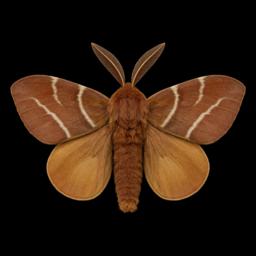
Fox Moth at a glance
Invertebrate · Europe · Open heathland · Relatively common
Known for: Stout, Fox-brown to grey-brown forewings with two pale, Feathery antennae on the males, Large dark caterpillar covered in velvety brown hair
Its Power
Silken Shield
Create a protective space for transformation.
Build a secure environment where you can safely undergo personal growth and change.
“Secure to Transform.”
Capture a Fox Moth, and it's yours when you finish one step it gives you.
Biological basis
The fox moth spins a robust cocoon to protect itself during its vulnerable pupal stage, ensuring a safe environment for metamorphosis.
Put it into practice
She sets boundaries at work, creating a safe space to develop her new skills without distraction.
What does the fox moth symbolize?
The fox moth symbolizes silken shield: create a protective space for transformation. It represents transformation, safe shelter and saving for later. Its AnimalDex motto: "Secure to Transform."
The fox moth as a spirit animal
If the fox moth is your spirit animal, the AnimalDex reading is Silken Shield: build a secure environment where you can safely undergo personal growth and change. It suggests a strength in transformation and safe shelter, and a reminder to use it on purpose.
What can the fox moth help you with in life?
The fox moth is a guide for transformation, safe shelter and saving for later. Its lesson applies wherever transformation matters: build a secure environment where you can safely undergo personal growth and change.
- Transformation
- Safe Shelter
- Saving for Later
In practice: She sets boundaries at work, creating a safe space to develop her new skills without distraction.
What can we learn from the Fox Moth?What does it mean to dream about or encounter a wild fox moth?
A wild fox moth, whether in a dream or in front of you, tends to show up when transformation or safe shelter is on your mind. In AnimalDex, the fox moth's principle is Silken Shield: create a protective space for transformation. Read the moment through its core lesson: Build a secure environment where you can safely undergo personal growth and change.
It depends on how the fox moth behaved. Calm or close by, it reads as safe shelter within reach; aggressive or fleeing, it points to transformation you are resisting.
Spotting a fox moth in the wild
A real encounter is the plainest version of the sign: notice what the fox moth was doing. Create a protective space for transformation. That is the transformation worth borrowing today.
A fox moth that keeps appearing
A fox moth that keeps turning up points to safe shelter you keep circling back to. The repetition is the message.
Dreaming of being chased by a fox moth
If the fox moth pursues you, look at where safe shelter is being asked of you and you are stepping away instead of meeting it.
Dreaming that a fox moth attacks you
An aggressive fox moth can mirror a conflict where transformation has become a weapon rather than a strength.
A calm or friendly fox moth
Meeting a peaceful fox moth is usually encouraging: safe shelter and saving for later are within reach.
A dead or injured fox moth
A dead or injured fox moth, dreamed or found, can mark transformation you have let lapse, or a phase built on Silken Shield coming to an end.
These readings are reflective prompts drawn from how the fox moth really lives, not predictions. If you meet one in the wild, watch from a distance and leave it undisturbed.
Capture your own Fox Moth
Photograph or film one in the wild, at a zoo or at home with the app. It becomes yours: it remembers you, gives you steps, and can debate your problems with your other animals.
Animal field guide
Fox Moth
Sign in to hear this read by a natural AI voice instead of your browser's.
A large, furry moth of heaths, moors and rough grassland whose caterpillar does all the eating. The adults have reduced mouthparts and do not feed, so each moth flies on reserves built by a velvety caterpillar that grazes heather and bramble through summer and then waits out the winter in leaf litter.
Native range
Natural range, not this capture location
Open heathland, moorland, rough grassland, coastal dunes, bogs and woodland rides with heather, bilberry or bramble, from lowland commons to upland moors across much of Europe.
Search near meAnimalDex stats
Size scale
Understand the animal
Understand the Fox Moth
Factual biology first: what this animal is like, where it lives, how it survives, and why those traits exist.
01
Introduction to Fox Moth
A large, furry moth of heaths, moors and rough grassland whose caterpillar does all the eating. The adults have reduced mouthparts and do not feed, so each moth flies on reserves built by a velvety caterpillar that grazes heather and bramble through summer and then waits out the winter in leaf litter.
How to identify a Fox Moth
- Stout, furry body and broad rounded wings
- Fox-brown to grey-brown forewings with two pale cross-lines
- Feathery antennae on the males
- Large dark caterpillar covered in velvety brown hair
- Young caterpillars banded black and orange
Why Fox Moth are interesting
- The scientific name rubi refers to bramble, Rubus, one of the caterpillar's common foodplants.
- The caterpillar's hairs can cause an itchy rash, so it is best not handled with bare hands.
- It belongs to the eggar and lappet family, Lasiocampidae, a group of stout, hairy moths.
- Males find females by scent, following an airborne signal released by the resting female.
- The English name comes from the fox-red colour of the male moth.
02
Adaptations and biological abilities
03
Why does Fox Moth behave this way?
- Stout, furry body and broad rounded wings
- Fox-brown to grey-brown forewings with two pale cross-lines
- Feathery antennae on the males
- Large dark caterpillar covered in velvety brown hair
- Young caterpillars banded black and orange
Males fly fast and low in afternoon sunshine searching for females, while females fly at night and come to light. Caterpillars rest coiled in litter and bask on sunny spring days.
04
Why Open heathland?
Habitat: Open heathland, moorland, rough grassland, coastal dunes, bogs and woodland rides with heather, bilberry or bramble, from lowland commons to upland moors across much of Europe.
Native range: Europe
Native range
Natural range, not this specific capture location.
Open heathland, moorland, rough grassland, coastal dunes, bogs and woodland rides with heather, bilberry or bramble, from lowland commons to upland moors across much of Europe.
05
Why this diet?
Caterpillars eat heather, bilberry, bramble, clovers, burnet, sallows and other low plants from summer into autumn. Adults do not feed.
06
Activity, rest, and lifespan
Males fly fast and low in afternoon sunshine searching for females, while females fly at night and come to light. Caterpillars rest coiled in litter and bask on sunny spring days.
The life cycle takes one year, most of it spent as a caterpillar; adult moths live only about one to two weeks.
07
Fox Moth reproduction
Females lay batches of eggs on stems of the foodplants. Caterpillars hatch in summer, feed until autumn, overwinter full-grown, and pupate in a silk cocoon in spring, emerging as moths in May and June.
Males are a warmer foxy red-brown with feathery antennae; females are larger and greyer-brown with thinner antennae. Both show two pale lines across the forewing.
08
Predators, threats, and defense
Cuckoos are among the few birds that readily eat the hairy caterpillars, while parasitic wasps and flies attack larvae and pupae, and birds and bats take adults. The dense hairs deter most birds and can irritate human skin.
09
Conservation and rarity
Rarity: Relatively common · 25/100. AnimalDex canonical rarity score: 25/100, maintained by the live indexed species profile.
- Observe from a respectful distance and avoid changing the animal's behavior.
- Do not block feeding, shelter, nesting, or travel routes.
- Use a live camera capture without handling or staging wildlife.
Talk to it
Talk to the Fox Moth
It answers as itself: ask about how it lives, or bring it something of yours and hear what it would do, from its own Power.
Anonymous: 6/day. Signed-in: 10/day. Pro: 100/day.
Side by side
The Fox Moth, side by side
Nothing written side by side for the Fox Moth yet. Pick any animal to compare it with. Compare with any animal →
Where to find them
Where to find Fox Moth
To find Fox Moth in the wild, focus on the exact habitat patches that match its body design and daily behavior, not just the broad country where it exists. You usually do better by working one good piece of habitat inside europe than by covering too much ground.
- Forest edge, canopy gaps, fruiting trees, or shaded trails where cover and food meet
- Open grassland edges, lightly wooded plains, or raised ground where you can scan long distances
- Water sources, dune bases, rocky wadis, or shaded scrub at first and last light
In the Ark
No Fox Moth is aboard yet.
Since November 17: 1 died of old age.
The Ark is a live, shared animal world. Animals come aboard when people capture them, and live there by rules based on their field guides.
Scientific name
Macrothylacia rubi
Category
Invertebrate
Habitat
Open heathland, moorland, rough grassland, coastal dunes, bogs and woodland rides with heather, bilberry or bramble, from lowland commons to upland moors across much of Europe.
Rarity
Relatively common · 25/100
Native range
Europe
Take the encyclopedia outside
AnimalDex helps you scan real animals, identify species, collect cards, and learn from nature wherever you are.