Animal field guide
Grass Moth
Crambidae
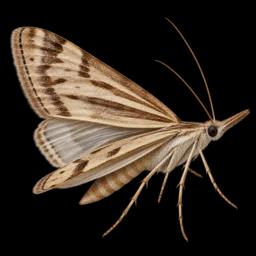
A large family of more than 10,000 small moths whose caterpillars bore into grass stems, roots and crops, or even live underwater. Resting grass moths roll their narrow wings tightly around the body and cling head-down to a stem, looking like part of the plant.
Grass Moth at a glance
Invertebrate · Australia & Oceania · Grassland · Relatively common
Known for: Prominent forward-pointing palps like a beak in, Grass veneers: narrow straw-coloured forewings, Many others hold broad triangular wings flat at rest, Slender body and long
Its Power
Stem Shelter
Feed hidden inside stems, silk tubes or rolled leaves.
Doing vulnerable work inside a shelter built from the surroundings keeps it safe from most interruptions.
“Shelter while you feed.”
Capture a Grass Moth, and it's yours when you finish one step it gives you.
Biological basis
Most Crambidae caterpillars are concealed feeders: some bore inside grass and crop stems, others live in silk tubes at the base of grasses or feed within leaves rolled or webbed with silk. Adults of many grass moths rest along stems with wings rolled tight.
Put it into practice
A writer rents a quiet corner in the library basement and drafts his thesis there, away from the noise of the shared flat.
What does the grass moth symbolize?
The grass moth symbolizes stem shelter: feed hidden inside stems, silk tubes or rolled leaves. It represents safe shelter, deep work and discretion. Its AnimalDex motto: "Shelter while you feed."
The grass moth as a spirit animal
If the grass moth is your spirit animal, the AnimalDex reading is Stem Shelter: doing vulnerable work inside a shelter built from the surroundings keeps it safe from most interruptions. It suggests a strength in safe shelter and deep work, and a reminder to use it on purpose.
What can the grass moth help you with in life?
The grass moth is a guide for safe shelter, deep work and discretion. Its lesson applies wherever safe shelter matters: doing vulnerable work inside a shelter built from the surroundings keeps it safe from most interruptions.
- Safe Shelter
- Deep Work
- Discretion
In practice: A writer rents a quiet corner in the library basement and drafts his thesis there, away from the noise of the shared flat.
What can we learn from the Grass Moth?What does it mean to dream about or encounter a wild grass moth?
A wild grass moth, whether in a dream or in front of you, tends to show up when safe shelter or deep work is on your mind. In AnimalDex, the grass moth's principle is Stem Shelter: feed hidden inside stems, silk tubes or rolled leaves. Read the moment through its core lesson: Doing vulnerable work inside a shelter built from the surroundings keeps it safe from most interruptions.
Mostly a prompt rather than a warning. A calm grass moth suggests safe shelter you already have; a threatening one suggests safe shelter is being tested or pushed too far.
Spotting a grass moth in the wild
A real encounter is the plainest version of the sign: notice what the grass moth was doing. Feed hidden inside stems, silk tubes or rolled leaves. That is the safe shelter worth borrowing today.
A grass moth that keeps appearing
Seeing the grass moth again and again, in dreams or outside, suggests safe shelter is a theme you have not settled yet.
Dreaming of being chased by a grass moth
Being chased suggests you are avoiding the Stem Shelter the grass moth stands for: doing vulnerable work inside a shelter built from the surroundings keeps it safe from most interruptions. Ask what you keep postponing that needs safe shelter.
Dreaming that a grass moth attacks you
An aggressive grass moth can mirror a conflict where safe shelter has become a weapon rather than a strength.
A calm or friendly grass moth
A calm grass moth suggests you have made peace with safe shelter and can use it without force.
A dead or injured grass moth
Seeing the grass moth hurt may point to deep work that has been neglected. Ask what it would take to restore it.
These readings are reflective prompts drawn from how the grass moth really lives, not predictions. If you meet one in the wild, watch from a distance and leave it undisturbed.
Capture your own Grass Moth
Photograph or film one in the wild, at a zoo or at home with the app. It becomes yours: it remembers you, gives you steps, and can debate your problems with your other animals.
Animal field guide
Grass Moth
Sign in to hear this read by a natural AI voice instead of your browser's.
A large family of more than 10,000 small moths whose caterpillars bore into grass stems, roots and crops, or even live underwater. Resting grass moths roll their narrow wings tightly around the body and cling head-down to a stem, looking like part of the plant.
Native range
Natural range, not this capture location
Grassland, meadows, lawns, marshes and crop fields, with some groups in woodland and a few whose larvae live in ponds and slow streams.
Search near meAnimalDex stats
Dominance
1
Speed
18
Size
1
Intelligence
5
Rarity
8%
Total
33
Size scale
Understand the animal
Understand the Grass Moth
Factual biology first: what this animal is like, where it lives, how it survives, and why those traits exist.
01
Introduction to Grass Moth
A large family of more than 10,000 small moths whose caterpillars bore into grass stems, roots and crops, or even live underwater. Resting grass moths roll their narrow wings tightly around the body and cling head-down to a stem, looking like part of the plant.
How to identify a Grass Moth
- Prominent forward-pointing palps like a beak in many species
- Grass veneers: narrow straw-coloured forewings, often with a silver stripe
- Many others hold broad triangular wings flat at rest
- Slender body and long, thin legs
Why Grass Moth are interesting
- The European corn borer, Ostrinia nubilalis, is a major pest of maize in Europe and North America.
- China-mark moths in this family have caterpillars that live underwater, some breathing through gills.
- The box tree moth, Cydalima perspectalis, spread from East Asia into Europe and now strips box hedges in many gardens.
- Sod webworm caterpillars can leave dead brown patches in lawns by feeding on grass at night.
02
Adaptations and biological abilities
03
Why does Grass Moth behave this way?
- Prominent forward-pointing palps like a beak in many species
- Grass veneers: narrow straw-coloured forewings, often with a silver stripe
- Many others hold broad triangular wings flat at rest
- Slender body and long, thin legs
Most adults fly at dusk and at night and rest by day on grass stems or under leaves, though they are easily flushed in daylight.
04
Why Grassland?
Habitat: Grassland, meadows, lawns, marshes and crop fields, with some groups in woodland and a few whose larvae live in ponds and slow streams.
Native range: Australia & Oceania, Central Asia, East Asia, Europe, North Africa & Middle East, North America, South America, South Asia, Southeast Asia, Sub-Saharan Africa
Native range
Natural range, not this specific capture location.
Grassland, meadows, lawns, marshes and crop fields, with some groups in woodland and a few whose larvae live in ponds and slow streams.
05
Why this diet?
Caterpillars feed on grasses, mosses and many other plants, often inside stems, roots or silk tubes at the base; some are serious crop borers. Adults of many species sip nectar or water, and some do not feed.
06
Activity, rest, and lifespan
Most adults fly at dusk and at night and rest by day on grass stems or under leaves, though they are easily flushed in daylight.
Adults usually live from a few days to a few weeks; temperate species have one or two generations a year, while tropical species may breed continuously.
07
Grass Moth reproduction
Females scatter eggs among grass or lay them in small batches on leaves and stems. Larvae feed hidden and often overwinter as caterpillars before pupating in a silk cocoon.
In most species the sexes look very similar; females are sometimes larger or have broader, less contrasting wings.
08
Predators, threats, and defense
Bats, birds, spiders and parasitic wasps and flies are major enemies. Adults detect bat calls with hearing organs at the base of the abdomen and dive away, while caterpillars stay hidden inside plant tissue or silk tunnels.
09
Conservation and rarity
Rarity: Relatively common · 8/100. AnimalDex canonical rarity score: 8/100, maintained by the live indexed species profile.
- Observe from a respectful distance and avoid changing the animal's behavior.
- Do not block feeding, shelter, nesting, or travel routes.
- Use a live camera capture without handling or staging wildlife.
Talk to it
Talk to the Grass Moth
It answers as itself: ask about how it lives, or bring it something of yours and hear what it would do, from its own Power.
Anonymous: 3/day. Signed-in: 10/day. Pro: 100/day.
Side by side
The Grass Moth, side by side
Nothing written side by side for the Grass Moth yet. Pick any animal to compare it with. Compare with any animal →
Where to find them
Where to find Grass Moth
To find Grass Moth in the wild, focus on the exact habitat patches that match its body design and daily behavior, not just the broad country where it exists. You usually do better by working one good piece of habitat inside australia & Oceania, Central Asia, East Asia, Europe, North Africa & Middle East, North America, South America, South Asia, Southeast Asia, Sub-Saharan Africa than by covering too much ground.
- Quiet marsh edges, reedbeds, river bends, or shallow wetland margins
- Forest edge, canopy gaps, fruiting trees, or shaded trails where cover and food meet
- Open grassland edges, lightly wooded plains, or raised ground where you can scan long distances
Where explorers saw it
- Hàm Thuận, Lâm Đồng, Việt NamAug · 1 sighting
Scientific name
Crambidae
Category
Invertebrate
Habitat
Grassland, meadows, lawns, marshes and crop fields, with some groups in woodland and a few whose larvae live in ponds and slow streams.
Rarity
Relatively common · 8/100
Native range
Australia & Oceania, Central Asia, East Asia, Europe, North Africa & Middle East, North America, South America, South Asia, Southeast Asia, Sub-Saharan Africa
Take the encyclopedia outside
AnimalDex helps you scan real animals, identify species, collect cards, and learn from nature wherever you are.