Animal field guide
Grey Field Slug
Deroceras reticulatum
A small slug of about 3.5 to 5 cm that ranks among the most damaging crop pests in Europe. It grazes seedlings of cereals, oilseed rape and vegetables, and in mild, damp years its numbers can build up fast enough to destroy newly sown fields.
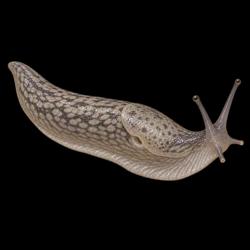
Grey Field Slug at a glance
Marine invertebrate · Europe · Farmland · Relatively common
Known for: Pale grey, Short keel at the tip of the tail, Mantle with fine concentric ridges like a, Breathing pore on the right side
Its Power
Moist Retreat
Seek out environments that support your needs.
The Grey Field Slug thrives by finding moist, sheltered areas that protect it from drying out, teaching us to prioritize environments that sustain our well-being.
“Find your haven.”
Capture a Grey Field Slug, and it's yours when you finish one step it gives you.
Biological basis
Grey Field Slugs are nocturnal and seek out damp, shaded areas to avoid desiccation and predators.
Put it into practice
After a hectic day, Clara unwinds by reading in her favorite quiet corner, where she feels most at ease.
What does the grey field slug symbolize?
The grey field slug symbolizes moist retreat: seek out environments that support your needs. It represents safe shelter, self-regulation and healthy routine. Its AnimalDex motto: "Find your haven."
The grey field slug as a spirit animal
If the grey field slug is your spirit animal, the AnimalDex reading is Moist Retreat: the Grey Field Slug thrives by finding moist, sheltered areas that protect it from drying out, teaching us to prioritize environments that sustain our well-being. It suggests a strength in safe shelter and self-regulation, and a reminder to use it on purpose.
What can the grey field slug help you with in life?
The grey field slug is a guide for safe shelter, self-regulation and healthy routine. Its lesson applies wherever safe shelter matters: the Grey Field Slug thrives by finding moist, sheltered areas that protect it from drying out, teaching us to prioritize environments that sustain our well-being.
- Safe Shelter
- Self-Regulation
- Healthy Routine
In practice: After a hectic day, Clara unwinds by reading in her favorite quiet corner, where she feels most at ease.
What can we learn from the Grey Field Slug?What does it mean to dream about or encounter a wild grey field slug?
Meeting a wild grey field slug, asleep or awake, is often a nudge toward safe shelter, the quality the grey field slug is built around. In AnimalDex, the grey field slug's principle is Moist Retreat: seek out environments that support your needs. Read the moment through its core lesson: The Grey Field Slug thrives by finding moist, sheltered areas that protect it from drying out, teaching us to prioritize environments that sustain our well-being.
Neither good nor bad on its own. How the grey field slug acts matters: at ease, it reflects safe shelter; hostile, it flags safe shelter out of balance.
Spotting a grey field slug in the wild
A real encounter is the plainest version of the sign: notice what the grey field slug was doing. Seek out environments that support your needs. That is the safe shelter worth borrowing today.
A grey field slug that keeps appearing
Seeing the grey field slug again and again, in dreams or outside, suggests safe shelter is a theme you have not settled yet.
Dreaming of being chased by a grey field slug
If the grey field slug pursues you, look at where self-regulation is being asked of you and you are stepping away instead of meeting it.
Dreaming that a grey field slug attacks you
An aggressive grey field slug can mirror a conflict where safe shelter has become a weapon rather than a strength.
A calm or friendly grey field slug
Meeting a peaceful grey field slug is usually encouraging: self-regulation and healthy routine are within reach.
A dead or injured grey field slug
An injured grey field slug often reflects safe shelter under strain; rest and repair come before pushing again.
These readings are reflective prompts drawn from how the grey field slug really lives, not predictions. If you meet one in the wild, watch from a distance and leave it undisturbed.
Capture your own Grey Field Slug
Photograph or film one in the wild, at a zoo or at home with the app. It becomes yours: it remembers you, gives you steps, and can debate your problems with your other animals.
Animal field guide
Grey Field Slug
Sign in to hear this read by a natural AI voice instead of your browser's.
A small slug of about 3. It grazes seedlings of cereals, oilseed rape and vegetables, and in mild, damp years its numbers can build up fast enough to destroy newly sown fields.
Native range
Natural range, not this capture location
Farmland, gardens, grassland, hedge bottoms and waste ground, mainly on moist, fertile soils with plenty of plant cover.
Search near meAnimalDex stats
Dominance
10
Speed
3
Size
4
Intelligence
10
Rarity
8%
Total
35
Size scale
Understand the animal
Understand the Grey Field Slug
Factual biology first: what this animal is like, where it lives, how it survives, and why those traits exist.
01
Introduction to Grey Field Slug
A small slug of about 3.5 to 5 cm that ranks among the most damaging crop pests in Europe. It grazes seedlings of cereals, oilseed rape and vegetables, and in mild, damp years its numbers can build up fast enough to destroy newly sown fields.
How to identify a Grey Field Slug
- Pale grey, cream or fawn with darker brown flecks
- Short keel at the tip of the tail
- Mantle with fine concentric ridges like a fingerprint
- Breathing pore on the right side, towards the rear of the mantle
Why Grey Field Slug are interesting
- Mating pairs circle each other for a long time before everting their sexual organs and exchanging sperm.
- Breeding can take place in almost any month when the weather is mild and damp, so generations overlap.
- Carried with plants and soil, it has spread from Europe to North America, Australasia and many other regions.
- A parasitic nematode that kills it is sold to gardeners as a biological slug control.
02
Adaptations and biological abilities
03
Why does Grey Field Slug behave this way?
- Pale grey, cream or fawn with darker brown flecks
- Short keel at the tip of the tail
- Mantle with fine concentric ridges like a fingerprint
- Breathing pore on the right side, towards the rear of the mantle
Feeding peaks in the few hours after dusk, while humidity rises. In frost or drought it becomes inactive, withdrawing deeper into the soil until conditions improve.
04
Why Farmland?
Habitat: Farmland, gardens, grassland, hedge bottoms and waste ground, mainly on moist, fertile soils with plenty of plant cover.
Native range: Europe
Native range
Natural range, not this specific capture location.
Farmland, gardens, grassland, hedge bottoms and waste ground, mainly on moist, fertile soils with plenty of plant cover.
05
Why this diet?
Grazes living leaves, sown seeds, stems and roots with a rasping tongue, and also eats decaying plant matter, fungi and occasionally dead animals.
06
Activity, rest, and lifespan
Feeding peaks in the few hours after dusk, while humidity rises. In frost or drought it becomes inactive, withdrawing deeper into the soil until conditions improve.
Usually about 9 to 12 months; some individuals live a little over a year.
07
Grey Field Slug reproduction
Batches of about 10 to 50 small, clear, round eggs are laid in soil crevices, and one slug may lay several hundred over its life. Hatching takes a few weeks in mild conditions, and young reach maturity within months.
There are no separate sexes: every slug is a hermaphrodite with both male and female organs, so individuals cannot be sorted into males and females.
08
Predators, threats, and defense
Ground beetles, hedgehogs, thrushes, frogs, toads, slow-worms and the larvae of marsh flies all kill it. When attacked it pours out sticky mucus that turns milky white.
09
Conservation and rarity
Rarity: Relatively common · 8/100. AnimalDex canonical rarity score: 8/100, maintained by the live indexed species profile.
- Observe from a respectful distance and avoid changing the animal's behavior.
- Do not block feeding, shelter, nesting, or travel routes.
- Use a live camera capture without handling or staging wildlife.
Talk to it
Talk to the Grey Field Slug
It answers as itself: ask about how it lives, or bring it something of yours and hear what it would do, from its own Power.
Anonymous: 3/day. Signed-in: 10/day. Pro: 100/day.
Side by side
The Grey Field Slug, side by side
Nothing written side by side for the Grey Field Slug yet. Pick any animal to compare it with. Compare with any animal →
Where to find them
Where to find Grey Field Slug
To find Grey Field Slug in the wild, focus on the exact habitat patches that match its body design and daily behavior, not just the broad country where it exists. You usually do better by working one good piece of habitat inside europe than by covering too much ground.
- Open grassland edges, lightly wooded plains, or raised ground where you can scan long distances
- Headlands, reef edges, island colonies, tidal channels, or productive coastal water
- Protected habitat blocks within europe
Scientific name
Deroceras reticulatum
Category
Marine invertebrate
Habitat
Farmland, gardens, grassland, hedge bottoms and waste ground, mainly on moist, fertile soils with plenty of plant cover.
Rarity
Relatively common · 8/100
Native range
Europe
Take the encyclopedia outside
AnimalDex helps you scan real animals, identify species, collect cards, and learn from nature wherever you are.