Animal field guide
Kangal
Canis lupus familiaris
The Kangal Shepherd Dog is a large livestock guardian breed of domestic dog (Canis lupus familiaris) from central Anatolia in Turkey, named after the Kangal district of Sivas Province. Males commonly stand about 75 cm at the shoulder and weigh roughly 50 to 65 kg. It was bred to live with flocks of sheep and drive off wolves, bears and jackals.
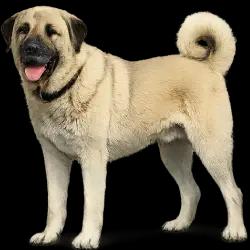
Kangal at a glance
Domestic dog · Breed · Anatolia in Turkey with domestic · dry steppe pasture · Stays with the flock day and night · Relatively common
Known for: Large, Short, Black mask over the muzzle and black, Long tail carried low at rest and curled high over
Its Power
Precision
In Kangal, precision creates a repeatable survival edge when conditions are uncertain.
“Target what matters most.”
Capture a Kangal, and it's yours when you finish one step it gives you.
Biological basis
Kangal is a domestic dog known for massive guardian frame, broad heavy head and neck, and calm territorial livestock defense. dry steppe pasture, village edge, and working rangeland Kangal remains fairly widespread where dry steppe pasture, village edge, and working rangeland is still available.
What does the kangal symbolize?
The kangal symbolizes precision. It represents timing, high-stakes decisions and craft. Its AnimalDex motto: "Target what matters most."
The kangal as a spirit animal
If the kangal is your spirit animal, the AnimalDex reading is Precision: in Kangal, precision creates a repeatable survival edge when conditions are uncertain. It suggests a strength in timing and high-stakes decisions, and a reminder to use it on purpose.
What can the kangal help you with in life?
The kangal is a guide for timing, high-stakes decisions and craft. Its lesson applies wherever timing matters: in Kangal, precision creates a repeatable survival edge when conditions are uncertain.
- Timing
- High-Stakes Decisions
- Craft
What does it mean to dream about or encounter a kangal?
Meeting a kangal, asleep or awake, is often a nudge toward timing, the quality the kangal is built around. In AnimalDex, the kangal's principle is Precision. Read the moment through its core lesson: In Kangal, precision creates a repeatable survival edge when conditions are uncertain.
Neither good nor bad on its own. How the kangal acts matters: at ease, it reflects timing; hostile, it flags timing out of balance.
Meeting a kangal in real life
A real encounter is the plainest version of the sign: notice what the kangal was doing. In Kangal, precision creates a repeatable survival edge when conditions are uncertain. That is the timing worth borrowing today.
A kangal that keeps appearing
A kangal that keeps turning up points to high-stakes decisions you keep circling back to. The repetition is the message.
Dreaming of being chased by a kangal
Being chased suggests you are avoiding the Precision the kangal stands for: in Kangal, precision creates a repeatable survival edge when conditions are uncertain. Ask what you keep postponing that needs timing.
Dreaming that a kangal attacks you
When the kangal attacks, the dream may be about pressure: high-stakes decisions or craft applied too hard, by you or by someone close to you.
A calm or friendly kangal
Meeting a peaceful kangal is usually encouraging: high-stakes decisions and craft are within reach.
A dead or injured kangal
A dead or injured kangal, dreamed or found, can mark timing you have let lapse, or a phase built on Precision coming to an end.
These readings are reflective prompts drawn from how the kangal really lives, not predictions.
Capture your own Kangal
Photograph or film one in the wild, at a zoo or at home with the app. It becomes yours: it remembers you, gives you steps, and can debate your problems with your other animals.
Animal field guide
Kangal
Sign in to hear this read by a natural AI voice instead of your browser's.
The Kangal is a massive guardian dog with a broad head, calm watchfulness, and a body built for protecting livestock in open country. For us, the message is simple: a clear boundary is often more powerful than a late reaction.
Native range
Natural range, not this capture location
dry steppe pasture, village edge, and working rangeland
Search near meAnimalDex stats
Dominance
62
Speed
46
Size
73
Intelligence
45
Rarity
24%
Total
250
Size scale
Understand the animal
Understand the Kangal
Factual biology first: what this animal is like, where it lives, how it survives, and why those traits exist.
01
Introduction to Kangal
The Kangal Shepherd Dog is a large livestock guardian breed of domestic dog (Canis lupus familiaris) from central Anatolia in Turkey, named after the Kangal district of Sivas Province. Males commonly stand about 75 cm at the shoulder and weigh roughly 50 to 65 kg. It was bred to live with flocks of sheep and drive off wolves, bears and jackals.
How to identify a Kangal
- Large, powerful but athletic build, taller and less bulky than a mastiff.
- Short, dense double coat in pale fawn to sandy dun.
- Black mask over the muzzle and black, drop ears.
- Long tail carried low at rest and curled high over the back when alert.
Why Kangal are interesting
- In Namibia and Kenya, conservation groups place Kangal and Anatolian guardian dogs with farmers to cut livestock losses to cheetahs and reduce retaliatory killing.
- Turkey regards the Kangal as a national breed and restricts export of dogs from its home region.
- Like most large breeds, it usually lives about 12 to 15 years.
02
Adaptations and biological abilities
03
Why does Kangal behave this way?
- Stays with the flock day and night, patrolling and watching from high ground rather than herding.
- Responds to threats first by barking and standing its ground, and attacks only if a predator keeps coming.
- Works independently with little direction from people, which makes it strong-willed as a pet.
- Typically wary of strangers but calm and protective with its own family and animals.
04
Why dry steppe pasture?
Habitat: dry steppe pasture, village edge, and working rangeland
Native range: Anatolia in Turkey with domestic working populations elsewhere
Native range
Natural range, not this specific capture location.
dry steppe pasture, village edge, and working rangeland
05
Why this diet?
Kangal eats the foods its body design and habitat make easiest to access. Diet can shift across seasons, life stages, and local competition.
- The most accessible prey or plant foods in its habitat
- Energy-rich foods that match its size and behavior
- Seasonal resources available in the local environment
A practical answer for Kangal always depends on what food is actually available in dry steppe pasture, village edge, and working rangeland.
06
Why these lookalikes matter
- The Anatolian Shepherd Dog, developed from the same Turkish guardian dogs, is accepted in many more coat colors and patterns.
- The Akbash is another Turkish guardian breed but is all white with a leaner build.
- The English Mastiff is heavier and shorter-legged, with a wrinkled, broad head.
07
Conservation and rarity
Rarity: Relatively common · 24/100. Kangal remains fairly widespread where dry steppe pasture, village edge, and working rangeland is still available.
- Keep distance and let the animal choose the space.
- Avoid blocking movement routes, nesting areas, or feeding behavior.
- Use optics, patience, and quiet observation instead of crowding for a closer view.
Talk to it
Talk to the Kangal
It answers as itself: ask about how it lives, or bring it something of yours and hear what it would do, from its own Power.
Anonymous: 6/day. Signed-in: 10/day. Pro: 100/day.
Side by side
The Kangal, side by side
Where to find them
Where to find Kangal
To find Kangal in the wild, focus on the exact habitat patches that match its body design and daily behavior, not just the broad country where it exists. You usually do better by working one good piece of habitat inside anatolia in Turkey with domestic working populations elsewhere than by covering too much ground.
- Open grassland edges, lightly wooded plains, or raised ground where you can scan long distances
- Protected habitat blocks within anatolia in Turkey with domestic working populations elsewhere
Scientific name
Canis lupus familiaris
Category
Domestic dog · Breed
Habitat
dry steppe pasture, village edge, and working rangeland
Rarity
Relatively common · 24/100
Native range
Anatolia in Turkey with domestic working populations elsewhere
Related animals
Yak
The yak is a shaggy high-altitude bovine adapted to cold plateaus, thin air, and rough…
Read species guideCane Toad
Cane Toad is a amphibian known for large warty body, poison glands behind the head, and…
Read species guideChicken
Chicken is a bird known for short rounded bill, ground-scratching feet, and dense…
Read species guideMore animals with Timing
Aardvark
The aardvark is a nocturnal African mammal known for its long snout, strong digging…
Read species guideAardwolf
The aardwolf is a small striped relative of hyenas that feeds mainly on termites rather…
Read species guideAbyssinian Ground Hornbill
Abyssinian Ground Hornbill is a bird known for bare red facial skin, huge…
Read species guideTake the encyclopedia outside
AnimalDex helps you scan real animals, identify species, collect cards, and learn from nature wherever you are.
Related comparisons
See how this species performs in structured AnimalDex comparison pages.
Honey Badger vs Kangal: Who Would Win in a Fight?
Kangal gets the clear overall edge through massive size, stronger total bite package, and a livestock-guardian body built to confront large threats. Honey badger remains dangerous because it is fearless, awkward to control, and willing to create a miserable fight.
Read comparison page