
Animal field guide
Louse
Phthiraptera
Lice are wingless insects specialized to live permanently on birds or mammals.
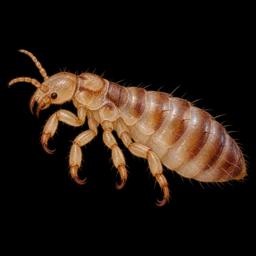
Louse at a glance
Animal · North America · Hair · Relatively common
Known for: Flattened wingless body, Strong host-adapted claws, Entire life cycle on a host, Tiny eggs fixed to hair or feathers
Its Power
Secure Attachment
Match your grip to the environment you must move through.
Reliability comes from fitting the contact point, not from using excess force.
“Fit the grip to the task.”
Capture a Louse, and it's yours when you finish one step it gives you.
Biological basis
Lice have flattened bodies and host-adapted claws that keep them attached among hair, fur, or feathers.
Put it into practice
A climber picks shoes with the right grip for wet rock instead of squeezing every hold harder.
What does the louse symbolize?
The louse symbolizes secure attachment: match your grip to the environment you must move through. It represents precision, efficiency and holding ground. Its AnimalDex motto: "Fit the grip to the task."
The louse as a spirit animal
If the louse is your spirit animal, the AnimalDex reading is Secure Attachment: reliability comes from fitting the contact point, not from using excess force. It suggests a strength in precision and efficiency, and a reminder to use it on purpose.
What can the louse help you with in life?
The louse is a guide for precision, efficiency and holding ground. Its lesson applies wherever precision matters: reliability comes from fitting the contact point, not from using excess force.
- Precision
- Efficiency
- Holding Ground
In practice: A climber picks shoes with the right grip for wet rock instead of squeezing every hold harder.
What can we learn from the Louse?What does it mean to dream about or encounter a wild louse?
A wild louse, whether in a dream or in front of you, tends to show up when precision or efficiency is on your mind. In AnimalDex, the louse's principle is Secure Attachment: match your grip to the environment you must move through. Read the moment through its core lesson: Reliability comes from fitting the contact point, not from using excess force.
Neither good nor bad on its own. How the louse acts matters: at ease, it reflects precision; hostile, it flags precision out of balance.
Spotting a louse in the wild
Coming across a louse in person asks for attention more than interpretation. Watch it for a minute; the louse's way of working is Secure Attachment, and the lesson is: reliability comes from fitting the contact point, not from using excess force.
A louse that keeps appearing
Repeated sightings of a louse usually mean the Secure Attachment lesson is still open: reliability comes from fitting the contact point, not from using excess force.
Dreaming of being chased by a louse
Being chased suggests you are avoiding the Secure Attachment the louse stands for: reliability comes from fitting the contact point, not from using excess force. Ask what you keep postponing that needs precision.
Dreaming that a louse attacks you
When the louse attacks, the dream may be about pressure: efficiency or holding ground applied too hard, by you or by someone close to you.
A calm or friendly louse
Meeting a peaceful louse is usually encouraging: efficiency and holding ground are within reach.
A dead or injured louse
A dead or injured louse, dreamed or found, can mark precision you have let lapse, or a phase built on Secure Attachment coming to an end.
These readings are reflective prompts drawn from how the louse really lives, not predictions. If you meet one in the wild, watch from a distance and leave it undisturbed.
Capture your own Louse
Photograph or film one in the wild, at a zoo or at home with the app. It becomes yours: it remembers you, gives you steps, and can debate your problems with your other animals.
Animal field guide
Louse
Sign in to hear this read by a natural AI voice instead of your browser's.
Lice are wingless insects specialized to live permanently on birds or mammals.
Native range
Natural range, not this capture location
Hair, fur, feathers, and skin surface of birds or mammals.
Search near meAnimalDex stats
Size scale
Understand the animal
Understand the Louse
Factual biology first: what this animal is like, where it lives, how it survives, and why those traits exist.
01
Introduction to Louse
Lice are wingless insects specialized to live permanently on birds or mammals.
How to identify a Louse
- Flattened wingless body
- Strong host-adapted claws
- Entire life cycle on a host
- Tiny eggs fixed to hair or feathers
Why Louse are interesting
- Different lice specialize on particular host groups, and many species live on only one kind of host.
- Their eggs are commonly called nits and are glued firmly to the host's hair or feathers.
- Chewing and sucking lice represent different feeding strategies.
- Humans host head lice, body lice, and pubic lice, and body lice can spread diseases such as epidemic typhus.
02
Adaptations and biological abilities
03
Why does Louse behave this way?
- Flattened wingless body
- Strong host-adapted claws
- Entire life cycle on a host
- Tiny eggs fixed to hair or feathers
Activity follows host conditions rather than a distinct day-night sleep cycle.
04
Why Hair?
Habitat: Hair, fur, feathers, and skin surface of birds or mammals.
Native range: North America, South America, Europe, North Africa & Middle East, Sub-Saharan Africa, Central Asia, South Asia, Southeast Asia, East Asia, Australia & Oceania, Arctic & Antarctic
Native range
Natural range, not this specific capture location.
Hair, fur, feathers, and skin surface of birds or mammals.
05
Why this diet?
Depending on group, skin debris, feathers, secretions, or blood.
06
Activity, rest, and lifespan
Activity follows host conditions rather than a distinct day-night sleep cycle.
Often around one month, with continuous generations on a suitable host.
07
Louse reproduction
Females cement eggs directly to hair shafts or feathers.
Females are often larger; reproductive anatomy provides the clearest distinction.
08
Predators, threats, and defense
Host grooming, immune defenses, predatory arthropods, and parasites.
09
Conservation and rarity
Rarity: Relatively common · 4/100. AnimalDex canonical rarity score: 4/100, maintained by the live indexed species profile.
- Observe from a respectful distance and avoid changing the animal's behavior.
- Do not block feeding, shelter, nesting, or travel routes.
- Use a live camera capture without handling or staging wildlife.
Talk to it
Talk to the Louse
It answers as itself: ask about how it lives, or bring it something of yours and hear what it would do, from its own Power.
Anonymous: 6/day. Signed-in: 10/day. Pro: 100/day.
Side by side
The Louse, side by side
Nothing written side by side for the Louse yet. Pick any animal to compare it with. Compare with any animal →
Where to find them
Where to find Louse
To find Louse in the wild, focus on the exact habitat patches that match its body design and daily behavior, not just the broad country where it exists. You usually do better by working one good piece of habitat inside north America, South America, Europe, North Africa & Middle East, Sub-Saharan Africa, Central Asia, South Asia, Southeast Asia, East Asia, Australia & Oceania, Arctic & Antarctic than by covering too much ground.
- Hair, fur, feathers
- Protected habitat blocks within north America, South America, Europe, North Africa & Middle East, Sub-Saharan Africa, Central Asia, South Asia, Southeast Asia, East Asia, Australia & Oceania, Arctic & Antarctic
In the Ark
No Louse is aboard yet.
None have come aboard or left since November 6.
The Ark is a live, shared animal world. Animals come aboard when people capture them, and live there by rules based on their field guides.
Scientific name
Phthiraptera
Category
Animal
Habitat
Hair, fur, feathers, and skin surface of birds or mammals.
Rarity
Relatively common · 4/100
Native range
North America, South America, Europe, North Africa & Middle East, Sub-Saharan Africa, Central Asia, South Asia, Southeast Asia, East Asia, Australia & Oceania, Arctic & Antarctic
Take the encyclopedia outside
AnimalDex helps you scan real animals, identify species, collect cards, and learn from nature wherever you are.