
Animal field guide
Marbled Orbweaver
Araneus marmoreus
The Marbled Orbweaver shows that patience is not inactivity. Its web is a working system, turning stillness into awareness.
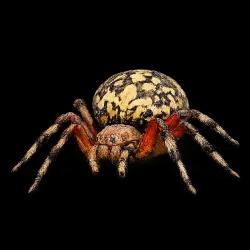
Marbled Orbweaver at a glance
Animal · North America · Damp deciduous and mixed woodland · Relatively common
Known for: Large, Abdomen pale yellow to bright orange with fine dark, Legs banded orange-brown and dark, Vertical orb web with a retreat of curled leaves
Its Power
Patterned Patience
Builds an orb web and relies on placement, patience, and sensitivity to vibration.
A well-placed system can work while you wait.
“Build the system. Feel the signal.”
Capture a Marbled Orbweaver, and it's yours when you finish one step it gives you.
Biological basis
Orbweavers create structured webs that detect prey movement through tension and vibration.
Put it into practice
Create processes that alert you when action is needed instead of manually chasing every update.
What does the marbled orbweaver symbolize?
The marbled orbweaver symbolizes patterned patience: builds an orb web and relies on placement, patience, and sensitivity to vibration. It represents leverage, sensitivity and planning. Its AnimalDex motto: "Build the system. Feel the signal."
The marbled orbweaver as a spirit animal
If the marbled orbweaver is your spirit animal, the AnimalDex reading is Patterned Patience: a well-placed system can work while you wait. It suggests a strength in leverage and sensitivity, and a reminder to use it on purpose.
What can the marbled orbweaver help you with in life?
The marbled orbweaver is a guide for leverage, sensitivity and planning. Its lesson applies wherever leverage matters: a well-placed system can work while you wait.
- Leverage
- Sensitivity
- Planning
In practice: Create processes that alert you when action is needed instead of manually chasing every update.
What can we learn from the Marbled Orbweaver?What does it mean to dream about or encounter a wild marbled orbweaver?
A wild marbled orbweaver, whether in a dream or in front of you, tends to show up when leverage or sensitivity is on your mind. In AnimalDex, the marbled orbweaver's principle is Patterned Patience: builds an orb web and relies on placement, patience, and sensitivity to vibration. Read the moment through its core lesson: A well-placed system can work while you wait.
It depends on how the marbled orbweaver behaved. Calm or close by, it reads as sensitivity within reach; aggressive or fleeing, it points to leverage you are resisting.
Spotting a marbled orbweaver in the wild
If a marbled orbweaver crosses your path, take it as a cue to look at where leverage fits your day. Its AnimalDex motto: "Build the system. Feel the signal."
A marbled orbweaver that keeps appearing
Seeing the marbled orbweaver again and again, in dreams or outside, suggests leverage is a theme you have not settled yet.
Dreaming of being chased by a marbled orbweaver
If the marbled orbweaver pursues you, look at where sensitivity is being asked of you and you are stepping away instead of meeting it.
Dreaming that a marbled orbweaver attacks you
An aggressive marbled orbweaver can mirror a conflict where leverage has become a weapon rather than a strength.
A calm or friendly marbled orbweaver
Meeting a peaceful marbled orbweaver is usually encouraging: sensitivity and planning are within reach.
A dead or injured marbled orbweaver
An injured marbled orbweaver often reflects leverage under strain; rest and repair come before pushing again.
These readings are reflective prompts drawn from how the marbled orbweaver really lives, not predictions. If you meet one in the wild, watch from a distance and leave it undisturbed.
Capture your own Marbled Orbweaver
Photograph or film one in the wild, at a zoo or at home with the app. It becomes yours: it remembers you, gives you steps, and can debate your problems with your other animals.
Animal field guide
Marbled Orbweaver
Sign in to hear this read by a natural AI voice instead of your browser's.
The Marbled Orbweaver shows that patience is not inactivity. Its web is a working system, turning stillness into awareness.
Native range
Natural range, not this capture location
Damp deciduous and mixed woodland, woodland edges, wet meadows and shrubby stream and pond margins, where tall herbs and low branches give anchor points for webs. It lives in temperate Europe and North America, mostly at low to moderate elevations.
Search near meAnimalDex stats
Size scale
Understand the animal
Understand the Marbled Orbweaver
Factual biology first: what this animal is like, where it lives, how it survives, and why those traits exist.
01
Introduction to Marbled Orbweaver
The Marbled Orbweaver shows that patience is not inactivity. Its web is a working system, turning stillness into awareness.
How to identify a Marbled Orbweaver
- Large, rounded abdomen overhanging the rear of the body
- Abdomen pale yellow to bright orange with fine dark marbling
- Legs banded orange-brown and dark
- Vertical orb web with a retreat of curled leaves beside it
Why Marbled Orbweaver are interesting
- Its round orange abdomen has earned it the nickname pumpkin spider in parts of North America, where adults are noticed around Halloween.
- A European colour form called pyramidatum carries a large dark brown triangle at the rear of the abdomen and was once described as a separate species.
- Like many orbweavers, it often eats its old silk before spinning a fresh web, recycling much of the protein it contains.
- It is not dangerous to people; its bite is not medically significant and it rarely bites at all.
02
Adaptations and biological abilities
03
Why does Marbled Orbweaver behave this way?
- Large, rounded abdomen overhanging the rear of the body
- Abdomen pale yellow to bright orange with fine dark marbling
- Legs banded orange-brown and dark
- Vertical orb web with a retreat of curled leaves beside it
Mostly active in the evening and at night, when it spins or repairs the web and may sit at the hub. By day it usually stays hidden off the web in its retreat.
04
Why Damp deciduous and mixed woodland?
Habitat: Damp deciduous and mixed woodland, woodland edges, wet meadows and shrubby stream and pond margins, where tall herbs and low branches give anchor points for webs. It lives in temperate Europe and North America, mostly at low to moderate elevations.
Native range: North America, Europe
Native range
Natural range, not this specific capture location.
Damp deciduous and mixed woodland, woodland edges, wet meadows and shrubby stream and pond margins, where tall herbs and low branches give anchor points for webs. It lives in temperate Europe and North America, mostly at low to moderate elevations.
05
Why this diet?
Flying insects such as flies, moths, midges and small beetles caught in a vertical orb web. The spider waits out of sight holding a signal thread that runs to the hub, then rushes out to wrap prey in silk before biting it.
06
Activity, rest, and lifespan
Mostly active in the evening and at night, when it spins or repairs the web and may sit at the hub. By day it usually stays hidden off the web in its retreat.
About one year from egg to death, of which only some six to eight months are spent out of the egg sac. Adults mature in late summer and rarely survive the first hard frosts.
07
Marbled Orbweaver reproduction
In autumn the female lays her eggs in a silk sac hidden in a sheltered spot such as a curled leaf or bark crevice, and dies soon afterwards. The eggs overwinter and the spiderlings disperse in spring, often by ballooning on silk threads.
Females are much larger than males, with a swollen, rounded abdomen. Males are slimmer, with relatively longer legs and enlarged pedipalps that look like small boxing gloves at the front of the head.
08
Predators, threats, and defense
Birds, mud-dauber and other spider-hunting wasps, and parasitoid wasps that lay eggs on or in spiders all take it. When disturbed on the web it usually drops to the ground on a silk line and keeps still.
09
Conservation and rarity
Rarity: Relatively common · 25/100. AnimalDex canonical rarity score: 25/100, maintained by the live indexed species profile.
- Observe from a respectful distance and avoid changing the animal's behavior.
- Do not block feeding, shelter, nesting, or travel routes.
- Use a live camera capture without handling or staging wildlife.
Talk to it
Talk to the Marbled Orbweaver
It answers as itself: ask about how it lives, or bring it something of yours and hear what it would do, from its own Power.
Anonymous: 6/day. Signed-in: 10/day. Pro: 100/day.
Side by side
The Marbled Orbweaver, side by side
Nothing written side by side for the Marbled Orbweaver yet. Pick any animal to compare it with. Compare with any animal →
Where to find them
Where to find Marbled Orbweaver
To find Marbled Orbweaver in the wild, focus on the exact habitat patches that match its body design and daily behavior, not just the broad country where it exists. You usually do better by working one good piece of habitat inside north America, Europe than by covering too much ground.
- Quiet marsh edges, reedbeds, river bends, or shallow wetland margins
- Forest edge, canopy gaps, fruiting trees, or shaded trails where cover and food meet
- Open grassland edges, lightly wooded plains, or raised ground where you can scan long distances
In the Ark
No Marbled Orbweaver is aboard yet.
Since November 17: 1 died of old age.
The Ark is a live, shared animal world. Animals come aboard when people capture them, and live there by rules based on their field guides.
Scientific name
Araneus marmoreus
Category
Animal
Habitat
Damp deciduous and mixed woodland, woodland edges, wet meadows and shrubby stream and pond margins, where tall herbs and low branches give anchor points for webs. It lives in temperate Europe and North America, mostly at low to moderate elevations.
Rarity
Relatively common · 25/100
Native range
North America, Europe
Take the encyclopedia outside
AnimalDex helps you scan real animals, identify species, collect cards, and learn from nature wherever you are.