
Animal field guide
Ferret
Identification, habitat, rarity, behavior, symbolism, facts, and practical lessons from nature.
Animal field guide
Ferret
Curious Exploration
Explore with Curiosity.
Ferrets are naturally curious and explore their surroundings with enthusiasm, teaching us to embrace curiosity and the joy of discovery.
You’re #1 of 1
RECORD ID
1A3F7A65-1E49-4C46-A90D-4E7462AD748C
Native range
Natural range, not this capture location
Native range keys: domestic_global.
Search near me0/1 XP toward Level 2
AnimalDex stats
Dominance
22
Speed
48
Size
13
Intelligence
34
Rarity
7%
Total
124
Size scale
✦ Available actions
Compare this public animal when your deck meets the current rules.
Scientific name
Mustela putorius furo
Category
Animal
Habitat
Native range keys: domestic_global.
Rarity
Relatively common · 7/100
Native range
Native range keys: domestic_global.
Why Curious Exploration?
The creator's reasoning behind this Animal Principle and the biology that supports it.
The Curious Tunnel Sleuth. The Curious Tunnel Sleuth. Curiosity and persistence can uncover paths hidden to hurried eyes.
How to identify a Ferret
- Recognized in AnimalDex as Ferret
- Indexed profile #1984
Habitat: Native range keys: domestic_global.
Native range: Native range keys: domestic_global.
Native range
Natural range, not this specific capture location.
Some regional overlays are unavailable in this web build.
Native range keys: domestic_global.
To find Ferret in the wild, focus on the exact habitat patches that match its body design and daily behavior, not just the broad country where it exists. You usually do better by working one good piece of habitat inside native range keys: domestic_global. than by covering too much ground.
- Burrow systems, sandy banks, fallen logs, or ground with clear den entrances
- Protected habitat blocks within native range keys: domestic_global.
- Start early, pick one strong patch of habitat, and stay long enough for movement to return after you arrive.
- Look for food, cover, and movement routes in the same place, because the best sightings usually happen where those overlap.
- Slow down and scan shapes, outlines, and eye-level silhouettes; many good sightings come from noticing what does not move.
Ferret eats the foods its body design and habitat make easiest to access. Diet can shift across seasons, life stages, and local competition.
- The most accessible prey or plant foods in its habitat
- Energy-rich foods that match its size and behavior
- Seasonal resources available in the local environment
A practical answer for Ferret always depends on what food is actually available in native range keys: domestic_global..
- Embrace your curiosity and explore new environments.
Ferret most often symbolizes curious exploration in AnimalDex because its real survival behavior repeatedly shows this pattern.
Ferrets are naturally curious and explore their surroundings with enthusiasm, teaching us to embrace curiosity and the joy of discovery.
Ferrets have a strong instinct to explore and investigate their environment, often squeezing into tight spaces and examining everything around them.
- Observe from a respectful distance and avoid changing the animal's behavior.
- Do not block feeding, shelter, nesting, or travel routes.
- Use a live camera capture without handling or staging wildlife.
Related animals
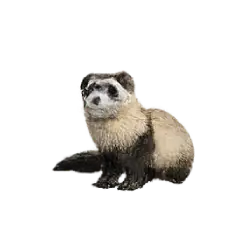
Black-footed Ferret
Black-footed Ferret is a mammal known for long prairie-tunnel body, dark facial mask,…
Read species guide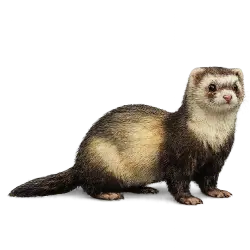
Domestic Ferret
Ferret explains Tunnelplay through a body and routine shaped for its exact problem.…
Read species guide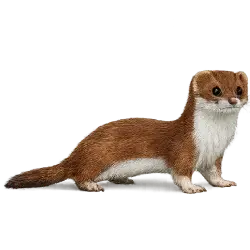
Least Weasel
Least Weasel explains Narrowstrike through a body and routine shaped for its exact…
Read species guideMore animals with Curiosity
Browse all Curiosity animals

Take the encyclopedia outside
AnimalDex helps you scan real animals, identify species, collect cards, and learn from nature wherever you are.