Animal field guide
Oertzen's Lizard
Anatololacerta oertzeni
A lacertid of the Anatolian rock lizard group, it has a somewhat flattened head and body. It lives on sun-warmed cliffs, boulders and walls in south-western Turkey and on nearby Aegean islands.
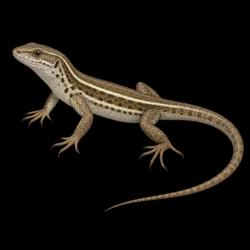
Oertzen's Lizard at a glance
Reptile · Europe · Rocky places in Mediterranean · Relatively common
Known for: Somewhat flattened head and body, Brown to olive back with a dark net-like or spotted, Small blue spots along the lower flanks, Long
Its Power
Rock Crevice Retreat
Seek secure spaces to regroup and recharge.
Oertzen's Lizard uses rock crevices for safety and rest, teaching us the value of finding secure spaces to recharge and reflect.
“Find your safe haven.”
Capture a Oertzen's Lizard, and it's yours when you finish one step it gives you.
Biological basis
Oertzen's Lizard often retreats into rock crevices to avoid predators and harsh weather, using these spaces for safety and rest.
Put it into practice
After a hectic day, Jane unwinds in her cozy reading nook, feeling recharged and ready for tomorrow.
What does the Oertzen's lizard symbolize?
The Oertzen's lizard symbolizes rock crevice retreat: seek secure spaces to regroup and recharge. It represents recovery, safe shelter and solitude. Its AnimalDex motto: "Find your safe haven."
The Oertzen's lizard as a spirit animal
If the Oertzen's lizard is your spirit animal, the AnimalDex reading is Rock Crevice Retreat: oertzen's Lizard uses rock crevices for safety and rest, teaching us the value of finding secure spaces to recharge and reflect. It suggests a strength in recovery and safe shelter, and a reminder to use it on purpose.
What can the Oertzen's lizard help you with in life?
The Oertzen's lizard is a guide for recovery, safe shelter and solitude. Its lesson applies wherever recovery matters: oertzen's Lizard uses rock crevices for safety and rest, teaching us the value of finding secure spaces to recharge and reflect.
- Recovery
- Safe Shelter
- Solitude
In practice: After a hectic day, Jane unwinds in her cozy reading nook, feeling recharged and ready for tomorrow.
What can we learn from the Oertzen's Lizard?What does it mean to dream about or encounter a wild Oertzen's lizard?
Dreaming about a wild Oertzen's lizard, or coming across one, usually points to recovery and safe shelter: the qualities the Oertzen's lizard lives by. In AnimalDex, the Oertzen's lizard's principle is Rock Crevice Retreat: seek secure spaces to regroup and recharge. Read the moment through its core lesson: Oertzen's Lizard uses rock crevices for safety and rest, teaching us the value of finding secure spaces to recharge and reflect.
Mostly a prompt rather than a warning. A calm Oertzen's lizard suggests recovery you already have; a threatening one suggests recovery is being tested or pushed too far.
Spotting an Oertzen's lizard in the wild
Coming across an Oertzen's lizard in person asks for attention more than interpretation. Watch it for a minute; the Oertzen's lizard's way of working is Rock Crevice Retreat, and the lesson is: oertzen's Lizard uses rock crevices for safety and rest, teaching us the value of finding secure spaces to recharge and reflect.
An Oertzen's lizard that keeps appearing
An Oertzen's lizard that keeps turning up points to safe shelter you keep circling back to. The repetition is the message.
Dreaming of being chased by an Oertzen's lizard
Being chased suggests you are avoiding the Rock Crevice Retreat the Oertzen's lizard stands for: oertzen's Lizard uses rock crevices for safety and rest, teaching us the value of finding secure spaces to recharge and reflect. Ask what you keep postponing that needs recovery.
Dreaming that an Oertzen's lizard attacks you
An attack points to recovery turned against you: someone using it on you, or your own recovery overused until it costs you.
A calm or friendly Oertzen's lizard
A calm Oertzen's lizard suggests you have made peace with recovery and can use it without force.
A dead or injured Oertzen's lizard
Seeing the Oertzen's lizard hurt may point to safe shelter that has been neglected. Ask what it would take to restore it.
These readings are reflective prompts drawn from how the Oertzen's lizard really lives, not predictions. If you meet one in the wild, watch from a distance and leave it undisturbed.
Capture your own Oertzen's Lizard
Photograph or film one in the wild, at a zoo or at home with the app. It becomes yours: it remembers you, gives you steps, and can debate your problems with your other animals.
Animal field guide
Oertzen's Lizard
Sign in to hear this read by a natural AI voice instead of your browser's.
A lacertid of the Anatolian rock lizard group, it has a somewhat flattened head and body. It lives on sun-warmed cliffs, boulders and walls in south-western Turkey and on nearby Aegean islands.
Native range
Natural range, not this capture location
Rocky places in Mediterranean country: cliffs, boulder slopes, gorges, stone walls and ruins, often among scrub or open pine woodland, from near sea level up into the hills.
Search near meAnimalDex stats
Dominance
24
Speed
28
Size
14
Intelligence
30
Rarity
40%
Total
136
Size scale
Understand the animal
Understand the Oertzen's Lizard
Factual biology first: what this animal is like, where it lives, how it survives, and why those traits exist.
01
Introduction to Oertzen's Lizard
A lacertid of the Anatolian rock lizard group, it has a somewhat flattened head and body. It lives on sun-warmed cliffs, boulders and walls in south-western Turkey and on nearby Aegean islands.
How to identify a Oertzen's Lizard
- Somewhat flattened head and body, suited to rock crevices
- Brown to olive back with a dark net-like or spotted pattern
- Small blue spots along the lower flanks, strongest in males
- Long, slender tail, well over half the total length
- Males with broader, heavier heads than females
Why Oertzen's Lizard are interesting
- Island and mainland populations differ in colour and pattern, and several subspecies have been described.
- Like other lacertids it can shed its tail when grabbed, and a new, shorter tail regrows over the following months.
- It is quick and wary, slipping into a crack when approached and often reappearing at the entrance after a short wait.
- Females are thought to lay small clutches of eggs in soil or under stones in late spring and summer.
02
Adaptations and biological abilities
03
Why does Oertzen's Lizard behave this way?
- Somewhat flattened head and body, suited to rock crevices
- Brown to olive back with a dark net-like or spotted pattern
- Small blue spots along the lower flanks, strongest in males
- Long, slender tail, well over half the total length
- Males with broader, heavier heads than females
Active by day, basking in the morning and hunting as rock surfaces warm. It spends nights, hot midday spells and the cold season deep in crevices.
04
Why Rocky places in Mediterranean country?
Habitat: Rocky places in Mediterranean country: cliffs, boulder slopes, gorges, stone walls and ruins, often among scrub or open pine woodland, from near sea level up into the hills.
Native range: Europe, North Africa & Middle East
Native range
Natural range, not this specific capture location.
Rocky places in Mediterranean country: cliffs, boulder slopes, gorges, stone walls and ruins, often among scrub or open pine woodland, from near sea level up into the hills.
05
Why this diet?
Hunts insects, spiders and other small arthropods by sight, darting out from rock to seize prey on stone surfaces or at the foot of vegetation.
06
Activity, rest, and lifespan
Active by day, basking in the morning and hunting as rock surfaces warm. It spends nights, hot midday spells and the cold season deep in crevices.
Field lifespan of Anatololacerta oertzeni remains unmeasured; it shelters in sun-warmed cliff crevices across south-western Turkey and nearby islands.
07
Oertzen's Lizard reproduction
It lays eggs, but clutch size, nest sites and incubation time are poorly documented for this species. The young receive no parental care after hatching.
Males are larger than females, with broader, heavier heads.
08
Predators, threats, and defense
09
Conservation and rarity
Rarity: Relatively common · 40/100. AnimalDex canonical rarity score: 40/100, maintained by the live indexed species profile.
- Observe from a respectful distance and avoid changing the animal's behavior.
- Do not block feeding, shelter, nesting, or travel routes.
- Use a live camera capture without handling or staging wildlife.
Talk to it
Talk to the Oertzen's Lizard
It answers as itself: ask about how it lives, or bring it something of yours and hear what it would do, from its own Power.
Anonymous: 3/day. Signed-in: 10/day. Pro: 100/day.
Side by side
The Oertzen's Lizard, side by side
Nothing written side by side for the Oertzen's Lizard yet. Pick any animal to compare it with. Compare with any animal →
Where to find them
Where to find Oertzen's Lizard
To find Oertzen's Lizard in the wild, focus on the exact habitat patches that match its body design and daily behavior, not just the broad country where it exists. You usually do better by working one good piece of habitat inside europe, North Africa & Middle East than by covering too much ground.
- Forest edge, canopy gaps, fruiting trees, or shaded trails where cover and food meet
- Rocky slopes, ridge lines, cliff ledges, or open mountain meadows with a wide view
- Headlands, reef edges, island colonies, tidal channels, or productive coastal water
Scientific name
Anatololacerta oertzeni
Category
Reptile
Habitat
Rocky places in Mediterranean country: cliffs, boulder slopes, gorges, stone walls and ruins, often among scrub or open pine woodland, from near sea level up into the hills.
Rarity
Relatively common · 40/100
Native range
Europe, North Africa & Middle East
Take the encyclopedia outside
AnimalDex helps you scan real animals, identify species, collect cards, and learn from nature wherever you are.