
Animal field guide
Ornate Spiny Lobster
Identification, habitat, rarity, behavior, symbolism, facts, and practical lessons from nature.
Animal field guide
Ornate Spiny Lobster
Ornate Concealment
Blend and Thrive.
The ornate spiny lobster uses its vibrant colors and patterns to blend into coral reefs, avoiding predators and enhancing its survival.
You’re #1 of 1
RECORD ID
C59B1473-DB40-42B0-90FB-0F534EDFFEFE
Native range
Natural range, not this capture location
Native range keys: indian_ocean, south_pacific, coral_triangle. Coastal reef, rubble and adjacent soft bottom suit Ornate Spiny Lobster because Ornate Concealment works against complex, coloured backgrounds rather than plain ones.
Wild reward hint
First-time wild species earn bonus rewards, including 1 free credit.
0/1 XP toward Level 2
AnimalDex stats
Dominance
9
Speed
24
Size
4
Intelligence
18
Rarity
8%
Total
63
Size scale
Zoo animal · comparisons disabled
Zoo animals stay in your collection, but they can't enter scenario comparisons or the Arena.
✦ Available actions
Compare this public animal when your deck meets the current rules.
Scientific name
Panulirus ornatus
Category
Marine invertebrate
Habitat
Native range keys: indian_ocean, south_pacific, coral_triangle. Coastal reef, rubble and adjacent soft bottom suit Ornate Spiny Lobster because Ornate Concealment works against complex, coloured backgrounds rather than plain ones.
Rarity
Uncommon · 67/100
Native range
Native range keys: indian_ocean, south_pacific, coral_triangle. Coastal reef, rubble and adjacent soft bottom suit Ornate Spiny Lobster because Ornate Concealment works against complex, coloured backgrounds rather than plain ones.
Why Ornate Concealment?
The creator's reasoning behind this Animal Principle and the biology that supports it.
Ornate Spiny Lobster teaches Ornate Concealment with a body far too bright to look like camouflage until you see it against the coral it lives on, where the bands and blotches simply stop reading as an animal.
How to identify a Ornate Spiny Lobster
- Boldly banded legs in cream and dark blue-black
- Blue-green carapace with pale spots on the abdominal segments
- Long spiny antennae carried forward as a defensive fence
- One of the largest spiny lobsters, reaching about 50 cm
Why Ornate Spiny Lobster are interesting
- It is among the largest of all spiny lobsters.
- It has no claws — defence is spiny antennae and a violent backwards tail flip.
- Adults in some populations make long breeding migrations to offshore spawning grounds.
- It shelters in reef and rubble by day and forages over open bottom at night.
- Its larvae drift in the plankton as flat, transparent phyllosoma for months.
Habitat: Native range keys: indian_ocean, south_pacific, coral_triangle. Coastal reef, rubble and adjacent soft bottom suit Ornate Spiny Lobster because Ornate Concealment works against complex, coloured backgrounds rather than plain ones.
Native range: Native range keys: indian_ocean, south_pacific, coral_triangle. Coastal reef, rubble and adjacent soft bottom suit Ornate Spiny Lobster because Ornate Concealment works against complex, coloured backgrounds rather than plain ones.
Native range
Natural range, not this specific capture location.
Some regional overlays are unavailable in this web build.
Native range keys: indian_ocean, south_pacific, coral_triangle. Coastal reef, rubble and adjacent soft bottom suit Ornate Spiny Lobster because Ornate Concealment works against complex, coloured backgrounds rather than plain ones.
To find Ornate Spiny Lobster in the wild, focus on the exact habitat patches that match its body design and daily behavior, not just the broad country where it exists. You usually do better by working one good piece of habitat inside native range keys: indian_ocean, south_pacific, coral_triangle. Coastal reef, rubble and adjacent soft bottom suit Ornate Spiny Lobster because Ornate Concealment works against complex, coloured backgrounds rather than plain ones. than by covering too much ground.
- Open grassland edges, lightly wooded plains, or raised ground where you can scan long distances
- Headlands, reef edges, island colonies, tidal channels, or productive coastal water
- Protected habitat blocks within native range keys: indian_ocean, south_pacific, coral_triangle. Coastal reef, rubble and adjacent soft bottom suit Ornate Spiny Lobster because Ornate Concealment works against complex, coloured backgrounds rather than plain ones.
- First light and late afternoon are often best, when animals come out to feed along the edge of water.
- Use binoculars from a track, ridge, or vehicle stop and scan far ahead before you move closer.
- Choose a viewing point with clean light and water visibility, then watch for repeated surfacing, feeding, or current lines.
Molluscs, crustaceans, worms and carrion taken from the bottom at night. This diet supports Ornate Concealment because slow prey is worth walking to only if the walker is hard to pick out.
Ornate Spiny Lobsters shelter through daylight and emerge to forage after dark, usually within a familiar stretch of bottom.
They can live well over a decade, so Ornate Concealment is backed by memory — an older lobster knows which shelters on its ground actually work.
Females carry hundreds of thousands of eggs beneath the tail until they hatch into drifting larvae. Offspring fit the principle because the female shelters the whole brood in the same crevice that hides her.
Females carry eggs beneath the abdomen and have a small grooming hook on the last pair of legs; males are otherwise similar. The difference is functional rather than a display.
- Boldly banded legs in cream and dark blue-black
- Blue-green carapace with pale spots on the abdominal segments
- Long spiny antennae carried forward as a defensive fence
- One of the largest spiny lobsters, reaching about 50 cm
Ornate Spiny Lobster most often symbolizes ornate concealment in AnimalDex because its real survival behavior repeatedly shows this pattern.
The ornate spiny lobster uses its vibrant colors and patterns to blend into coral reefs, avoiding predators and enhancing its survival.
Ornate spiny lobsters have intricate patterns that help them camouflage within the colorful coral reefs they inhabit.
- Observe from a respectful distance and avoid changing the animal's behavior.
- Do not block feeding, shelter, nesting, or travel routes.
- Use a live camera capture without handling or staging wildlife.
Related animals

California Spiny Lobster
California Spiny Lobster defends before contact, using long antennae, spines, and…
Read species guide
Caribbean Spiny Lobster
Caribbean Spiny Lobster survives through armor and procession, moving in groups when…
Read species guide
Long-legged Spiny Lobster
Long-legged Spiny Lobster teaches Night Reach by splitting the day in two. In daylight…
Read species guideMore animals with Strategic Camouflage
Browse all Strategic Camouflage animals
American Badger
American Badger turns Burrow Strategy into muscular problem-solving, using claws,…
Read species guide
Band-eyed Drone Fly
The Striped Hoverer. Eristalinus taeniops, known for its strikingly striped eyes, is a…
Read species guide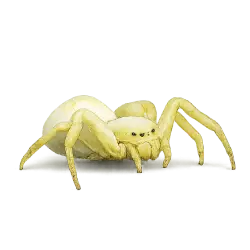
Goldenrod Crab Spider
Goldenrod Crab Spider expresses Flower-Edge Ambush through real survival details, not a…
Read species guideTake the encyclopedia outside
AnimalDex helps you scan real animals, identify species, collect cards, and learn from nature wherever you are.