
Animal field guide
Powder Blue Isopod
Porcellionides pruinosus
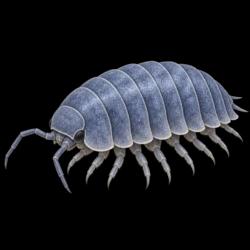
A fine powdery bloom dusts the back of this small woodlouse, giving it the frosted, blue-grey look that its scientific name pruinosus, from the Latin for hoarfrost, describes. The bloom rubs off easily when the animal is handled, leaving a darker body showing through. Like all woodlice, it is a land-living crustacean, not an insect.
Powder Blue Isopod at a glance
Animal · Europe · Powder Blue Isopods have an Old · Relatively common
Known for: Narrow, Tail section abruptly narrower than the body, Relatively long legs for a woodlouse, Two short pointed prongs projecting beyond the rear
Its Power
Adaptive Resilience
Adapt to your environment and thrive in diverse conditions.
Powder Blue Isopods thrive in various environments by adapting their behavior and physiology to different moisture levels and temperatures.
“Wear a waxy bloom.”
Capture a Powder Blue Isopod, and it's yours when you finish one step it gives you.
Biological basis
Powder Blue Isopods are known for their ability to survive in a range of habitats, from damp leaf litter to dry soil, by adjusting their moisture retention strategies.
Put it into practice
A freelance cook adapts to a cramped galley, a field kitchen or a hotel line and feeds people well in each.
What does the powder blue isopod symbolize?
The powder blue isopod symbolizes adaptive resilience: adapt to your environment and thrive in diverse conditions. It represents adaptability, self-regulation and renewal. Its AnimalDex motto: "Wear a waxy bloom."
The powder blue isopod as a spirit animal
If the powder blue isopod is your spirit animal, the AnimalDex reading is Adaptive Resilience: powder Blue Isopods thrive in various environments by adapting their behavior and physiology to different moisture levels and temperatures. It suggests a strength in adaptability and self-regulation, and a reminder to use it on purpose.
What can the powder blue isopod help you with in life?
The powder blue isopod is a guide for adaptability, self-regulation and renewal. Its lesson applies wherever adaptability matters: powder Blue Isopods thrive in various environments by adapting their behavior and physiology to different moisture levels and temperatures.
- Adaptability
- Self-Regulation
- Renewal
In practice: A freelance cook adapts to a cramped galley, a field kitchen or a hotel line and feeds people well in each.
What can we learn from the Powder Blue Isopod?What does it mean to dream about or encounter a wild powder blue isopod?
Meeting a wild powder blue isopod, asleep or awake, is often a nudge toward adaptability, the quality the powder blue isopod is built around. In AnimalDex, the powder blue isopod's principle is Adaptive Resilience: adapt to your environment and thrive in diverse conditions. Read the moment through its core lesson: Powder Blue Isopods thrive in various environments by adapting their behavior and physiology to different moisture levels and temperatures.
Mostly a prompt rather than a warning. A calm powder blue isopod suggests adaptability you already have; a threatening one suggests adaptability is being tested or pushed too far.
Spotting a powder blue isopod in the wild
A real encounter is the plainest version of the sign: notice what the powder blue isopod was doing. Adapt to your environment and thrive in diverse conditions. That is the adaptability worth borrowing today.
A powder blue isopod that keeps appearing
Repeated sightings of a powder blue isopod usually mean the Adaptive Resilience lesson is still open: powder Blue Isopods thrive in various environments by adapting their behavior and physiology to different moisture levels and temperatures.
Dreaming of being chased by a powder blue isopod
If the powder blue isopod pursues you, look at where self-regulation is being asked of you and you are stepping away instead of meeting it.
Dreaming that a powder blue isopod attacks you
An attack points to adaptability turned against you: someone using it on you, or your own adaptability overused until it costs you.
A calm or friendly powder blue isopod
A calm powder blue isopod suggests you have made peace with adaptability and can use it without force.
A dead or injured powder blue isopod
An injured powder blue isopod often reflects adaptability under strain; rest and repair come before pushing again.
These readings are reflective prompts drawn from how the powder blue isopod really lives, not predictions. If you meet one in the wild, watch from a distance and leave it undisturbed.
Capture your own Powder Blue Isopod
Photograph or film one in the wild, at a zoo or at home with the app. It becomes yours: it remembers you, gives you steps, and can debate your problems with your other animals.
Animal field guide
Powder Blue Isopod
Sign in to hear this read by a natural AI voice instead of your browser's.
A fine powdery bloom dusts the back of this small woodlouse, giving it the frosted, blue-grey look that its scientific name pruinosus, from the Latin for hoarfrost, describes. Like all woodlice, it is a land-living crustacean, not an insect.
Native range
Natural range, not this capture location
Powder Blue Isopods have an Old World native range centred on the Mediterranean region and adjacent parts of Europe and North Africa, although they are now widespread through human introduction. They inhabit moist leaf litter, soil, rotting wood, compost and debris, especially warm places where decaying organic material is abundant.
Search near meAnimalDex stats
Size scale
Understand the animal
Understand the Powder Blue Isopod
Factual biology first: what this animal is like, where it lives, how it survives, and why those traits exist.
01
Introduction to Powder Blue Isopod
A fine powdery bloom dusts the back of this small woodlouse, giving it the frosted, blue-grey look that its scientific name pruinosus, from the Latin for hoarfrost, describes. The bloom rubs off easily when the animal is handled, leaving a darker body showing through. Like all woodlice, it is a land-living crustacean, not an insect.
How to identify a Powder Blue Isopod
- Narrow, smooth oval body up to about 12 millimetres long
- Tail section abruptly narrower than the body, giving a stepped outline
- Relatively long legs for a woodlouse
- Two short pointed prongs projecting beyond the rear end
Why Powder Blue Isopod are interesting
- It moults in two halves: the rear half of the old shell is shed first and the front half follows a day or so later.
- Genetic studies suggest that the animals sharing this name are several closely related species and not a single one.
- Some populations carry Wolbachia bacteria, which pass from mother to young through the eggs and can turn genetic males into functional females.
- Soil scientists use it as a test animal when measuring how pesticides and metals affect life in the ground.
- Breeders have selected orange and white colour forms from the usual blue-grey stock, and keepers add the animals to terrariums to clear up waste.
02
Adaptations and biological abilities
03
Why does Powder Blue Isopod behave this way?
- Narrow, smooth oval body up to about 12 millimetres long
- Tail section abruptly narrower than the body, giving a stepped outline
- Relatively long legs for a woodlouse
- Two short pointed prongs projecting beyond the rear end
Nocturnal. It spends the day packed together with others under stones, boards and bark or deep in compost, which slows water loss, and comes out to feed after dark when the air is cooler and more humid.
04
Why Powder Blue Isopods have an Old World native range centred on the Mediterranean region and adjacent parts of Europe and North Africa?
Habitat: Powder Blue Isopods have an Old World native range centred on the Mediterranean region and adjacent parts of Europe and North Africa, although they are now widespread through human introduction. They inhabit moist leaf litter, soil, rotting wood, compost and debris, especially warm places where decaying organic material is abundant.
Native range: Europe, North Africa & Middle East
Native range
Natural range, not this specific capture location.
Powder Blue Isopods have an Old World native range centred on the Mediterranean region and adjacent parts of Europe and North Africa, although they are now widespread through human introduction. They inhabit moist leaf litter, soil, rotting wood, compost and debris, especially warm places where decaying organic material is abundant.
05
Why this diet?
Dead leaves, rotting wood, compost, dung and the fungi growing on them are scraped up with small jaws. It also eats its own droppings and its cast skin, recovering nutrients and minerals that would otherwise be lost.
06
Activity, rest, and lifespan
Nocturnal. It spends the day packed together with others under stones, boards and bark or deep in compost, which slows water loss, and comes out to feed after dark when the air is cooler and more humid.
About one to two years in captive colonies; how long it lives in the wild is poorly documented.
07
Powder Blue Isopod reproduction
The female carries her eggs in a fluid-filled pouch under her body until pale, fully formed young crawl out, often a few dozen at a time. They start with six pairs of legs and gain the seventh after a moult. Several broods can follow in a warm year.
The sexes look alike from above. Turned over, a male shows a pair of long, pointed structures at the front of the underside of the tail section, and a breeding female shows a pale, swollen brood pouch between her legs.
08
Predators, threats, and defense
Spiders, centipedes, ground beetles, toads, shrews and birds all eat woodlice, and the woodlouse spider specialises in them. This species cannot roll into a ball. It relies on speed, sprinting for the nearest crack the moment its cover is lifted.
09
Conservation and rarity
Rarity: Relatively common · 12/100. AnimalDex canonical rarity score: 12/100, maintained by the live indexed species profile.
- Observe from a respectful distance and avoid changing the animal's behavior.
- Do not block feeding, shelter, nesting, or travel routes.
- Use a live camera capture without handling or staging wildlife.
Talk to it
Talk to the Powder Blue Isopod
It answers as itself: ask about how it lives, or bring it something of yours and hear what it would do, from its own Power.
Anonymous: 6/day. Signed-in: 10/day. Pro: 100/day.
Side by side
The Powder Blue Isopod, side by side
Nothing written side by side for the Powder Blue Isopod yet. Pick any animal to compare it with. Compare with any animal →
Where to find them
Where to find Powder Blue Isopod
To find Powder Blue Isopod in the wild, focus on the exact habitat patches that match its body design and daily behavior, not just the broad country where it exists. You usually do better by working one good piece of habitat inside europe, North Africa & Middle East than by covering too much ground.
- Powder Blue Isopods have an Old World native range centred on the Mediterranean region, adjacent parts of Europe, north Africa
- Protected habitat blocks within europe, North Africa & Middle East
Where explorers saw it
- Croix, Hauts-de-France, FranceOct · 1 sighting
- Bana, Komáromi járás, MagyarországAug · 1 sighting
Guides to seeing Powder Blue Isopod
In the Ark
3 Powder Blue Isopods are aboard right now.
Since November 5: 3 came aboard.
The Ark is a live, shared animal world. Animals come aboard when people capture them, and live there by rules based on their field guides.
Scientific name
Porcellionides pruinosus
Category
Animal
Habitat
Powder Blue Isopods have an Old World native range centred on the Mediterranean region and adjacent parts of Europe and North Africa, although they are now widespread through human introduction. They inhabit moist leaf litter, soil, rotting wood, compost and debris, especially warm places where decaying organic material is abundant.
Rarity
Relatively common · 12/100
Native range
Europe, North Africa & Middle East
Take the encyclopedia outside
AnimalDex helps you scan real animals, identify species, collect cards, and learn from nature wherever you are.