
Animal field guide
Rougheye Rockfish
Sebastes aleutianus
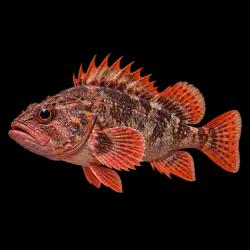
A deep-slope rockfish of the North Pacific, it grows so slowly that females are thought to reach maturity only at around 20 years old. It lives near the bottom on steep, rocky ground, mostly at roughly 200 to 500 metres, from Japan across the Aleutians to the Pacific coast of North America.
Rougheye Rockfish at a glance
Animal · North Pacific · Deep · Uncommon
Known for: Row of 2 to 10 small spines on the lower rim of, Pinkish-red to orange-red body, Large, Grows to about 90 cm
Its Power
Deep-Rock Years
Stay alive where cold depth makes hurry useless.
Slow growth can become endurance when the environment rewards patience.
“Grow in depth.”
Capture a Rougheye Rockfish, and it's yours when you finish one step it gives you.
Biological basis
Rougheye Rockfish are deepwater fish known for long lifespans, slow growth, and rocky habitat associations.
Put it into practice
You stop rushing the deep work and let consistency build the result.
What does the rougheye rockfish symbolize?
The rougheye rockfish symbolizes deep-rock years: stay alive where cold depth makes hurry useless. It represents patient progress, long-term endurance and pacing. Its AnimalDex motto: "Grow in depth."
The rougheye rockfish as a spirit animal
If the rougheye rockfish is your spirit animal, the AnimalDex reading is Deep-Rock Years: slow growth can become endurance when the environment rewards patience. It suggests a strength in patient progress and long-term endurance, and a reminder to use it on purpose.
What can the rougheye rockfish help you with in life?
The rougheye rockfish is a guide for patient progress, long-term endurance and pacing. Its lesson applies wherever patient progress matters: slow growth can become endurance when the environment rewards patience.
- Patient Progress
- Long-Term Endurance
- Pacing
In practice: You stop rushing the deep work and let consistency build the result.
What can we learn from the Rougheye Rockfish?What does it mean to dream about or encounter a wild rougheye rockfish?
A wild rougheye rockfish, whether in a dream or in front of you, tends to show up when patient progress or long-term endurance is on your mind. In AnimalDex, the rougheye rockfish's principle is Deep-Rock Years: stay alive where cold depth makes hurry useless. Read the moment through its core lesson: Slow growth can become endurance when the environment rewards patience.
Neither good nor bad on its own. How the rougheye rockfish acts matters: at ease, it reflects patient progress; hostile, it flags patient progress out of balance.
Spotting a rougheye rockfish in the wild
A real encounter is the plainest version of the sign: notice what the rougheye rockfish was doing. Stay alive where cold depth makes hurry useless. That is the patient progress worth borrowing today.
A rougheye rockfish that keeps appearing
Seeing the rougheye rockfish again and again, in dreams or outside, suggests patient progress is a theme you have not settled yet.
Dreaming of being chased by a rougheye rockfish
If the rougheye rockfish pursues you, look at where long-term endurance is being asked of you and you are stepping away instead of meeting it.
Dreaming that a rougheye rockfish attacks you
An aggressive rougheye rockfish can mirror a conflict where patient progress has become a weapon rather than a strength.
A calm or friendly rougheye rockfish
Meeting a peaceful rougheye rockfish is usually encouraging: long-term endurance and pacing are within reach.
A dead or injured rougheye rockfish
A dead or injured rougheye rockfish, dreamed or found, can mark patient progress you have let lapse, or a phase built on Deep-Rock Years coming to an end.
These readings are reflective prompts drawn from how the rougheye rockfish really lives, not predictions. If you meet one in the wild, watch from a distance and leave it undisturbed.
Capture your own Rougheye Rockfish
Photograph or film one in the wild, at a zoo or at home with the app. It becomes yours: it remembers you, gives you steps, and can debate your problems with your other animals.
Animal field guide
Rougheye Rockfish
Sign in to hear this read by a natural AI voice instead of your browser's.
A deep-slope rockfish of the North Pacific, it grows so slowly that females are thought to reach maturity only at around 20 years old. It lives near the bottom on steep, rocky ground, mostly at roughly 200 to 500 metres, from Japan across the Aleutians to the Pacific coast of North America.
Native range
Natural range, not this capture location
Deep, rocky, cold, or river-bottom habitat matters because fast tactics fail there. Rougheye Rockfish fits Deep-Rock Years because the environment rewards armored patience, slow growth, and precise use of depth.
Search near meAnimalDex stats
Size scale
Understand the animal
Understand the Rougheye Rockfish
Factual biology first: what this animal is like, where it lives, how it survives, and why those traits exist.
01
Introduction to Rougheye Rockfish
A deep-slope rockfish of the North Pacific, it grows so slowly that females are thought to reach maturity only at around 20 years old. It lives near the bottom on steep, rocky ground, mostly at roughly 200 to 500 metres, from Japan across the Aleutians to the Pacific coast of North America.
How to identify a Rougheye Rockfish
- Row of 2 to 10 small spines on the lower rim of each eye
- Pinkish-red to orange-red body, often with dusky blotches
- Large, spiny head and stout, deep body
- Grows to about 90 cm, large for a rockfish
Why Rougheye Rockfish are interesting
- Fish once all called rougheye were split into two species in 2008, so many older records mix it with the blackspotted rockfish.
- Like other rockfish it bears live young: eggs are fertilised and hatch inside the female, which then releases swimming larvae.
- Fish hauled up from depth usually suffer swollen swim bladders and bulging eyes, so few survive being released.
- It is caught in Alaskan trawl and longline fisheries under tight catch limits.
02
Adaptations and biological abilities
03
Why does Rougheye Rockfish behave this way?
- Row of 2 to 10 small spines on the lower rim of each eye
- Pinkish-red to orange-red body, often with dusky blotches
- Large, spiny head and stout, deep body
- Grows to about 90 cm, large for a rockfish
Its daily activity rhythm is poorly known. Survey footage shows it resting on or beside boulders, corals and sponges on the slope, and it stays at depth all year.
04
Why Deep?
Habitat: Deep, rocky, cold, or river-bottom habitat matters because fast tactics fail there. Rougheye Rockfish fits Deep-Rock Years because the environment rewards armored patience, slow growth, and precise use of depth.
Native range: North Pacific
Native range
Natural range, not this specific capture location.
Some regional overlays are unavailable in this web build.
Deep, rocky, cold, or river-bottom habitat matters because fast tactics fail there. Rougheye Rockfish fits Deep-Rock Years because the environment rewards armored patience, slow growth, and precise use of depth.
05
Why this diet?
06
Activity, rest, and lifespan
Its daily activity rhythm is poorly known. Survey footage shows it resting on or beside boulders, corals and sponges on the slope, and it stays at depth all year.
Often several decades and sometimes more than a century; one Alaskan fish was aged at about 205 years from ear-bone growth rings, a figure some researchers treat with caution.
07
Rougheye Rockfish reproduction
Females bear live young. Females store sperm after mating, and the eggs are later fertilised, develop and hatch inside the mother; she then releases large numbers of tiny swimming larvae, which drift in the plankton before settling near the bottom, where young fish live shallower than adults and move deeper with age.
The sexes look alike and cannot be told apart from outside; females appear to reach slightly larger sizes.
08
Predators, threats, and defense
Adults have few recorded natural predators; large fish and deep-diving marine mammals may take some. Young fish are more exposed. Fishing is the main threat, since slow growth makes stocks slow to recover. It shelters close to rocks and sponges.
09
Conservation and rarity
Rarity: Uncommon · 60/100. AnimalDex canonical rarity score: 60/100, maintained by the live indexed species profile.
- Observe from a respectful distance and avoid changing the animal's behavior.
- Do not block feeding, shelter, nesting, or travel routes.
- Use a live camera capture without handling or staging wildlife.
Talk to it
Talk to the Rougheye Rockfish
It answers as itself: ask about how it lives, or bring it something of yours and hear what it would do, from its own Power.
Anonymous: 6/day. Signed-in: 10/day. Pro: 100/day.
Side by side
The Rougheye Rockfish, side by side
Nothing written side by side for the Rougheye Rockfish yet. Pick any animal to compare it with. Compare with any animal →
Where to find them
Where to find Rougheye Rockfish
To find Rougheye Rockfish in the wild, focus on the exact habitat patches that match its body design and daily behavior, not just the broad country where it exists. You usually do better by working one good piece of habitat inside north Pacific than by covering too much ground.
- Quiet marsh edges, reedbeds, river bends, or shallow wetland margins
- Protected habitat blocks within north Pacific
In the Ark
No Rougheye Rockfish is aboard yet.
None have come aboard or left since November 17.
The Ark is a live, shared animal world. Animals come aboard when people capture them, and live there by rules based on their field guides.
Scientific name
Sebastes aleutianus
Category
Animal
Habitat
Deep, rocky, cold, or river-bottom habitat matters because fast tactics fail there. Rougheye Rockfish fits Deep-Rock Years because the environment rewards armored patience, slow growth, and precise use of depth.
Rarity
Uncommon · 60/100
Native range
North Pacific
Take the encyclopedia outside
AnimalDex helps you scan real animals, identify species, collect cards, and learn from nature wherever you are.