
Animal field guide
Skipper Butterfly
Hesperiidae
Skippers are stout-bodied butterflies recognized by hooked antenna clubs and fast, skipping flight.
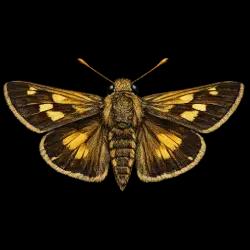
Skipper Butterfly at a glance
Invertebrate · Australia & Oceania · Meadows · Relatively common
Known for: Hooked antenna tips, Stout hairy body, Rapid darting flight, Forewings often held at an angle
Its Power
Burst Navigation
Use short, decisive adjustments to stay on course.
Progress can come from many accurate corrections rather than one perfect path.
“Correct quickly, continue lightly.”
Capture a Skipper Butterfly, and it's yours when you finish one step it gives you.
Biological basis
Skippers combine powerful thoracic muscles with rapid darting flight and frequent perching to navigate complex vegetation.
Put it into practice
Choose one current situation where this pattern can be tested in a small, observable step.
What does the skipper butterfly symbolize?
The skipper butterfly symbolizes burst navigation: use short, decisive adjustments to stay on course. It represents agility, sense of direction and learning. Its AnimalDex motto: "Correct quickly, continue lightly."
The skipper butterfly as a spirit animal
If the skipper butterfly is your spirit animal, the AnimalDex reading is Burst Navigation: progress can come from many accurate corrections rather than one perfect path. It suggests a strength in agility and sense of direction, and a reminder to use it on purpose.
What can the skipper butterfly help you with in life?
The skipper butterfly is a guide for agility, sense of direction and learning. Its lesson applies wherever agility matters: progress can come from many accurate corrections rather than one perfect path.
- Agility
- Sense of Direction
- Learning
In practice: Choose one current situation where this pattern can be tested in a small, observable step.
What can we learn from the Skipper Butterfly?What does it mean to dream about or encounter a wild skipper butterfly?
Dreaming about a wild skipper butterfly, or coming across one, usually points to agility and sense of direction: the qualities the skipper butterfly lives by. In AnimalDex, the skipper butterfly's principle is Burst Navigation: use short, decisive adjustments to stay on course. Read the moment through its core lesson: Progress can come from many accurate corrections rather than one perfect path.
Mostly a prompt rather than a warning. A calm skipper butterfly suggests agility you already have; a threatening one suggests agility is being tested or pushed too far.
Spotting a skipper butterfly in the wild
Coming across a skipper butterfly in person asks for attention more than interpretation. Watch it for a minute; the skipper butterfly's way of working is Burst Navigation, and the lesson is: progress can come from many accurate corrections rather than one perfect path.
A skipper butterfly that keeps appearing
Repeated sightings of a skipper butterfly usually mean the Burst Navigation lesson is still open: progress can come from many accurate corrections rather than one perfect path.
Dreaming of being chased by a skipper butterfly
Being chased suggests you are avoiding the Burst Navigation the skipper butterfly stands for: progress can come from many accurate corrections rather than one perfect path. Ask what you keep postponing that needs agility.
Dreaming that a skipper butterfly attacks you
When the skipper butterfly attacks, the dream may be about pressure: sense of direction or learning applied too hard, by you or by someone close to you.
A calm or friendly skipper butterfly
A calm skipper butterfly suggests you have made peace with agility and can use it without force.
A dead or injured skipper butterfly
Seeing the skipper butterfly hurt may point to sense of direction that has been neglected. Ask what it would take to restore it.
These readings are reflective prompts drawn from how the skipper butterfly really lives, not predictions. If you meet one in the wild, watch from a distance and leave it undisturbed.
Capture your own Skipper Butterfly
Photograph or film one in the wild, at a zoo or at home with the app. It becomes yours: it remembers you, gives you steps, and can debate your problems with your other animals.
Animal field guide
Skipper Butterfly
Sign in to hear this read by a natural AI voice instead of your browser's.
Skippers are stout-bodied butterflies recognized by hooked antenna clubs and fast, skipping flight.
Native range
Natural range, not this capture location
Meadows, woodland edges, grasslands, wetlands, and gardens with larval host plants.
Search near meAnimalDex stats
Size scale
Understand the animal
Understand the Skipper Butterfly
Factual biology first: what this animal is like, where it lives, how it survives, and why those traits exist.
01
Introduction to Skipper Butterfly
Skippers are stout-bodied butterflies recognized by hooked antenna clubs and fast, skipping flight.
How to identify a Skipper Butterfly
- Hooked antenna tips
- Stout hairy body
- Rapid darting flight
- Forewings often held at an angle
Why Skipper Butterfly are interesting
- They are true butterflies despite their stout, moth-like build, and are now usually placed with other butterflies in Papilionoidea.
- Many larvae roll or tie leaves into shelters.
- Some can accelerate exceptionally quickly for their size.
- The family is large, with roughly 3,500 or more described species found on every continent except Antarctica.
02
Adaptations and biological abilities
03
Why does Skipper Butterfly behave this way?
- Hooked antenna tips
- Stout hairy body
- Rapid darting flight
- Forewings often held at an angle
Active in daylight and roosts on vegetation overnight.
04
Why Meadows?
Habitat: Meadows, woodland edges, grasslands, wetlands, and gardens with larval host plants.
Native range: Australia & Oceania, Central Asia, East Asia, Europe, North Africa & Middle East, North America, South America, South Asia, Southeast Asia, Sub-Saharan Africa
Native range
Natural range, not this specific capture location.
Meadows, woodland edges, grasslands, wetlands, and gardens with larval host plants.
05
Why this diet?
Adults drink nectar; caterpillars feed mainly on grasses, sedges, palms, or broad-leaved host plants.
06
Activity, rest, and lifespan
Active in daylight and roosts on vegetation overnight.
Usually weeks as an adult, with seasonal development varying by species.
07
Skipper Butterfly reproduction
Females place eggs on suitable host plants; larvae often build leaf shelters.
Males and females can differ in scent scales and wing markings, depending on species.
08
Predators, threats, and defense
Birds, spiders, dragonflies, predatory insects, and parasitoids.
09
Conservation and rarity
Rarity: Relatively common · 5/100. AnimalDex canonical rarity score: 5/100, maintained by the live indexed species profile.
- Observe from a respectful distance and avoid changing the animal's behavior.
- Do not block feeding, shelter, nesting, or travel routes.
- Use a live camera capture without handling or staging wildlife.
Talk to it
Talk to the Skipper Butterfly
It answers as itself: ask about how it lives, or bring it something of yours and hear what it would do, from its own Power.
Anonymous: 6/day. Signed-in: 10/day. Pro: 100/day.
Side by side
The Skipper Butterfly, side by side
Nothing written side by side for the Skipper Butterfly yet. Pick any animal to compare it with. Compare with any animal →
Where to find them
Where to find Skipper Butterfly
To find Skipper Butterfly in the wild, focus on the exact habitat patches that match its body design and daily behavior, not just the broad country where it exists. You usually do better by working one good piece of habitat inside australia & Oceania, Central Asia, East Asia, Europe, North Africa & Middle East, North America, South America, South Asia, Southeast Asia, Sub-Saharan Africa than by covering too much ground.
- Quiet marsh edges, reedbeds, river bends, or shallow wetland margins
- Forest edge, canopy gaps, fruiting trees, or shaded trails where cover and food meet
- Open grassland edges, lightly wooded plains, or raised ground where you can scan long distances
Where explorers saw it
- Harrison, Hamilton County, United StatesAug · 1 sighting
In the Ark
No Skipper Butterfly is aboard yet.
None have come aboard or left since November 6.
The Ark is a live, shared animal world. Animals come aboard when people capture them, and live there by rules based on their field guides.
Scientific name
Hesperiidae
Category
Invertebrate
Habitat
Meadows, woodland edges, grasslands, wetlands, and gardens with larval host plants.
Rarity
Relatively common · 5/100
Native range
Australia & Oceania, Central Asia, East Asia, Europe, North Africa & Middle East, North America, South America, South Asia, Southeast Asia, Sub-Saharan Africa
Take the encyclopedia outside
AnimalDex helps you scan real animals, identify species, collect cards, and learn from nature wherever you are.