
Animal field guide
Stick Mantis
Toxodera beieri
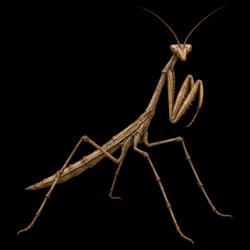
The front section of the thorax in this rainforest mantis is drawn out into a very long, narrow stalk that carries the head and grasping forelegs far ahead of the wings. It belongs to Toxodera, a South-east Asian genus built this way, and it appears to be rarely collected.
Stick Mantis at a glance
Animal · Southeast Asia · Tropical rainforest in South-east · Rare
Known for: Very long, Slender, Small leaf-like flaps on the legs, Grasping
Its Power
Thorny-Branch Outline
Blend seamlessly into your surroundings to observe unnoticed.
The Stick Mantis uses its remarkable ability to mimic twigs and branches to remain undetected, allowing it to observe its environment and prey with precision.
“Blend to Observe.”
Capture a Stick Mantis, and it's yours when you finish one step it gives you.
Biological basis
Stick Mantises are experts in camouflage, resembling sticks and leaves to avoid predators and ambush prey.
Put it into practice
A new hire sits quietly through the first meetings to learn how decisions really get made.
What does the stick mantis symbolize?
The stick mantis symbolizes thorny-branch outline: blend seamlessly into your surroundings to observe unnoticed. It represents sharp observation, blending in and stillness. Its AnimalDex motto: "Blend to Observe."
The stick mantis as a spirit animal
If the stick mantis is your spirit animal, the AnimalDex reading is Thorny-Branch Outline: the Stick Mantis uses its remarkable ability to mimic twigs and branches to remain undetected, allowing it to observe its environment and prey with precision. It suggests a strength in sharp observation and blending in, and a reminder to use it on purpose.
What can the stick mantis help you with in life?
The stick mantis is a guide for sharp observation, blending in and stillness. Its lesson applies wherever sharp observation matters: the Stick Mantis uses its remarkable ability to mimic twigs and branches to remain undetected, allowing it to observe its environment and prey with precision.
- Sharp Observation
- Blending In
- Stillness
In practice: A new hire sits quietly through the first meetings to learn how decisions really get made.
What can we learn from the Stick Mantis?What does it mean to dream about or encounter a wild stick mantis?
Dreaming about a wild stick mantis, or coming across one, usually points to sharp observation and blending in: the qualities the stick mantis lives by. In AnimalDex, the stick mantis's principle is Thorny-Branch Outline: blend seamlessly into your surroundings to observe unnoticed. Read the moment through its core lesson: The Stick Mantis uses its remarkable ability to mimic twigs and branches to remain undetected, allowing it to observe its environment and prey with precision.
Neither good nor bad on its own. How the stick mantis acts matters: at ease, it reflects sharp observation; hostile, it flags sharp observation out of balance.
Spotting a stick mantis in the wild
A real encounter is the plainest version of the sign: notice what the stick mantis was doing. Blend seamlessly into your surroundings to observe unnoticed. That is the sharp observation worth borrowing today.
A stick mantis that keeps appearing
Repeated sightings of a stick mantis usually mean the Thorny-Branch Outline lesson is still open: the Stick Mantis uses its remarkable ability to mimic twigs and branches to remain undetected, allowing it to observe its environment and prey with precision.
Dreaming of being chased by a stick mantis
A chase often means a demand for sharp observation is catching up with you. The stick mantis's lesson, "The Stick Mantis uses its remarkable ability to mimic twigs and branches to remain undetected, allowing it to observe its environment and prey with precision", is the part you may be running from.
Dreaming that a stick mantis attacks you
An attack points to sharp observation turned against you: someone using it on you, or your own sharp observation overused until it costs you.
A calm or friendly stick mantis
Meeting a peaceful stick mantis is usually encouraging: blending in and stillness are within reach.
A dead or injured stick mantis
Seeing the stick mantis hurt may point to blending in that has been neglected. Ask what it would take to restore it.
These readings are reflective prompts drawn from how the stick mantis really lives, not predictions. If you meet one in the wild, watch from a distance and leave it undisturbed.
Capture your own Stick Mantis
Photograph or film one in the wild, at a zoo or at home with the app. It becomes yours: it remembers you, gives you steps, and can debate your problems with your other animals.
Animal field guide
Stick Mantis
Sign in to hear this read by a natural AI voice instead of your browser's.
The front section of the thorax in this rainforest mantis is drawn out into a very long, narrow stalk that carries the head and grasping forelegs far ahead of the wings. It belongs to Toxodera, a South-east Asian genus built this way, and it appears to be rarely collected.
Native range
Natural range, not this capture location
Tropical rainforest in South-east Asia, where it lives among the twigs and foliage of trees and shrubs, probably mostly well above the ground.
Search near meAnimalDex stats
Size scale
Understand the animal
Understand the Stick Mantis
Factual biology first: what this animal is like, where it lives, how it survives, and why those traits exist.
01
Introduction to Stick Mantis
The front section of the thorax in this rainforest mantis is drawn out into a very long, narrow stalk that carries the head and grasping forelegs far ahead of the wings. It belongs to Toxodera, a South-east Asian genus built this way, and it appears to be rarely collected.
How to identify a Stick Mantis
- Very long, narrow front section of the thorax carrying the head far forward
- Slender, twig-like brown or greenish body
- Small leaf-like flaps on the legs
- Grasping, spined forelegs held folded under the head
Why Stick Mantis are interesting
- Its name honours Max Beier, an Austrian entomologist known for his extensive work on mantises.
- It belongs to the family Toxoderidae, whose members are mostly slender, elongated mantises of the Old World tropics.
- It is thought to hold its forelegs folded and still for long periods, relying on its twig-like shape until prey comes within reach.
- Like all mantises, it can swivel its head to look over its shoulder, tracking prey with large compound eyes.
02
Adaptations and biological abilities
03
Why does Stick Mantis behave this way?
- Very long, narrow front section of the thorax carrying the head far forward
- Slender, twig-like brown or greenish body
- Small leaf-like flaps on the legs
- Grasping, spined forelegs held folded under the head
Males are thought to be active and to fly at night. How and where the mantis rests by day has not been described.
04
Why Tropical rainforest in South-east Asia?
Habitat: Tropical rainforest in South-east Asia, where it lives among the twigs and foliage of trees and shrubs, probably mostly well above the ground.
Native range: Southeast Asia
Native range
Natural range, not this specific capture location.
Tropical rainforest in South-east Asia, where it lives among the twigs and foliage of trees and shrubs, probably mostly well above the ground.
05
Why this diet?
A sit-and-wait predator of small insects; its particular prey has not been studied.
06
Activity, rest, and lifespan
Males are thought to be active and to fly at night. How and where the mantis rests by day has not been described.
Toxodera beieri lacks a measured lifespan in print; its elongate body and thorny outline blend with thin southeast Asian twigs.
07
Stick Mantis reproduction
Egg-laying and development are unknown for this species. Mantises in general lay their eggs in a hardened foamy case, the ootheca, and give the nymphs no care after hatching.
How the sexes differ in this species is not well documented.
08
Predators, threats, and defense
09
Conservation and rarity
Rarity: Rare · 82/100. AnimalDex canonical rarity score: 82/100, maintained by the live indexed species profile.
- Observe from a respectful distance and avoid changing the animal's behavior.
- Do not block feeding, shelter, nesting, or travel routes.
- Use a live camera capture without handling or staging wildlife.
Talk to it
Talk to the Stick Mantis
It answers as itself: ask about how it lives, or bring it something of yours and hear what it would do, from its own Power.
Anonymous: 6/day. Signed-in: 10/day. Pro: 100/day.
Side by side
The Stick Mantis, side by side
Nothing written side by side for the Stick Mantis yet. Pick any animal to compare it with. Compare with any animal →
Where to find them
Where to find Stick Mantis
To find Stick Mantis in the wild, focus on the exact habitat patches that match its body design and daily behavior, not just the broad country where it exists. You usually do better by working one good piece of habitat inside southeast Asia than by covering too much ground.
- Forest edge, canopy gaps, fruiting trees, or shaded trails where cover and food meet
- Protected habitat blocks within southeast Asia
In the Ark
1 Stick Mantis is aboard right now.
Since November 17: 1 died of old age.
The Ark is a live, shared animal world. Animals come aboard when people capture them, and live there by rules based on their field guides.
Scientific name
Toxodera beieri
Category
Animal
Habitat
Tropical rainforest in South-east Asia, where it lives among the twigs and foliage of trees and shrubs, probably mostly well above the ground.
Rarity
Rare · 82/100
Native range
Southeast Asia
Take the encyclopedia outside
AnimalDex helps you scan real animals, identify species, collect cards, and learn from nature wherever you are.