
Animal field guide
Four-lined Whiptail Lizard
Identification, habitat, rarity, behavior, symbolism, facts, and practical lessons from nature.
Animal field guide
Four-lined Whiptail Lizard
Adaptive Movement
Move with agility.
The Four-lined Whiptail Lizard thrives by swiftly adapting its movements to navigate diverse terrains, showcasing the importance of flexibility in overcoming challenges.
You’re #1 of 1
Native range
Natural range, not this capture location
Native range keys: south_america. Open grassland, scrub and forest edge in southern Brazil, Uruguay, Paraguay and northern Argentina, because Restless Search needs sun to power it and litter to search.
Search near me0/1 XP toward Level 2
AnimalDex stats
Dominance
30
Speed
45
Size
12
Intelligence
28
Rarity
20%
Total
135
Size scale
✦ Available actions
Compare this public animal when your deck meets the current rules.
Scientific name
Teius oculatus
Category
Reptile
Habitat
Native range keys: south_america. Open grassland, scrub and forest edge in southern Brazil, Uruguay, Paraguay and northern Argentina, because Restless Search needs sun to power it and litter to search.
Rarity
Relatively common · 20/100
Native range
Native range keys: south_america. Open grassland, scrub and forest edge in southern Brazil, Uruguay, Paraguay and northern Argentina, because Restless Search needs sun to power it and litter to search.
Why Adaptive Movement?
The creator's reasoning behind this Animal Principle and the biology that supports it.
Four-lined Whiptail teaches Restless Search. It does not sit and wait like most lizards; it moves almost constantly, nosing through litter, and finds food by covering ground.
How to identify a Four-lined Whiptail Lizard
- Four pale stripes running the length of a dark back
- Long whip-like tail, much longer than the body
- Jerky, near-constant foraging movement
- Sharp, pointed snout used to probe litter
Why Four-lined Whiptail Lizard are interesting
- Whiptails forage actively rather than ambushing, which is unusual among lizards and costs far more energy.
- The long tail can be shed to escape a grip and regrows shorter and duller.
- They are strongly heat-dependent and only forage once the ground is warm.
- Several whiptail relatives are all-female species that reproduce without males, though this one is not.
Habitat: Native range keys: south_america. Open grassland, scrub and forest edge in southern Brazil, Uruguay, Paraguay and northern Argentina, because Restless Search needs sun to power it and litter to search.
Native range: Native range keys: south_america. Open grassland, scrub and forest edge in southern Brazil, Uruguay, Paraguay and northern Argentina, because Restless Search needs sun to power it and litter to search.
Native range
Natural range, not this specific capture location.
Native range keys: south_america. Open grassland, scrub and forest edge in southern Brazil, Uruguay, Paraguay and northern Argentina, because Restless Search needs sun to power it and litter to search.
To find Four-lined Whiptail Lizard in the wild, focus on the exact habitat patches that match its body design and daily behavior, not just the broad country where it exists. You usually do better by working one good piece of habitat inside native range keys: south_america. Open grassland, scrub and forest edge in southern Brazil, Uruguay, Paraguay and northern Argentina, because Restless Search needs sun to power it and litter to search. than by covering too much ground.
- Forest edge, canopy gaps, fruiting trees, or shaded trails where cover and food meet
- Open grassland edges, lightly wooded plains, or raised ground where you can scan long distances
- Headlands, reef edges, island colonies, tidal channels, or productive coastal water
- Start early, pick one strong patch of habitat, and stay long enough for movement to return after you arrive.
- Work edges, clearings, fruiting trees, and stream crossings rather than walking randomly through dense cover.
- Warm rocks, trail edges, fallen timber, and quiet water margins are usually better than heavily disturbed ground.
Insects, spiders and other small invertebrates turned up from leaf litter. This diet supports Restless Search because it is made of small, scattered items that only turn up if you keep moving.
Snakes, birds of prey and small carnivores. Speed, the shed tail and a dash to cover are the defences of an animal too busy to hide.
Four-lined Whiptails are strictly diurnal and heat-driven, emerging once the ground warms and retreating in the hottest hours. Their rhythm is dictated by temperature more than light.
They live a handful of years, so Restless Search is a short, fast life. The principle stays urgent because there is no time to wait for food to arrive.
Females lay small clutches in warm soil and leave them; there is no parental care. Offspring fit the principle because a hatchling begins searching immediately, alone.
Males are somewhat larger with a broader head, and both sexes forage identically.
- Four pale stripes running the length of a dark back
- Long whip-like tail, much longer than the body
- Jerky, near-constant foraging movement
- Sharp, pointed snout used to probe litter
Four-lined Whiptail Lizard most often symbolizes adaptive movement in AnimalDex because its real survival behavior repeatedly shows this pattern.
The Four-lined Whiptail Lizard thrives by swiftly adapting its movements to navigate diverse terrains, showcasing the importance of flexibility in overcoming challenges.
This lizard is known for its agility and ability to move quickly across various environments, from rocky areas to open fields.
- Observe from a respectful distance and avoid changing the animal's behavior.
- Do not block feeding, shelter, nesting, or travel routes.
- Use a live camera capture without handling or staging wildlife.
Related animals

Amboina Sailfin Lizard
Amboina Sailfin Lizard teaches Crested Display because its real biology turns…
Read species guide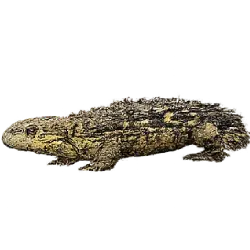
Armadillo Girdled Lizard
Armadillo Girdled Lizard is a reptile known for armor-like spiny scales, tail-grabbing…
Read species guide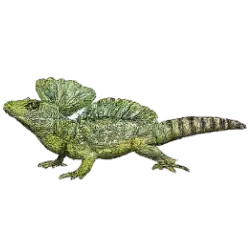
Basilisk Lizard
The basilisk lizard is a tropical reptile known for crests, long toes, and its ability…
Read species guideMore animals with Adaptability
Browse all Adaptability animals
Take the encyclopedia outside
AnimalDex helps you scan real animals, identify species, collect cards, and learn from nature wherever you are.