Animal field guide
Tick
Ixodida
Large, blood-feeding mites that feed on mammals, birds, reptiles and amphibians. Hard ticks cling to vegetation and wait with front legs raised, sensing warmth, carbon dioxide and movement through special organs on the tips of those legs.
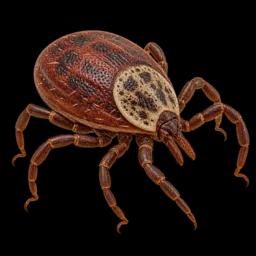
Tick at a glance
Arachnid · Arctic & Antarctic · Hard ticks favour humid woodland · Relatively common
Known for: Oval, Eight legs in nymphs and adults, Mouthparts projecting at the front, Swells greatly after feeding
Its Power
Patient Contact
Wait on the path, latch on at contact.
Positioning precisely where the opportunity must pass can outperform chasing it.
“Wait where they pass.”
Capture a Tick, and it's yours when you finish one step it gives you.
Biological basis
Ticks (Ixodida) are blood-feeding arachnids that sense hosts by carbon dioxide, heat and vibration. Many hard ticks climb vegetation, wait with forelegs outstretched, then cement barbed mouthparts in place and feed for days; soft ticks shelter in host nests and burrows, and their nymphs and adults usually feed within minutes to an hour and drop off.
Put it into practice
A job seeker volunteers at the industry conference registration desk, where every hiring manager must pass, and leaves with three interviews.
What does the tick symbolize?
The tick symbolizes patient contact: wait on the path, latch on at contact. It represents seizing opportunity, strategy and efficiency. Its AnimalDex motto: "Wait where they pass."
The tick as a spirit animal
If the tick is your spirit animal, the AnimalDex reading is Patient Contact: positioning precisely where the opportunity must pass can outperform chasing it. It suggests a strength in seizing opportunity and strategy, and a reminder to use it on purpose.
What can the tick help you with in life?
The tick is a guide for seizing opportunity, strategy and efficiency. Its lesson applies wherever seizing opportunity matters: positioning precisely where the opportunity must pass can outperform chasing it.
- Seizing Opportunity
- Strategy
- Efficiency
In practice: A job seeker volunteers at the industry conference registration desk, where every hiring manager must pass, and leaves with three interviews.
What can we learn from the Tick?What does it mean to dream about or encounter a wild tick?
Meeting a wild tick, asleep or awake, is often a nudge toward seizing opportunity, the quality the tick is built around. In AnimalDex, the tick's principle is Patient Contact: wait on the path, latch on at contact. Read the moment through its core lesson: Positioning precisely where the opportunity must pass can outperform chasing it.
Mostly a prompt rather than a warning. A calm tick suggests seizing opportunity you already have; a threatening one suggests seizing opportunity is being tested or pushed too far.
Spotting a tick in the wild
If a tick crosses your path, take it as a cue to look at where seizing opportunity fits your day. Its AnimalDex motto: "Wait where they pass."
A tick that keeps appearing
Seeing the tick again and again, in dreams or outside, suggests seizing opportunity is a theme you have not settled yet.
Dreaming of being chased by a tick
A chase often means a demand for seizing opportunity is catching up with you. The tick's lesson, "Positioning precisely where the opportunity must pass can outperform chasing it", is the part you may be running from.
Dreaming that a tick attacks you
An aggressive tick can mirror a conflict where seizing opportunity has become a weapon rather than a strength.
A calm or friendly tick
A relaxed tick near you, in a dream or in person, reads as readiness: Patient Contact is available to you now, as its motto puts it, "Wait where they pass.".
A dead or injured tick
Seeing the tick hurt may point to strategy that has been neglected. Ask what it would take to restore it.
These readings are reflective prompts drawn from how the tick really lives, not predictions. If you meet one in the wild, watch from a distance and leave it undisturbed.
Capture your own Tick
Photograph or film one in the wild, at a zoo or at home with the app. It becomes yours: it remembers you, gives you steps, and can debate your problems with your other animals.
Animal field guide
Tick
Sign in to hear this read by a natural AI voice instead of your browser's.
Large, blood-feeding mites that feed on mammals, birds, reptiles and amphibians. Hard ticks cling to vegetation and wait with front legs raised, sensing warmth, carbon dioxide and movement through special organs on the tips of those legs.
Native range
Natural range, not this capture location
Hard ticks favour humid woodland, scrub, bracken and long grass; soft ticks live mainly in nests, burrows, caves and roosts of their hosts.
Search near meAnimalDex stats
Size scale
Understand the animal
Understand the Tick
Factual biology first: what this animal is like, where it lives, how it survives, and why those traits exist.
01
Introduction to Tick
Large, blood-feeding mites that feed on mammals, birds, reptiles and amphibians. Hard ticks cling to vegetation and wait with front legs raised, sensing warmth, carbon dioxide and movement through special organs on the tips of those legs.
How to identify a Tick
- Oval, flattened body without clear segments
- Eight legs in nymphs and adults, six in larvae
- Mouthparts projecting at the front
- Swells greatly after feeding
- Clings motionless to tips of grass with legs spread
Why Tick are interesting
- Ticks transmit the bacteria that cause Lyme disease, as well as tick-borne encephalitis and other infections.
- Ixodes uriae lives on seabirds in the Arctic and sub-Antarctic, surviving harsh cold in nesting colonies.
- Oxpeckers in Africa remove ticks from large mammals, although they also feed on wounds and blood.
- Bites of the lone star tick, Amblyomma americanum, are linked to alpha-gal syndrome, a delayed allergy to red meat.
02
Adaptations and biological abilities
03
Why does Tick behave this way?
- Oval, flattened body without clear segments
- Eight legs in nymphs and adults, six in larvae
- Mouthparts projecting at the front
- Swells greatly after feeding
- Clings motionless to tips of grass with legs spread
No true sleep. Between feeds they rest in leaf litter or host shelters to regain moisture; many species also stop activity during winter or dry seasons.
04
Why Hard ticks favour humid woodland?
Habitat: Hard ticks favour humid woodland, scrub, bracken and long grass; soft ticks live mainly in nests, burrows, caves and roosts of their hosts.
Native range: Arctic & Antarctic, Australia & Oceania, Central Asia, East Asia, Europe, North Africa & Middle East, North America, South America, South Asia, Southeast Asia, Sub-Saharan Africa
Native range
Natural range, not this specific capture location.
Hard ticks favour humid woodland, scrub, bracken and long grass; soft ticks live mainly in nests, burrows, caves and roosts of their hosts.
05
Why this diet?
All active stages feed only on blood. Hard ticks cut the skin, cement their mouthparts in and feed for days; soft ticks usually feed for minutes to hours, often at night.
06
Activity, rest, and lifespan
No true sleep. Between feeds they rest in leaf litter or host shelters to regain moisture; many species also stop activity during winter or dry seasons.
Hard tick life cycles usually take one to three years; some soft ticks are reported to survive for several years, fasting for long periods between meals.
07
Tick reproduction
A female hard tick feeds once as an adult, drops off and lays one batch of often thousands of eggs, then dies. Soft ticks lay several smaller batches. Six-legged larvae hatch, then moult into nymphs and adults.
In hard ticks, the male's hard shield covers the whole back, while the female's covers only the front, so her body can swell greatly while feeding.
08
Predators, threats, and defense
Birds, ants, spiders, beetles and fungi kill ticks, and the parasitic wasp Ixodiphagus lays its eggs inside them. Ticks rely on their small size, a tough body and retreating to damp litter.
09
Conservation and rarity
Rarity: Relatively common · 10/100. AnimalDex canonical rarity score: 10/100, maintained by the live indexed species profile.
- Observe from a respectful distance and avoid changing the animal's behavior.
- Do not block feeding, shelter, nesting, or travel routes.
- Use a live camera capture without handling or staging wildlife.
Talk to it
Talk to the Tick
It answers as itself: ask about how it lives, or bring it something of yours and hear what it would do, from its own Power.
Anonymous: 6/day. Signed-in: 10/day. Pro: 100/day.
Side by side
The Tick, side by side
Nothing written side by side for the Tick yet. Pick any animal to compare it with. Compare with any animal →
Where to find them
Where to find Tick
To find Tick in the wild, focus on the exact habitat patches that match its body design and daily behavior, not just the broad country where it exists. You usually do better by working one good piece of habitat inside arctic & Antarctic, Australia & Oceania, Central Asia, East Asia, Europe, North Africa & Middle East, North America, South America, South Asia, Southeast Asia, Sub-Saharan Africa than by covering too much ground.
- Forest edge, canopy gaps, fruiting trees, or shaded trails where cover and food meet
- Protected habitat blocks within arctic & Antarctic, Australia & Oceania, Central Asia, East Asia, Europe, North Africa & Middle East, North America, South America, South Asia, Southeast Asia, Sub-Saharan Africa
Scientific name
Ixodida
Category
Arachnid
Habitat
Hard ticks favour humid woodland, scrub, bracken and long grass; soft ticks live mainly in nests, burrows, caves and roosts of their hosts.
Rarity
Relatively common · 10/100
Native range
Arctic & Antarctic, Australia & Oceania, Central Asia, East Asia, Europe, North Africa & Middle East, North America, South America, South Asia, Southeast Asia, Sub-Saharan Africa
Take the encyclopedia outside
AnimalDex helps you scan real animals, identify species, collect cards, and learn from nature wherever you are.