
Animal field guide
Water Bear
Hypsibius exemplaris
Water Bears, or tardigrades, survive harsh conditions by entering cryptobiotic states where metabolism nearly stops. Their toughness comes from reducing activity until water and safety return.
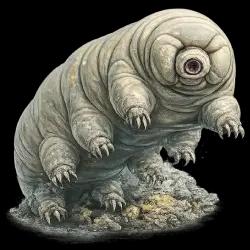
Water Bear at a glance
Mammal · North America · Water Bear belongs in moss and · Relatively common
Known for: Principle in the body: Water Bears, Habitat power: life in moss and water films makes, Daily behavior: extreme survival is the repeated, Survival pressure: threats from small invertebrates
Its Power
Cryptobiosis Courage
Pause life low enough for extremes to pass.
Resilience sometimes means reducing everything to the minimum that can continue.
“Pause and persist.”
Capture a Water Bear, and it's yours when you finish one step it gives you.
Biological basis
Water Bears, or tardigrades, can enter cryptobiotic states that help them survive drying, freezing, radiation, and other extremes.
Put it into practice
You lower the demands on yourself until the storm is survivable.
What does the water bear symbolize?
The water bear symbolizes cryptobiosis courage: pause life low enough for extremes to pass. It represents energy management, resilience and toughness. Its AnimalDex motto: "Pause and persist."
The water bear as a spirit animal
If the water bear is your spirit animal, the AnimalDex reading is Cryptobiosis Courage: resilience sometimes means reducing everything to the minimum that can continue. It suggests a strength in energy management and resilience, and a reminder to use it on purpose.
What can the water bear help you with in life?
The water bear is a guide for energy management, resilience and toughness. Its lesson applies wherever energy management matters: resilience sometimes means reducing everything to the minimum that can continue.
- Energy Management
- Resilience
- Toughness
In practice: You lower the demands on yourself until the storm is survivable.
What can we learn from the Water Bear?What does it mean to dream about or encounter a wild water bear?
Dreaming about a wild water bear, or coming across one, usually points to energy management and resilience: the qualities the water bear lives by. In AnimalDex, the water bear's principle is Cryptobiosis Courage: pause life low enough for extremes to pass. Read the moment through its core lesson: Resilience sometimes means reducing everything to the minimum that can continue.
Mostly a prompt rather than a warning. A calm water bear suggests energy management you already have; a threatening one suggests energy management is being tested or pushed too far.
Spotting a water bear in the wild
A real encounter is the plainest version of the sign: notice what the water bear was doing. Pause life low enough for extremes to pass. That is the energy management worth borrowing today.
A water bear that keeps appearing
Repeated sightings of a water bear usually mean the Cryptobiosis Courage lesson is still open: resilience sometimes means reducing everything to the minimum that can continue.
Dreaming of being chased by a water bear
If the water bear pursues you, look at where resilience is being asked of you and you are stepping away instead of meeting it.
Dreaming that a water bear attacks you
An aggressive water bear can mirror a conflict where energy management has become a weapon rather than a strength.
A calm or friendly water bear
A calm water bear suggests you have made peace with energy management and can use it without force.
A dead or injured water bear
Seeing the water bear hurt may point to resilience that has been neglected. Ask what it would take to restore it.
These readings are reflective prompts drawn from how the water bear really lives, not predictions. If you meet one in the wild, watch from a distance and leave it undisturbed.
Capture your own Water Bear
Photograph or film one in the wild, at a zoo or at home with the app. It becomes yours: it remembers you, gives you steps, and can debate your problems with your other animals.
Animal field guide
Water Bear
Sign in to hear this read by a natural AI voice instead of your browser's.
Water Bears, or tardigrades, survive harsh conditions by entering cryptobiotic states where metabolism nearly stops. Their toughness comes from reducing activity until water and safety return.
Native range
Natural range, not this capture location
Water Bear belongs in moss and water films, and that environment explains the principle of Cryptobiosis Courage: the animal succeeds only when its body and behavior fit that setting. The habitat is not background decoration; it is the pressure that makes 'Resilience sometimes means reducing everything to the minimum that can continue.' useful, because extreme survival only makes sense in a place where food, shelter, and danger meet that way.
Search near meAnimalDex stats
Size scale
Understand the animal
Understand the Water Bear
Factual biology first: what this animal is like, where it lives, how it survives, and why those traits exist.
01
Introduction to Water Bear
Water Bears, or tardigrades, survive harsh conditions by entering cryptobiotic states where metabolism nearly stops. Their toughness comes from reducing activity until water and safety return.
How to identify a Water Bear
- Principle in the body: Water Bears, or tardigrades, can enter cryptobiotic states that help them survive drying, freezing, radiation, and other extremes.
- Habitat power: life in moss and water films makes Cryptobiosis Courage useful instead of symbolic.
- Daily behavior: extreme survival is the repeated action that makes the lesson visible.
- Survival pressure: threats from small invertebrates keep the power honest and necessary.
Why Water Bear are interesting
- In laboratory culture, mean active lifespan is about sixty-two days, with a recorded maximum near seventy-five days.
- Unlike many moss tardigrades, this freshwater species shows only limited survival through long anhydrobiosis in experiments.
- Eggs are often laid inside the shed cuticle, and several clutches can follow as the animal ages.
- Eight stubby legs with claws let it walk on submerged surfaces rather than swim strongly.
02
Adaptations and biological abilities
03
Why does Water Bear behave this way?
- Principle in the body: Water Bears, or tardigrades, can enter cryptobiotic states that help them survive drying, freezing, radiation, and other extremes.
- Habitat power: life in moss and water films makes Cryptobiosis Courage useful instead of symbolic.
- Daily behavior: extreme survival is the repeated action that makes the lesson visible.
- Survival pressure: threats from small invertebrates keep the power honest and necessary.
Rest around dormancy supports the same pattern: Water Bear needs a safe reset point that matches its way of moving and feeding. Its sleep or resting rhythm reinforces Cryptobiosis Courage because the animal cannot keep using its power without a place to pause, hide, conserve energy, or return to the group before the next active phase.
04
Why Water Bear belongs in moss and water films?
Habitat: Water Bear belongs in moss and water films, and that environment explains the principle of Cryptobiosis Courage: the animal succeeds only when its body and behavior fit that setting. The habitat is not background decoration; it is the pressure that makes 'Resilience sometimes means reducing everything to the minimum that can continue.' useful, because extreme survival only makes sense in a place where food, shelter, and danger meet that way.
Native range: North America, South America, Europe, Sub-Saharan Africa, South Asia, Southeast Asia, East Asia, Australia & Oceania
Native range
Natural range, not this specific capture location.
Water Bear belongs in moss and water films, and that environment explains the principle of Cryptobiosis Courage: the animal succeeds only when its body and behavior fit that setting. The habitat is not background decoration; it is the pressure that makes 'Resilience sometimes means reducing everything to the minimum that can continue.' useful, because extreme survival only makes sense in a place where food, shelter, and danger meet that way.
05
Why this diet?
Its diet of algae, microbes is part of the lesson because feeding is where the power becomes practical. Water Bear does not eat randomly; the food source rewards the same skill described by Cryptobiosis Courage, whether that means patience, precision, cooperation, hidden movement, display, or endurance. The meal shows why the principle feeds the animal instead of remaining an abstract idea.
06
Activity, rest, and lifespan
Rest around dormancy supports the same pattern: Water Bear needs a safe reset point that matches its way of moving and feeding. Its sleep or resting rhythm reinforces Cryptobiosis Courage because the animal cannot keep using its power without a place to pause, hide, conserve energy, or return to the group before the next active phase.
Its lifespan and pace should be read through the principle rather than as a plain number. A life built around extreme survival depends on repeating the same successful pattern across seasons: find the right habitat, use the right food, avoid the right threats, and keep the power of Cryptobiosis Courage working long enough to reproduce.
07
Water Bear reproduction
Offspring strategy connects to the lesson because young animals must inherit more than genes; they must enter the same ecological problem. For Water Bear, nesting, eggs, larvae, young, or maternal investment all matter because the next generation has to learn or physically carry the same relationship between moss and water films, algae, microbes, safety, and Cryptobiosis Courage.
Laboratory stocks of Hypsibius exemplaris reproduce by parthenogenesis; males are not a regular field character for this species.
08
Predators, threats, and defense
Predators and threats such as small invertebrates explain why the power has consequences. The animal's lesson is not just about success; it is also about avoiding the cost of being seen, rushed, isolated, or poorly placed. That pressure keeps Cryptobiosis Courage sharp, because the wrong timing or wrong signal can turn survival into exposure.
09
Conservation and rarity
Rarity: Relatively common · 40/100. AnimalDex canonical rarity score: 40/100, maintained by the live indexed species profile.
- Observe from a respectful distance and avoid changing the animal's behavior.
- Do not block feeding, shelter, nesting, or travel routes.
- Use a live camera capture without handling or staging wildlife.
Talk to it
Talk to the Water Bear
It answers as itself: ask about how it lives, or bring it something of yours and hear what it would do, from its own Power.
Anonymous: 6/day. Signed-in: 10/day. Pro: 100/day.
Side by side
The Water Bear, side by side
Nothing written side by side for the Water Bear yet. Pick any animal to compare it with. Compare with any animal →
Where to find them
Where to find Water Bear
To find Water Bear in the wild, focus on the exact habitat patches that match its body design and daily behavior, not just the broad country where it exists. You usually do better by working one good piece of habitat inside north America, South America, Europe, Sub-Saharan Africa, South Asia, Southeast Asia, East Asia, Australia & Oceania than by covering too much ground.
- Open grassland edges, lightly wooded plains, or raised ground where you can scan long distances
- Protected habitat blocks within north America, South America, Europe, Sub-Saharan Africa, South Asia, Southeast Asia, East Asia, Australia & Oceania
In the Ark
No Water Bear is aboard yet.
None have come aboard or left since November 17.
The Ark is a live, shared animal world. Animals come aboard when people capture them, and live there by rules based on their field guides.
Scientific name
Hypsibius exemplaris
Category
Mammal
Habitat
Water Bear belongs in moss and water films, and that environment explains the principle of Cryptobiosis Courage: the animal succeeds only when its body and behavior fit that setting. The habitat is not background decoration; it is the pressure that makes 'Resilience sometimes means reducing everything to the minimum that can continue.' useful, because extreme survival only makes sense in a place where food, shelter, and danger meet that way.
Rarity
Relatively common · 40/100
Native range
North America, South America, Europe, Sub-Saharan Africa, South Asia, Southeast Asia, East Asia, Australia & Oceania
Take the encyclopedia outside
AnimalDex helps you scan real animals, identify species, collect cards, and learn from nature wherever you are.