Animal field guide
Weevil
Curculionoidea
Weevils are snout beetles whose enormous diversity is closely tied to seeds, stems, roots, fruits, and other plant tissues.
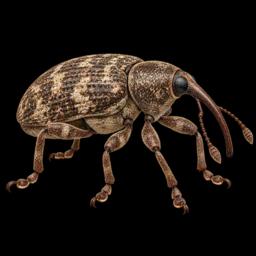
Weevil at a glance
Animal · Australia & Oceania · Forests · Relatively common
Known for: Elongated snout or rostrum, Elbowed clubbed antennae, Compact beetle body, Plant-associated life cycle
Its Power
Match the Tool to the Resource
Precision-Snout Access
A specialized tool creates access when it is precisely matched to the task.
“Match the tool.”
Capture a Weevil, and it's yours when you finish one step it gives you.
Biological basis
Weevils use an elongated rostrum to feed, bore, or prepare exact egg-laying sites in plant tissues and stored seeds.
Put it into practice
A child uses a long thin straw to reach the last of a drink at the bottom of a tall bottle instead of tipping it over.
What does the weevil symbolize?
The weevil symbolizes match the tool to the resource: precision-Snout Access. It represents using the right tool, mastering a niche and precision. Its AnimalDex motto: "Match the tool."
The weevil as a spirit animal
If the weevil is your spirit animal, the AnimalDex reading is Match the Tool to the Resource: a specialized tool creates access when it is precisely matched to the task. It suggests a strength in using the right tool and mastering a niche, and a reminder to use it on purpose.
What can the weevil help you with in life?
The weevil is a guide for using the right tool, mastering a niche and precision. Its lesson applies wherever using the right tool matters: a specialized tool creates access when it is precisely matched to the task.
- Using the Right Tool
- Mastering a Niche
- Precision
In practice: A child uses a long thin straw to reach the last of a drink at the bottom of a tall bottle instead of tipping it over.
What can we learn from the Weevil?What does it mean to dream about or encounter a wild weevil?
A wild weevil, whether in a dream or in front of you, tends to show up when using the right tool or mastering a niche is on your mind. In AnimalDex, the weevil's principle is Match the Tool to the Resource: precision-Snout Access. Read the moment through its core lesson: A specialized tool creates access when it is precisely matched to the task.
Neither good nor bad on its own. How the weevil acts matters: at ease, it reflects using the right tool; hostile, it flags using the right tool out of balance.
Spotting a weevil in the wild
A real encounter is the plainest version of the sign: notice what the weevil was doing. Precision-Snout Access. That is the using the right tool worth borrowing today.
A weevil that keeps appearing
A weevil that keeps turning up points to mastering a niche you keep circling back to. The repetition is the message.
Dreaming of being chased by a weevil
Being chased suggests you are avoiding the Match the Tool to the Resource the weevil stands for: a specialized tool creates access when it is precisely matched to the task. Ask what you keep postponing that needs using the right tool.
Dreaming that a weevil attacks you
When the weevil attacks, the dream may be about pressure: mastering a niche or precision applied too hard, by you or by someone close to you.
A calm or friendly weevil
Meeting a peaceful weevil is usually encouraging: mastering a niche and precision are within reach.
A dead or injured weevil
An injured weevil often reflects using the right tool under strain; rest and repair come before pushing again.
These readings are reflective prompts drawn from how the weevil really lives, not predictions. If you meet one in the wild, watch from a distance and leave it undisturbed.
Capture your own Weevil
Photograph or film one in the wild, at a zoo or at home with the app. It becomes yours: it remembers you, gives you steps, and can debate your problems with your other animals.
Animal field guide
Weevil
Sign in to hear this read by a natural AI voice instead of your browser's.
Weevils are snout beetles whose enormous diversity is closely tied to seeds, stems, roots, fruits, and other plant tissues.
Native range
Natural range, not this capture location
Forests, grasslands, crops, gardens, stored grain, and nearly any habitat with plants.
Search near meAnimalDex stats
Dominance
10
Speed
8
Size
3
Intelligence
12
Rarity
15%
Total
48
Size scale
Understand the animal
Understand the Weevil
Factual biology first: what this animal is like, where it lives, how it survives, and why those traits exist.
01
Introduction to Weevil
Weevils are snout beetles whose enormous diversity is closely tied to seeds, stems, roots, fruits, and other plant tissues.
How to identify a Weevil
- Elongated snout or rostrum
- Elbowed clubbed antennae
- Compact beetle body
- Plant-associated life cycle
Why Weevil are interesting
- Weevils are among the most species-rich animal groups.
- Females of many species bore a hole before laying an egg.
- Some species are important pollinators while others are crop pests.
02
Adaptations and biological abilities
03
Why does Weevil behave this way?
- Elongated snout or rostrum
- Elbowed clubbed antennae
- Compact beetle body
- Plant-associated life cycle
Activity differs by species; many hide in plant material when inactive.
04
Why Forests?
Habitat: Forests, grasslands, crops, gardens, stored grain, and nearly any habitat with plants.
Native range: Australia & Oceania, Central Asia, East Asia, Europe, North Africa & Middle East, North America, South America, South Asia, Southeast Asia, Sub-Saharan Africa
Native range
Natural range, not this specific capture location.
Forests, grasslands, crops, gardens, stored grain, and nearly any habitat with plants.
05
Why this diet?
Plant tissues, seeds, fruit, roots, wood, or fungi depending on species.
06
Activity, rest, and lifespan
Activity differs by species; many hide in plant material when inactive.
Often months to a few years depending on species and climate.
07
Weevil reproduction
Females commonly place eggs inside or beside the plant resource the larva will consume.
Sex differences are often subtle and may involve rostrum length or abdominal structure.
08
Predators, threats, and defense
Birds, spiders, predatory insects, parasitoid wasps, and small vertebrates.
09
Conservation and rarity
Rarity: Relatively common · 15/100. AnimalDex canonical rarity score: 15/100, maintained by the live indexed species profile.
- Observe from a respectful distance and avoid changing the animal's behavior.
- Do not block feeding, shelter, nesting, or travel routes.
- Use a live camera capture without handling or staging wildlife.
Talk to it
Talk to the Weevil
It answers as itself: ask about how it lives, or bring it something of yours and hear what it would do, from its own Power.
Anonymous: 3/day. Signed-in: 10/day. Pro: 100/day.
Side by side
The Weevil, side by side
Nothing written side by side for the Weevil yet. Pick any animal to compare it with. Compare with any animal →
Where to find them
Where to find Weevil
To find Weevil in the wild, focus on the exact habitat patches that match its body design and daily behavior, not just the broad country where it exists. You usually do better by working one good piece of habitat inside australia & Oceania, Central Asia, East Asia, Europe, North Africa & Middle East, North America, South America, South Asia, Southeast Asia, Sub-Saharan Africa than by covering too much ground.
- Forest edge, canopy gaps, fruiting trees, or shaded trails where cover and food meet
- Open grassland edges, lightly wooded plains, or raised ground where you can scan long distances
- Protected habitat blocks within australia & Oceania, Central Asia, East Asia, Europe, North Africa & Middle East, North America, South America, South Asia, Southeast Asia, Sub-Saharan Africa
Scientific name
Curculionoidea
Category
Animal
Habitat
Forests, grasslands, crops, gardens, stored grain, and nearly any habitat with plants.
Rarity
Relatively common · 15/100
Native range
Australia & Oceania, Central Asia, East Asia, Europe, North Africa & Middle East, North America, South America, South Asia, Southeast Asia, Sub-Saharan Africa
Take the encyclopedia outside
AnimalDex helps you scan real animals, identify species, collect cards, and learn from nature wherever you are.