
Animal field guide
White Underwing Moth
Catocala relicta
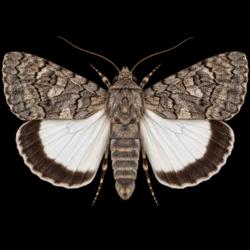
Hidden under pale, bark-coloured forewings, the hindwings of this large underwing are black crossed by a broad white band, unlike the red or orange of most of its relatives. The band flashes into view when the moth takes off and vanishes as it lands.
White Underwing Moth at a glance
Invertebrate · North America · White Underwing Moths occur across · Relatively common
Known for: Wingspan about 6, Forewings whitish with black and grey zigzag lines, Forewings far paler than those of most other, At rest
Its Power
Birch-Bark Forewings
Blend into your surroundings to protect your interests.
The White Underwing Moth uses its cryptic wing patterns to blend into tree bark during the day, avoiding predators and conserving energy.
“Blend and Protect.”
Capture a White Underwing Moth, and it's yours when you finish one step it gives you.
Biological basis
The White Underwing Moth's forewings mimic the appearance of tree bark, providing effective camouflage against predators.
Put it into practice
A lottery winner keeps the old car and tells no one, and the begging letters never come.
What does the white underwing moth symbolize?
The white underwing moth symbolizes birch-bark forewings: blend into your surroundings to protect your interests. It represents blending in, mode switching and element of surprise. Its AnimalDex motto: "Blend and Protect."
The white underwing moth as a spirit animal
If the white underwing moth is your spirit animal, the AnimalDex reading is Birch-Bark Forewings: the White Underwing Moth uses its cryptic wing patterns to blend into tree bark during the day, avoiding predators and conserving energy. It suggests a strength in blending in and mode switching, and a reminder to use it on purpose.
What can the white underwing moth help you with in life?
The white underwing moth is a guide for blending in, mode switching and element of surprise. Its lesson applies wherever blending in matters: the White Underwing Moth uses its cryptic wing patterns to blend into tree bark during the day, avoiding predators and conserving energy.
- Blending In
- Mode Switching
- Element of Surprise
In practice: A lottery winner keeps the old car and tells no one, and the begging letters never come.
What can we learn from the White Underwing Moth?What does it mean to dream about or encounter a wild white underwing moth?
Meeting a wild white underwing moth, asleep or awake, is often a nudge toward blending in, the quality the white underwing moth is built around. In AnimalDex, the white underwing moth's principle is Birch-Bark Forewings: blend into your surroundings to protect your interests. Read the moment through its core lesson: The White Underwing Moth uses its cryptic wing patterns to blend into tree bark during the day, avoiding predators and conserving energy.
Mostly a prompt rather than a warning. A calm white underwing moth suggests blending in you already have; a threatening one suggests blending in is being tested or pushed too far.
Spotting a white underwing moth in the wild
If a white underwing moth crosses your path, take it as a cue to look at where blending in fits your day. Its AnimalDex motto: "Blend and Protect."
A white underwing moth that keeps appearing
Seeing the white underwing moth again and again, in dreams or outside, suggests blending in is a theme you have not settled yet.
Dreaming of being chased by a white underwing moth
A chase often means a demand for blending in is catching up with you. The white underwing moth's lesson, "The White Underwing Moth uses its cryptic wing patterns to blend into tree bark during the day, avoiding predators and conserving energy", is the part you may be running from.
Dreaming that a white underwing moth attacks you
An aggressive white underwing moth can mirror a conflict where blending in has become a weapon rather than a strength.
A calm or friendly white underwing moth
A relaxed white underwing moth near you, in a dream or in person, reads as readiness: Birch-Bark Forewings is available to you now, as its motto puts it, "Blend and Protect.".
A dead or injured white underwing moth
Seeing the white underwing moth hurt may point to mode switching that has been neglected. Ask what it would take to restore it.
These readings are reflective prompts drawn from how the white underwing moth really lives, not predictions. If you meet one in the wild, watch from a distance and leave it undisturbed.
Capture your own White Underwing Moth
Photograph or film one in the wild, at a zoo or at home with the app. It becomes yours: it remembers you, gives you steps, and can debate your problems with your other animals.
Animal field guide
White Underwing Moth
Sign in to hear this read by a natural AI voice instead of your browser's.
Hidden under pale, bark-coloured forewings, the hindwings of this large underwing are black crossed by a broad white band, unlike the red or orange of most of its relatives. The band flashes into view when the moth takes off and vanishes as it lands.
Native range
Natural range, not this capture location
White Underwing Moths occur across much of northern North America. They are associated with deciduous and mixed woodland, especially areas containing birch, willow, poplar and related host trees, while adults rest cryptically against bark during daylight.
Search near meAnimalDex stats
Size scale
Understand the animal
Understand the White Underwing Moth
Factual biology first: what this animal is like, where it lives, how it survives, and why those traits exist.
01
Introduction to White Underwing Moth
Hidden under pale, bark-coloured forewings, the hindwings of this large underwing are black crossed by a broad white band, unlike the red or orange of most of its relatives. The band flashes into view when the moth takes off and vanishes as it lands.
How to identify a White Underwing Moth
- Wingspan about 6.5 to 8 centimetres
- Forewings whitish with black and grey zigzag lines
- Forewings far paler than those of most other underwings
- At rest, forewings close flat and hide the hindwings
Why White Underwing Moth are interesting
- Some individuals have much darker forewings, and dark and pale moths can occur in the same area.
- The flattened caterpillars have a fringe of short hairs along each side that hides their outline against bark.
- Its range extends well into the boreal forest of Canada.
- Laboratory studies of blue jays hunting underwing moths on bark helped show how birds learn to find hidden prey.
02
Adaptations and biological abilities
03
Why does White Underwing Moth behave this way?
- Wingspan about 6.5 to 8 centimetres
- Forewings whitish with black and grey zigzag lines
- Forewings far paler than those of most other underwings
- At rest, forewings close flat and hide the hindwings
It flies at night, from dusk onwards. Daylight hours are spent resting on the trunks of trees with the body pressed close to the bark.
04
Why White Underwing Moths occur across much of northern North America?
Habitat: White Underwing Moths occur across much of northern North America. They are associated with deciduous and mixed woodland, especially areas containing birch, willow, poplar and related host trees, while adults rest cryptically against bark during daylight.
Native range: North America
Native range
Natural range, not this specific capture location.
White Underwing Moths occur across much of northern North America. They are associated with deciduous and mixed woodland, especially areas containing birch, willow, poplar and related host trees, while adults rest cryptically against bark during daylight.
05
Why this diet?
Caterpillars eat the leaves of poplars, aspens and willows. Adults sip sap from wounded trees and juice from fermenting fruit, and readily come to sweet baits painted on trunks.
06
Activity, rest, and lifespan
It flies at night, from dusk onwards. Daylight hours are spent resting on the trunks of trees with the body pressed close to the bark.
Adults probably survive for several weeks, since they feed as adults. There is one generation a year, so the whole life cycle takes about twelve months.
07
White Underwing Moth reproduction
Eggs are laid in late summer in bark crevices of host trees and hatch the following spring. The grey caterpillars feed through spring and early summer and pupate in a loose cocoon among leaves or debris.
Males and females are very similar in pattern and size, and are hard to separate in the field.
08
Predators, threats, and defense
Birds search trunks for resting moths, and bats take them in flight. A discovered moth bolts in a fast, erratic flight and quickly resettles on another trunk, where it becomes hard to follow.
09
Conservation and rarity
Rarity: Relatively common · 36/100. AnimalDex canonical rarity score: 36/100, maintained by the live indexed species profile.
- Observe from a respectful distance and avoid changing the animal's behavior.
- Do not block feeding, shelter, nesting, or travel routes.
- Use a live camera capture without handling or staging wildlife.
Talk to it
Talk to the White Underwing Moth
It answers as itself: ask about how it lives, or bring it something of yours and hear what it would do, from its own Power.
Anonymous: 6/day. Signed-in: 10/day. Pro: 100/day.
Side by side
The White Underwing Moth, side by side
Nothing written side by side for the White Underwing Moth yet. Pick any animal to compare it with. Compare with any animal →
Where to find them
Where to find White Underwing Moth
To find White Underwing Moth in the wild, focus on the exact habitat patches that match its body design and daily behavior, not just the broad country where it exists. You usually do better by working one good piece of habitat inside north America than by covering too much ground.
- Forest edge, canopy gaps, fruiting trees, or shaded trails where cover and food meet
- Protected habitat blocks within north America
In the Ark
No White Underwing Moth is aboard yet.
Since November 17: 1 died of old age.
The Ark is a live, shared animal world. Animals come aboard when people capture them, and live there by rules based on their field guides.
Scientific name
Catocala relicta
Category
Invertebrate
Habitat
White Underwing Moths occur across much of northern North America. They are associated with deciduous and mixed woodland, especially areas containing birch, willow, poplar and related host trees, while adults rest cryptically against bark during daylight.
Rarity
Relatively common · 36/100
Native range
North America
Take the encyclopedia outside
AnimalDex helps you scan real animals, identify species, collect cards, and learn from nature wherever you are.