
Animal field guide
Whitemargin Stargazer
Uranoscopus sulphureus
The Whitemargin Stargazer teaches strategic concealment. It does not need to chase the whole sea when it has chosen the right place to wait.
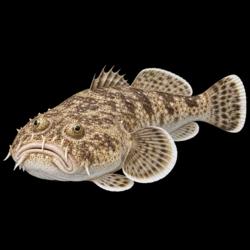
Whitemargin Stargazer at a glance
Animal · Indian Ocean · Sandy and silty bottoms of the · Uncommon
Known for: Broad, Eyes on top of the head, Nearly vertical, Fins typically edged in white
Its Power
Buried Ambush
Waits buried in sand with eyes upward, striking when prey enters the right position.
Hidden patience can be more effective than visible pursuit.
“Watch from below.”
Capture a Whitemargin Stargazer, and it's yours when you finish one step it gives you.
Biological basis
Stargazers are bottom-dwelling ambush predators that bury themselves and attack from concealment.
Put it into practice
Instead of chasing every opportunity, position yourself where the right opening naturally passes over you.
What does the whitemargin stargazer symbolize?
The whitemargin stargazer symbolizes buried ambush: waits buried in sand with eyes upward, striking when prey enters the right position. It represents stillness, patient progress and element of surprise. Its AnimalDex motto: "Watch from below."
The whitemargin stargazer as a spirit animal
If the whitemargin stargazer is your spirit animal, the AnimalDex reading is Buried Ambush: hidden patience can be more effective than visible pursuit. It suggests a strength in stillness and patient progress, and a reminder to use it on purpose.
What can the whitemargin stargazer help you with in life?
The whitemargin stargazer is a guide for stillness, patient progress and element of surprise. Its lesson applies wherever stillness matters: hidden patience can be more effective than visible pursuit.
- Stillness
- Patient Progress
- Element of Surprise
In practice: Instead of chasing every opportunity, position yourself where the right opening naturally passes over you.
What can we learn from the Whitemargin Stargazer?What does it mean to dream about or encounter a wild whitemargin stargazer?
Meeting a wild whitemargin stargazer, asleep or awake, is often a nudge toward stillness, the quality the whitemargin stargazer is built around. In AnimalDex, the whitemargin stargazer's principle is Buried Ambush: waits buried in sand with eyes upward, striking when prey enters the right position. Read the moment through its core lesson: Hidden patience can be more effective than visible pursuit.
It depends on how the whitemargin stargazer behaved. Calm or close by, it reads as patient progress within reach; aggressive or fleeing, it points to stillness you are resisting.
Spotting a whitemargin stargazer in the wild
Coming across a whitemargin stargazer in person asks for attention more than interpretation. Watch it for a minute; the whitemargin stargazer's way of working is Buried Ambush, and the lesson is: hidden patience can be more effective than visible pursuit.
A whitemargin stargazer that keeps appearing
A whitemargin stargazer that keeps turning up points to patient progress you keep circling back to. The repetition is the message.
Dreaming of being chased by a whitemargin stargazer
A chase often means a demand for stillness is catching up with you. The whitemargin stargazer's lesson, "Hidden patience can be more effective than visible pursuit", is the part you may be running from.
Dreaming that a whitemargin stargazer attacks you
An attack points to stillness turned against you: someone using it on you, or your own stillness overused until it costs you.
A calm or friendly whitemargin stargazer
Meeting a peaceful whitemargin stargazer is usually encouraging: patient progress and element of surprise are within reach.
A dead or injured whitemargin stargazer
An injured whitemargin stargazer often reflects stillness under strain; rest and repair come before pushing again.
These readings are reflective prompts drawn from how the whitemargin stargazer really lives, not predictions. If you meet one in the wild, watch from a distance and leave it undisturbed.
Capture your own Whitemargin Stargazer
Photograph or film one in the wild, at a zoo or at home with the app. It becomes yours: it remembers you, gives you steps, and can debate your problems with your other animals.
Animal field guide
Whitemargin Stargazer
Sign in to hear this read by a natural AI voice instead of your browser's.
The Whitemargin Stargazer teaches strategic concealment. It does not need to chase the whole sea when it has chosen the right place to wait.
Native range
Natural range, not this capture location
Sandy and silty bottoms of the tropical Indian Ocean and the seas of the Indo-Malay archipelago, including sheltered bays, lagoons and open sand near reefs, from shallow water to moderate depths.
Search near meAnimalDex stats
Size scale
Understand the animal
Understand the Whitemargin Stargazer
Factual biology first: what this animal is like, where it lives, how it survives, and why those traits exist.
01
Introduction to Whitemargin Stargazer
The Whitemargin Stargazer teaches strategic concealment. It does not need to chase the whole sea when it has chosen the right place to wait.
How to identify a Whitemargin Stargazer
- Broad, flattened head that looks boxy from above
- Eyes on top of the head, pointing upwards
- Nearly vertical, upward-facing mouth
- Fins typically edged in white
- Heavy body tapering to a narrow tail
Why Whitemargin Stargazer are interesting
- It digs in by wriggling and shovelling sand aside with its pectoral fins, sinking out of sight within seconds.
- Fringes on the lips and around the gill openings keep sand out while it breathes under the seabed.
- It is reported as bycatch in bottom trawls in parts of its range.
- The species name sulphureus is Latin for sulphur-coloured.
02
Adaptations and biological abilities
03
Why does Whitemargin Stargazer behave this way?
- Broad, flattened head that looks boxy from above
- Eyes on top of the head, pointing upwards
- Nearly vertical, upward-facing mouth
- Fins typically edged in white
- Heavy body tapering to a narrow tail
Its daily activity cycle is poorly known. It spends long periods lying motionless beneath the sand.
04
Why Sandy and silty bottoms of the tropical Indian Ocean and the seas of the Indo-Malay archipelago?
Habitat: Sandy and silty bottoms of the tropical Indian Ocean and the seas of the Indo-Malay archipelago, including sheltered bays, lagoons and open sand near reefs, from shallow water to moderate depths.
Native range: Indian Ocean, Coral Triangle
Native range
Natural range, not this specific capture location.
Sandy and silty bottoms of the tropical Indian Ocean and the seas of the Indo-Malay archipelago, including sheltered bays, lagoons and open sand near reefs, from shallow water to moderate depths.
05
Why this diet?
Small fish and crustaceans that swim or crawl over its hiding place. Lying buried, it opens its large, upward-facing mouth suddenly and swallows the prey whole.
06
Activity, rest, and lifespan
Its daily activity cycle is poorly known. It spends long periods lying motionless beneath the sand.
Nobody has published a species-specific lifespan table for Uranoscopus sulphureus; it lies buried in sand with only eyes and mouth exposed.
07
Whitemargin Stargazer reproduction
Reproduction has not been documented in detail for this species; nothing specific is known about its spawning season, egg numbers or early development.
External differences between the sexes are not known.
08
Predators, threats, and defense
Its predators are poorly documented. Staying buried in the sand, where it is hard to see, is its main defence.
09
Conservation and rarity
Rarity: Uncommon · 54/100. AnimalDex canonical rarity score: 54/100, maintained by the live indexed species profile.
- Observe from a respectful distance and avoid changing the animal's behavior.
- Do not block feeding, shelter, nesting, or travel routes.
- Use a live camera capture without handling or staging wildlife.
Talk to it
Talk to the Whitemargin Stargazer
It answers as itself: ask about how it lives, or bring it something of yours and hear what it would do, from its own Power.
Anonymous: 6/day. Signed-in: 10/day. Pro: 100/day.
Side by side
The Whitemargin Stargazer, side by side
Nothing written side by side for the Whitemargin Stargazer yet. Pick any animal to compare it with. Compare with any animal →
Where to find them
Where to find Whitemargin Stargazer
To find Whitemargin Stargazer in the wild, focus on the exact habitat patches that match its body design and daily behavior, not just the broad country where it exists. You usually do better by working one good piece of habitat inside indian Ocean, Coral Triangle than by covering too much ground.
- Quiet marsh edges, reedbeds, river bends, or shallow wetland margins
- Headlands, reef edges, island colonies, tidal channels, or productive coastal water
- Burrow systems, sandy banks, fallen logs, or ground with clear den entrances
In the Ark
No Whitemargin Stargazer is aboard yet.
None have come aboard or left since November 17.
The Ark is a live, shared animal world. Animals come aboard when people capture them, and live there by rules based on their field guides.
Scientific name
Uranoscopus sulphureus
Category
Animal
Habitat
Sandy and silty bottoms of the tropical Indian Ocean and the seas of the Indo-Malay archipelago, including sheltered bays, lagoons and open sand near reefs, from shallow water to moderate depths.
Rarity
Uncommon · 54/100
Native range
Indian Ocean, Coral Triangle
Take the encyclopedia outside
AnimalDex helps you scan real animals, identify species, collect cards, and learn from nature wherever you are.