

Axolotl Symbolism: Endangered Wonder, Regeneration, Child-Like Energy & Creative Rebirth
Explore axolotl symbolism through endangered wonder, child-like curiosity, creativity, regeneration, neoteny, innocence, healing, and the strange magic of staying soft in a world that demands hardness.
Listen to this story
Hear the full article read aloud.

Quick Answer
Quick answer
The axolotl, which is a very endangered species, is possibly endangered because we are losing our child-like energy.
Not literally.
In the real world, wild axolotls are critically endangered because of habitat loss, pollution, invasive species, urbanization, and the destruction of their natural ecosystem.
But symbolically, the axolotl's disappearance feels like a mirror.
We are losing our creativity. We are losing our curiosity. We are losing our softness. We are losing our sense of wonder. We are losing the ability to stay strange, playful, and open.
The axolotl feels like the perfect animal symbol for the part of us that never wanted to become hard just to survive.
It is a creature of healing, innocence, impossible regeneration, and youth-like magic.
The axolotl may be one of the clearest symbols of endangered wonder.
The axolotl is a living symbol of endangered wonder.
What Is an Axolotl?
The axolotl is a type of salamander native to Mexico, especially associated with the lake and canal systems around Xochimilco.
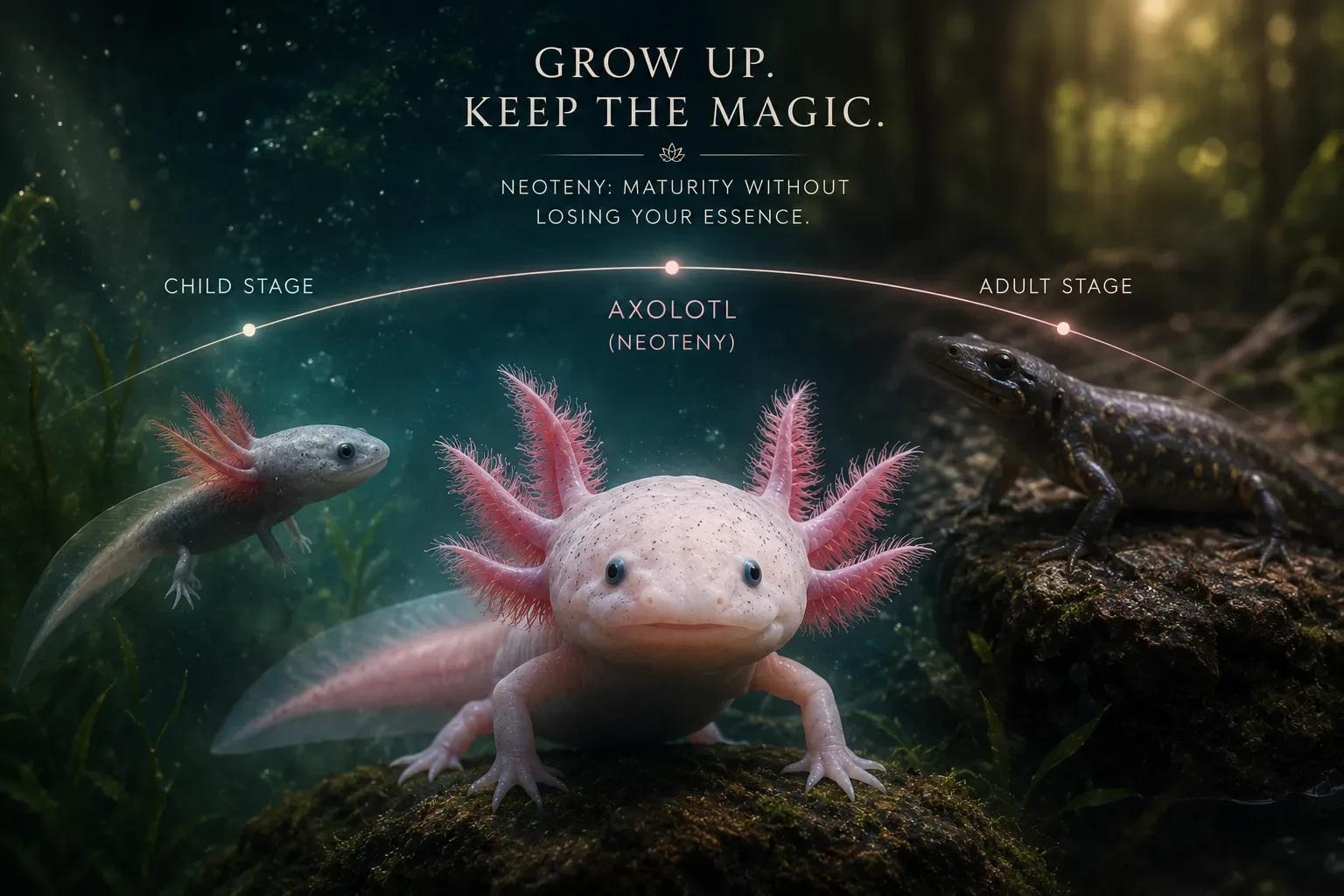
Unlike many amphibians, the axolotl does not fully transform into a land-dwelling adult. It keeps its aquatic form, external gills, and youthful appearance even after reaching maturity.
This biological trait is called neoteny.
In simple terms, the axolotl grows up without fully leaving its child-like form behind.
That alone makes it symbolically powerful.
Most animals transform by becoming harder, more defined, more adult, or more adapted to a new environment.
The axolotl transforms by remaining soft.
It becomes mature without losing its wonder.
The Axolotl as a Symbol of Child-Like Energy
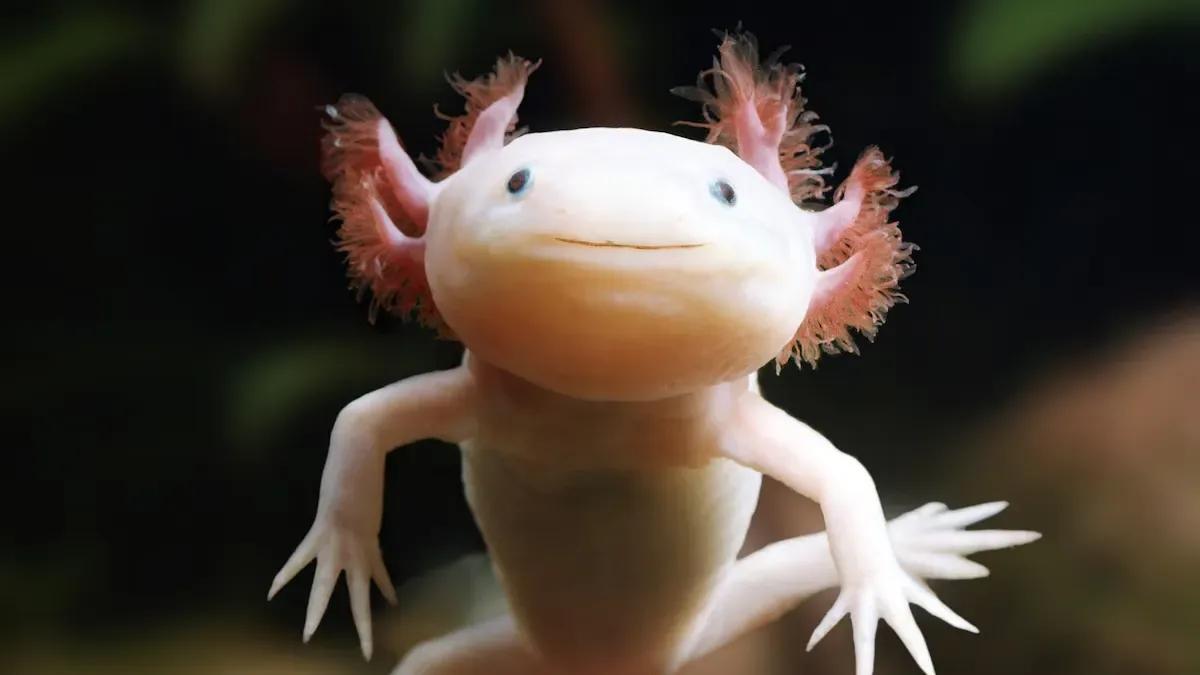
The axolotl looks like an animal designed by imagination.
It has a soft face, wide eyes, feathery gills, tiny limbs, and an almost permanent smile. It does not look intimidating. It looks curious.
That is part of its symbolic power.
The axolotl represents the child-like energy that modern life often pushes out of us: curiosity, play, imagination, softness, weirdness, wonder, emotional openness, and creative experimentation.
As people get older, they often become more practical, more defensive, more serious, more productive, and more afraid of looking strange.
But the axolotl remains strange.
It reminds us that being unusual is not a weakness.
Sometimes the strange creature is the one with the greatest healing power.
Endangered Wonder
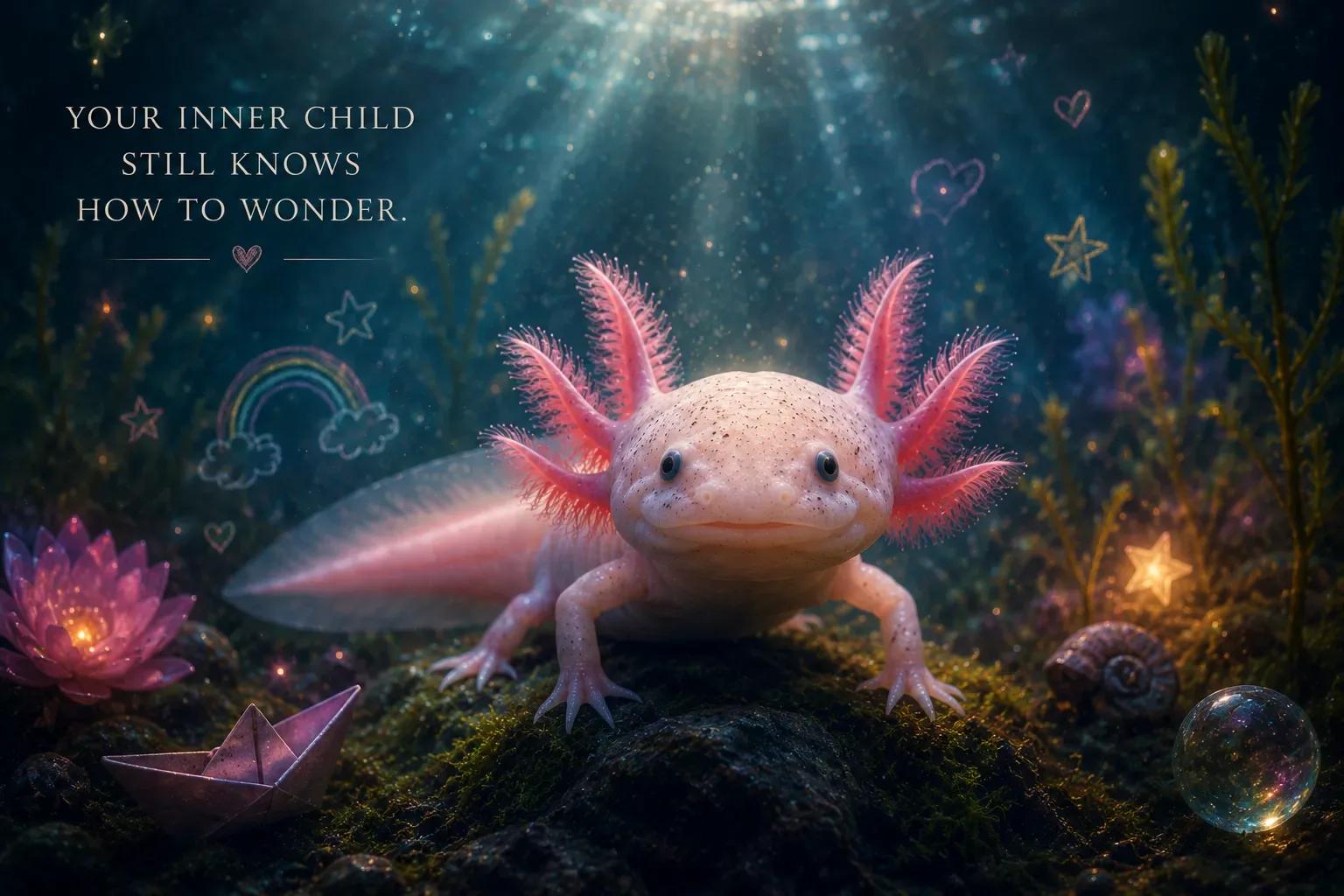
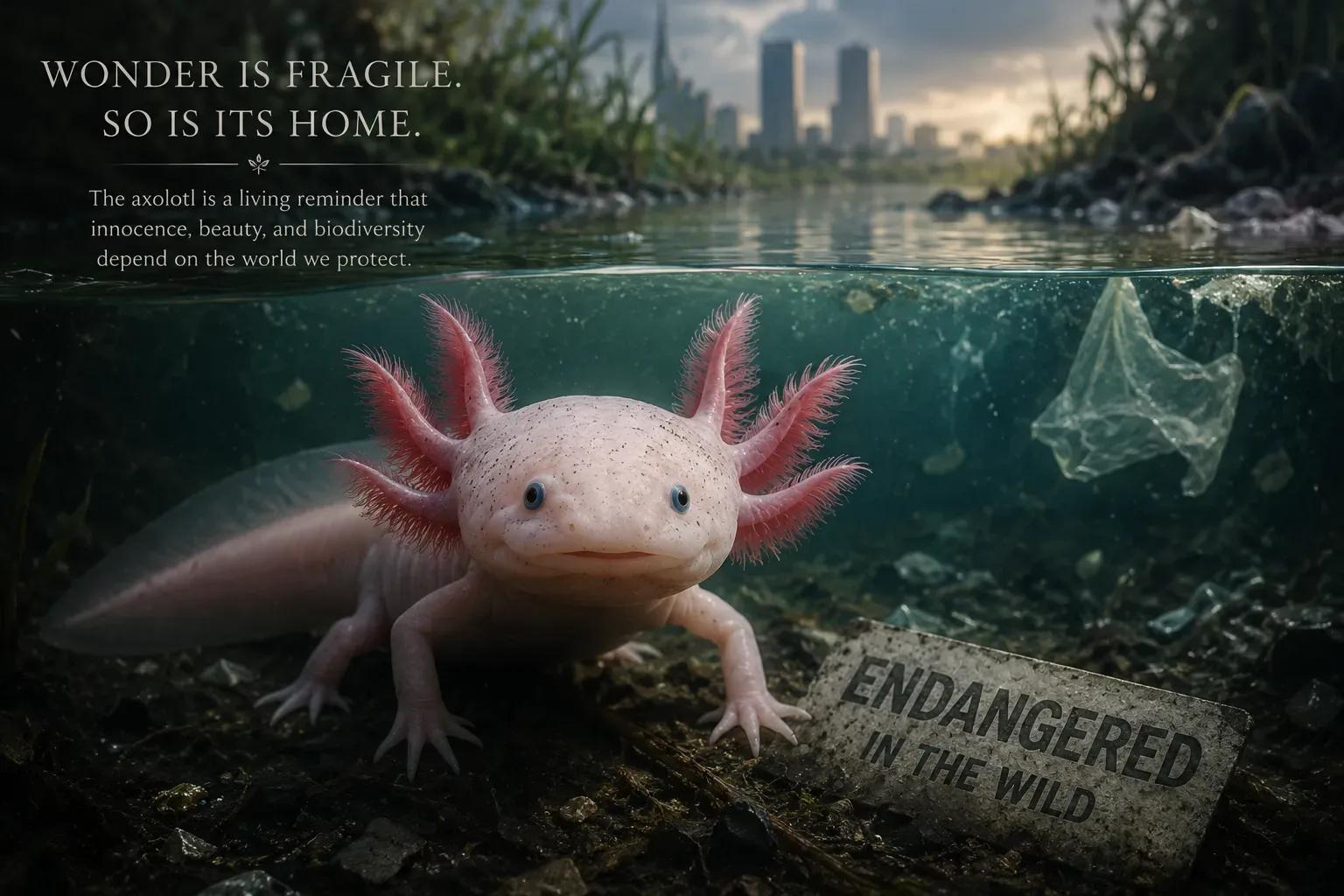
The wild axolotl is critically endangered.
That fact gives its symbolism a deeper sadness.
The axolotl does not only represent wonder. It represents wonder under threat.
Its natural home has been damaged by pollution, invasive species, habitat loss, and urban expansion. It still exists in captivity, laboratories, aquariums, and pet collections, but its wild world is disappearing.
That contrast feels symbolic.
We still like the image of wonder. We still like cute creatures. We still like fantasy animals. We still like magical-looking things.
But the living habitat where wonder survives is being destroyed.
The same thing can happen inside a person.
You can still like art, beauty, animals, games, stories, and dreams, but if your inner environment is polluted by stress, fear, cynicism, comparison, pressure, and survival mode, your real creativity starts to disappear.
The axolotl asks: What kind of world allows wonder to stay alive?
Regeneration: The Power to Grow Back
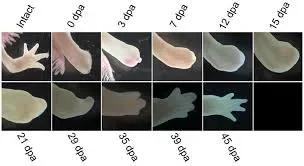
The axolotl is famous for regeneration.
It can regrow limbs, tails, parts of its heart, spinal cord, eyes, and even parts of its brain.
This makes the axolotl one of the most powerful living symbols of healing.
The axolotl does not just survive damage.
It rebuilds.
Symbolically, the axolotl represents the part of us that can recover what was lost: lost creativity, lost trust, lost joy, lost emotional softness, lost curiosity, lost confidence, and lost imagination.
The axolotl reminds us that healing is not only about closing a wound.
Healing can mean becoming whole again.
It says: You can grow back. You can become curious again. You can return to wonder. You can rebuild the parts of yourself that life damaged.
Neoteny: Growing Up Without Losing the Inner Child
Neoteny is one of the most important parts of axolotl symbolism.
The axolotl reaches maturity while keeping juvenile traits.
That means it does not follow the usual symbolic path of grow up, lose the old form, become something else.
Instead, it shows another path: grow up, but keep the magic.
This is a powerful symbol for creativity.
The best artists, inventors, explorers, storytellers, and visionaries often keep some part of themselves child-like. Not childish in the negative sense, but child-like in the sacred sense: curious, open, playful, experimental, and unafraid to ask strange questions.
The axolotl teaches that maturity does not have to mean the death of wonder.
You can become responsible without becoming numb.
You can become wise without becoming cold.
You can grow older without abandoning the part of you that still believes life is mysterious.
The Axolotl's Gills: Breathing Through Sensitivity
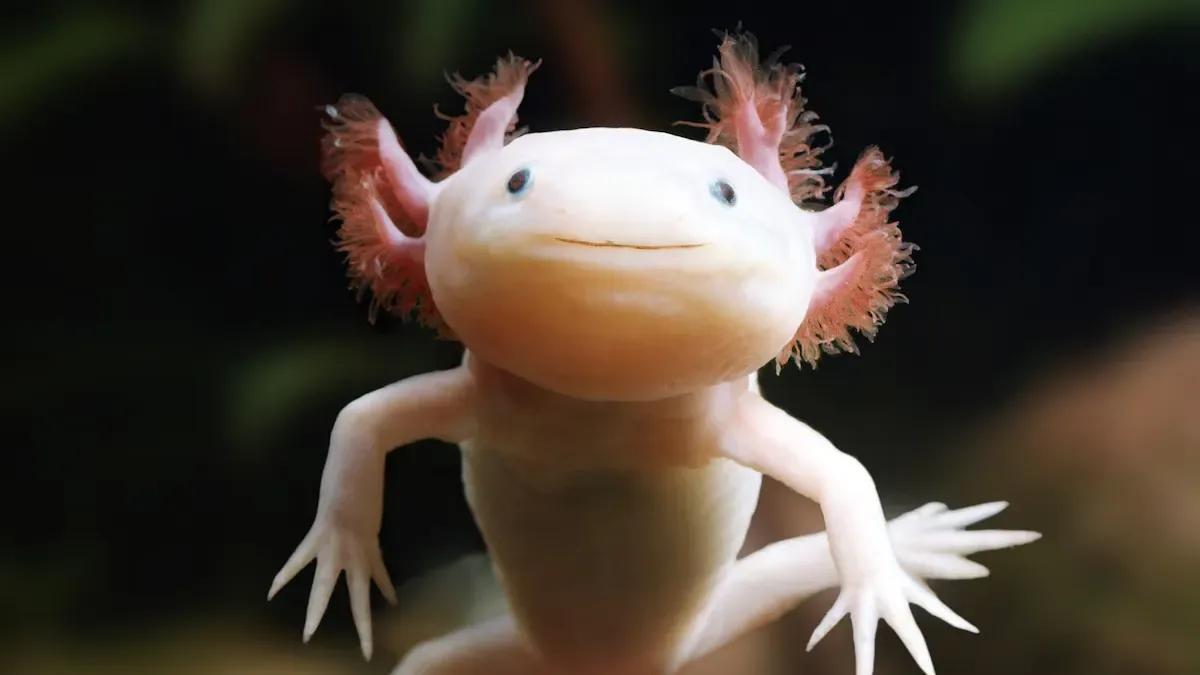
One of the most recognizable features of the axolotl is its feathery external gills.
They look like a crown, a halo, coral branches, or living antennae.
Symbolically, the gills represent sensitivity.
The axolotl breathes through delicate structures exposed to the water around it. It does not hide all of its vulnerability inside armor.
It survives through openness.
That makes the axolotl a symbol of emotional sensitivity, creative reception, soft awareness, environmental vulnerability, the ability to breathe through feeling, and openness as a survival strategy.
But this also makes the axolotl fragile.
If the water is polluted, the creature suffers.
Sensitive beings need clean environments.
Creative people need emotional oxygen.
Wonder cannot survive in poisoned water.
The Axolotl and Creativity
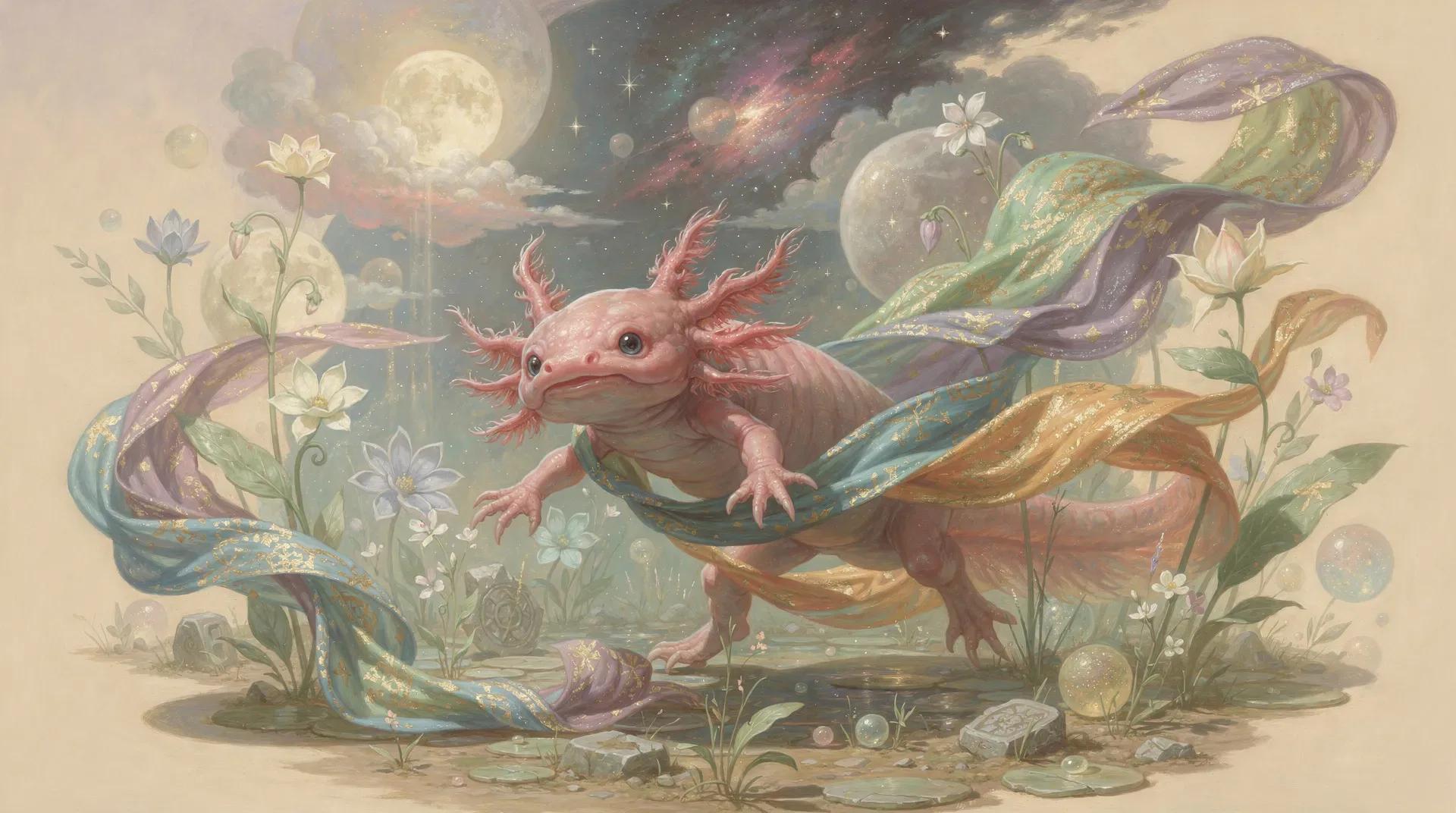
The axolotl is one of the most creative-looking animals on Earth.
It seems unfinished in the best way.
It looks like a creature still becoming.
That makes it a strong symbol of creative potential.
Creativity often requires a person to stay close to the unknown. To make something new, you have to allow yourself to be awkward, experimental, strange, and not fully formed yet.
The axolotl symbolizes that state.
It is not the finished masterpiece.
It is the living sketch.
It reminds us that creativity often begins as something soft and weird before it becomes something powerful.
The axolotl may symbolize early-stage ideas, creative incubation, playful experimentation, strange beauty, emotional imagination, and the courage to remain unfinished.
In a world obsessed with polish, performance, and certainty, the axolotl represents the sacred unfinished thing.
The axolotl represents the sacred unfinished thing.
The Axolotl as a Symbol of Soft Resilience
Many animals symbolize resilience through armor, speed, claws, horns, venom, or aggression.
The axolotl symbolizes a different kind of resilience.
Soft resilience.
It does not look powerful in the obvious way. It does not dominate. It does not roar. It does not intimidate.
Its strength is hidden in its ability to heal.
That is a different archetype.
The axolotl teaches that softness is not the opposite of strength.
Softness can be regenerative.
Softness can be adaptive.
Softness can survive damage without becoming cruel.
The axolotl is the animal symbol of healing without hardening.
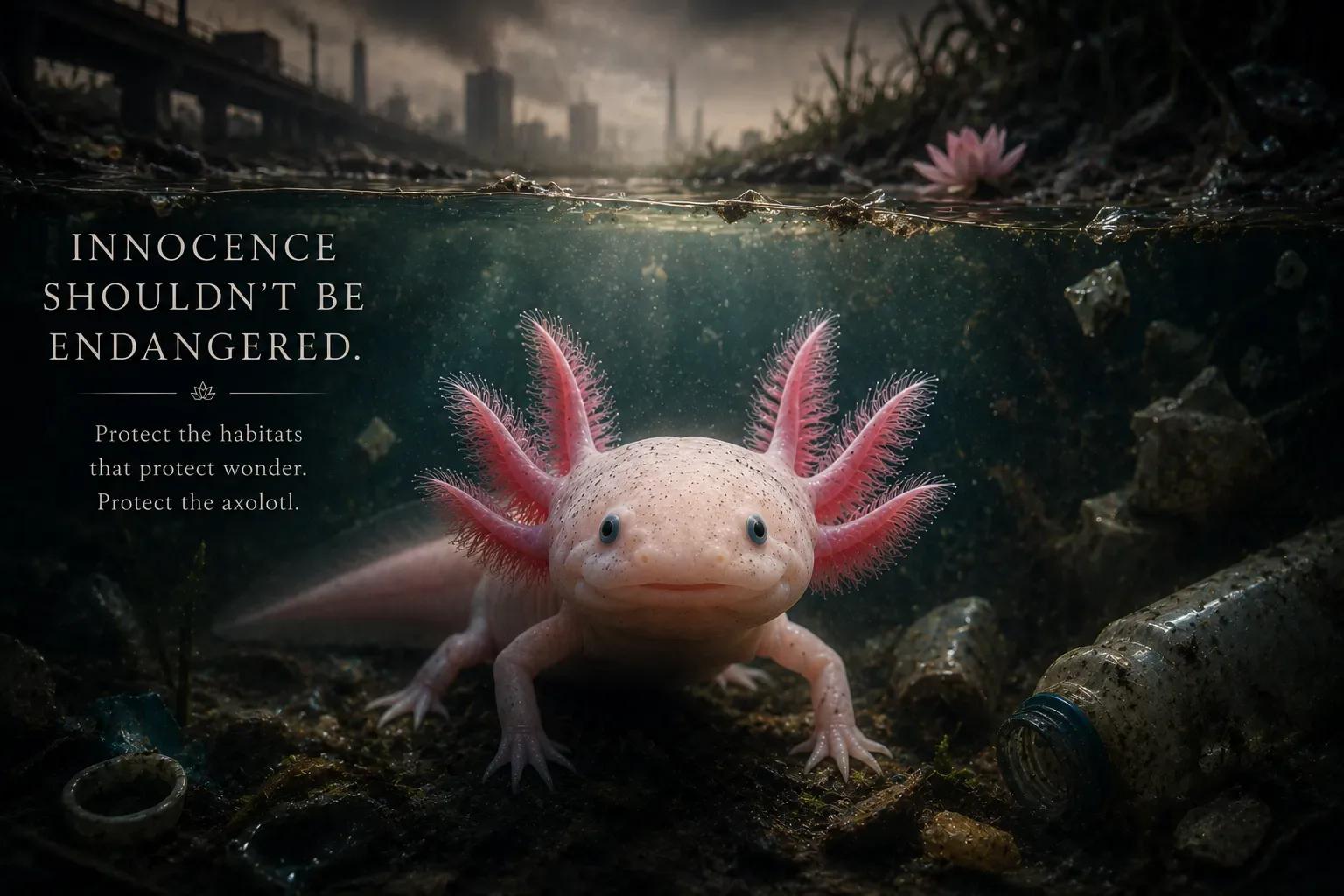
Innocence Under Threat
The axolotl looks innocent.
That is part of why people love it.
But innocence is not the same as weakness.
In symbolic terms, innocence means a state of openness before corruption. It means the ability to meet the world with curiosity instead of suspicion.
The tragedy of the axolotl is that this innocence exists inside a damaged world.
Its real habitat has been invaded, polluted, and reduced. The animal that symbolizes wonder is being pushed out by the consequences of human development.
That makes the axolotl an image of innocence under threat.
It asks us: What happens to soft things in a hard world? What happens to wonder in a polluted culture? What happens to curiosity when everything becomes content, productivity, competition, or survival?
The axolotl does not only ask us to protect a species.
It asks us to protect the conditions where innocence can exist.
Axolotl Symbolism in Mexican Culture
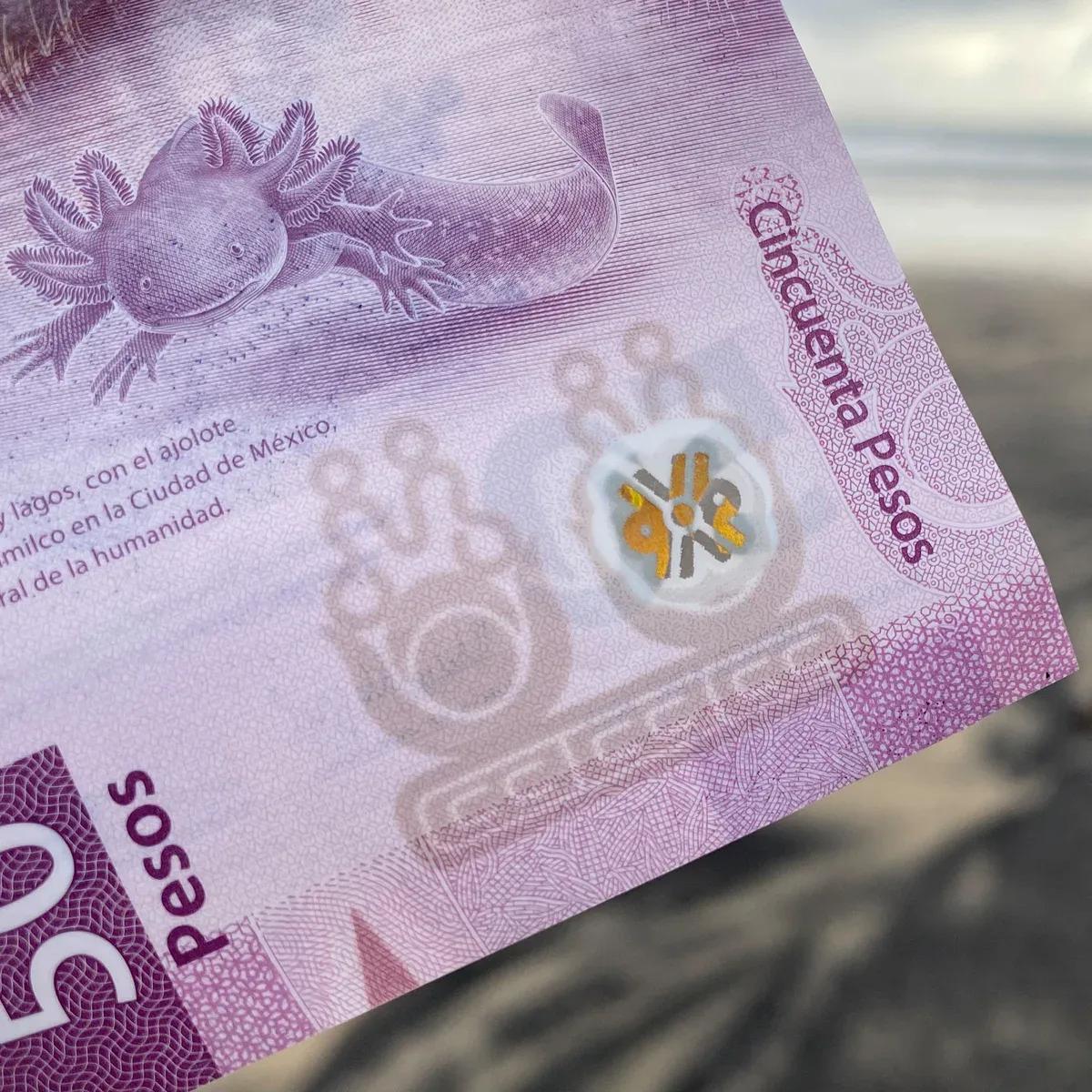
The axolotl is deeply connected to Mexico, especially Xochimilco.
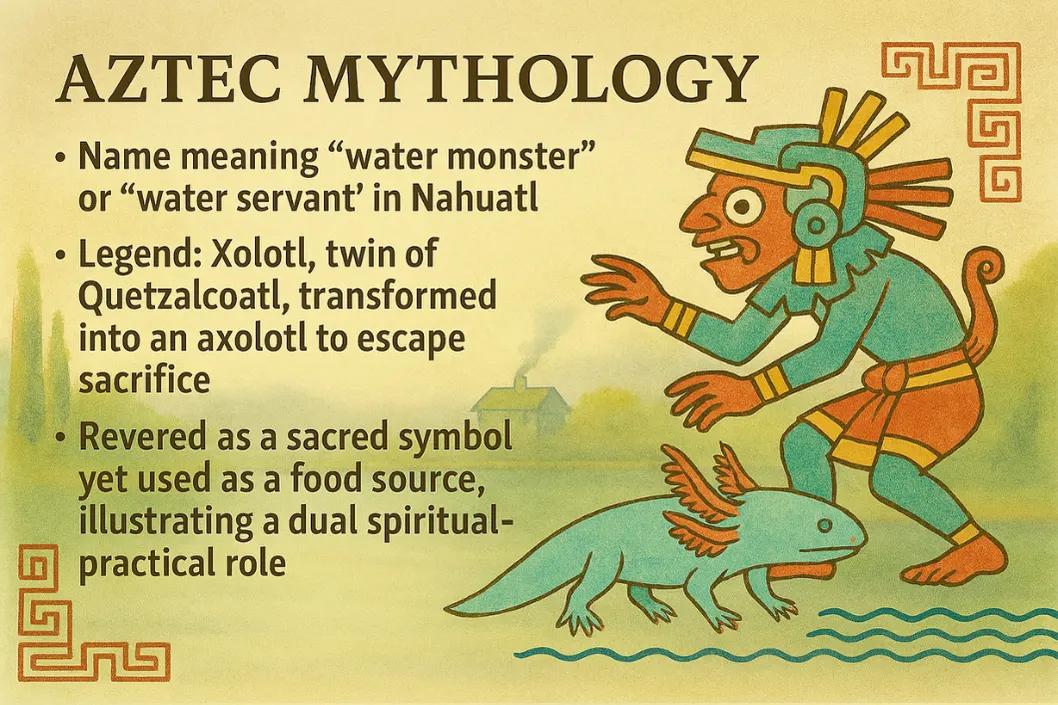
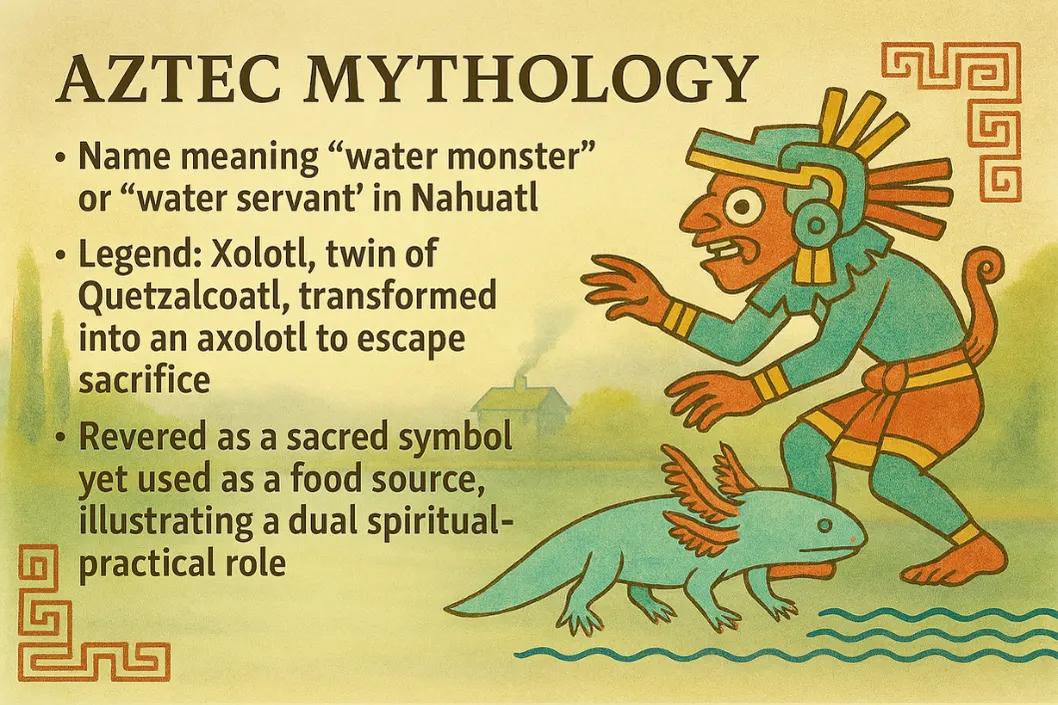
Its name is often linked to the Nahuatl language and the Aztec deity Xolotl, a figure associated with transformation, endings, monstrosity, twins, and the underworld.
This gives the axolotl an even deeper symbolic layer.
It is not only cute.
It is mythic.
The axolotl becomes a creature of in-between states: water and land, youth and adulthood, death and regeneration, monster and miracle, biology and mythology, endangered animal and cultural icon.
This is what makes the axolotl so powerful.
It lives between categories.
And many magical creatures do.
What the Axolotl Teaches
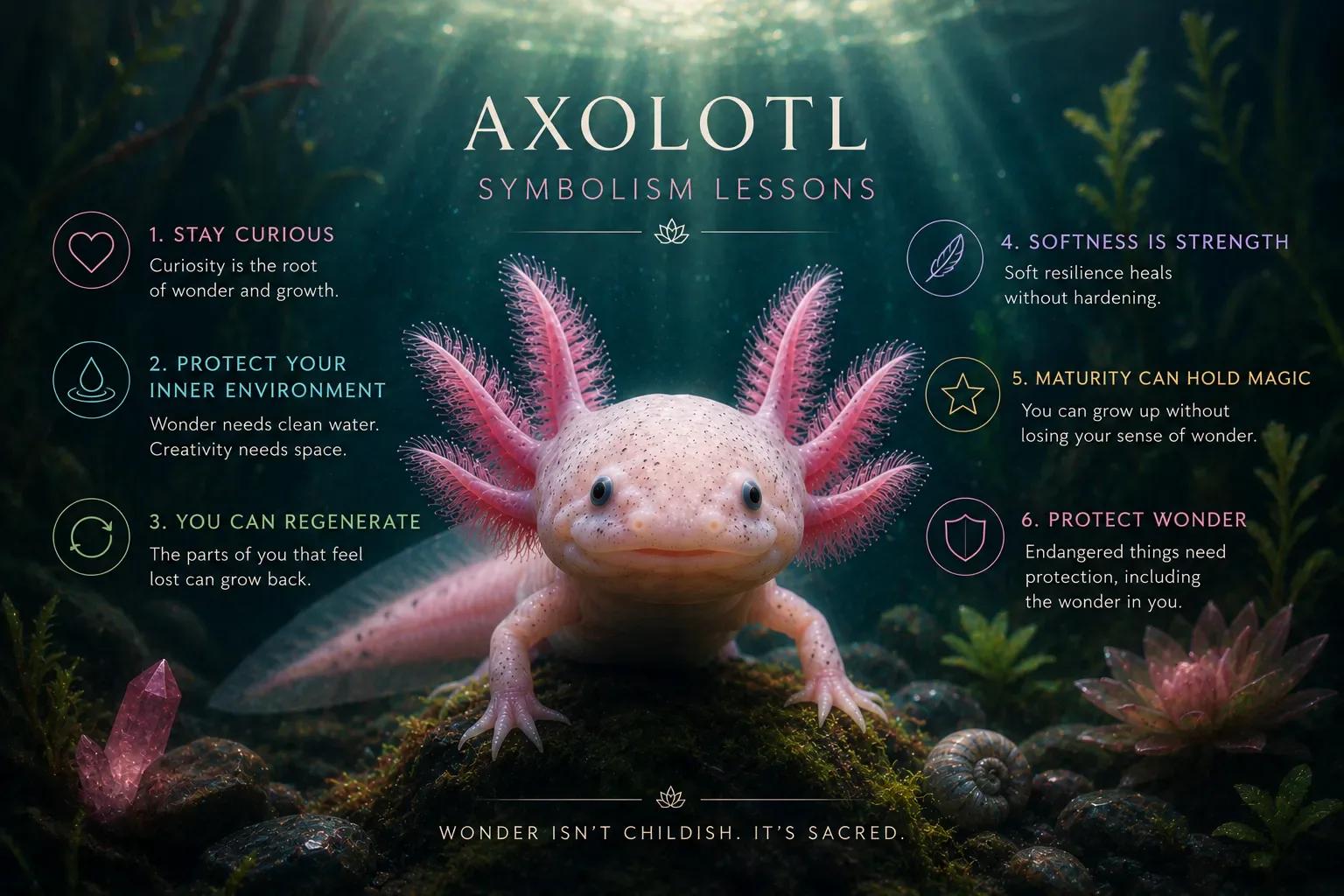
The axolotl teaches several lessons.
1. Stay curious. Curiosity is not childish. It is one of the roots of intelligence.
2. Protect your inner environment. Wonder needs clean water. Creativity needs emotional space.
3. You can regenerate. The parts of you that feel lost may not be gone forever.
4. Softness can be strength. You do not have to become hard to become resilient.
5. Maturity does not require losing magic. You can grow up and still remain open, strange, playful, and imaginative.
6. Endangered things need protection. If wonder is disappearing, it must be protected intentionally.
Final Meaning of Axolotl Symbolism
The axolotl symbolizes endangered wonder.
It represents child-like energy, creativity, softness, regeneration, innocence, healing, and the strange power of staying open in a world that pressures everything to harden.
It is a creature that grows without fully abandoning youth.
It is an animal that heals without becoming armored.
It is a symbol of the inner child, not as weakness, but as a regenerative force.
The axolotl reminds us that wonder is not decoration.
Wonder is survival. Creativity is survival. Softness is survival.
And if the axolotl is disappearing from the wild, maybe that should make us ask what else is disappearing from the world - and from ourselves.
The axolotl is not just a cute animal.
It is a living reminder that the most magical parts of life are often the most fragile.
Protect the habitat. Protect the wonder. Protect the child-like energy that still knows how to grow back.
Axolotl Symbolism Quick Summary
| Axolotl Trait | Symbolic Meaning |
|---|---|
| Critically endangered in the wild | Endangered wonder, innocence under threat |
| Neoteny | Growing up without losing child-like energy |
| Regeneration | Healing, renewal, creative rebirth |
| External gills | Sensitivity, openness, emotional breathing |
| Aquatic life | Dream state, subconscious, emotional world |
| Soft body | Soft resilience, vulnerability as strength |
| Smile-like face | Joy, curiosity, innocence |
| Mexican origin | Cultural memory, myth, transformation |
| Unfinished appearance | Creative potential, becoming, imagination |
| Captive popularity vs wild decline | Keeping the image of wonder while losing its living source |
Explore on AnimalDex
Continue learning about the axolotl through species facts, behavior lessons, and related survival strategies on AnimalDex.
Axolotl species pageAxolotl animal lessonResilience animal powerAnimal Symbolism hub
Systems Intelligence & Hidden Purpose
See these animals as engineered biological systems: what they are built to do, how they fit the wider environment, and what their design can teach us.
Specialized Hardware
External gills, aquatic neoteny, and unusual regenerative capacity make axolotls living hardware for low-motion survival and tissue rebuilding.
Systems Script
Axolotls occupy cool freshwater systems where regeneration, camouflage, and patience outperform speed. They are less about domination and more about biological repair efficiency under pressure.
Strategic Insight
Some systems win not by avoiding damage entirely, but by rebuilding faster than disruption compounds.
Quick questions
Short answers to common questions readers ask on this topic.
What does an axolotl symbolize?
The axolotl symbolizes endangered wonder, regeneration, child-like energy, creativity, softness, innocence, healing, and the ability to mature without losing curiosity.
Why is the axolotl a symbol of regeneration?
Axolotls are famous for their ability to regrow body parts, including limbs and other tissues. Symbolically, this makes them a powerful image of healing, renewal, and creative rebirth.
What does axolotl neoteny symbolize?
Neoteny means the axolotl reaches maturity while keeping youthful traits. Symbolically, it represents growing up without losing wonder, play, softness, or imagination.
Why is the axolotl connected to the inner child?
The axolotl's soft appearance, neoteny, curiosity, and regenerative power make it a strong symbol of the protected creative inner child.
Is the axolotl endangered?
Yes. Wild axolotls are critically endangered, mainly because of habitat loss, pollution, urbanization, and invasive species in and around their native Xochimilco habitat.
Sources and Further Reading
Animals mentioned
Jump from this article into the species pages behind the examples, systems notes, and field-guide references.
Answer guides related to this topic
If you want direct comparisons and clear recommendations, continue with these answer-focused pages.
Best Animal Identification Apps
Compare the best animal identification apps by features like photo/video identification, species coverage, collection capabilities, offline use, and more.
Read answer guideWhat Is Animal Collecting
Learn what animal collecting means in modern apps and how AnimalDex turns real-world sightings into cards, sets, rarity, and species learning.
Read answer guidePokemon-Like Animal App
Looking for a Pokemon-like animal app with real species? AnimalDex combines creature-collection energy with AI scanning and wildlife learning.
Read answer guideTurn what you learn into a real animal collection
Keep going in AnimalDex with the species behind this guide, real-world sighting context, and a collection that grows beyond the article.
Related guides
Indus River Dolphin Symbolism: Blind Observation, River Wisdom & Hidden Navigation
Explore Indus river dolphin symbolism through blind echolocation, river navigation, endangered status, and the archetype of seeing without eyes.
Read articleSnowy Owl Symbolism: Arctic Observation, Silent Wisdom & Patient Sight
Explore snowy owl symbolism through Arctic hunting, silent flight, patient observation, and the archetype of wisdom that waits in stillness.
Read articleBlue-ringed Octopus Symbolism: Warning Beauty, Deadly Observation & Hidden Precision
Explore blue-ringed octopus symbolism through aposematic coloration, tetrodotoxin, and the archetype of beauty that warns.
Read article