

coral reefscoral bleachingmarine heatwaves
Can Bleached Coral Recover? A Week Touching Its Clone Did It
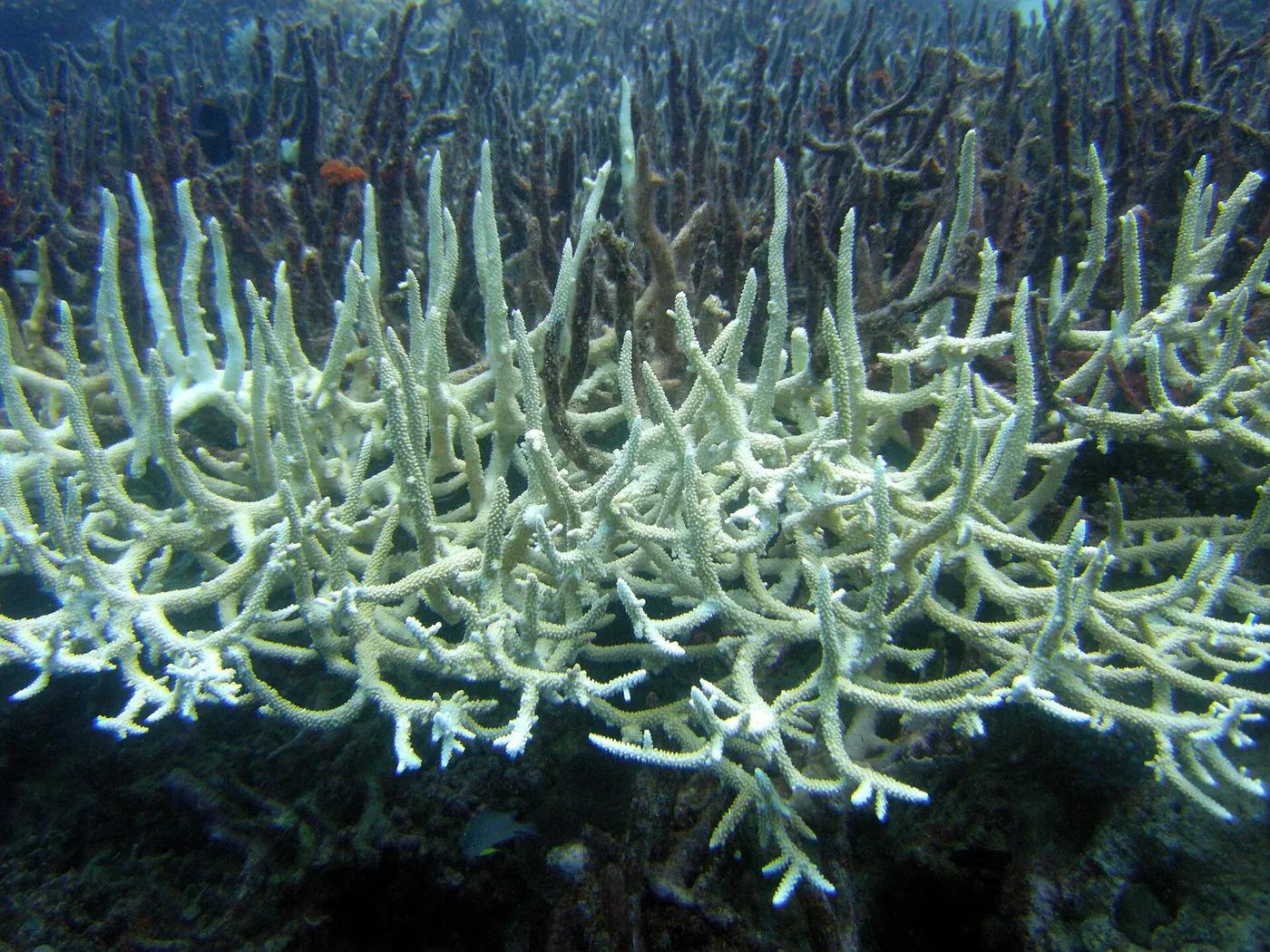
Bleached corals at Stanford fully recovered in 7 weeks after touching a healthy clone. Those kept millimetres apart died. Touch a stranger and they fight.
In this guide
- Can bleached coral recover just by touching a healthy clone?
- Why do corals turn white?
- How did scientists discover this by accident?
- How does a healthy coral pass algae to a bleached one?
- How long does it take coral to recover from bleaching?
- What happens if a bleached coral touches a different coral?
- Can scientists reverse coral bleaching on real reefs?
- Where can you see coral reefs and the animals that need them?
The short answer
Quick answer
Yes. Bleached coral is starving, not dead, and survivors can recover, though normally over months to years. In a 2026 Stanford lab study, bleached fragments that touched a healthy, genetically identical clone for about a week fused tissue with it, received its food-making algae and fully recovered in seven weeks. Fragments kept millimetres apart died.
The experiment
Can bleached coral recover just by touching a healthy clone?
Five starving white corals touched a healthy clone of themselves and came back to life. Five more, kept just a few millimetres from their clones, died.
That was the whole experiment, run in a Stanford lab: 10 pairs, each made of one bleached fragment and one healthy fragment from the same coral. Half the pairs were allowed to touch. Half were not. Seven weeks later, every bleached fragment that touched had fully recovered its colour, and every bleached fragment kept apart was dead.
The study was led by Danny Collins, an oceans PhD student at the Stanford Doerr School of Sustainability, with marine scientist Steve Palumbi and faculty advisor Fiorenza Micheli. It was published on 14 October 2026 in Science Advances.
Stanford calls it the first time bleached corals 'on the brink of death' have been seen to fully recover through brief contact with healthy clones. Or, as Collins puts it: 'While bleached corals may be dying, they are not dead yet.'
| Group | Pairs | Outcome after 7 weeks |
|---|---|---|
| Bleached fragment touching its healthy clone | 5 | All 5 fully recovered |
| Bleached fragment a few millimetres from its clone | 5 | All bleached fragments died |
A few millimetres was the gap between a coral that lived and a coral that died.
Borrowed colour
Why do corals turn white?
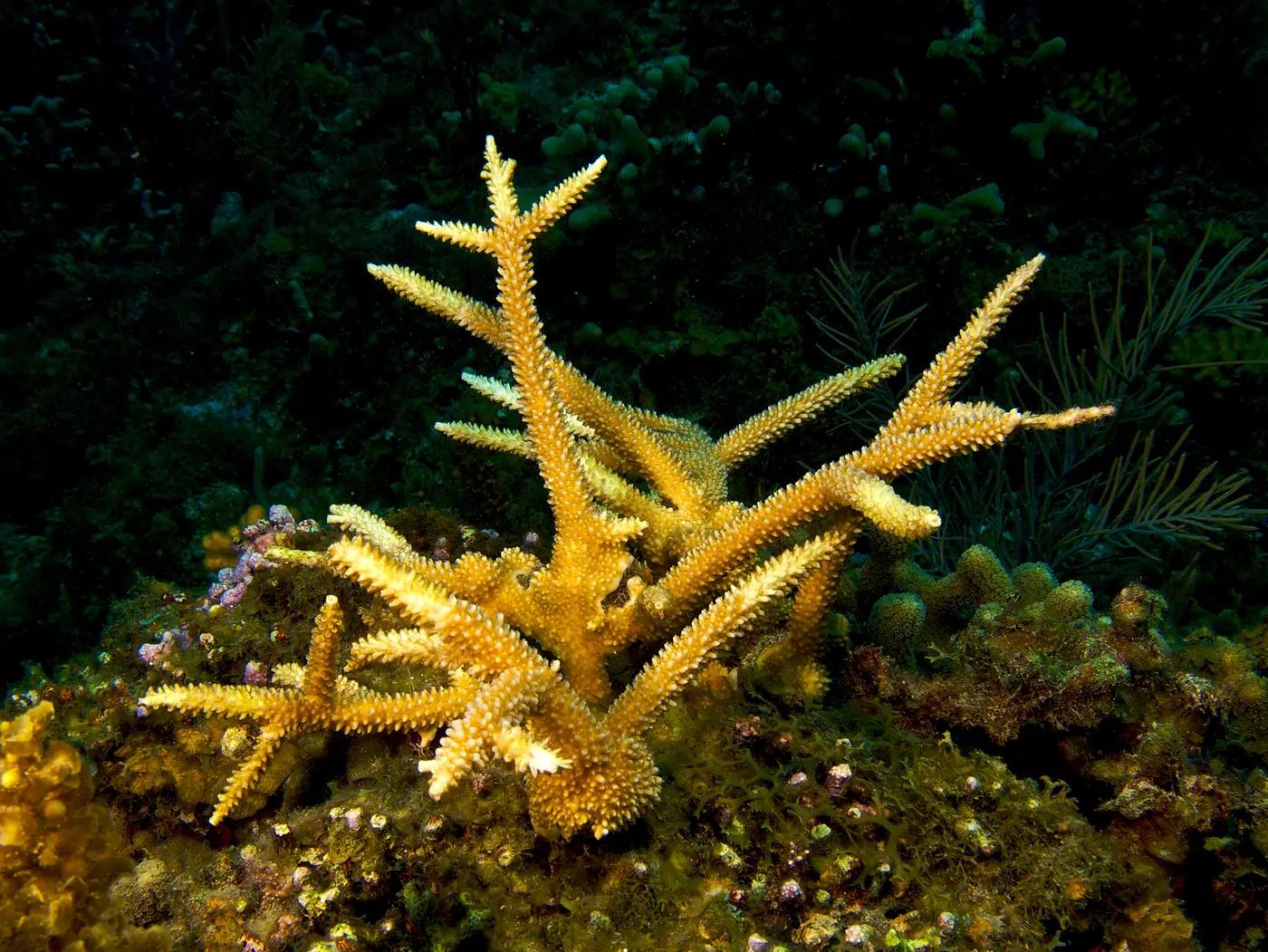
The colour on a reef mostly isn't the coral's. The colours 'are actually not from the coral themselves,' Collins told ABC News. 'They're from colorful microscopic algae that are living in the coral's tissues.'
The coral itself is an animal, every species of it, not a plant or a rock. The algae are lodgers that pay their rent in food, supplying the energy corals need to grow. Reef builders such as staghorn coral depend on that arrangement.
Bleaching is what happens when the deal collapses. When the water warms, corals expel their algae. With the lodgers gone, the coral goes pale, starves and is left open to harmful algae moving in.
In other words, a heatwave makes a coral evict its own food supply. If it survives, full recovery normally takes months to years. 'Bleached corals are often considered a lost cause because recovery after a heatwave is very slow, if it happens at all,' says Micheli.
Happy accident
How did scientists discover this by accident?
It started with two corals falling over. In 2025, in Palumbi's lab, a bleached fragment and a healthy fragment from the same colony tipped over in a tank and ended up touching. Where they met, colour came back.
Collins happened to be thinking about contact for a darker reason. He had been studying how harmful bacteria riding on plastic debris infect corals by touch. The toppled fragments raised the opposite question. 'Could we flip this mechanism?' he asked.
The answer was filmed on a phone. Collins attached one to a microscope with a 3D-printed mount designed by Tom Rolander of the Fabrication Lab at Hopkins Marine Station, and recorded the recovery as it happened.
Tissue bridge
How does a healthy coral pass algae to a bleached one?
Shortly after the two corals touch, tiny channels in their tissues line up. The result is a continuous pathway that algae and nutrients flow through. Collins calls it a 'tissue bridge that acted as a nutrient highway.'
Within days, the healthy fragment's algae are crossing into the bleached one. Stanford's release says within three days; ABC News reports transfer beginning in as little as 36 hours. The figures may simply describe when transfer starts and when it is clearly visible.
Then the algae go into overdrive. In the second week of contact, the algae inside the bleached fragments doubled roughly every 4 days, about 10 times faster than in wild corals. 'They flood in and start dividing at the fastest rates seen in corals,' Palumbi said.
So the healthy coral is not refilling its twin by hand. It hands over a starter population, and the empty, bleached tissue fills up fast, like a vacant building that suddenly has tenants again.
Once inside, the algae doubled every 4 days, about 10 times faster than in wild corals.
Record pace
How long does it take coral to recover from bleaching?
Normally, months to years, and only if the coral survives at all. In this lab study, seven weeks, which the Stanford team describes as 'the fastest documented recovery to date.'
The strangest part is how little contact it takes. Pairs that touched for one week, and in some cases just five days, were then pulled apart. The bleached fragments went on to recover by themselves, in the same seven weeks as pairs left touching the whole time.
That tells the researchers the donor is not keeping the patient alive. Recovery is driven by the algae multiplying inside the bleached coral once they arrive. A few days of contact is the spark; the coral does the rest.
| Milestone | Time |
|---|---|
| Algae start crossing into the bleached fragment | Within days (36 hours to 3 days, depending on the source) |
| Minimum contact for full recovery | 5 days (in some cases) |
| Reliable contact for full recovery | 1 week |
| Algae doubling time in week 2 | Every 4 days (about 10× the wild rate) |
| Full recovery after touching a clone | 7 weeks |
| Normal recovery after bleaching | Months to years |
Stranger danger
What happens if a bleached coral touches a different coral?
Here the trick flips. In most coral species, individuals multiply by making clones that grow together into colonies sharing the same genes. And corals can tell their own clone from a stranger.
'Their tissues fuse if they are from the same clone,' Palumbi said, comparing it to medicine: 'Organ transplants are often successful if the donor is your identical twin.'
Pair a bleached fragment with a healthy coral that is not genetically identical and there is no rescue. Collins told ABC News the result was 'antagonistic interactions almost similar to an [rejected] organ transplant.' Hackaday describes corals from other clones taking over the bleached coral 'antagonistically.'
So a starving coral will accept a lifeline from itself. From anyone else, the two fight, like a body rejecting a transplant.
Touch its own clone and a dying coral comes back. Touch a stranger and the two fight.
The catch
Can scientists reverse coral bleaching on real reefs?
Not like this, and the researchers say so first. The method needs a healthy, genetically identical copy of every bleached coral, which Stanford's release says 'is not feasible at the scale needed to restore reefs.' Collins told ABC it likely won't scale in the wild. So far it has only worked in the lab.
Scale is the whole problem. The most recent global bleaching event lasted about two and a half years, and about 84% of the world's coral reef area was exposed to bleaching-level heat stress, according to NOAA figures reported by ABC. Reefs shelter somewhere between a quarter and a third of known marine species, feed and employ hundreds of millions of people, and shield coasts from storms and flooding.
Stanford's release also points to estimates that reefs could disappear within a few decades as marine heatwaves become more frequent and intense.
The next step is to take the touching out of it. The team plans to test ways of delivering algae without contact, such as collecting algae from healthy corals long before a heatwave and giving it to bleached corals in large batches. Hackaday has floated a separate idea, not the team's: healthy patches on a partly bleached reef might hold more heat-tolerant algae that could be spread to neighbours.
Any of these would join tools already in use, such as breeding heat-tolerant corals, coral nurseries and transplanting coral microbiomes. Collins is blunt about what matters most: 'The real solution will be trying to make sure that these corals then don't bleach.'
See it yourself
Where can you see coral reefs and the animals that need them?
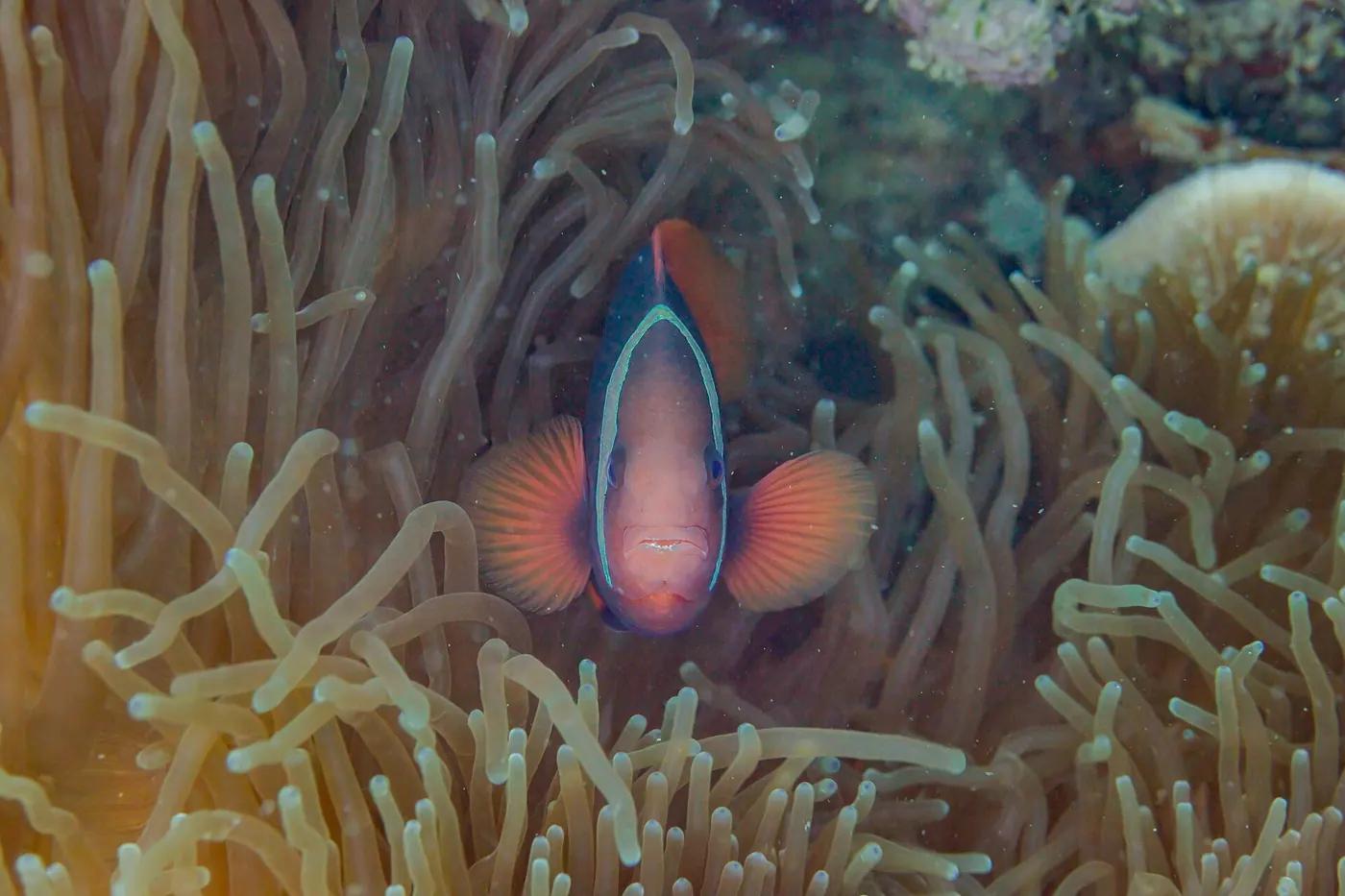
Every brown, green or gold coral on a healthy reef is wearing borrowed colour, and the reef it builds is home to everything else: a clownfish tucked into a magnificent sea anemone, a humphead parrotfish patrolling the coral, a green sea turtle or hawksbill sea turtle gliding past, a reef manta ray or blacktip reef shark cruising the edge.
If you are dreaming of the Great Barrier Reef, our guide to animals in Australia is a good place to start. For more creatures that come back from the edge, browse our most resilient animals tier list.
One rule, given everything above: look, don't touch. The touching in this study happened between corals in a lab, not between corals and human hands. Choose snorkel and dive operators who keep you off the reef, and never stand on coral.
When you do come face to face with a real reef animal, from a boat, a pier or behind a waterproof case, AnimalDex lets you capture it with your phone camera and add it to your collection.
magnificent sea anemonereef manta rayblacktip reef sharkanimals in Australiamost resilient animals
Quick questions
Short answers to common questions readers ask on this topic.
- Can bleached coral recover?
- Yes, if it survives. Bleached coral is starving, not dead, and can regain its algae and colour. In a 2026 Stanford lab study, bleached fragments that touched a healthy clone of themselves fully recovered in seven weeks.
- How long does it take coral to recover from bleaching?
- Normally months to years, according to Stanford researchers. In their lab experiment, corals that touched a genetically identical healthy fragment for about a week recovered in seven weeks, which the team calls the fastest documented recovery to date.
- Is bleached coral dead?
- No. Bleached coral has lost the algae that feed it, so it is starving and vulnerable, but it is still alive. As lead author Danny Collins put it, bleached corals 'may be dying, they are not dead yet.'
- What causes coral bleaching and why do corals turn white?
- When the water gets too warm, corals expel the colourful microscopic algae living in their tissues. Those algae supply the energy corals need, so without them the coral goes pale, starves and becomes open to harmful algae.
- Are corals animals or plants?
- Corals are animals, every species of them. In most species, individuals multiply by making clones that grow together into colonies sharing the same genes, and they rely on algae living inside them for food.
- How much of the world's coral has been hit by bleaching?
- During the most recent global bleaching event, which lasted about two and a half years, about 84% of the world's coral reef area was exposed to bleaching-level heat stress, according to NOAA figures reported by ABC News. Not every reef exposed to that heat necessarily bleached.
Animals mentioned
Jump from this article into the species pages behind the examples, systems notes, and field-guide references.
ClownfishHumphead ParrotfishGreen Sea TurtleHawksbill Sea Turtle
Sources and further reading
Answer guides related to this topic
If you want direct comparisons and clear recommendations, continue with these answer-focused pages.
Best Animal Identification Apps
Compare the best animal identification apps by features like photo/video identification, species coverage, collection capabilities, offline use, and more.
What Is Animal Collecting
Learn what animal collecting means in modern apps and how AnimalDex turns real-world sightings into cards, sets, rarity, and species learning.
Pokemon-Like Animal App
Looking for a Pokemon-like animal app with real species? AnimalDex combines creature-collection energy with AI scanning and wildlife learning.