
honey badgersnakesvenom resistance
Honey Badger Isn't Immune to Cobras. Hedgehogs Share Its Fix
Honey badger vs snake: the badger usually wins, but it isn't immune. One charged swap pushes cobra toxin away, and hedgehogs and pigs evolved it too.
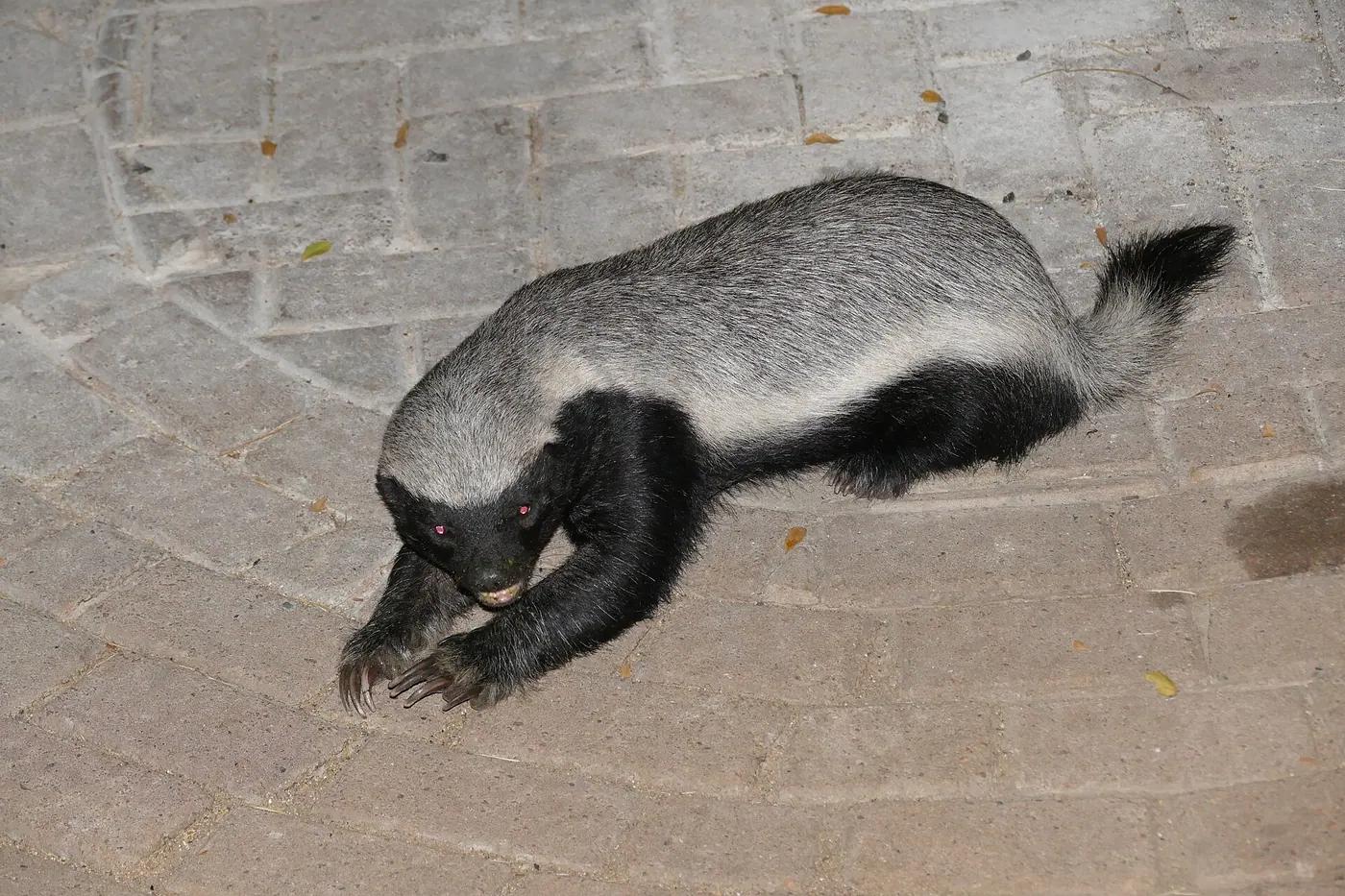
The short version · 0:28
GUESS WHO ELSE HAS THIS POWER
This article in under a minute. Watch it here, then read on for the detail and sources.
AI-narrated, with motion added to some photos. Photo credits are with each image in the article.
In this guide
- Who wins, honey badger or snake?
- Is the honey badger immune to snake venom?
- Why doesn't snake venom work on honey badgers?
- Which is more venom-resistant, a mongoose or a honey badger?
- What other animals are resistant to snake venom?
- What makes a honey badger so hard to kill?
- Honey badger myths: which ones are true?
- What can you learn from a honey badger vs snake fight?
The short answer
Quick answer
In a honey badger vs snake fight, the badger usually wins because it is the hunter: it regularly preys on cobras and other elapids, and large snakes made up 58% of its diet in the southern Kalahari's hot-wet season. But it is resistant, not immune: one charged swap in its nerve receptors makes cobra-type neurotoxins grip poorly.
Who wins, honey badger or snake?
Short answer
The honey badger isn't immune to cobra venom, and it eats snakes from the cobra's family anyway. So the usual answer to honey badger vs snake is right: the badger usually wins, because the badger is usually the one doing the hunting.
Honey badgers regularly prey on elapids, the snake family that includes cobras and mambas. In the southern Kalahari, diet data summarised by the University of Michigan's Animal Diversity Web show that large snakes made up 58% of what the badgers ate in the hot-wet season, January to April. That's from an animal 60–70 cm long and 8–12 kg, armed with big forefoot claws for grasping prey.
So what stops the venom? Not thick hide, and not attitude. It comes down to a single building block, in a single protein, at a single spot.
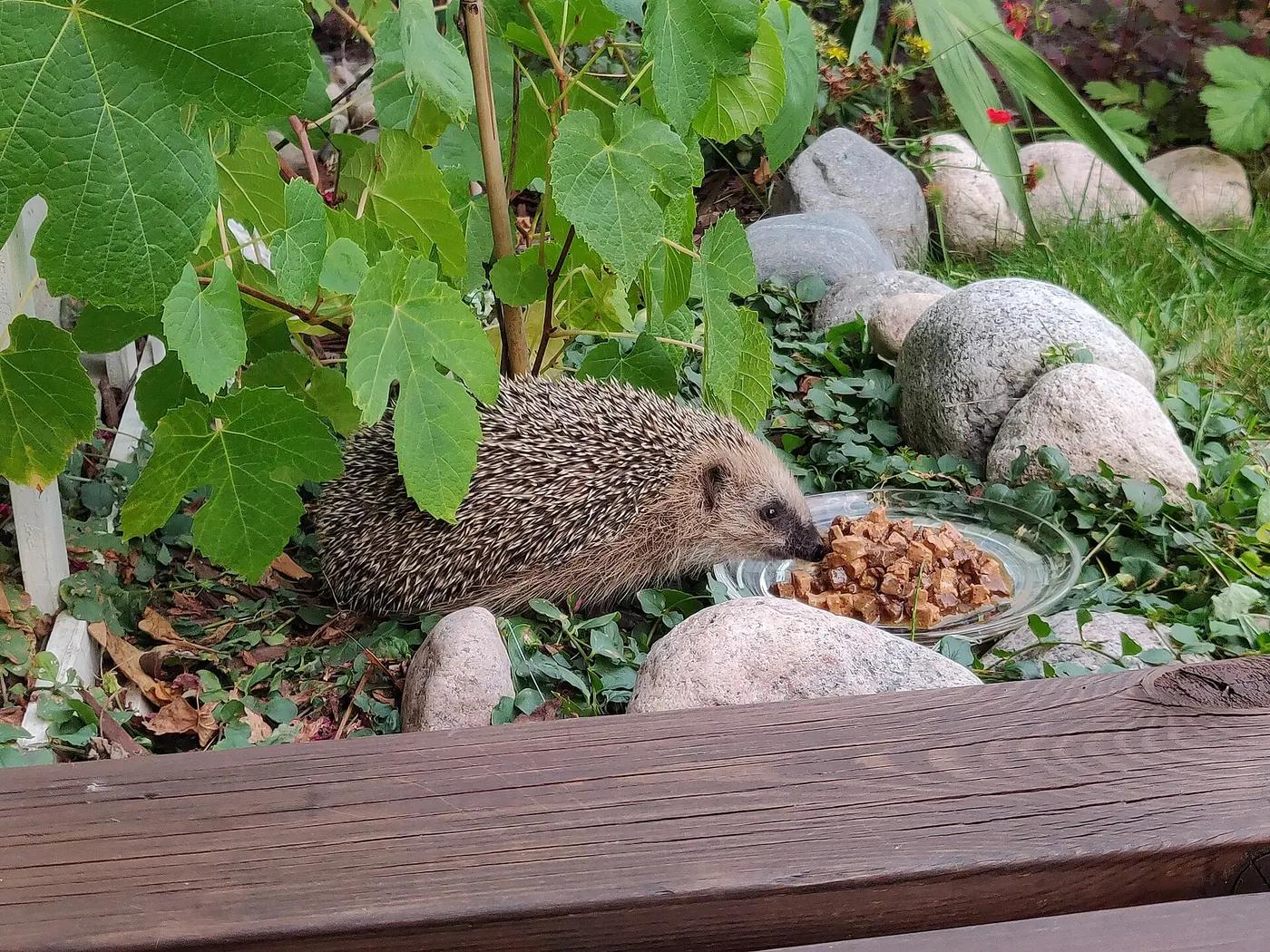
And here is the part the usual answer skips. A hedgehog snuffling through leaf litter carries that same building block in that same spot. So does a pig. None of the three got it from the others.
Myth check
Is the honey badger immune to snake venom?
No. Animal Diversity Web says the honey badger's exact resistance mechanism 'has not been demonstrated' in the animal itself. What does exist is genetic evidence, backed by lab work, and it points at one very specific target.
Cobras such as the Egyptian cobra and the king cobra, and mambas such as the black mamba, are elapids. Their venom carries α-neurotoxins, which latch onto the muscle nicotinic acetylcholine receptor: the docking point where a nerve tells a muscle to move. Jam it and the message never lands. The result is rapid paralysis, then death.
The badger's version of that receptor holds the toxin poorly. But a receptor that resists one class of toxin is not the same as a body that resists a whole venom. The scientists behind the 2022 study that mapped this resistance across mammals list that as an open question and call for more work.
That gap matters for the other snake people ask about, the puff adder. It is a viper, not an elapid, and the receptor research covers elapid toxins only. Nothing in that research explains how a badger copes with a puff adder bite, so be wary of anyone who sounds certain either way.
Resistant, not immune: the honey badger's venom protection has been read from its genes, not tested in a fight.
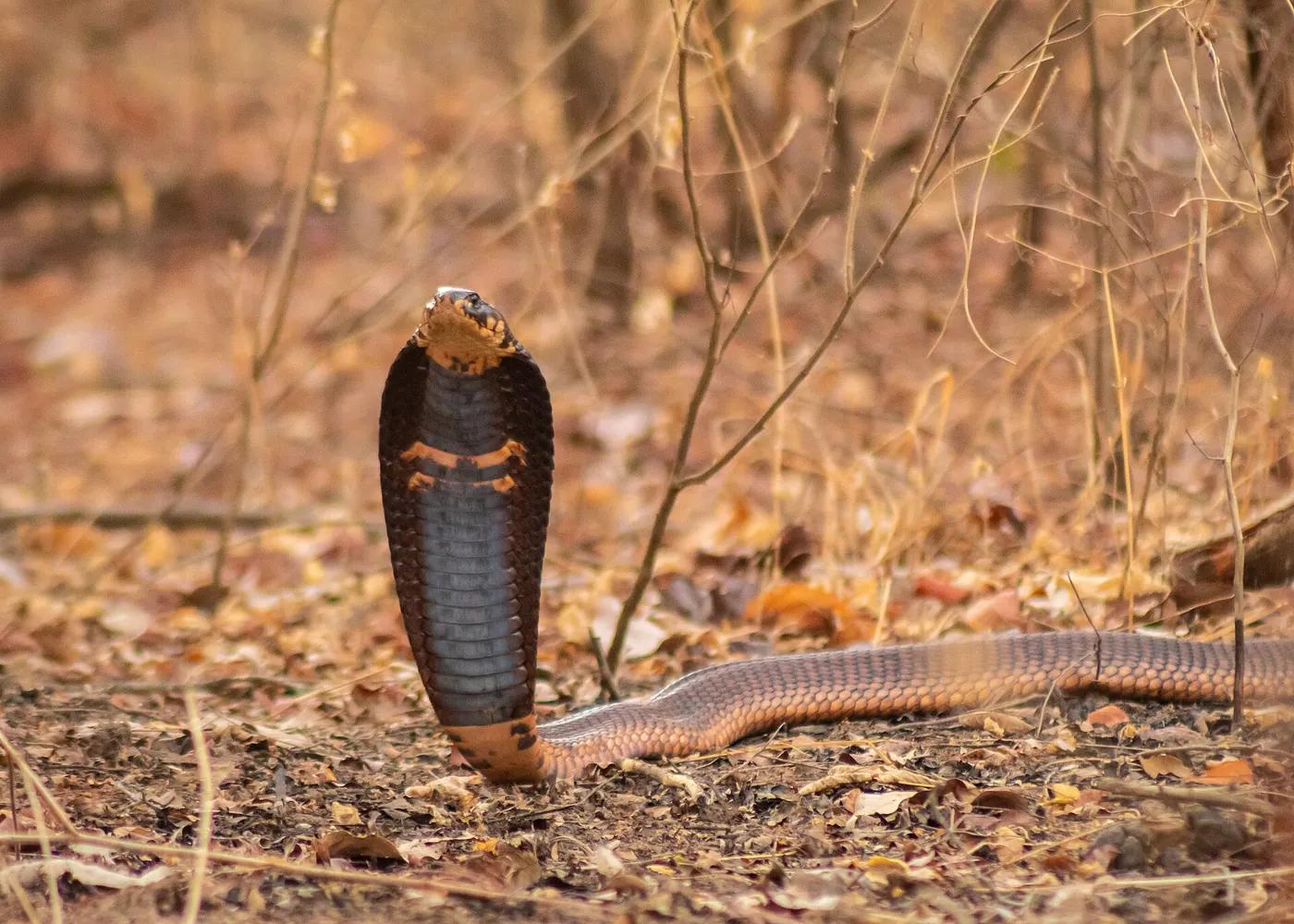
The lock
Why doesn't snake venom work on honey badgers?
Think of the receptor as a lock and the α-neurotoxin as a key built to jam it. In most mammals, position 187 of that lock holds an amino acid called tryptophan, written W187, and the toxin slots in neatly.
In the honey badger, that position holds arginine instead: R187. Arginine carries a positive charge, and the charge pushes the toxin away before it can settle. One swap, in one protein, at one spot, and the key no longer fits well.
In 2015, Drabeck, Dean and Jansa reported in the journal Toxicon that four regular elapid eaters, the honey badger, the Egyptian mongoose, the domestic pig and hedgehogs, had each evolved resistance changes in this receptor separately, under strong positive selection. In plain terms: evolution favoured these changes hard, again and again.
Which brings us back to the hedgehog. Hedgehogs and pigs carry the badger's exact swap, arginine at site 187. A spiny hedgehog, a farmyard pig and a snake-hunting badger landed on the same answer, and none of them inherited it from the others.
A hedgehog, a pig and a honey badger found the same one-letter fix for cobra venom, each on its own.
The upset
Which is more venom-resistant, a mongoose or a honey badger?
The mongoose, and the lab work isn't kind to the badger. Studies summarised in the 2022 paper found that charge-based resistance, the badger's kind, is 'less effective than either glycosylation or proline resistance'. Both of those belong to the mongoose.
At sites 187 and 189, mongooses carry N187/T189. That pairing lets the cell attach a sugar molecule to the receptor (glycosylation), a shield parked right where the toxin wants to land. The badger's charge repels the key. The mongoose's sugar covers the keyhole.
Then come changes at two more sites, 194 and 197, where most mammals have proline. In lab binding tests on the Egyptian mongoose's receptor, summarised in the 2022 study, swapping proline for leucine at 194 and for histidine at 197 stopped the toxin binding. Those tests measured toxin against the receptor in the lab, not against a live mongoose.
All the mongooses sequenced in the study carried both the sugar and the proline changes. The meerkat's published genome shows the sugar shield and one of the proline swaps too.
The twist is in the family tree. Among the mongoose's wider relatives, the charge swap, the badger's fix, appeared first. Stronger selection later stacked the sugar shield and proline changes on top in mongooses. They started with the badger's lock and upgraded it.
| Animal | Change at the receptor | How it stops the toxin | Strength in lab work |
|---|---|---|---|
| Most mammals | W187 / F189 | No block: the toxin binds | No resistance |
| Honey badger | R187 (arginine) | Positive charge pushes the toxin away | Weaker type |
| Hedgehogs and pigs | R187 (arginine) | Same charge swap, evolved separately | Weaker type |
| Mongooses (all sequenced in the study) | N187/T189 plus L194/H197 | Sugar shield over the binding site, plus proline swaps | Stronger type |
| Meerkat | N187, T189, L194 | Sugar shield plus a proline swap | Stronger type |
The honey badger isn't the best-protected snake fighter. The mongoose's lock is stronger.
Copycats
What other animals are resistant to snake venom?
Until recently, this kind of venom resistance was thought to be rare, known in just six mammals. A 2022 study screened 199 mammal sequences and found 27 new species with known resistance changes, plus 17 more with suspected ones.
The headline: resistance to α-neurotoxins has evolved separately at least 11 times in mammals. The badger's charge swap alone turns up in the common warthog, the European otter (also called the Eurasian otter), the scimitar-horned oryx, the Cape golden mole and Australia's common brushtail possum.
For the possum, snakes may not be the point at all. One idea, still only a hypothesis, is that the swap helps it cope with eucalyptus oil.
Madagascar is stranger still. The island's carnivores, the fossa family, carry the resistance even though no land snake on Madagascar makes these toxins. It is probably a leftover from before their ancestors reached the island.
Not every candidate is confirmed. Genets carry new swaps of their own, K187/E189, and whether those work still needs biophysical testing. And some venom-resistant mammals take a different route entirely: Animal Diversity Web notes that blood factors which neutralise the toxin are the other main strategy.
No land snake on Madagascar makes these toxins. Its carnivores carry the resistance anyway.
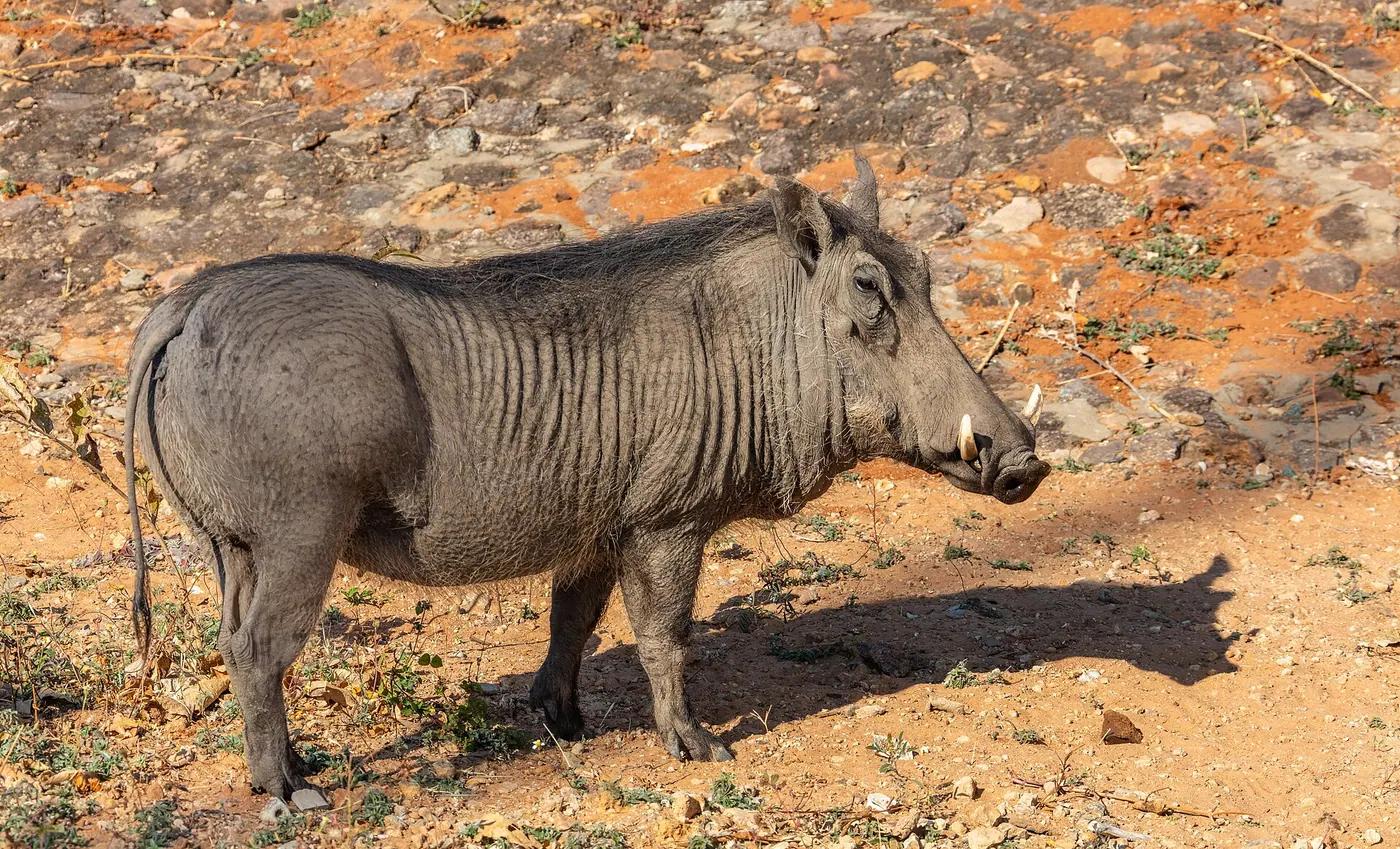
European otterCape golden mole
Loose skin
What makes a honey badger so hard to kill?
Bite a honey badger and you may find you're holding mostly skin. Its skin is thick and loose, so when a predator clamps down the grip doesn't hold, and the badger can twist around inside it and bite back.
That is why lions and leopards tend to kill only old or weak badgers. A fit adult in a coat that slides is a poor bargain for a big cat.
It isn't a homebody either. Males forage up to 27 km in a day, on a body that weighs no more than 12 kg.
Bite a honey badger and it can turn around inside its own skin and bite back.
Myth vs fact
Honey badger myths: which ones are true?
Three of the honey badger's most repeated stories, checked against the evidence. Start with the most charming one, because it has the least behind it.
The greater honeyguide, a bird, supposedly leads honey badgers to beehives. Animal Diversity Web says there is no evidence for this: the partnership has never been seen in the wild.
Next, the idea that nothing can kill a honey badger. Lions, leopards and spotted hyenas kill older badgers. And the animal famous for raiding hives has been killed by bees: badgers caught in beekeepers' traps have died from mass stings.
That trap is the uncomfortable side of the badger-and-bee story. Farmers and beekeepers kill honey badgers with traps and poison, and although the IUCN lists the species as Least Concern, its population is declining.
Last, the popular story that a honey badger bitten by a puff adder collapses, sleeps it off and gets back up. None of the sources behind this article document it, and the receptor research can't explain it, because it covers cobra-type toxins and the puff adder is a viper. Until someone checks it, file it under unverified.
The bird that leads badgers to honey? Nobody has ever seen it happen in the wild.
The take
What can you learn from a honey badger vs snake fight?
Put the two snake fighters side by side. The honey badger carries the weaker of the two anti-neurotoxin locks; the mongoose's is better. In the southern Kalahari's hot-wet season, the badger still makes large snakes more than half its diet.
Weaker lock. More than half its diet. The badger never waited for the mongoose's version.
The mongoose's take comes from its family tree. Its ancestors began with the same charge swap as the badger, then kept stacking changes until the toxin could barely touch the receptor. Same lock, different change, and the first fix turned out to be a starting point.
If there's a plan you've parked until your kit matches someone else's, or one you stopped improving because it already works, both animals have something to say about it. On AnimalDex you can take that fight to the honey badger on Talk and hear how its kind would see it, next to the usual answer.
Quick questions
Short answers to common questions readers ask on this topic.
- Who wins, honey badger or snake?
- Usually the honey badger, because it is the hunter. Honey badgers regularly prey on elapids such as cobras and mambas, and in the southern Kalahari large snakes made up 58% of their diet in the hot-wet season, January to April.
- Is the honey badger immune to snake venom?
- No. It is resistant, not immune: a charged swap at site 187 of its nerve receptors makes elapid α-neurotoxins bind poorly. Whether that adds up to resistance against whole venom has not been shown in live badgers.
- Can a honey badger survive a cobra or black mamba bite?
- Its receptors resist the α-neurotoxins that cobras and mambas use, which helps explain how it can hunt them. But no live-animal venom test is cited in the evidence, and resistance to whole venom remains an open question.
- Which is more venom-resistant, a mongoose or a honey badger?
- The mongoose. Lab work summarised in a 2022 study found the badger's charge-based resistance is less effective than the sugar shield and proline swaps mongooses carry. Those tests measured toxin binding to the receptor, not bites on live animals.
- What other animals are resistant to snake venom?
- Hedgehogs and pigs carry the badger's exact swap, and mongooses and meerkats have their own stronger version. The same charge swap also appears in warthogs, Eurasian otters, scimitar-horned oryx, Cape golden moles, brushtail possums and Madagascar's carnivores.
- Can a puff adder kill a honey badger?
- The research doesn't say. The receptor resistance works against elapid α-neurotoxins, and the puff adder is a viper, so that mechanism can't explain how a badger copes with its bite. The popular story of a bitten badger collapsing and getting back up is not documented in the sources behind this article.
Animals mentioned
Jump from this article into the species pages behind the examples, systems notes, and field-guide references.
Honey BadgerEgyptian CobraKing CobraBlack MambaEuropean HedgehogMeerkatCommon WarthogCommon Brushtail Possum
Answer guides related to this topic
If you want direct comparisons and clear recommendations, continue with these answer-focused pages.
Best Animal Identification Apps
Compare the best animal identification apps by features like photo/video identification, species coverage, collection capabilities, offline use, and more.
What Is Animal Collecting
Learn what animal collecting means in modern apps and how AnimalDex turns real-world sightings into cards, sets, rarity, and species learning.
Pokemon-Like Animal App
Looking for a Pokemon-like app with real animals? AnimalDex is something else: take any idea to a real animal for a genuinely different take, and every animal you meet in the wild joins your collection.