

herpingfield journalreptiles
How to Keep a Herping Field Journal
What to record after a snake, lizard or frog find: temperature, time, substrate, behaviour and an honest ID, without handling or disturbing the animal.
The short version · 0:42
STOP POSTING SNAKE LOCATIONS
This article in under a minute. Watch it here, then read on for the detail and sources.
AI-narrated, with motion added to some photos. Photo credits are with each image in the article.
Record the find, then leave the animal alone
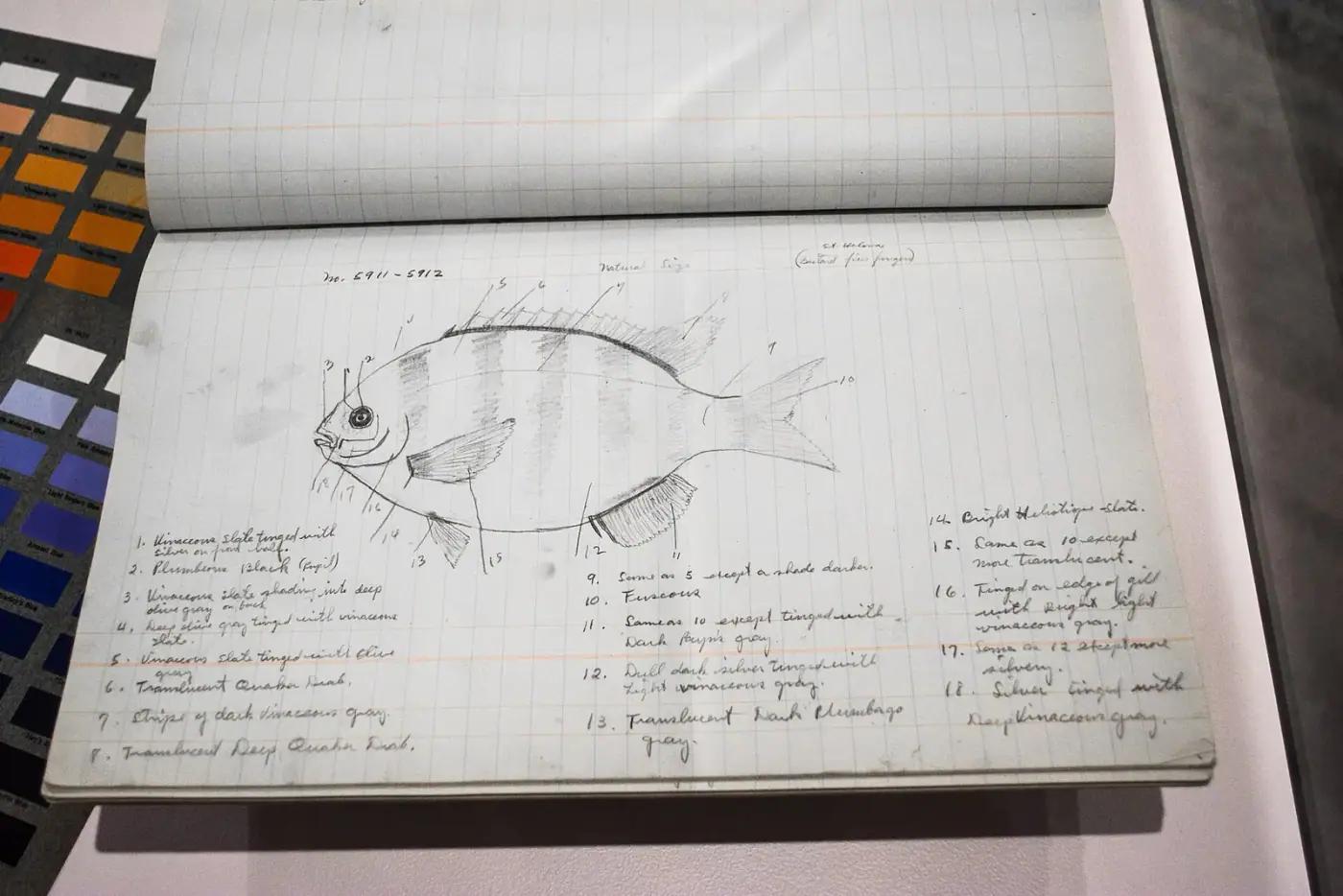
A herping journal is different from a bird list because reptiles and amphibians are governed by conditions. A garter snake is where it is because of the air temperature, the sun on that rock and the time since the last rain. A journal that records those conditions alongside the animal becomes predictive: after a season you know which nights the salamanders cross the road and which hour the wall lizards come out in April.
The record does not require touching the animal. A photograph from two metres, a few numbers and a sentence of behaviour is a complete entry. Pinning, flipping and crowding add nothing to the journal and a great deal of stress to the animal, and with venomous species they add risk you cannot undo.

The fields that matter for herps
Most of these take ten seconds at the time and cannot be recovered afterwards. The first six are the ones herpetological surveys actually use.
| Field | Why | Example |
|---|---|---|
| Date and time of day | Activity is tied to hour and season | 2026-04-18, 21:40 |
| Air temperature | The main predictor of reptile and amphibian activity | 14 °C |
| Weather and recent rain | Amphibian movement follows rain; basking follows sun | Overcast, rain 2 h earlier |
| Habitat and microhabitat | Where in the landscape, and where in the metre around the animal | Heathland edge; south-facing bank |
| Substrate or cover | Rock, log, leaf litter, road, under tin, in water | Basking on tarmac |
| Behaviour | Basking, moving, feeding, calling, in amplexus, in shed (cloudy eyes) | Basking, moved off when approached to 3 m |
| Life stage and count | Adult, juvenile, larva, egg mass; how many | 2 adults, 1 juvenile |
| How found | Visual search, road cruising, call survey, under cover | Road cruising, 25 km/h |
| Identity and confidence | Species or group, and the feature that decided it | Garter snake (Thamnophis); stripes seen, species not resolved |
| Place and precision | Where the animal was; how sure you are | Named reserve, within 100 m; exact site private |
Why temperature and time are the core of the record
Reptiles and amphibians are ectotherms: their body temperature, and therefore their activity, tracks the environment. In temperate regions most snakes are active in a band of roughly 15 to 30 °C air temperature, basking at the cool end and sheltering at the hot end, which is why spring finds happen in the late morning on south-facing slopes and summer finds happen at dusk. Amphibians move on wet, mild nights; a mass migration of common toads to a breeding pond typically starts on the first evenings above about 5 °C with rain, and your journal is how you learn the date for your own pond.
Write the temperature you measured or the forecast you read, and say which. Over a few seasons the journal shows you the conditions each species appears in, and it starts telling you where to be tonight.
Identity: species when you can, group when you must
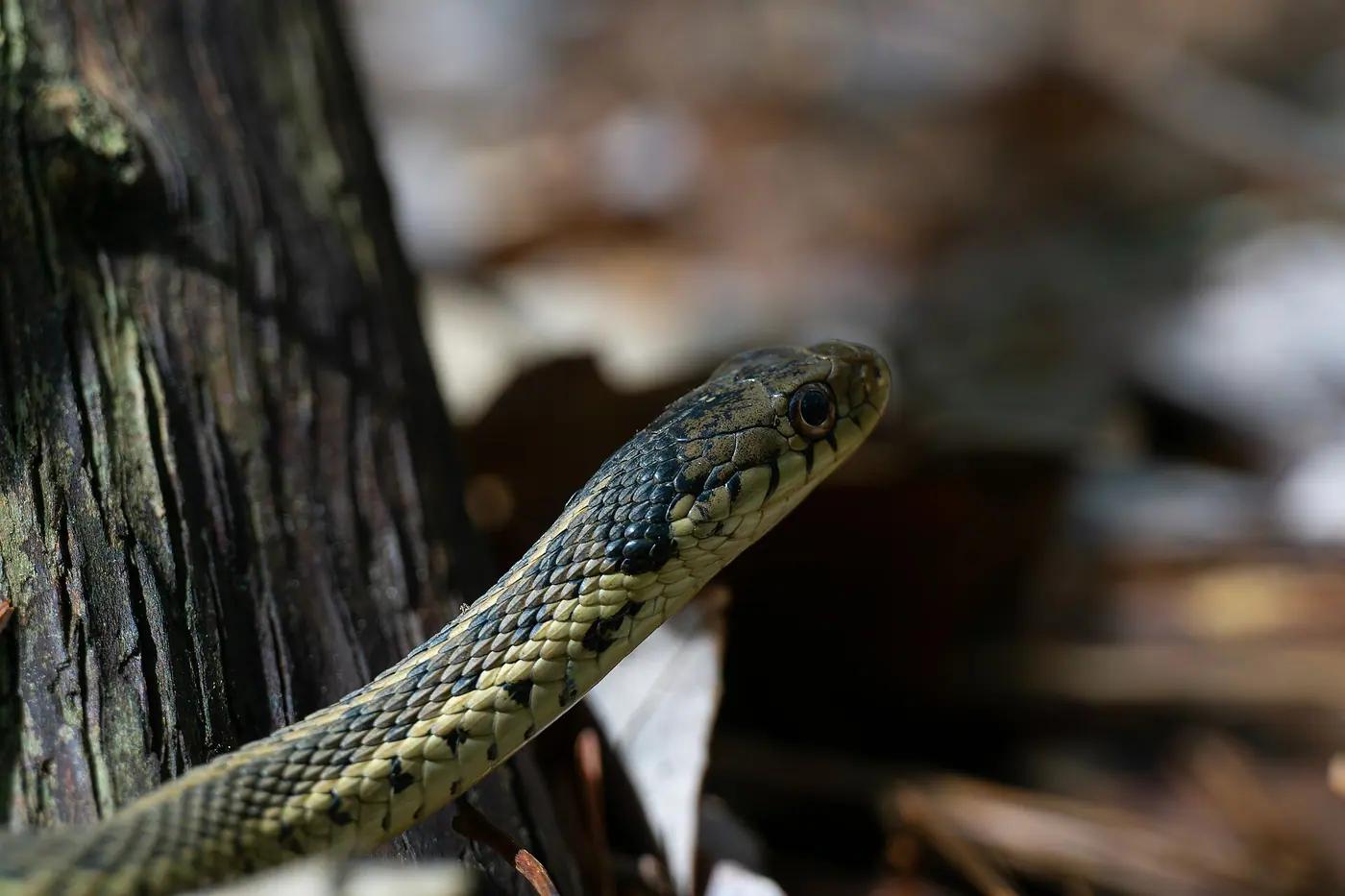
If you cannot identify to species, keep the group. Honesty travels better than a confident wrong name, and herps make this harder than birds: many are identified by scale counts, by the shape of a single head scale, or by a call you did not hear. A fire salamander with yellow blotches is unmistakable; a small brown newt in a torch beam often is not. Write the group, write the feature you could see, and let a later photo or a more experienced friend upgrade the entry.
Record the reason either way. “Vertical pupil, zigzag, reddish-brown: adder” is a record that can be checked. A name on its own is a guess with a tick next to it.
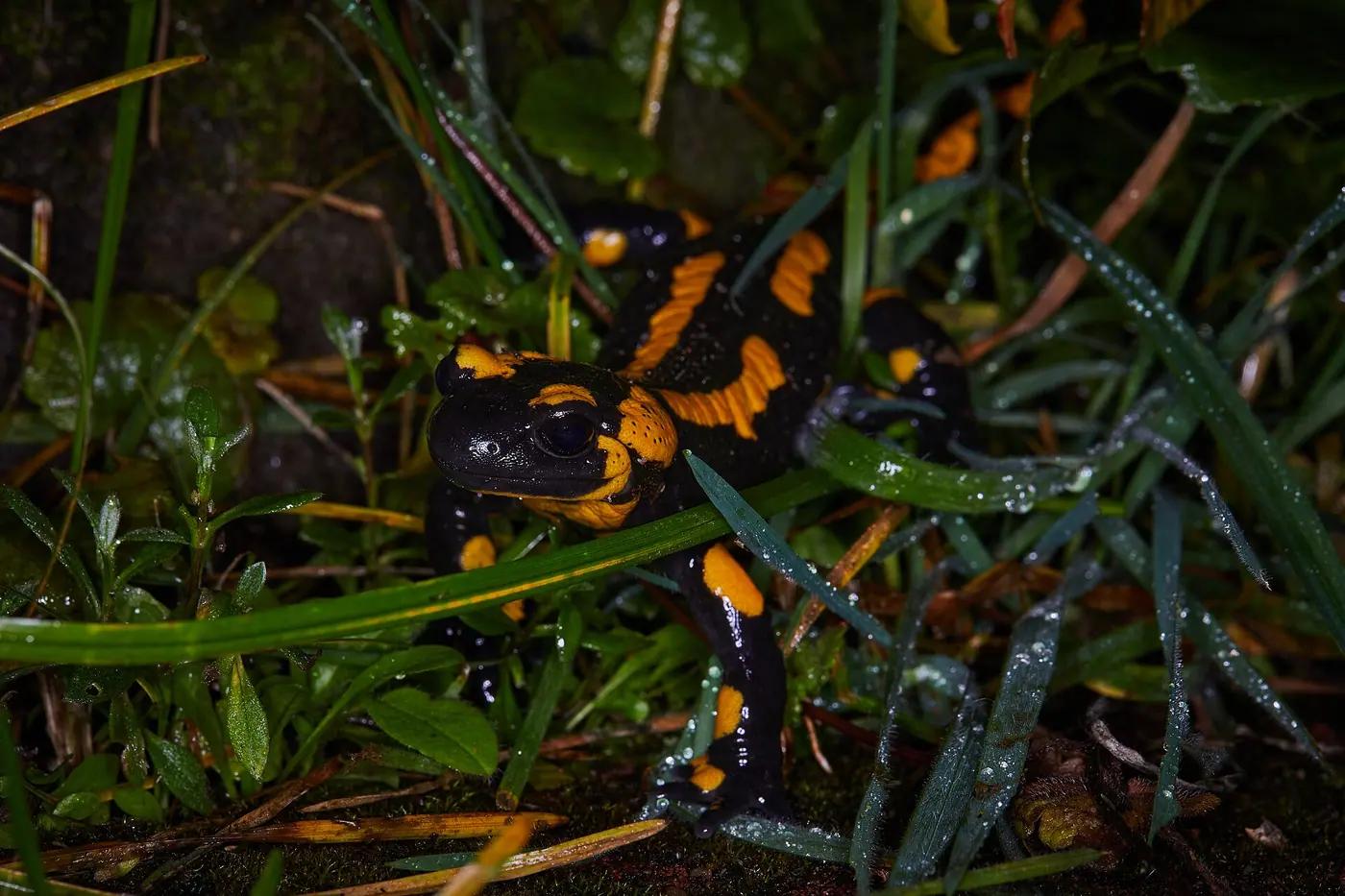
Fire SalamanderSmooth NewtAlpine Newt
Location is the place of the find
Do not drop today's GPS on last year's road-cruising photo. The location in a journal is a historical claim about where the animal was at the time, and it should carry a precision: “this bank, within 20 m” or “this reserve, somewhere on the eastern trail”. Unknown is an acceptable answer in your notes. In AnimalDex, a historical location is what you confirm when reviewing an archive item, and a candidate without one stays out of the import queue rather than being pinned to a guess.
Keep two versions of sensitive sites. The precise one lives in your own journal. The public one, the version that appears on a profile or a community platform, is the coarse place. Adder hibernacula, rare turtle ponds and any site for a species with pet-trade value have been emptied by people who read a precise location online.
Ethics that belong in the journal
Field behaviour is part of the method, and a few habits keep both the animal and the record intact.
Do not handle
Handling stresses the animal, transfers skin oils and sunscreen to amphibians that breathe through their skin, and with any snake you have not identified is a bite risk. Photograph from a distance and let it go about its business.
Replace cover exactly
If you lift a log, board or stone, put it back as it was and let the animal move back under on its own. Never set the cover down on top of the animal.
No flash on nocturnal frogs
Use a dim torch or red light for amphibians at night and keep the beam off them between frames. A frog's night vision is the thing it hunts and avoids predators with.
Clean boots between sites
Chytrid fungi (Bd and Bsal) and ranavirus travel on mud. Scrub and dry boots and nets between wetlands; it is the single biggest thing a herper can do for amphibians.
Do not bait or move animals for a photo
No posing, no placing a snake on a nicer rock, no chilling an animal to slow it down. The journal records what you found, where you found it.
A photograph from two metres, a few numbers and a sentence of behaviour is a complete entry.
Quick questions
Short answers to common questions readers ask on this topic.
- What should I write in a herping field journal?
- Date and time, air temperature, weather and recent rain, habitat and microhabitat, the substrate or cover the animal was on or under, its behaviour, life stage and count, how you found it, the identity with your confidence and the feature that decided it, and the place with a precision. A photograph from a distance completes the record.
- Do I need to handle a snake to identify it?
- No, and for a journal record you should not. Most identifications come from pupil shape, head markings, pattern and location, all visible in a photograph taken from two or three metres. Handling stresses the animal and is a bite risk with any snake you have not already identified. If the photo does not resolve the species, record the group.
- What temperature do snakes come out?
- In temperate regions most snakes are active at roughly 15 to 30 °C air temperature, basking at the cooler end of that range in spring and retreating or switching to dusk activity at the hot end in summer. Recording the temperature at each find is how your journal learns the exact pattern for your own sites and species.
- Can I use flash when photographing frogs at night?
- Avoid it. Nocturnal frogs rely on night vision to hunt and to detect predators, and repeated flash or a bright torch held on the animal disrupts that. Use a dim or red light, keep the beam off the frog between frames, take a few shots and move on.
- Can I keep a herping journal in an app?
- Yes. AnimalDex's herping field journal stores the identity, a historical place, the setting and the photo or clip as one record, with group-level identities allowed when the photo does not support a species. Eligible older finds posted to a compatible Instagram professional account can be reviewed into the same journal.
Animals mentioned
Jump from this article into the species pages behind the examples, systems notes, and field-guide references.
Answer guides related to this topic
If you want direct comparisons and clear recommendations, continue with these answer-focused pages.
Related guides

life list
How to Build a Reptile and Amphibian Life List
A herp life list that allows group-level entries, records historical places and conditions, and brings older Instagram finds in after review.
4 min read
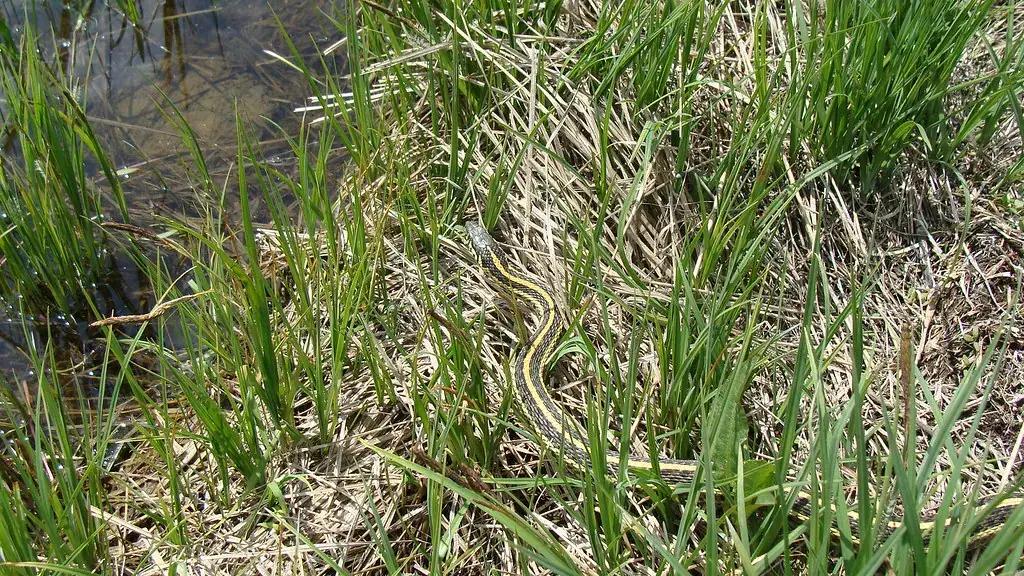
What to Record When You Find a Snake in the Wild
A field checklist for snake finds: distance and safety first, then the photo, the conditions, an honest identification and a location that is true.
5 min read

Herping Photography Without Disturbing Wildlife
How to photograph snakes, frogs and lizards without handling, flipping or baiting: working distance, light, venomous-species safety and what to log.
6 min read