

wildlife photographyspecies collectioncreators
How to Build a Digital Species Collection as a Photographer
Turn field photos into a searchable species collection: what counts as a capture, how a card gets indexed, and the field habit that keeps the list honest.
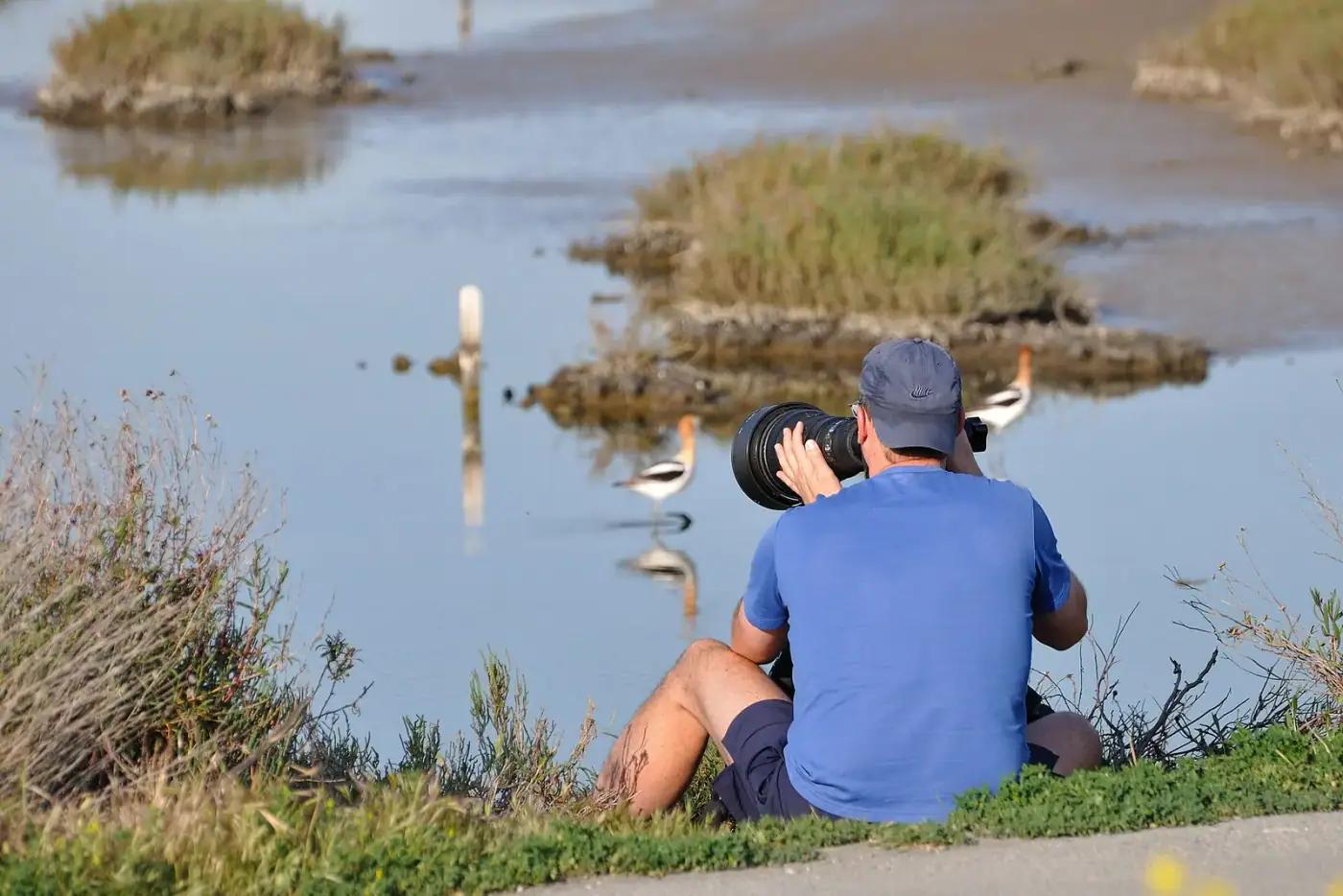
A camera roll is not a species record
Most wildlife photographers already shoot more than they can name. After three seasons the archive is tens of thousands of frames sorted by date, and the useful questions are the ones a date cannot answer: which warbler was that, on which morning, and have you actually photographed the species before? Keyword tagging in a desktop catalog solves this only if you do it every time, and almost nobody does.
A species collection inverts the problem. The unit is the animal identity, not the file. One record per species, with the captures that back it up, and the list is readable in a minute: 212 species, 31 of them herps, nothing from the coast since March. That is a list you can plan a trip around.
AnimalDex is built as a live capture collection. You photograph an animal with the in-app camera, analysis resolves a catalog card, and that card is the thing you collect. The photo stays attached to a named index instead of sinking into a date-sorted camera roll.

Wildlife photography companion app
What AnimalDex actually indexes
AnimalDex numbers belong to resolved catalog cards, not to every name the analysis text mentions. The rule is species by default, a shared group card only for large lookalike families that phone photos cannot fairly split, and domestic breeds or colour morphs folded into the base animal. A German Shepherd indexes as Domestic Dog. A confident live heron becomes its own species card. A small brown tree frog may land on the Tree Frog group card.
For a photographer who wants an honest list this is the point. You are not minting a new entry every time the model mentions a subspecies, and you are building the same public catalog every other collector uses, so your 212 species mean the same thing as someone else's 212.
| What you photographed | What gets indexed | Why |
|---|---|---|
| A grey heron at a reedbed | Species card | Distinct wild species, visible features, not in a lookalike list |
| A small green tree frog at night | Tree Frog group card | Many canopy frogs cannot be separated from a phone photo |
| Your neighbour's Border Collie | Domestic Dog | Breeds fold to the base animal |
| A named Desert Locust | Species card | Named insects stay species; only broad keys like “grasshopper” group |
| A blur you cannot identify | No new number | Missing or unusable identity does not mint a card |
Honest identification: the lookalike groups
The lookalike problem is not an app problem. It is a field problem that birders have argued about for a century. Willow warbler and common chiffchaff are near-identical olive-green leaf warblers around 11 cm long. In the hand the separation is primary projection and leg colour, with the willow warbler's wing tip longer and its legs usually pale; in the field it is the song, a descending cascade versus the two-note “chiff-chaff”. A silent bird photographed from below is often an honest tick for the group, not the species.
Great egret and snowy egret are the other classic. Both are white herons, but the great egret stands close to a metre tall with a yellow bill and black feet, and the snowy egret is much smaller, around 60 cm, with a black bill and yellow feet. If the feet are in the frame the call is easy. If you cropped them out, the photo cannot prove what you saw.
A species record is only as good as the weakest identification in it. Log the pair you can prove. Add the field note that would let someone else check it. Leave the maybe out, or let it resolve to a group card rather than guessing a species for the sake of a number.
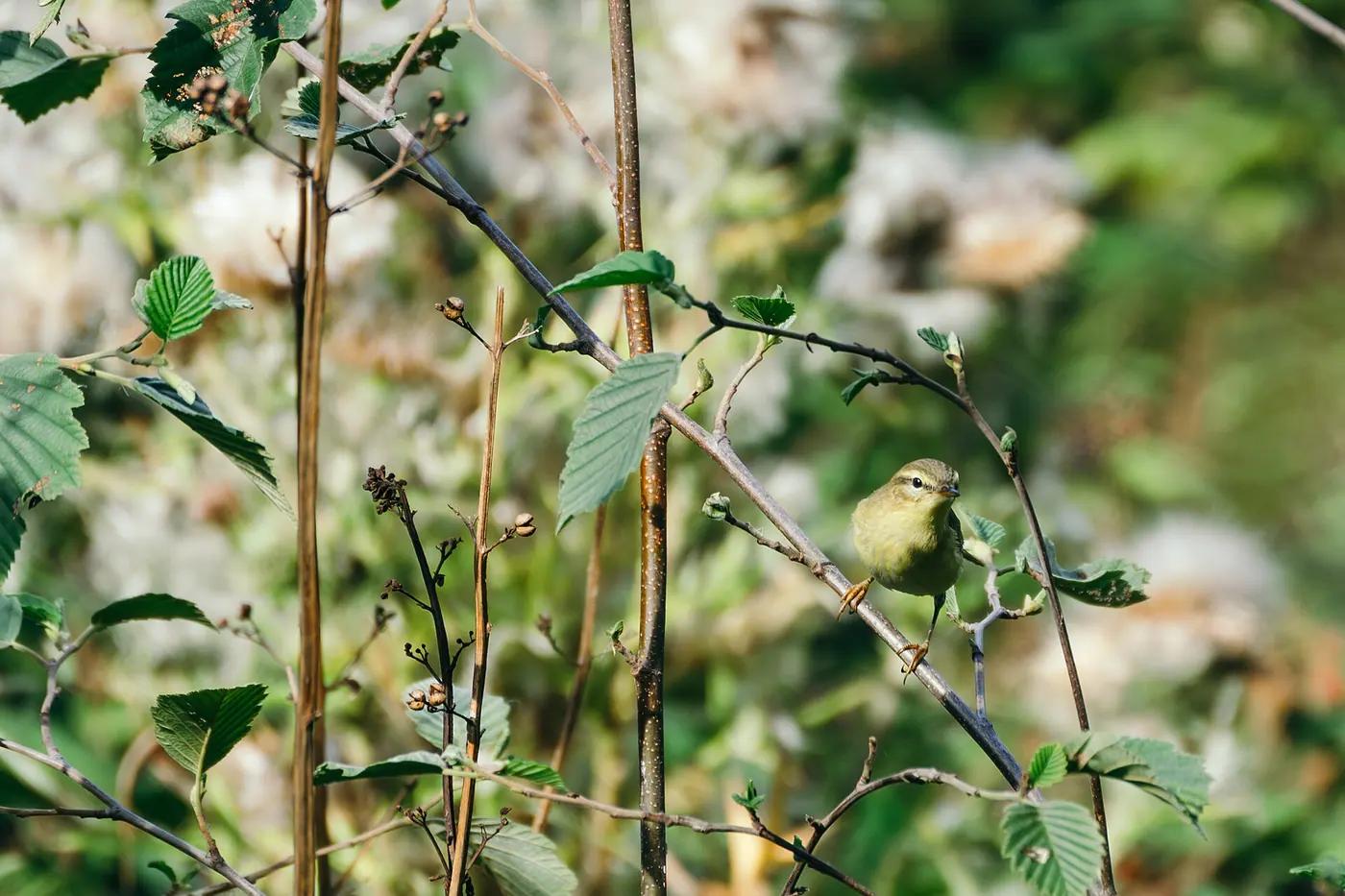
A field habit that sticks
The collection only works if the capture happens in the field. Gallery uploads are not how AnimalDex records a live sighting, so the habit has to fit between the moments you are already shooting with the big camera.
Phone after the frame, not instead of it
Take the shot you came for on the camera, then take the capture on the phone while the animal is still there. A heron will usually give you both; a warbler often will not, so decide which one you want first.
Enough body to identify
A head-and-shoulders crop looks good and identifies badly. Keep legs, bill, wing tips or flank markings in the capture. Those are the features the identification confidence factor is looking for.
Let analysis finish
Walk on before the capture resolves and you lose the context. Wait the few seconds, check the card it landed on, and correct a lookalike while you still remember what you saw.
Same species, new context
Separate captures of the same species keep their own grade and context. A sanderling on a beach in October and the same species on a mudflat in May are both worth having; only the catalog card is counted once.
Note what you did not get
A gap list is a shot list. If the day's captures were all birds, the next outing has a direction: night, pond edge, or the hedge you always walk past.
What the grade actually scores
Grade is a 1–10 quality score for a specific capture, not a measure of the animal. The same species can hold a 9 and a 3 in the same collection. A sharp, well-lit live bird with its habitat in frame will outrank a distant blur of a rarer species every time, which is exactly how a photographer would judge the two frames.
The factors below are the ones the product describes. None of them is about luck; all of them are the things you already adjust when the light changes.
| Grade factor | What it looks at | What you control in the field |
|---|---|---|
| Clarity | Focus on the animal, motion blur, noise | Shutter speed, steadying the phone, waiting for the pause |
| Framing | How much of the frame the animal fills and where it sits | Distance, crouching to eye level, not centring everything |
| Identification confidence | Whether the photo shows the features that separate the species | Side-on angle, visible legs, bill, wing tips or markings |
| Visible detail | Feather, scale or fur texture and the eye | Light direction, getting closer without flushing the animal |
| Context | Habitat and setting around the animal | Leaving reeds, bark or sand in the frame instead of cropping to a head |
What this page is not promising
A collection is not a payout. Credits you spend on scans stay Credits and cannot be converted to cash. Creator Rewards, the company-funded program designed to recognise live contribution during open periods, is currently paused with no published reopen date. The reason to index species now is the record itself: a list you can search, compare and keep building, and, wherever you log enough wild species at one place, a virtual Wildlife Guide that AnimalDex builds from your sightings.
The unit you collect is the animal identity, not the file. One card per species, backed by the captures that prove it.
Creator RewardsHow virtual Wildlife Guides workWays to earn on AnimalDex
Quick questions
Short answers to common questions readers ask on this topic.
- Can I upload my existing wildlife Lightroom catalog to AnimalDex?
- No. AnimalDex records live in-app captures, and gallery uploads are not captures. It is not a bulk importer for a desktop archive. The one exception is the Instagram import for compatible professional accounts, which reviews each eligible post for species and a historical location before it becomes part of the collection.
- Does every photo become its own AnimalDex number?
- No. The collectible number belongs to the resolved catalog card, so a species is counted once however many times you capture it. Each capture still keeps its own grade, context and media, which is why a second capture of a common species in a new habitat is still worth making.
- What is a lookalike group card?
- A lookalike group card is a single collectible entry shared by a family of animals that phone photos cannot reliably separate, such as many tree frogs or broad insect keys like “mosquito”. It is a real card with a number. Named species outside those lists, including most birds and mammals, still get their own species card.
- How do I organise wildlife photos by species without an app?
- Use keywords in your desktop catalog with the scientific name as the keyword, so Phylloscopus trochilus and willow warbler cannot drift apart, and keep a flat species spreadsheet with first-photographed date and location. The weakness is discipline: it only works if every import gets keyworded, which is the step most people skip.
Animals mentioned
Jump from this article into the species pages behind the examples, systems notes, and field-guide references.
Answer guides related to this topic
If you want direct comparisons and clear recommendations, continue with these answer-focused pages.
Related guides
wildlife photography
Why Photographers Should Track the Species They Photograph
A species list changes what you go out to shoot. How a tracked list exposes portfolio gaps, keeps IDs honest, and turns a camera roll into a body of work.
6 min read
Can Wildlife Photography Make Money? Realistic Income Routes
Wildlife photography income mixes licensing, assignments, prints, workshops and guiding. How each route really pays, and where an app actually fits.
6 min read
How AnimalDex Rewards Genuine Wildlife Contribution
Creator Rewards recognises live, diverse, high-quality wildlife contribution and is currently paused. What genuine means, and what never becomes cash.
6 min read