

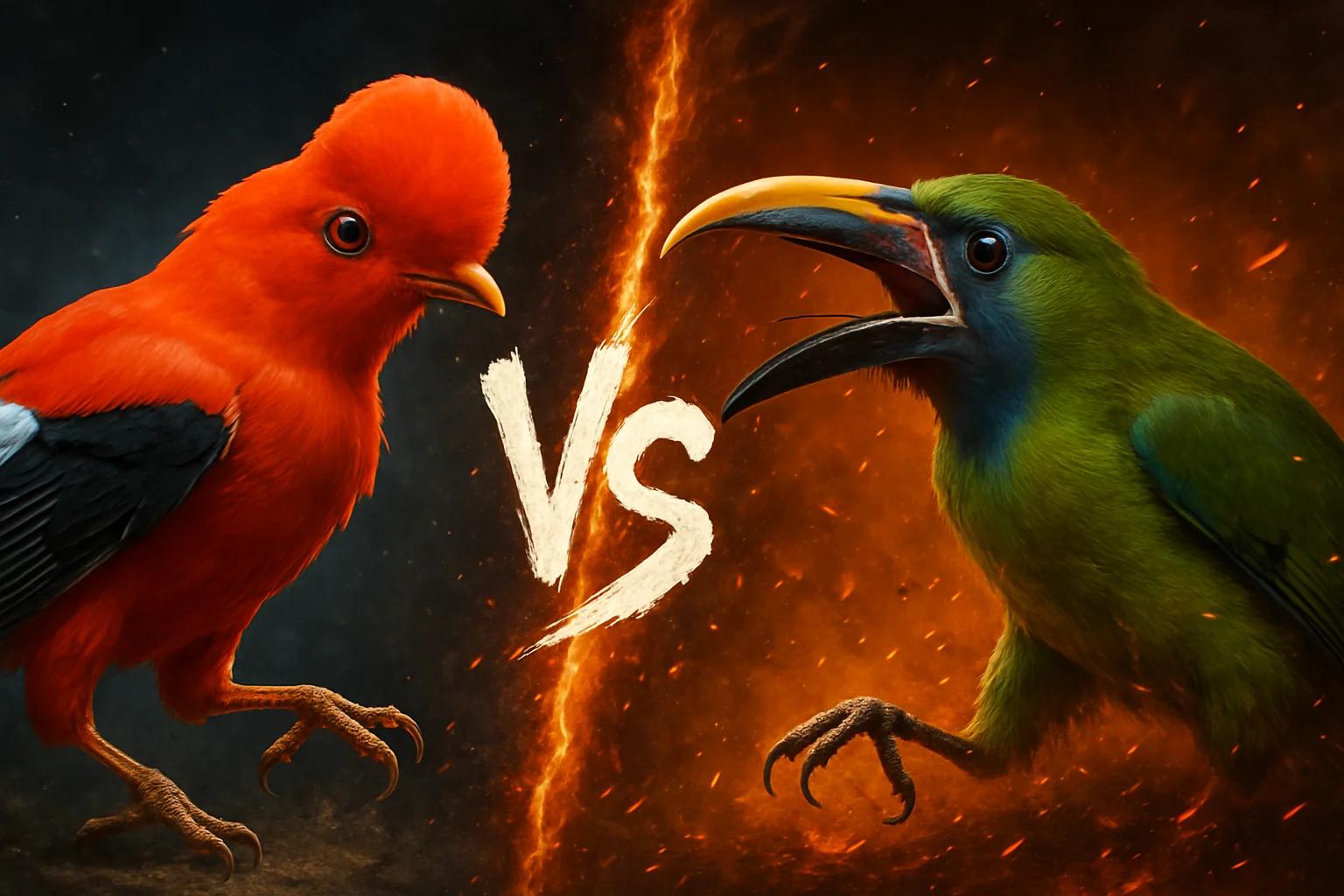
Andean Cock-of-the-rock vs Emerald Toucanet: Who Actually Wins?
Andean Cock-of-the-rock vs Emerald Toucanet: a biology-first breakdown of mass, bill reach, agility and temperament to decide which cloud-forest bird would win a confrontation.
Andean Cock-of-the-rock vs Emerald Toucanet
Matchup winner
Andean Cock-of-the-rock
Quick verdict
Start with the direct answer, then use the structured comparison below to see what changes the outcome.
The Andean Cock-of-the-rock wins, though not by much. A displaying male typically weighs about 200–300 g. Most Emerald Toucanets weigh roughly 150–230 g. That extra mass sits in a compact, deep-chested body built for explosive wingbeats inside steep river gorges, so the cock-of-the-rock can shove, buffet and outlast a rival in any close scramble. The Emerald Toucanet carries the more dangerous-looking tool: a long, serrated bill that gives it reach and that it uses to raid other birds' nests. That bill is light and honeycombed, though. It is excellent for plucking fruit and snatching eggs, but it is not a reinforced weapon. The toucanet is also slightly more agile and somewhat more opportunistic, and it can win brief harassment exchanges, especially near its own nest cavity. Over a sustained, body-to-body contest, the heavier bird with the stronger frame usually prevails.
Read the full explanation
Winner: Andean Cock-of-the-rock, mainly on body mass and chest power.
The Emerald Toucanet's bill gives it reach and a startling first strike, but the bill is built for fruit, not combat.
The toucanet is the more practiced aggressor, since it regularly raids nests for eggs and chicks.
In reality both are mostly fruit-eaters, and a real encounter would almost always end with one bird leaving.
Reader vote
Who do you think wins?
Pick a side — no account needed. Results update live.
No votes yet — be the first to call it.
Editorial note
Why people disagree
The bill looks lethal. People assume a big beak means a big weapon, but a toucanet's bill is mostly hollow keratin over a light bony scaffold.
Body mass & frame
In bird-on-bird scuffles, mass decides who gets pinned, knocked off a perch, or driven away.
Reach & weaponry
Reach lets the toucanet strike first and keep a rival at bill's length, which matters most in the opening seconds.
Explosive power
Stronger wingbeats turn into buffeting force when two birds collide.
Read the full explanation +
Cock-of-the-rock males are famous for loud lek displays, so people assume they are fighters. Most of that rivalry is display and posturing, not damaging combat.
The toucanet actually preys on nestlings, so it has more 'killer instinct' experience, even though it is the smaller bird.
Comparison FAQ
Short, direct answers to the next questions readers usually ask after the headline verdict.
Would an Andean Cock-of-the-rock beat an Emerald Toucanet in a fight?+
Usually, yes. It is heavier and stockier, so in a sustained or open-perch confrontation it should drive off or overpower the toucanet. Expect it to win roughly 6 times in 10.
Which bird is stronger?+
The Andean Cock-of-the-rock. It typically outweighs the toucanet by a meaningful margin and has a deeper chest and more powerful flight muscles.
Isn't the toucanet's big bill a deadly weapon?+
Less than it looks. The bill is long and serrated, which is useful for reach and for snatching eggs, but it is lightweight and honeycombed inside. It can deliver sharp jabs, but it is not built for heavy impact.
Why does the Emerald Toucanet stay dangerous even though it loses?+
It regularly raids nests for eggs and chicks, so it is comfortable attacking other birds. It also has reach, quick reflexes in dense foliage, and very strong motivation when defending its nest cavity.
Do these birds ever meet in the wild?+
Both live in neotropical montane forests, but how much their ranges overlap depends on taxonomy. Some Andean toucanets once grouped as Emerald Toucanet are now often treated as separate species. Where they do share fruiting trees, they mostly compete through displacement, not fighting.
Do male cock-of-the-rocks fight each other?+
Males gather at leks and display intensely with calls, bowing and wing-flapping. Most of this rivalry is ritualized, and damaging fights are uncommon.
Head-to-head species stats
These are the same core AnimalDex stat dimensions used on the dedicated animal pages, pulled side by side so the matchup is faster to scan.
Andean Cock-of-the-rock
Tier CEmerald Toucanet
Tier CTrait-by-trait comparison
Only the categories that matter to this matchup are included. The goal is not filler stats, but the real design differences that change the result.
Roughly 200–300 g, stocky and deep-chested
Body mass & frame
Andean Cock-of-the-rock
Roughly 150–230 g, slimmer body behind a big bill
Body mass & frame
Andean Cock-of-the-rock
Short, stout bill partly hidden by its crest
Reach & weaponry
Emerald Toucanet
Long serrated bill with excellent reach
Reach & weaponry
Emerald Toucanet
Powerful, noisy takeoffs suited to gorge flying
Explosive power
Andean Cock-of-the-rock
Quick hops and short dashes between branches
Explosive power
Andean Cock-of-the-rock
Fast in straight flight, less nimble in tangles
Canopy agility
Emerald Toucanet
Slightly quicker and very nimble among branches
Canopy agility
Emerald Toucanet
Display-driven rivalry, mostly a fruit-eater
Predatory temperament
Emerald Toucanet
Opportunistic nest raider of eggs and chicks
Predatory temperament
Emerald Toucanet
Dense, compact body that absorbs jostling
Close-range durability
Andean Cock-of-the-rock
Lighter build, and the bill is a liability if grabbed
Close-range durability
Andean Cock-of-the-rock
How the verdict forms
Verdict timeline
01 · Body mass & frame
Andean Cock-of-the-rock
02 · Reach & weaponry
Emerald Toucanet
03 · Explosive power
Andean Cock-of-the-rock
04 · Canopy agility
Emerald Toucanet
05 · Predatory temperament
Emerald Toucanet
06 · Close-range durability
Andean Cock-of-the-rock
Change the conditions
Scenario breakdown
This is where shallow battle content usually fails. Terrain, spacing, timing, and engagement style can change the answer.
Scenario lean
Emerald Toucanet
Verdict confidence
82%
Toucanet edge: agility and reach rule the tangles.
Among vines and fruiting branches the cock-of-the-rock cannot build momentum. The toucanet can jab from behind obstacles, hop away and come back. Clutter cancels out mass and rewards maneuverability, which is exactly the toucanet's strength.
AnimalDex field profiles
Explore these animals
Andean Cock-of-the-rock
Rupicola peruvianus
cloud forest, ravine, and humid montane woodland
Emerald Toucanet
Aulacorhynchus prasinus
cloud forest, humid woodland, and montane canopy
Systems Intelligence & Hidden Purpose
See the animals behind this comparison as engineered biological systems: what each one is built to do, where it gains leverage, and why the matchup changes by scenario.
Specialized Hardware
brilliant orange fan crest, lek-court dancing display, and cloud-forest cliff nesting give the Andean Cock-of-the-rock a body plan tuned for its niche.
Systems Script
Andean Cock-of-the-rocks operate through cloud forest, ravine, and humid montane woodland. Their design links movement, feeding, shelter, and timing into one workable survival system.
Strategic Insight
Dense environments reward precision, patience, and the ability to read layered cover.
Specialized Hardware
bright emerald body, rainbow-tipped bill, and quiet branch-hopping fruit forage give the Emerald Toucanet a body plan tuned for its niche.
Systems Script
Emerald Toucanets operate through cloud forest, humid woodland, and montane canopy. Their design links movement, feeding, shelter, and timing into one workable survival system.
Strategic Insight
Dense environments reward precision, patience, and the ability to read layered cover.
Final take
The Andean Cock-of-the-rock is the pick. In bird confrontations, body mass and frame strength usually beat impressive-looking weaponry, and the cock-of-the-rock has the heavier, more powerful body.
Read the full explanation
The Emerald Toucanet is far from a pushover. It has real reach, nest-raiding experience and branch agility, so it wins in dense cover and at its own nest. Give it clutter and a reason to fight, and the result flips.
In the wild these birds share a fruit-eating lifestyle and would almost never fight seriously. A real meeting would most likely end with posturing, a few lunges, and one bird flying off.
Collect both animals in AnimalDex
Track the species behind this matchup, compare their real traits, and build the rivalry into your AnimalDex collection.
Related comparisons
Continue with nearby matchups to compare more real-world animal traits without dropping into junky who-wins filler.
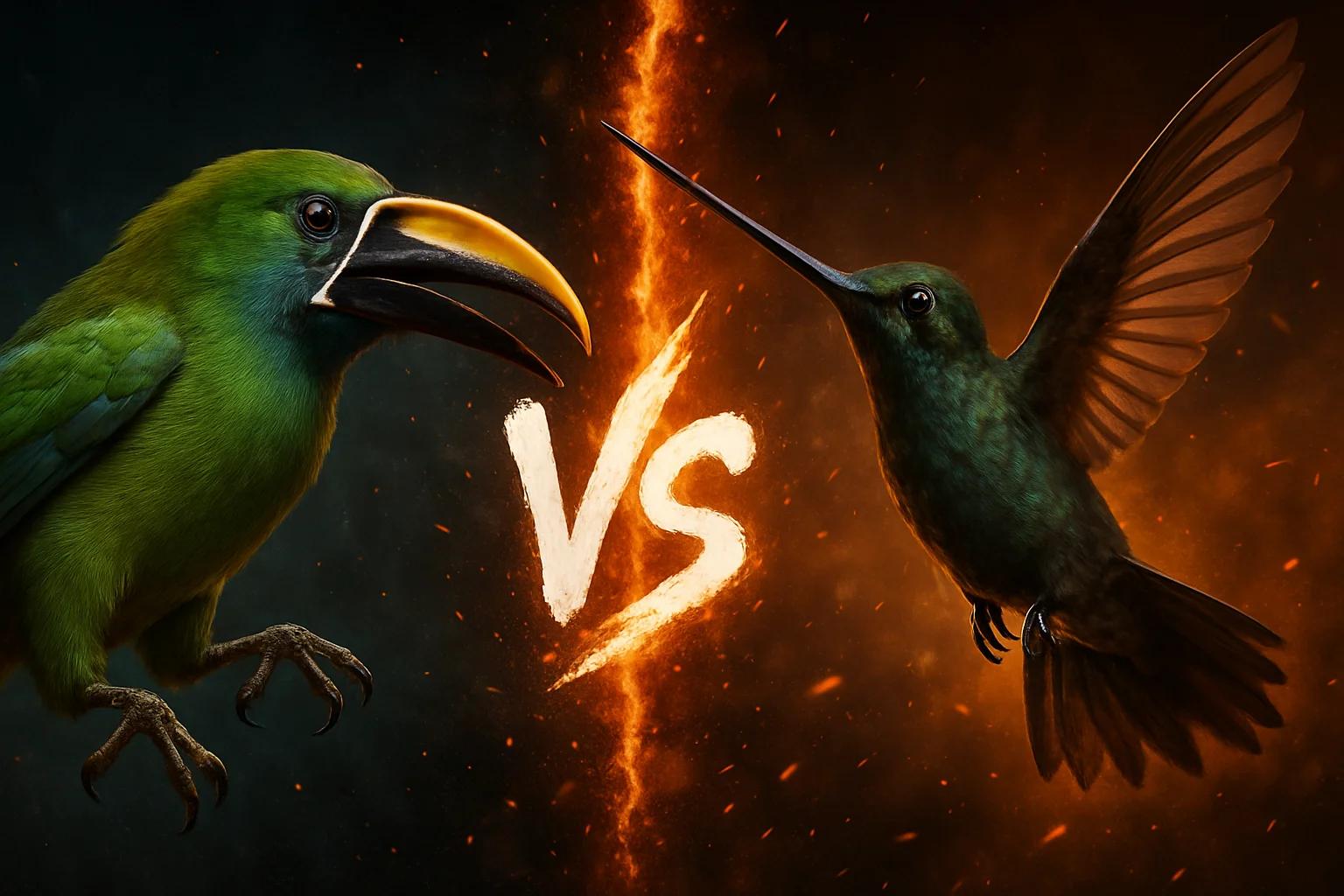
Emerald Toucanet vs Sword-billed Hummingbird: Who Actually Wins?
The Emerald Toucanet wins clearly. It weighs roughly 150–230 g against the Sword-billed Hummingbird's 12–15 g, more than ten times heavier. Its serrated, gripping bill is built to seize and crush fruit, insects, small lizards, and the eggs and nestlings of other birds. The hummingbird's famous bill can be about 10 cm long, longer than its body without the tail, but it is a hollow-feeling nectar probe, not a weapon. It is light and slender, and the bird has to hold it upward when perched just to stay balanced. In any physical clash the toucanet's mass, bite force and predatory habits decide things fast. The hummingbird's real advantage is aerial control. It can hover, reverse and dart away, which means it usually escapes rather than wins.
Read comparison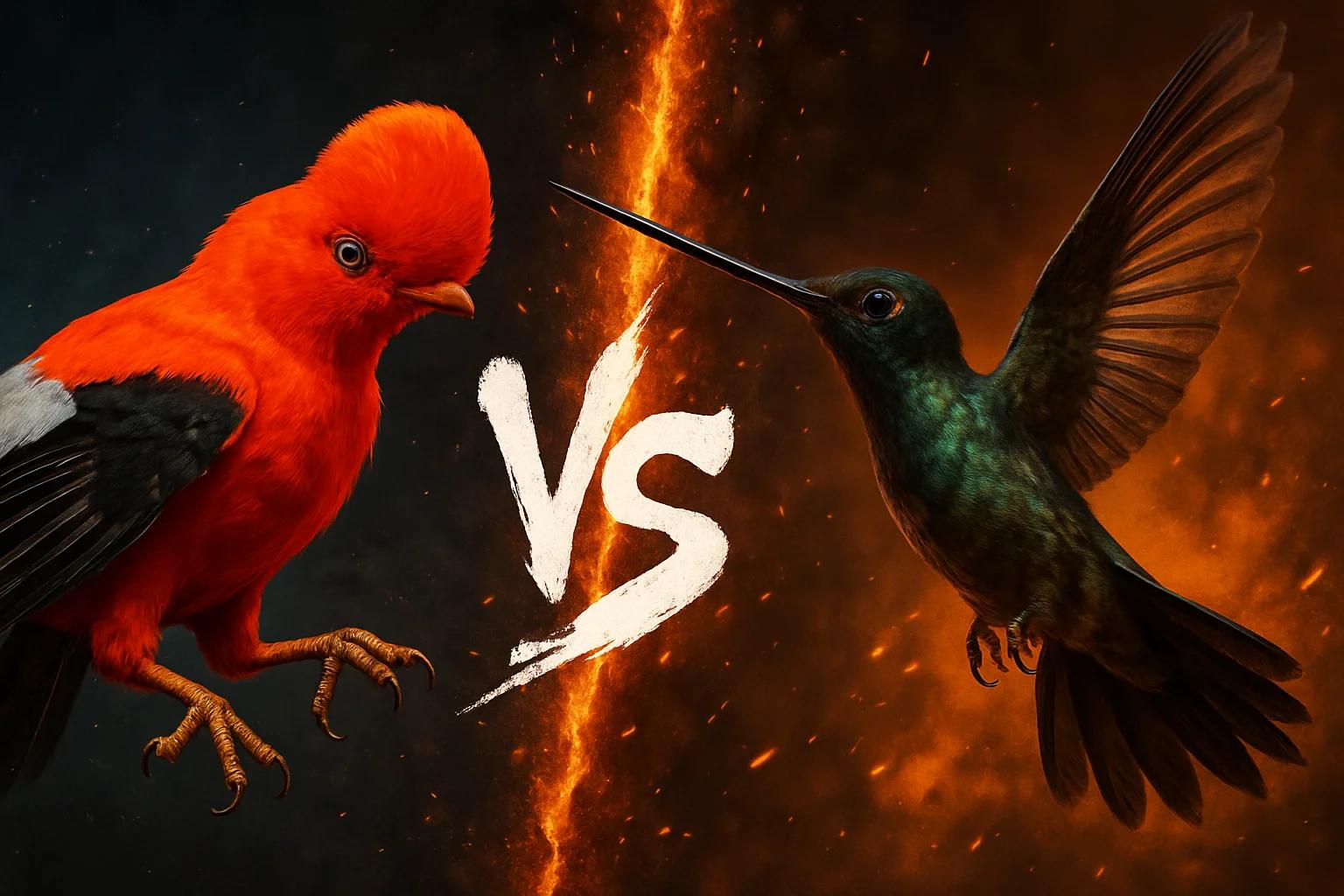
Andean Cock-of-the-rock vs Sword-billed Hummingbird: Who Actually Wins?
The Andean Cock-of-the-rock wins clearly. At roughly 250–300 g against the Sword-billed Hummingbird's 12–15 g, the cock-of-the-rock carries about twenty times the mass, a stout fruit-crushing bill, strong perching feet, and a lifetime of shoving matches at crowded leks. The hummingbird is a marvel of hovering flight with the longest bill relative to body length of any bird, but that 10 cm bill is a delicate nectar probe built to reach deep into passionflowers, not a weapon. It is so long the bird has to groom with its feet and perch with its head tilted up. In any physical contest the hummingbird's real strengths are dodging and leaving. That keeps it safe, but it cannot win a real confrontation.
Read comparison
Discussion
What do you think?
Share your reasoning with other readers. Be civil and stick to the animals.
Sign in to join the discussion.
Sign inNo comments yet. Start the conversation.