


Black Mamba vs Mole Viper: Who Actually Wins?
Black Mamba vs Mole Viper: who would win? A biology-first look at venom, size, speed and the mole viper's sideways-striking fangs, and why the mamba comes out on top.
Black Mamba vs Mole Viper
Matchup winner
Black Mamba
Quick verdict
Start with the direct answer, then use the structured comparison below to see what changes the outcome.
The black mamba wins this matchup clearly. It is Africa's longest venomous snake, often 2.5 m or more, against a burrowing mole viper that usually stays under 60 cm. The mamba strikes fast and repeatedly with a potent neurotoxic venom, and it holds its head high. That reach and tempo let it control the engagement before the smaller snake can close. The mole viper is no pushover. Its fangs swing out sideways from a closed mouth, so it can stab backward and sideways in tight spaces where normal snakes can't bite. That makes it awkward to pin and gives it a real edge underground. Out in the open, though, size and speed decide the fight, and the mamba has more of both. Large ophiophagous elapids also carry some natural margin against smaller venomous prey. The black mamba takes it more often than not, with roughly 80% confidence.
Read the full explanation
Black Mamba wins in most realistic encounters.
The mamba has a big size advantage, plus speed, reach, and a fast-acting neurotoxin.
The Mole Viper's sideways-stabbing fangs make it dangerous in tunnels and hard to handle.
The mole viper's best chance is a confined, underground fight.
Reader vote
Who do you think wins?
Pick a side — no account needed. Results update live.
No votes yet — be the first to call it.
Editorial note
Why people disagree
Mole vipers have a notorious reputation for envenomating handlers who think they are holding them safely. People assume that 'unholdable' means 'unbeatable', but holding a snake is not the same as fighting one.
Striking reach
Reach lets the mamba hit first and stay out of the viper's limited range.
Venom delivery
Neurotoxins take hold faster in a much smaller body than the mole viper's venom does in a larger one.
Body mass and size
The size gap means a large dose barely dilutes in the viper, while the mamba can absorb more.
Read the full explanation +
Mamba speed is often exaggerated. Its real edge is reach, raised posture and repeated strikes, not the cartoon 'outrunning a horse' myth.
Some argue venom potency alone decides snake fights. In reality, delivery, body size, and how fast the venom takes effect in a small versus large body matter just as much.
Comparison FAQ
Short, direct answers to the next questions readers usually ask after the headline verdict.
Would a black mamba beat a mole viper?+
Yes, in most encounters. Its large size advantage, raised strike reach and fast neurotoxic venom let it overwhelm the much smaller mole viper, especially above ground.
Which snake is stronger, black mamba or mole viper?+
The black mamba, by a wide margin. It can be several times longer and far heavier, which gives it more muscle, more reach and more venom to deliver.
Why is the mole viper still dangerous to a mamba?+
It can swing a fang out sideways from a closed mouth and stab backward, even when restrained. In close contact or underground, it can land a bite that conventional snakes couldn't.
Where would a mole viper have the best chance?+
Inside a narrow burrow, where the mamba can't rear up or strike from range, and the fight becomes close-quarters stabbing.
Do black mambas eat other snakes?+
They mostly eat small mammals and birds. Snakes are not a staple of their diet, but a mamba is fully capable of killing a smaller snake that threatens it.
Head-to-head species stats
These are the same core AnimalDex stat dimensions used on the dedicated animal pages, pulled side by side so the matchup is faster to scan.
Black Mamba
Tier BMole Viper
Tier CTrait-by-trait comparison
Only the categories that matter to this matchup are included. The goal is not filler stats, but the real design differences that change the result.
Raises a third of its body, long strike arc
Striking reach
Black Mamba
Short-range, close-contact stabs
Striking reach
Black Mamba
Fast-acting neurotoxins, multiple strikes
Venom delivery
Black Mamba
Cytotoxic venom with sarafotoxins, sideways fang stab
Venom delivery
Black Mamba
2–3 m, robust and long
Body mass and size
Black Mamba
Typically under 60 cm, slender
Body mass and size
Black Mamba
Needs room to rear and strike
Confined-space lethality
Mole Viper
Built for tunnels, strikes without opening its mouth
Confined-space lethality
Mole Viper
Among the fastest snakes on the continent
Tempo and speed
Black Mamba
Slow surface mover, quick jab
Tempo and speed
Black Mamba
Typical elapid; vulnerable when pinned
Handling resistance
Mole Viper
Nearly impossible to pin safely
Handling resistance
Mole Viper
How the verdict forms
Verdict timeline
01 · Striking reach
Black Mamba
02 · Venom delivery
Black Mamba
03 · Body mass and size
Black Mamba
04 · Confined-space lethality
Mole Viper
05 · Tempo and speed
Black Mamba
06 · Handling resistance
Mole Viper
Change the conditions
Scenario breakdown
This is where shallow battle content usually fails. Terrain, spacing, timing, and engagement style can change the answer.
Scenario lean
Black Mamba
Verdict confidence
82%
Clear mamba win.
On open savanna soil, the mamba can rear, track and strike from a distance. The mole viper is a poor surface operator and has no reach. The mamba's fast, repeated strikes put a heavy neurotoxic load into a tiny body, and the viper rarely lands a counter.
AnimalDex field profiles
Explore these animals
Black Mamba
Dendroaspis polylepis
Savannah, rocky outcrop, woodland edge, and dry river corridor with shelter sites.
Mole Viper
Atractaspis microlepidota
savannah soil, scrub, and dry woodland ground
Systems Intelligence & Hidden Purpose
See the animals behind this comparison as engineered biological systems: what each one is built to do, where it gains leverage, and why the matchup changes by scenario.
Specialized Hardware
Long muscular body, elevated head carriage, and fast-acting venom delivery make black mambas strike hardware optimized for speed, reach, and decisiveness.
Systems Script
Black mambas regulate small mammal and bird populations across dry African landscapes while showing how mobility changes predator geometry. They do not own one hiding place; they own the gap between them.
Strategic Insight
Velocity matters most when it is paired with accuracy and a clear exit route.
Specialized Hardware
side-stabbing long fangs, cylindrical burrowing body, and loose-soil tunneling give the Mole Viper a body plan tuned for its niche.
Systems Script
Mole Vipers operate through savannah soil, scrub, and dry woodland ground. Their design links movement, feeding, shelter, and timing into one workable survival system.
Strategic Insight
Harsh places reward efficiency, timing, and bodies that waste very little.
Final take
The black mamba is the overall winner. It brings size, reach, speed and a fast neurotoxin to a fight against a much smaller snake. In most settings, that combination ends the encounter before the mole viper can use its unusual weapon.
Read the full explanation
The mole viper earns respect anyway. Its side-stabbing fangs are among the strangest pieces of hardware in the snake world, and inside a tunnel it can turn the matchup around. The overall result follows the conditions these snakes meet most often, though, and on the surface the mamba is in control.
Collect both animals in AnimalDex
Track the species behind this matchup, compare their real traits, and build the rivalry into your AnimalDex collection.
Related comparisons
Continue with nearby matchups to compare more real-world animal traits without dropping into junky who-wins filler.
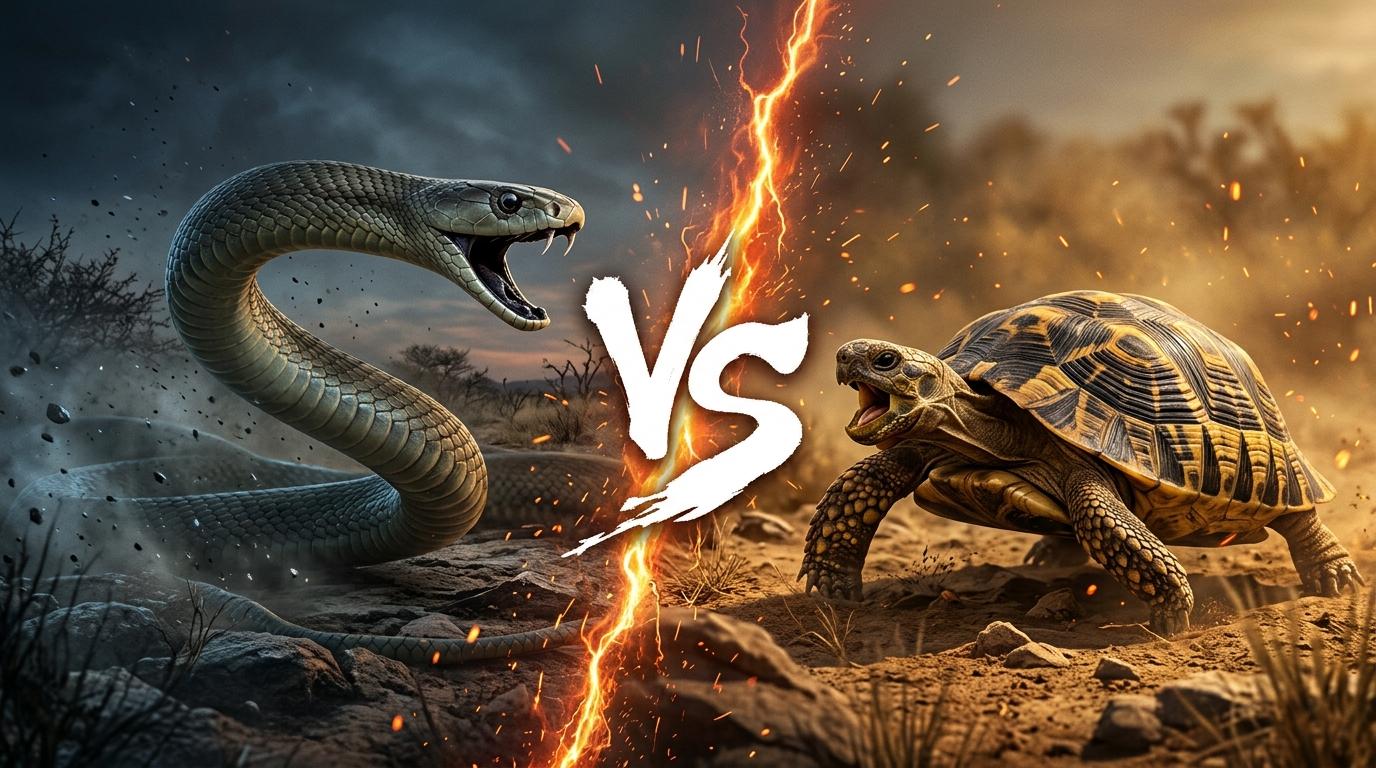
Black Mamba vs Pancake Tortoise: Who Actually Wins?
The black mamba wins, and it is not especially close in a direct confrontation. Africa's longest venomous snake brings a fast, neurotoxic bite, a strike delivered from a raised forebody, and enough speed and body length to control any meeting on open ground. The pancake tortoise is a tiny, flat-shelled specialist of East African rock outcrops. Its shell is unusually thin and flexible, an adaptation for squeezing into rock crevices rather than for withstanding a beating like a classic armored tortoise. It has no offensive weapons that matter against a snake. Its only real winning move is to avoid the fight by wedging itself into a crack where nothing can reach it. That is a survival win, not a combat win. Overall, the mamba takes the matchup, though the tortoise's escape strategy is smarter than it looks.
Read comparison
Discussion
What do you think?
Share your reasoning with other readers. Be civil and stick to the animals.
Sign in to join the discussion.
Sign inNo comments yet. Start the conversation.