

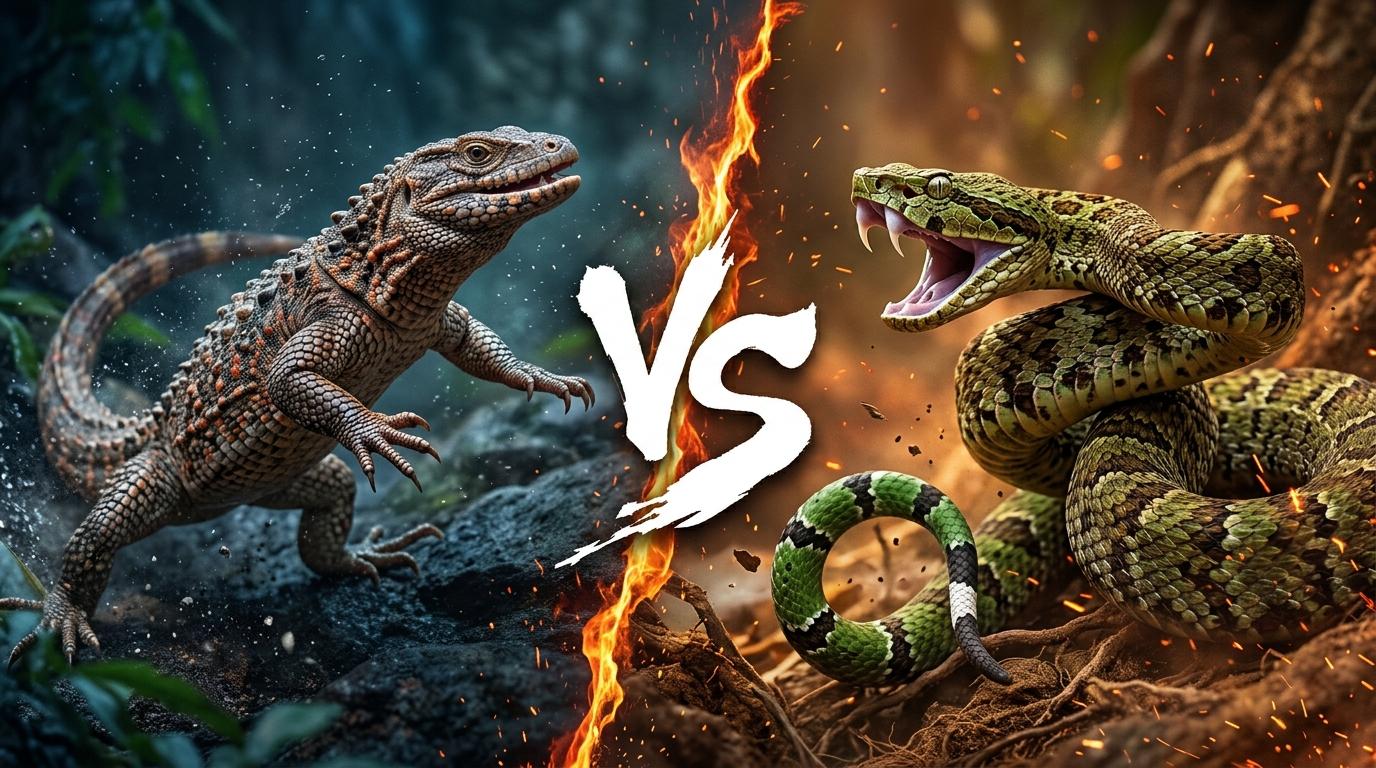
Chinese Crocodile Lizard vs Mangshan Pit Viper: Who Actually Wins?
Chinese crocodile lizard vs Mangshan pit viper: a biology-first breakdown of size, venom, armor and habitat to show who wins and why the lizard isn't helpless.
Chinese Crocodile Lizard vs Mangshan Pit Viper
Matchup winner
Mangshan Pit Viper
Quick verdict
Start with the direct answer, then use the structured comparison below to see what changes the outcome.
The Mangshan pit viper wins clearly. It is a heavy-bodied ambush predator that can reach about 2 meters, with heat-sensing pits, long hinged fangs and a potent hemotoxic venom. The Chinese crocodile lizard is a stream-dwelling reptile of roughly 40-46 cm that mostly eats insects, snails, tadpoles and small fish. Its keeled scales and crocodile-like tail ridges suggest armor, but they don't stop fangs, and its main defense is stillness followed by diving into water. On land, within strike range, the viper's single injection outweighs anything the lizard can do in return. The lizard's real path to victory is not fighting at all. It wins only when it reaches deep water and stays submerged.
Read the full explanation
Mangshan pit viper wins: it is far longer and heavier, and it carries strong hemotoxic venom.
The crocodile lizard has no venom and a bite built for invertebrates and small fish.
The lizard's best move is escape: it is a capable diver and can stay underwater for long stretches.
On a forest floor or open ground, the viper's ambush strike decides it fast.
Reader vote
Who do you think wins?
Pick a side — no account needed. Results update live.
No votes yet — be the first to call it.
Editorial note
Why people disagree
The crocodile lizard's ridged, crocodilian look makes people overrate its armor and bite.
Lethal payload
One clean strike lets the viper end the encounter without trading blows.
Size and reach
The viper's strike range covers the lizard's entire body before the lizard can close in.
Ambush control
Infrared pits help the viper track a warm-bodied target in leaf litter, though they're less useful on a cool, still lizard.
Read the full explanation +
Both are rare Chinese mountain reptiles, so people assume they're evenly matched. They aren't close in weaponry.
Water changes everything: near a deep stream pool, the lizard can simply disappear, and some count escape as a win.
Comparison FAQ
Short, direct answers to the next questions readers usually ask after the headline verdict.
Would a Chinese crocodile lizard beat a Mangshan pit viper?+
No. In a direct fight, the viper wins. The lizard's only realistic success is escaping into water.
Which is stronger, the crocodile lizard or the Mangshan pit viper?+
The Mangshan pit viper. It is several times longer and much heavier, with a muscular body and venom delivery the lizard can't match.
How dangerous is the Mangshan pit viper's venom?+
It is hemotoxic and potent, causing serious tissue and blood damage. That is easily lethal to a small lizard and medically serious for humans.
Why is the crocodile lizard still dangerous or hard to catch?+
It can bite defensively and, more importantly, dives instantly and stays submerged for long periods. A predator often loses it entirely.
Do they live in the same place?+
Both are rare reptiles of southern Chinese mountain forests. Their habitats are close in region, but the lizard is tied to streams while the viper favors forested slopes.
Head-to-head species stats
These are the same core AnimalDex stat dimensions used on the dedicated animal pages, pulled side by side so the matchup is faster to scan.
Chinese Crocodile Lizard
Tier BMangshan Pit Viper
Tier BTrait-by-trait comparison
Only the categories that matter to this matchup are included. The goal is not filler stats, but the real design differences that change the result.
No venom; small crushing bite
Lethal payload
Mangshan Pit Viper
Long fangs, potent hemotoxic venom
Lethal payload
Mangshan Pit Viper
About 40-46 cm, half of it tail
Size and reach
Mangshan Pit Viper
Up to about 2 m, thick-bodied
Size and reach
Mangshan Pit Viper
Freezes motionless; a passive sit-and-wait forager
Ambush control
Mangshan Pit Viper
Camouflaged ambusher with heat-sensing pits
Ambush control
Mangshan Pit Viper
Keeled scales and tail ridges, little real armor
Close-range durability
Mangshan Pit Viper
Muscular body with good tolerance for struggling prey
Close-range durability
Mangshan Pit Viper
Dives and stays submerged for long periods
Escape options
Chinese Crocodile Lizard
Slow, deliberate; relies on staying put
Escape options
Chinese Crocodile Lizard
Overhanging branches above forest streams
Habitat edge
Chinese Crocodile Lizard
Rocky, forested slopes and the forest floor
Habitat edge
Chinese Crocodile Lizard
How the verdict forms
Verdict timeline
01 · Lethal payload
Mangshan Pit Viper
02 · Size and reach
Mangshan Pit Viper
03 · Ambush control
Mangshan Pit Viper
04 · Close-range durability
Mangshan Pit Viper
05 · Escape options
Chinese Crocodile Lizard
06 · Habitat edge
Chinese Crocodile Lizard
Change the conditions
Scenario breakdown
This is where shallow battle content usually fails. Terrain, spacing, timing, and engagement style can change the answer.
Scenario lean
Mangshan Pit Viper
Verdict confidence
82%
The viper's ambush strike ends it.
In dense cover, both animals rely on stillness, but stillness serves the ambush predator better. The viper lies coiled and camouflaged. If the lizard wanders into strike range, a fast, envenomating bite triggers tissue and blood damage that a 40 cm lizard cannot survive. The lizard has no tool to win a close exchange.
AnimalDex field profiles
Explore these animals
Chinese Crocodile Lizard
Shinisaurus crocodilurus
cool forest stream, shaded ravine, and humid subtropical woodland
Mangshan Pit Viper
Protobothrops mangshanensis
mountain forest, bamboo thicket, and humid ravine
Systems Intelligence & Hidden Purpose
See the animals behind this comparison as engineered biological systems: what each one is built to do, where it gains leverage, and why the matchup changes by scenario.
Specialized Hardware
armor-like ridged tail, semi-aquatic stillness, and narrow stream habitat dependence give the Chinese Crocodile Lizard a body plan tuned for its niche.
Systems Script
Chinese Crocodile Lizards operate through cool forest stream, shaded ravine, and humid subtropical woodland Their design links movement, shelter, and feeding into one workable survival system.
Strategic Insight
Fragile systems often depend on a habitat so specific that even small damage matters.
Specialized Hardware
jade green patterned body, heat-sensing pit organs, and heavy still ambush coils give the Mangshan Pit Viper a body plan tuned for its niche.
Systems Script
Mangshan Pit Vipers operate through mountain forest, bamboo thicket, and humid ravine. Their design links movement, feeding, shelter, and timing into one workable survival system.
Strategic Insight
In steep terrain, balance and route control matter more than brute force.
Final take
The Mangshan pit viper is the clear winner. Size, reach and venom stack heavily in its favor, and its ambush style fits the dim forest floor where an encounter would most likely happen.
Read the full explanation
The Chinese crocodile lizard is a specialist in avoiding fights, not winning them. Its edge is entirely about escape through water, which is why it survives only when the encounter happens beside a deep stream.
Both species are endangered and confined to tiny ranges in southern China (the lizard also reaches northern Vietnam), so this matchup is better appreciated as a contrast in survival strategies than as a real-world clash.
Collect both animals in AnimalDex
Track the species behind this matchup, compare their real traits, and build the rivalry into your AnimalDex collection.
Related comparisons
Continue with nearby matchups to compare more real-world animal traits without dropping into junky who-wins filler.
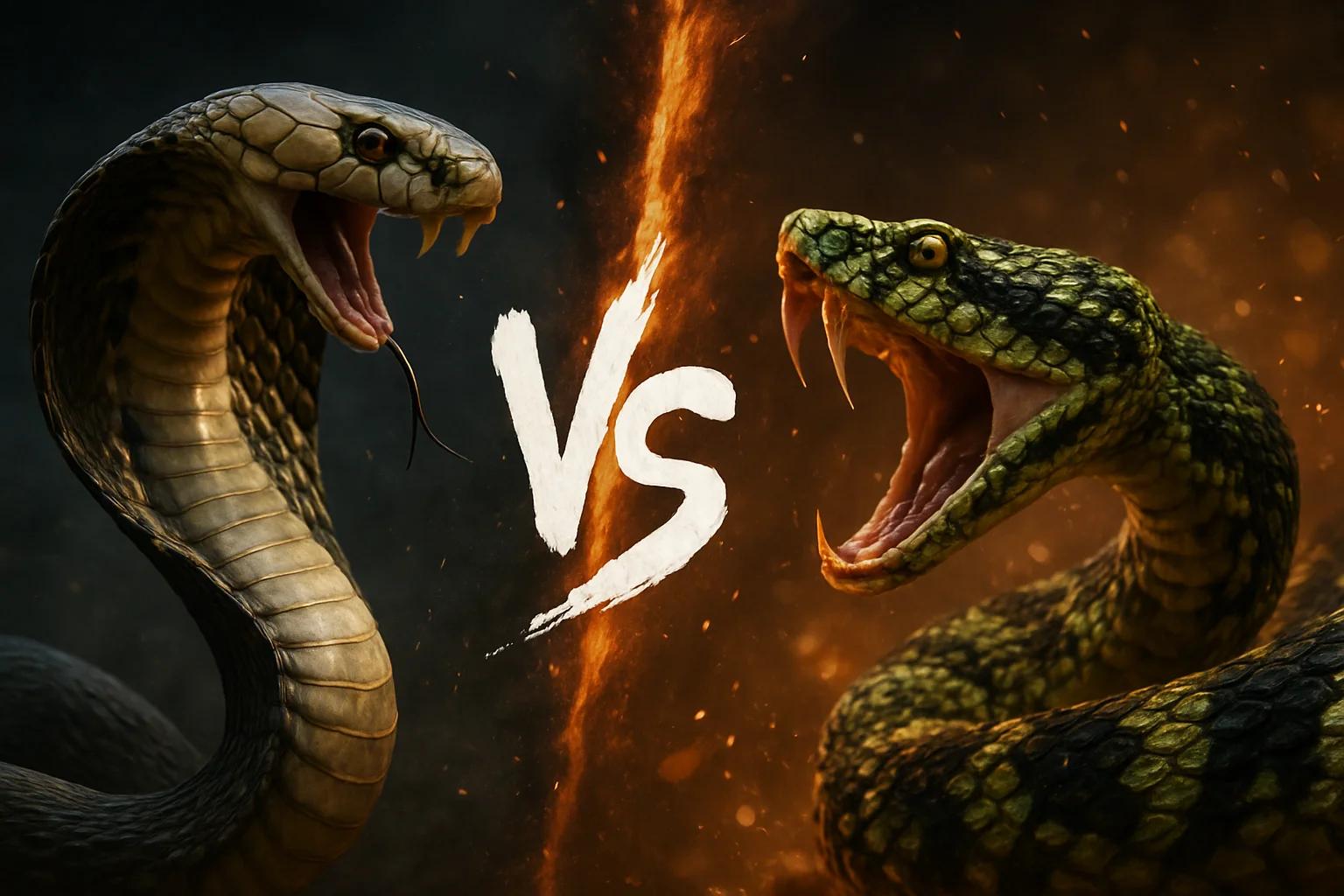
King Cobra vs Mangshan Pit Viper: Who Actually Wins?
The King Cobra wins, and it is not especially close. As Ophiophagus hannah, literally the 'snake-eater,' it is the world's longest venomous snake. Adults commonly reach 3–4 m and can exceed 5 m. Its hunting system is built for subduing other snakes, venomous ones included. The Mangshan Pit Viper is a formidable, heavy-bodied Chinese endemic at roughly 1.5–2 m. It carries potent hemotoxic venom and long, hinged fangs. But it is a sit-and-wait ambusher designed for rodents and small vertebrates, not for fighting a reach-dominant serpent hunter. The cobra's length lets it strike from beyond the viper's effective range and pin the head. Its neurotoxic venom then overwhelms a much smaller body. The viper's best chance is a lucky defensive bite that delivers a meaningful hemotoxic dose. That keeps the matchup dangerous, but it does not make it even.
Read comparison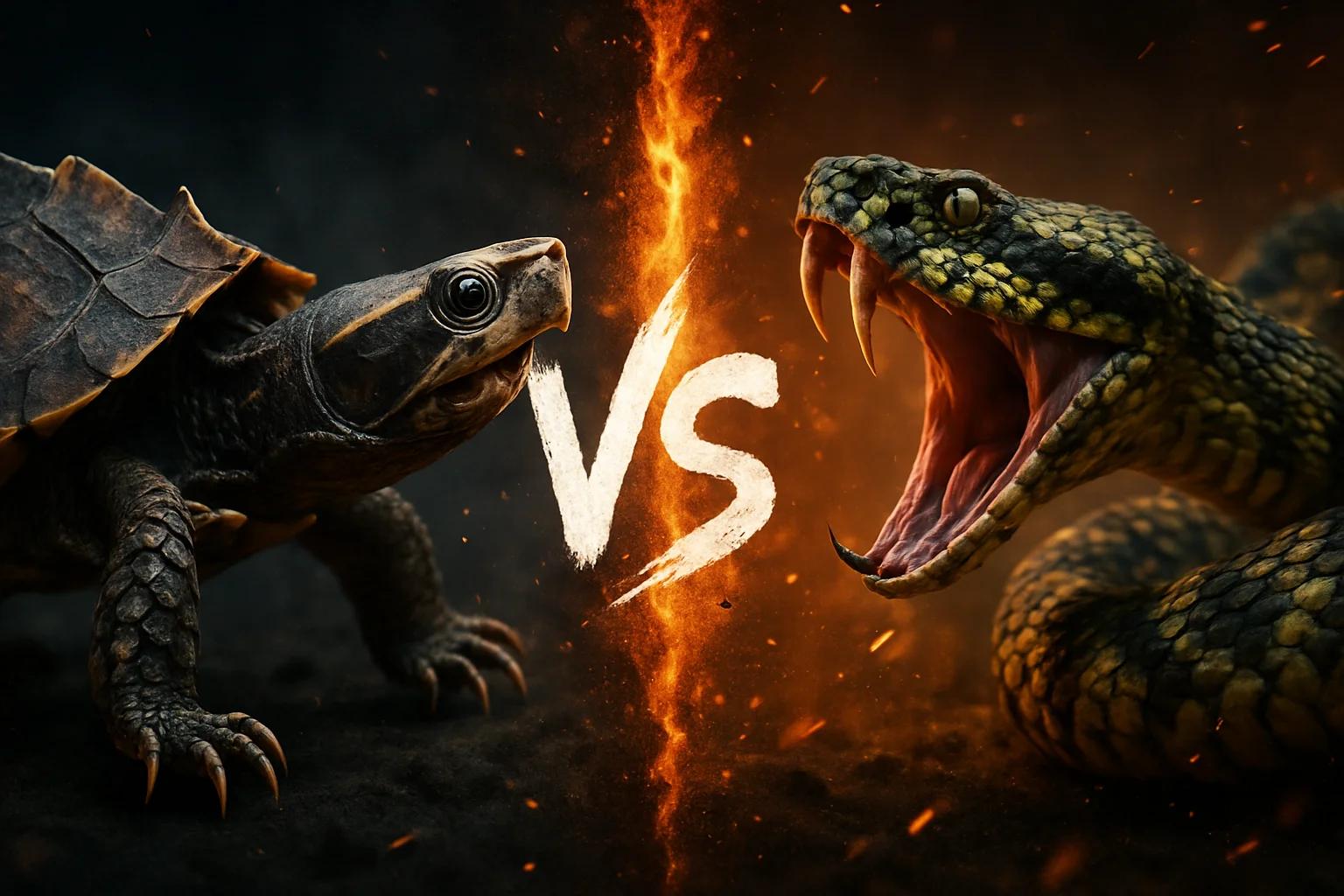
Black-breasted Leaf Turtle vs Mangshan Pit Viper: Who Actually Wins?
The Mangshan Pit Viper wins this matchup clearly. At up to roughly 2 meters and over 3 kg, it is one of the heaviest pit vipers in Asia. It carries long hinged fangs, potent hemotoxic venom, and heat-sensing pits, and it hunts by ambush in the same misty karst forests of southern China. The Black-breasted Leaf Turtle is tiny, usually about 11–13 cm in shell length. It survives by camouflage, a serrated leaf-like shell, and stillness rather than force. Its shell gives real protection, but it is a small, low-domed shell that a snake this size can grip and pressure. In any encounter where the viper commits, the turtle's best possible result is to avoid being noticed.
Read comparison
Discussion
What do you think?
Share your reasoning with other readers. Be civil and stick to the animals.
Sign in to join the discussion.
Sign inNo comments yet. Start the conversation.