

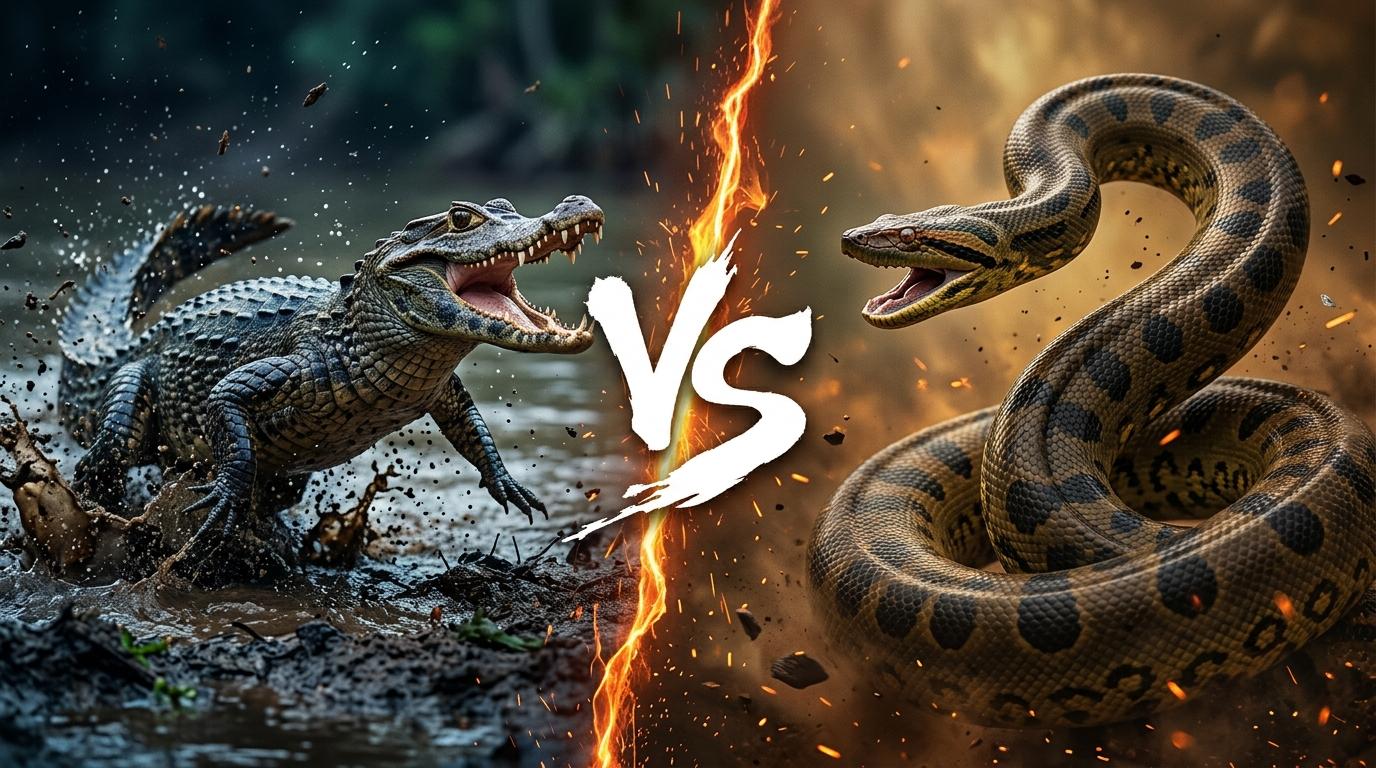
Dwarf Caiman vs Green Anaconda: Who Actually Wins?
Dwarf caiman vs green anaconda: who would win? A biology-first breakdown of size, armor, constriction and habitat that shows why the anaconda is the clear favorite.
Dwarf Caiman vs Green Anaconda
Matchup winner
Green Anaconda
Quick verdict
Start with the direct answer, then use the structured comparison below to see what changes the outcome.
The green anaconda wins this matchup clearly. A large adult female can reach 5+ meters and weigh well over 100 kg. The dwarf caiman is the smallest crocodilian in the Americas, usually 1.2–1.6 meters and roughly 6–7 kg. That mass gap is decisive. Anacondas are documented predators of caimans, mostly spectacled caimans, which grow larger than dwarf caimans. Their attack follows a proven sequence: an ambush strike, a jaw anchor full of backward-curving teeth, then coils that tighten every time the prey exhales and cut off blood flow. The dwarf caiman is the most heavily armored crocodilian, with bony osteoderms even on its belly. That armor buys it time, and its bite can wound. But armor does not stop a body being squeezed shut from all sides. A juvenile or small anaconda is a much more even fight, but against a mature adult, the caiman is prey.
Read the full explanation
Green anaconda wins: it can outweigh a dwarf caiman by 10–20x.
Anacondas routinely kill caimans larger than dwarf caimans in the wild.
The dwarf caiman's heavy armor and sharp bite make it a costly meal, not an easy one.
Only small or young anacondas are realistically at risk.
Reader vote
Who do you think wins?
Pick a side — no account needed. Results update live.
No votes yet — be the first to call it.
Editorial note
Why people disagree
People hear 'crocodilian vs snake' and picture a Nile crocodile, not a 1.5-meter dwarf caiman.
Raw mass
In a grappling fight, mass is leverage. The anaconda can pin, roll and envelop the caiman's entire body.
Close-range durability
The caiman shrugs off bites and abrasion that would injure other prey. That is why its fights take longer, but it cannot change how they end.
Finishing mechanism
Constriction acts on the whole body, so armor offers little defense. The caiman's bite must find something vital, and on a thick-bodied snake it rarely does.
Read the full explanation +
The dwarf caiman's armor is genuinely exceptional, which leads some readers to overrate how much it helps against constriction.
Viral videos of caimans fighting anacondas usually feature spectacled caimans or small snakes, which skews intuition both ways.
Comparison FAQ
Short, direct answers to the next questions readers usually ask after the headline verdict.
Would a dwarf caiman beat a green anaconda?+
Not an adult one. A mature green anaconda would very likely ambush, constrict and kill a dwarf caiman. Only small or juvenile anacondas are at real risk.
Which is stronger, a dwarf caiman or a green anaconda?+
The green anaconda by far. It can be 10–20 times heavier, and its constriction strength overwhelms an animal the caiman's size.
Do anacondas actually eat caimans?+
Yes. Green anacondas are documented killing and eating caimans, mainly spectacled caimans, which are larger than dwarf caimans.
Why is the dwarf caiman still dangerous?+
It has the heaviest armor of any crocodilian, sharp teeth and fast lunges. Fights cost the snake time and injuries, and the caiman is a serious threat to young anacondas.
Does the dwarf caiman's armor protect it from constriction?+
Only partially. Osteoderms resist bites, but constriction cuts off blood flow across the whole body, so armor slows the outcome without preventing it.
Head-to-head species stats
These are the same core AnimalDex stat dimensions used on the dedicated animal pages, pulled side by side so the matchup is faster to scan.
Dwarf Caiman
Tier CGreen Anaconda
Tier BTrait-by-trait comparison
Only the categories that matter to this matchup are included. The goal is not filler stats, but the real design differences that change the result.
~6–7 kg, up to ~1.6 m
Raw mass
Green Anaconda
Commonly 30–100+ kg, 4–5+ m
Raw mass
Green Anaconda
Heaviest osteoderm armor of any crocodilian, belly included
Close-range durability
Dwarf Caiman
Flexible scales, thick muscle
Close-range durability
Dwarf Caiman
Bite and thrash, no death roll at this scale
Finishing mechanism
Green Anaconda
Constriction that collapses circulation within minutes
Finishing mechanism
Green Anaconda
Hides in forest streams, often on land at night
Ambush control
Green Anaconda
Submerged, eyes-only lurking in swamps and slow rivers
Ambush control
Green Anaconda
Quick lunges, capable walker on land
Burst mobility
Dwarf Caiman
Slow on land, fast short strikes in water
Burst mobility
Dwarf Caiman
Sharp conical teeth, strong for its size
Bite threat
Dwarf Caiman
Non-venomous anchoring bite
Bite threat
Dwarf Caiman
How the verdict forms
Verdict timeline
01 · Raw mass
Green Anaconda
02 · Close-range durability
Dwarf Caiman
03 · Finishing mechanism
Green Anaconda
04 · Ambush control
Green Anaconda
05 · Burst mobility
Dwarf Caiman
06 · Bite threat
Dwarf Caiman
Change the conditions
Scenario breakdown
This is where shallow battle content usually fails. Terrain, spacing, timing, and engagement style can change the answer.
Scenario lean
Green Anaconda
Verdict confidence
82%
Anaconda by a wide margin.
This is the anaconda's home terrain. Water supports its weight, hides its body and lets it strike from below. Once the jaws anchor and coils wrap the caiman's torso, every exhale lets the coils tighten further. The osteoderms resist punctures, but they cannot stop pressure.
AnimalDex field profiles
Explore these animals
Dwarf Caiman
Paleosuchus palpebrosus
Forest rivers, creeks, blackwater channels, and swampy tropical waterways.
Green Anaconda
Eunectes murinus
Swamp, marsh, flooded forest, oxbow lake, and slow tropical waterways.
Systems Intelligence & Hidden Purpose
See the animals behind this comparison as engineered biological systems: what each one is built to do, where it gains leverage, and why the matchup changes by scenario.
Specialized Hardware
Smaller size than many crocodilians, heavy armored scales, and broad head and strong tail give the Dwarf Caiman a body plan tuned for its niche.
Systems Script
Dwarf Caimans operate in forest rivers, creeks, blackwater channels, and swampy tropical waterways. Their design helps them match food access, shelter, and timing inside that environment.
Strategic Insight
Old designs stay useful when they are scaled to the space available.
Specialized Hardware
Heavy aquatic body mass, low-profile head placement, and constriction strength make anacondas ambush hardware for slow dark wetlands.
Systems Script
Anacondas own the murky zone where visibility collapses and surface confidence gets punished. They keep wetland prey from treating shallow cover as safety by default.
Strategic Insight
If the environment hides you for free, let the environment subsidize your advantage.
Final take
Adult against adult, the green anaconda wins clearly. It is one of the heaviest snakes on Earth, and caimans are a documented part of its diet. The dwarf caiman is among the smallest crocodilians, which leaves it on the wrong side of a large size gap.
Read the full explanation
The dwarf caiman still earns respect. Its full-body armor, overland mobility and sharp bite make it costly prey and a capable predator in its own forest streams. Its best strategy is avoiding the anaconda entirely, and on land it usually can.
Collect both animals in AnimalDex
Track the species behind this matchup, compare their real traits, and build the rivalry into your AnimalDex collection.
Related comparisons
Continue with nearby matchups to compare more real-world animal traits without dropping into junky who-wins filler.
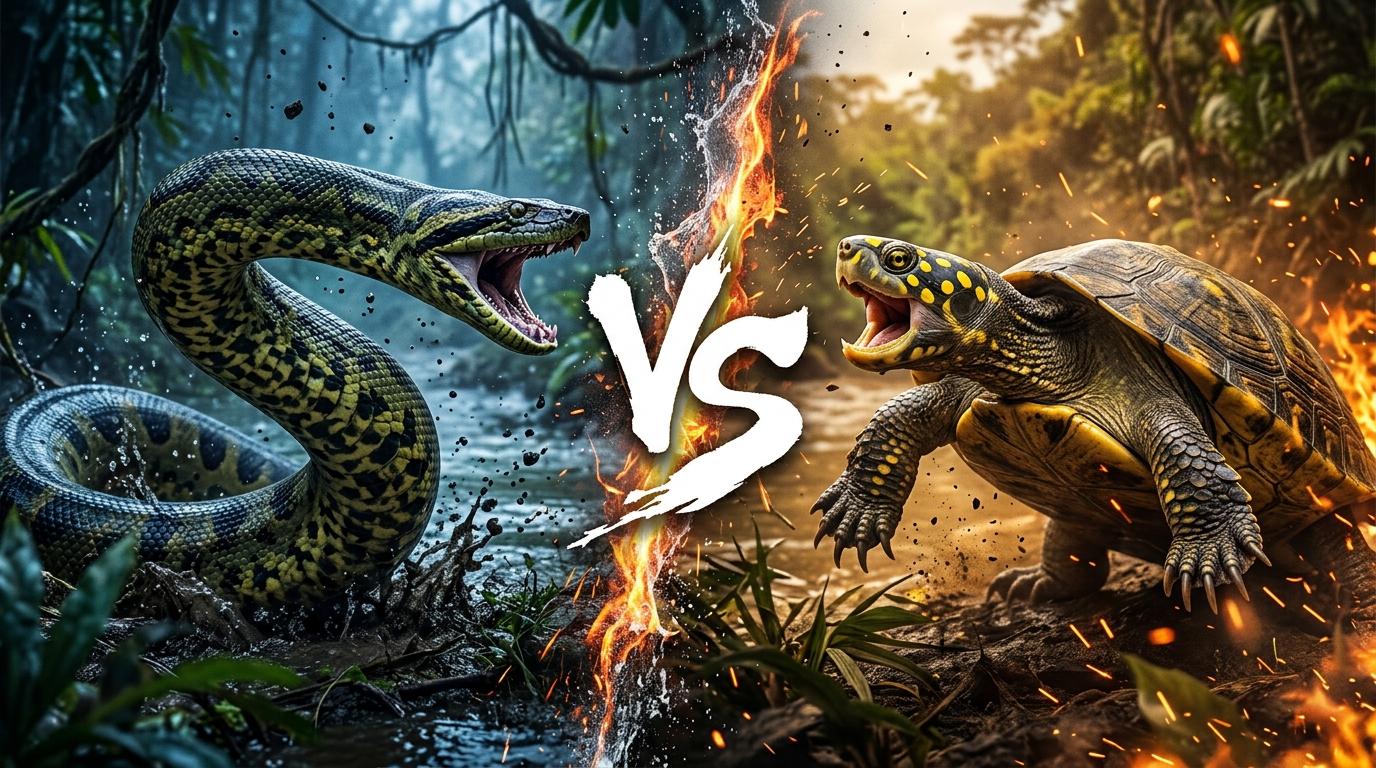
Green Anaconda vs Yellow-spotted River Turtle: Who Actually Wins?
The green anaconda wins, and it isn't especially close. The heaviest snake on Earth can exceed 5 m and 70+ kg of pure constricting muscle. The yellow-spotted river turtle is a mostly herbivorous side-necked turtle, with adult shells typically 30–45 cm and weights in the single-digit kilograms. Anacondas are ambush predators of Amazonian waterways that take caimans, capybaras, and turtles. The turtle's shell blocks crushing and biting but does nothing against being seized, wrapped, and swallowed whole. Its best weapons are a sharp-edged beak, quick retreat into murky water, and a hard-to-handle shape. Those can make a small anaconda give up, but against a big adult the size gap decides it.
Read comparison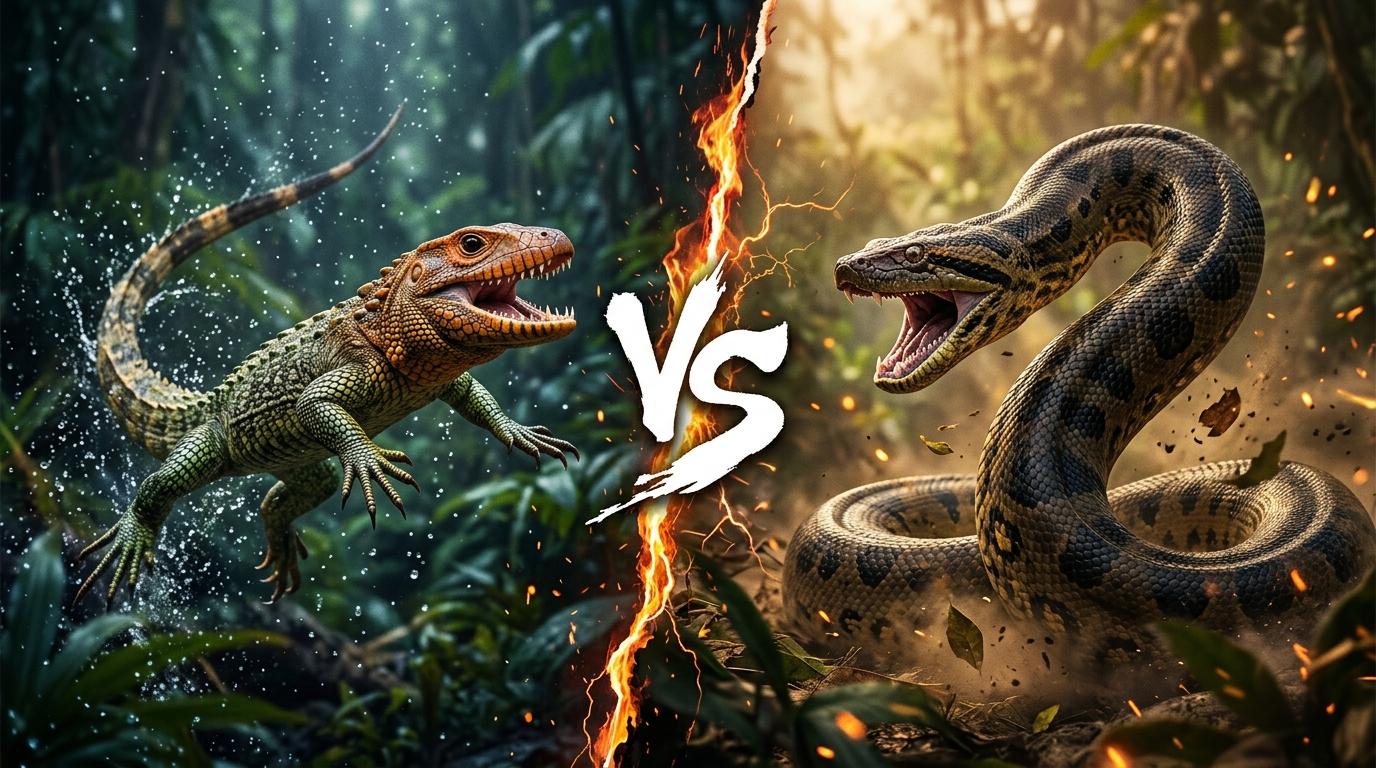
Caiman Lizard vs Green Anaconda: Who Actually Wins?
The green anaconda wins, and it isn't close. It is the heaviest snake on Earth. Adult females commonly reach 4–5+ meters and can weigh well over 50 kg. A caiman lizard is a semi-aquatic South American teiid that tops out around 1.2 meters and a few kilograms. The lizard's crushing molar-like teeth are excellent tools for cracking snail shells, but they are not built to stop a constrictor that can wrap, anchor and out-mass it many times over. The anaconda also controls the exact habitat both species share: flooded forests, slow rivers and marsh edges. It ambushes from water with a fast strike, a recurved-tooth grip and coils that shut down circulation within minutes. The caiman lizard's best realistic outcome is escape, not victory.
Read comparison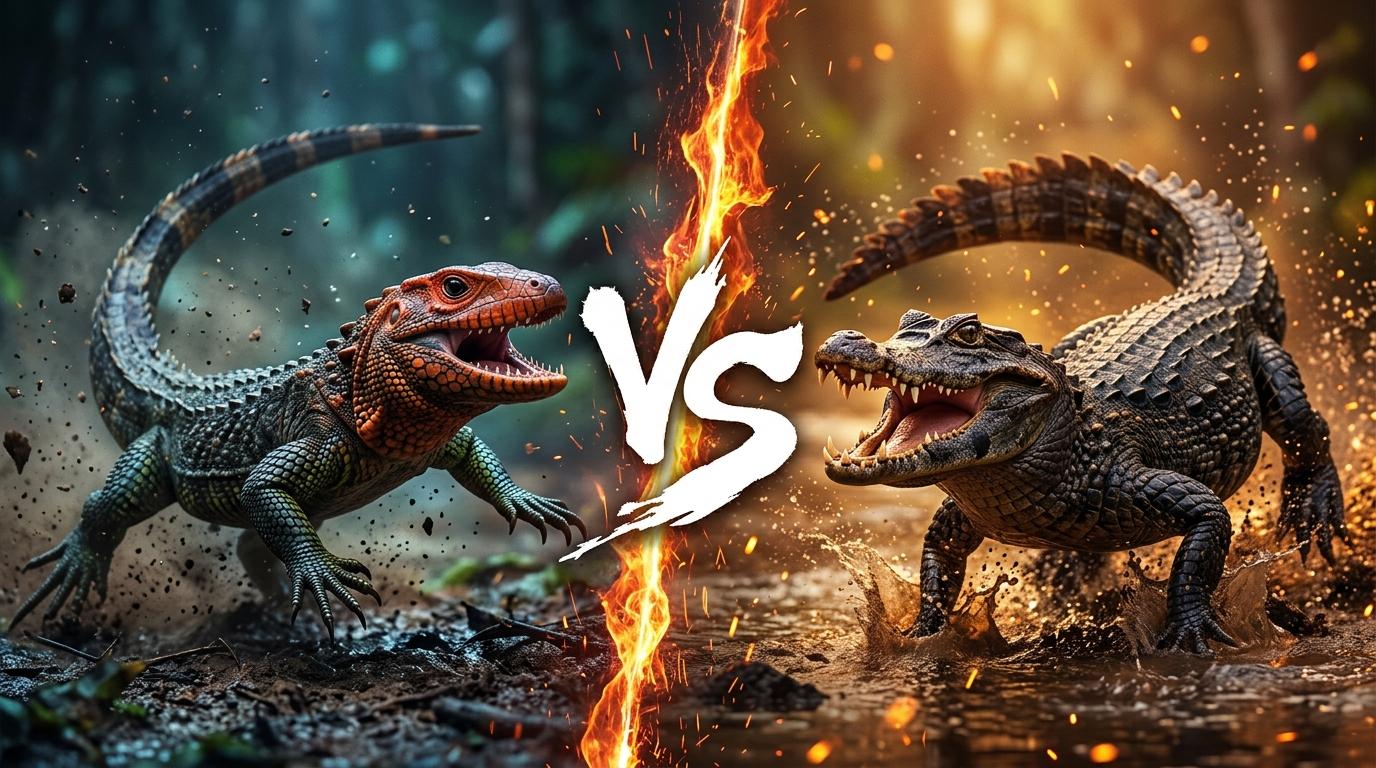
Caiman Lizard vs Dwarf Caiman: Who Actually Wins?
The dwarf caiman wins clearly. Cuvier's dwarf caiman is a true crocodilian. Adults reach about 1.2–1.6 m and 6–7 kg. It has heavy bony osteoderms, a conical-toothed bite built to seize and hold struggling prey, and the classic crocodilian death-grip instinct. The caiman lizard is impressive for a lizard: about 1.2 m long, mostly tail, and roughly 1.5–4 kg. But its broad crushing molars evolved to pop apple snails, not to grapple a living, armored predator. The lizard has respectable scutes and a strong bite. The caiman brings more mass, a more lethal tooth design, thicker armor and ambush instincts honed for exactly this kind of close-quarters water contact.
Read comparison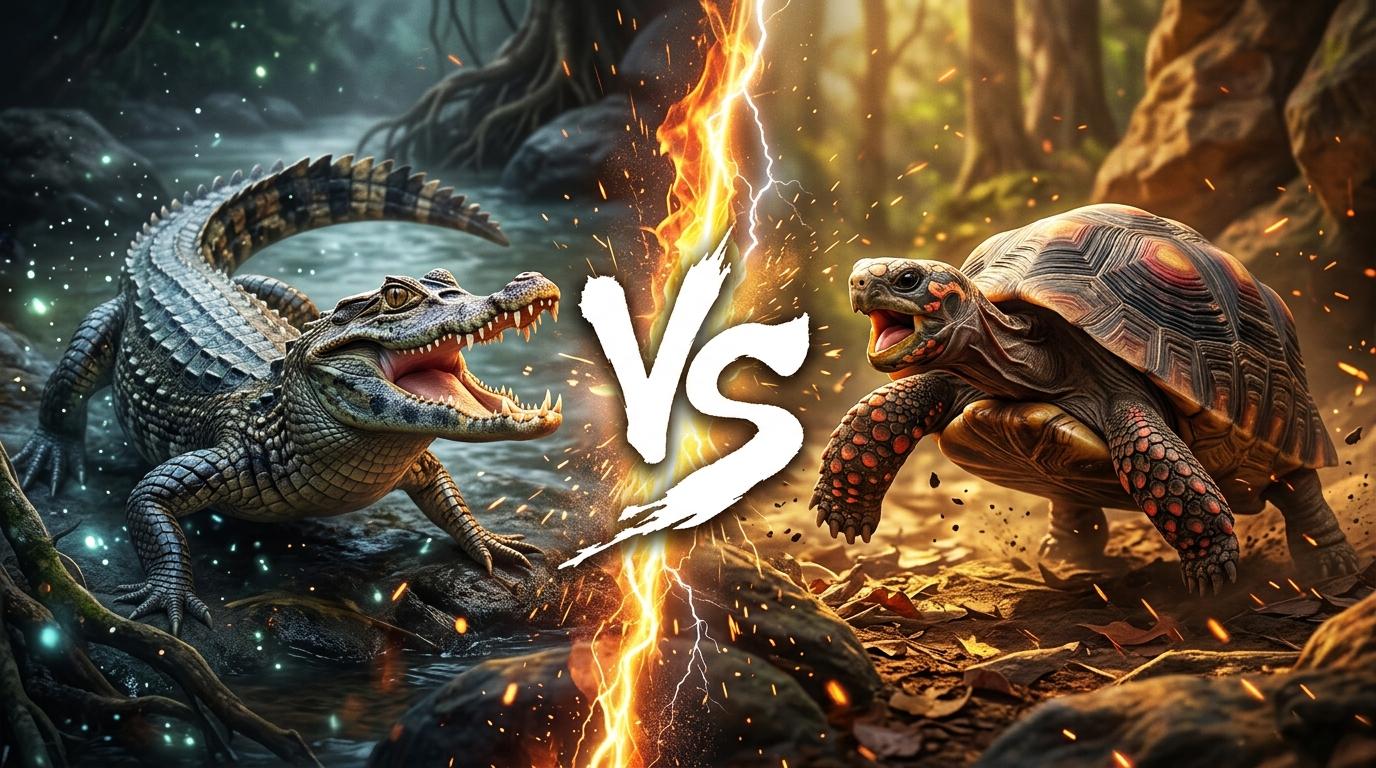
Dwarf Caiman vs Red-footed Tortoise: Who Actually Wins?
The Dwarf Caiman wins this matchup clearly. Cuvier's dwarf caiman is a fast-striking, heavily armored crocodilian with a bite built for gripping and crushing. It has far more speed, more aggression, and the only real offensive weapon in the pairing. The red-footed tortoise is a slow, plant-heavy forest grazer whose whole strategy is to retract and outlast. That shell is a serious obstacle: a full-grown adult tortoise can be too wide and too hard for a dwarf caiman to crack or swallow, so many encounters would end with no kill at all. But 'winning' here means controlling the encounter. The caiman sets the terms, can injure exposed limbs and heads, and easily overwhelms juveniles. The tortoise survives by refusing to fight, not by beating anything.
Read comparison
Discussion
What do you think?
Share your reasoning with other readers. Be civil and stick to the animals.
Sign in to join the discussion.
Sign inNo comments yet. Start the conversation.