

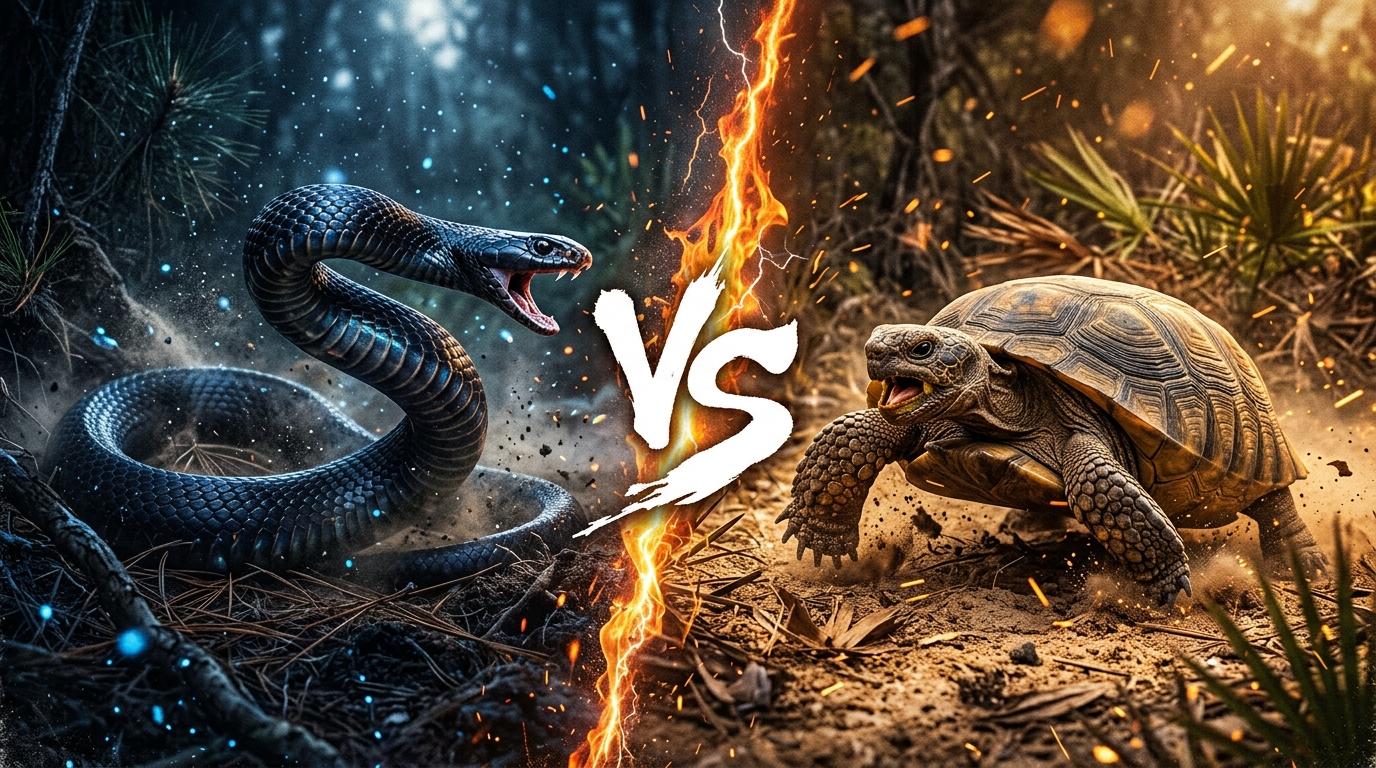
Eastern Indigo Snake vs Gopher Tortoise: Who Actually Wins?
Eastern indigo snake vs gopher tortoise: who wins? See how America's longest native snake matches up against the armored burrow-builder it depends on, with stats, scenarios, and a clear verdict.
Eastern Indigo Snake vs Gopher Tortoise
Matchup winner
Gopher Tortoise
Quick verdict
Start with the direct answer, then use the structured comparison below to see what changes the outcome.
The gopher tortoise wins this matchup. The eastern indigo snake is faster, longer, and a bold predator that overpowers rattlesnakes with sheer jaw pressure and body weight. But it has no venom, does not truly constrict, and has no way to break or pry open the high-domed shell of an adult tortoise. A grown gopher tortoise only has to pull in its head, fold its armored, shovel-like forelimbs across the opening, and wait. The snake gets nothing for its effort and eventually leaves. The snake's real edge exists only against hatchlings and very small juveniles, which indigos do occasionally eat. In any fair adult-versus-adult encounter, the tortoise's defense goes unanswered. In practice, the snake usually ends up as a tenant in the tortoise's burrow, not its conqueror.
Read the full explanation
Adult vs adult: the gopher tortoise wins because the indigo cannot get through its shell.
The indigo snake is the stronger, faster, more aggressive animal, but its tools are built for soft-bodied prey such as snakes, rodents, and frogs.
Hatchling tortoises are genuinely vulnerable. Indigos have been recorded eating young tortoises.
In the wild, the two are better known as burrow partners, with the indigo sheltering in tortoise burrows through winter.
Reader vote
Who do you think wins?
Pick a side — no account needed. Results update live.
No votes yet — be the first to call it.
Editorial note
Why people disagree
The stat sheet favors the snake on dominance, speed, and size, but stats do not account for a predator meeting a defense it physically cannot defeat.
Explosive power
The indigo dictates the pace, but speed only matters if there is a soft target to hit.
Close-range durability
This category decides the fight. The tortoise's main weapon is simply being impossible to swallow.
Kill toolkit
The snake has the better offense, yet none of it is designed to break a shell.
Read the full explanation +
People picture a constrictor crushing its prey. Indigos actually bite, pin, and swallow, which does nothing to armor.
Some readers count the snake's occasional kills of hatchlings as a win. Others argue only an adult matchup is fair.
Comparison FAQ
Short, direct answers to the next questions readers usually ask after the headline verdict.
Would an eastern indigo snake beat a gopher tortoise?+
Not an adult. The snake cannot penetrate or swallow a grown tortoise's shell. It can kill and eat hatchlings and small juveniles.
Which is stronger, the eastern indigo snake or the gopher tortoise?+
The indigo snake is stronger in offensive terms, with speed, a powerful bite, and pinning strength. The tortoise is stronger defensively, and defense is what decides this matchup.
Do indigo snakes eat gopher tortoises?+
Occasionally they eat hatchlings or very young tortoises. Adults are effectively off the menu.
Why does the losing indigo snake stay dangerous?+
It remains a top snake predator that eats rattlesnakes, rodents, and young tortoises. Losing to armor does not reduce its threat to anything soft-bodied.
Is the eastern indigo snake venomous?+
No. It is non-venomous and subdues prey by biting and pinning it with its body rather than by venom or true constriction.
Why do indigo snakes live in tortoise burrows?+
The burrows provide stable temperatures and protection from cold and fire, which is critical for indigos in the Southeast.
Head-to-head species stats
These are the same core AnimalDex stat dimensions used on the dedicated animal pages, pulled side by side so the matchup is faster to scan.
Eastern Indigo Snake
Tier BGopher Tortoise
Tier CTrait-by-trait comparison
Only the categories that matter to this matchup are included. The goal is not filler stats, but the real design differences that change the result.
Fast strikes, jaw-and-body pinning
Explosive power
Eastern Indigo Snake
Slow, deliberate shoves
Explosive power
Eastern Indigo Snake
Smooth scales, no armor
Close-range durability
Gopher Tortoise
Domed carapace, plastron, armored forelimbs
Close-range durability
Gopher Tortoise
Powerful bite, no venom, no true constriction
Kill toolkit
Eastern Indigo Snake
Beak-like jaws, digging claws
Kill toolkit
Eastern Indigo Snake
Up to about 2.4 m long, heavy-bodied
Size and reach
Eastern Indigo Snake
Shell up to about 38 cm, compact
Size and reach
Eastern Indigo Snake
Borrows other animals' shelters
Burrow control
Gopher Tortoise
Excavates burrows averaging about 4.5 m long, sometimes much longer
Burrow control
Gopher Tortoise
Active hunter that moves on
Siege patience
Gopher Tortoise
Can stay sealed up for long stretches
Siege patience
Gopher Tortoise
How the verdict forms
Verdict timeline
01 · Explosive power
Eastern Indigo Snake
02 · Close-range durability
Gopher Tortoise
03 · Kill toolkit
Eastern Indigo Snake
04 · Size and reach
Eastern Indigo Snake
05 · Burrow control
Gopher Tortoise
06 · Siege patience
Gopher Tortoise
Change the conditions
Scenario breakdown
This is where shallow battle content usually fails. Terrain, spacing, timing, and engagement style can change the answer.
Scenario lean
Gopher Tortoise
Verdict confidence
82%
The tortoise closes up and the snake gives up.
In the open, the indigo can reach the tortoise first and probe it, but the shell offers no seam its jaws can use. The tortoise withdraws and braces its scaled forelimbs across the opening. With no venom and no crushing method, the snake's only sensible option is to leave.
AnimalDex field profiles
Explore these animals
Eastern Indigo Snake
Drymarchon couperi
pine flatwood, scrub, sandhill, and marsh edge
Gopher Tortoise
Gopherus polyphemus
pine flatwood, scrub, and sandy longleaf habitat
Systems Intelligence & Hidden Purpose
See the animals behind this comparison as engineered biological systems: what each one is built to do, where it gains leverage, and why the matchup changes by scenario.
Specialized Hardware
glossy blue-black scales, large nonvenomous body, and active daytime hunting give the Eastern Indigo Snake a body plan tuned for its niche.
Systems Script
Eastern Indigo Snakes operate through pine flatwood, scrub, sandhill, and marsh edge Their design links movement, shelter, feeding, and survival into one workable system.
Strategic Insight
Confidence can come from range, awareness, and steady movement instead of ambush.
Specialized Hardware
shovel-like forelimbs, deep burrow-building shell body, and dry sandy-ground grazing give the Gopher Tortoise a body plan tuned for its niche.
Systems Script
Gopher Tortoises operate through pine flatwood, scrub, and sandy longleaf habitat. Their design links movement, feeding, shelter, and timing into one workable survival system.
Strategic Insight
Good design turns a difficult habitat into usable ground.
Final take
The gopher tortoise wins because it never has to win anything. Its strategy is to be an unsolvable problem, and the eastern indigo snake, for all its power, carries no tool that solves it.
Read the full explanation
The indigo is still the more formidable animal in a general sense. It is fast, bold, and willing to tackle venomous snakes. Small tortoises are right to fear it. Against a grown tortoise, though, the matchup becomes a stalemate that only the shell can sustain.
The real relationship is even more interesting than the fight. The tortoise digs, and the indigo survives in what it digs. Losing tortoises puts the snake at risk too.
Collect both animals in AnimalDex
Track the species behind this matchup, compare their real traits, and build the rivalry into your AnimalDex collection.
Related comparisons
Continue with nearby matchups to compare more real-world animal traits without dropping into junky who-wins filler.
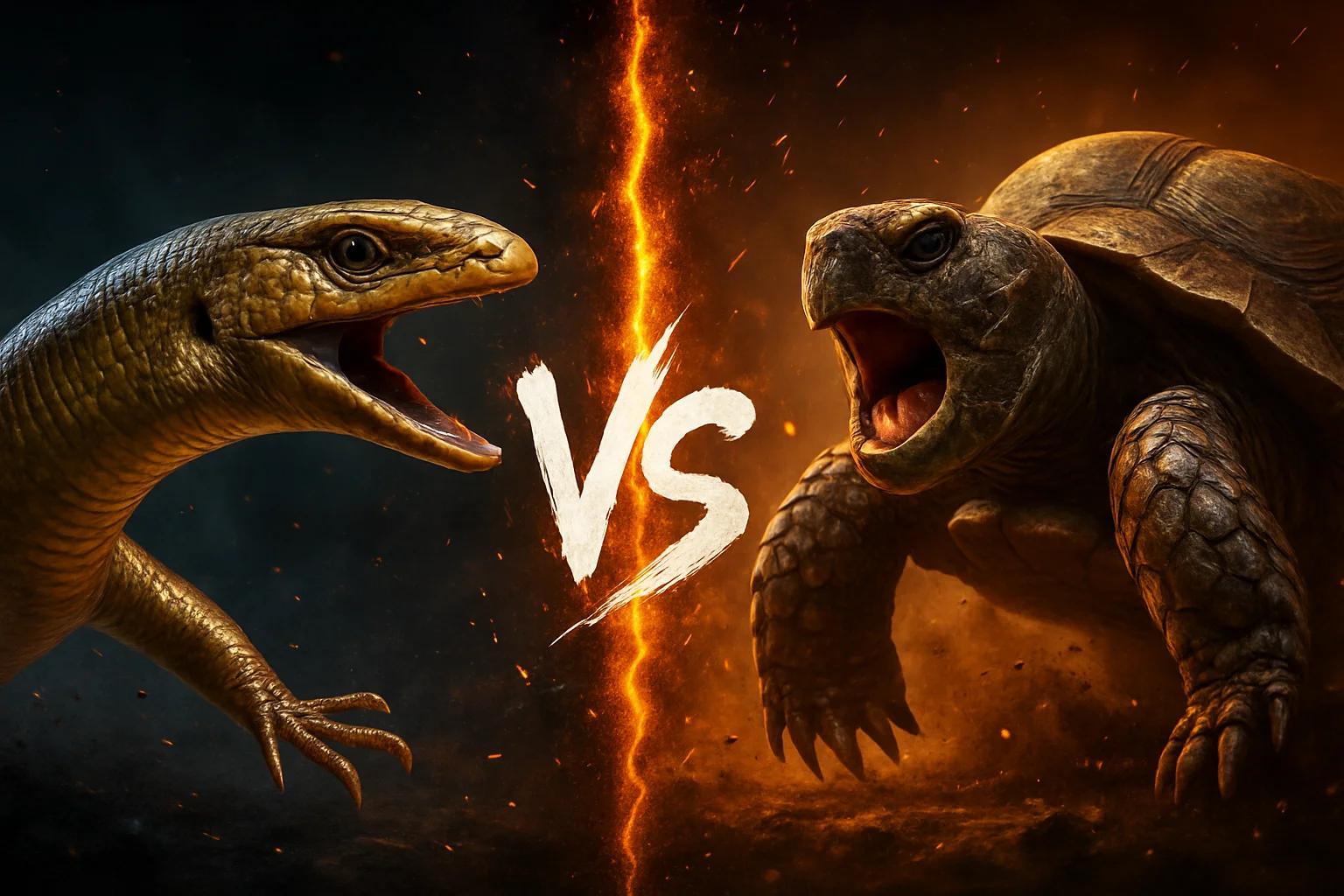
Eastern Glass Lizard vs Gopher Tortoise: Who Actually Wins?
The Gopher Tortoise wins this matchup clearly. The Eastern Glass Lizard is longer, up to about a meter, but roughly two-thirds of that length is a fragile, detachable tail. Its jaws are built for insects, spiders, snails and eggs, so they have nothing that can get through a domed shell. A grown gopher tortoise weighs several kilograms of bone-plated mass. Males fight rivals by ramming and flipping them with a forked throat plate called the gular scute, and the species controls burrows that can run more than 10 meters underground. The lizard can't injure the tortoise in any meaningful way. The tortoise can shove, pin and outlast the lizard, and it owns the ground they would contest. The glass lizard's real strength is escape, not combat. It 'wins' only by leaving, and in a battle frame leaving isn't winning.
Read comparison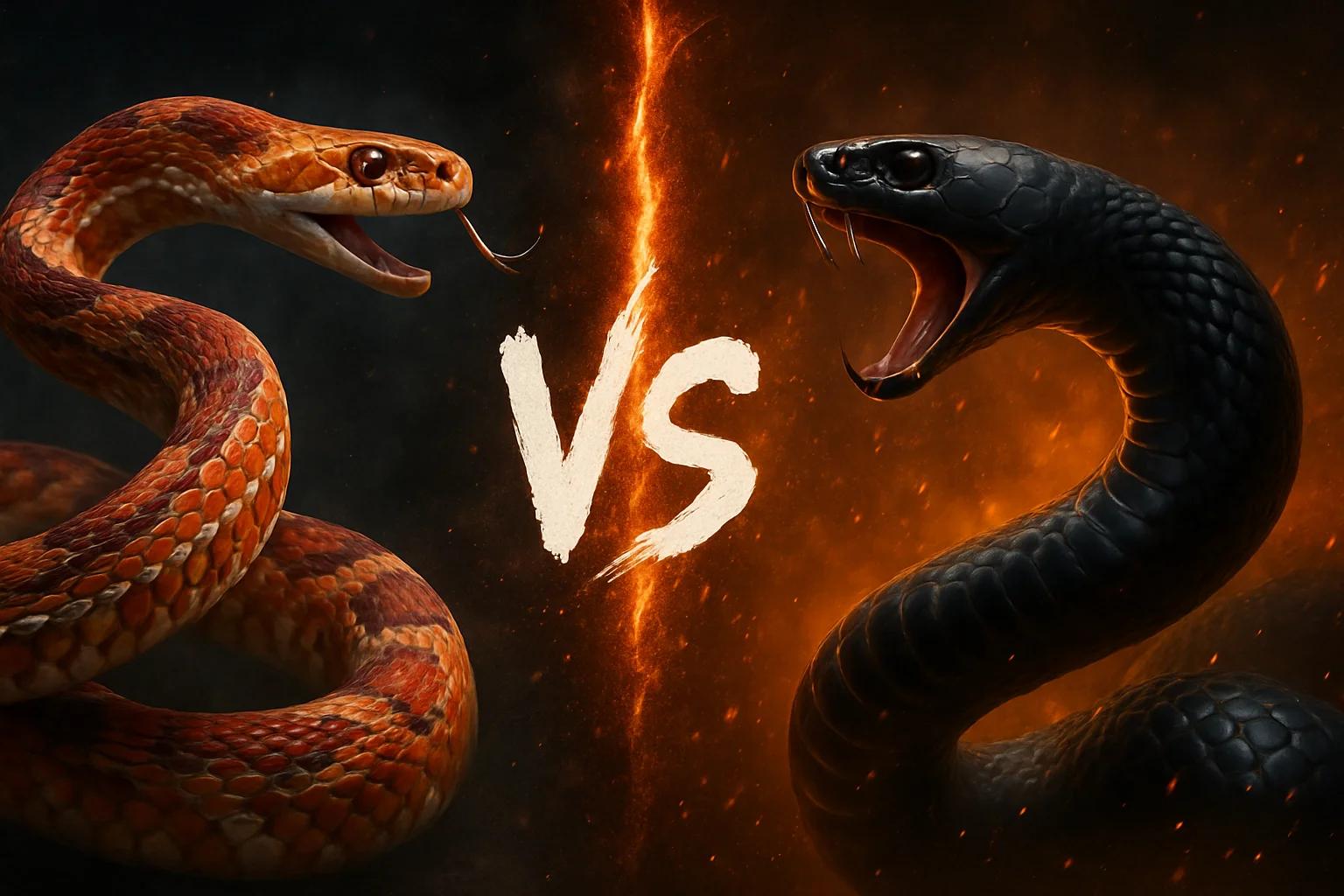
Corn Snake vs Eastern Indigo Snake: Who Actually Wins?
The Eastern Indigo Snake wins, and it isn't especially close. North America's longest native snake regularly tops 2 m and can exceed 2.5 m, against a corn snake's typical 1.0–1.5 m. More important than size, the indigo is an ophiophage: snakes are a normal part of its diet, including venomous rattlesnakes. Its method doesn't depend on constriction. It grips with its jaws, pins the prey with its heavy body, and overpowers it. The corn snake is a skilled constrictor of rodents and birds, but it has no defensive answer to a larger, faster-acting predator that treats it as food. Corn snakes escape through climbing, camouflage, and burrow use, and those are the corn snake's only real routes to survival.
Read comparison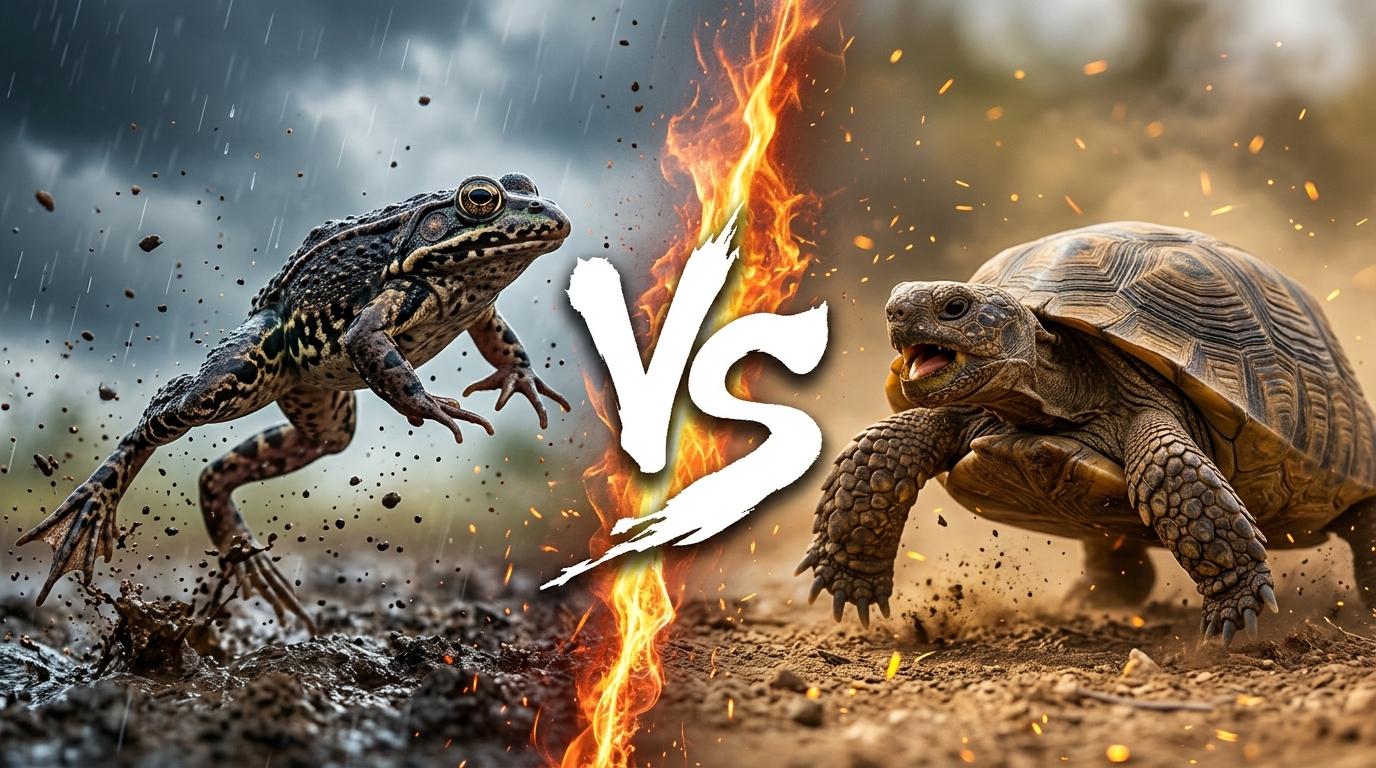
Dusky Gopher Frog vs Gopher Tortoise: Who Actually Wins?
The gopher tortoise wins clearly. An adult weighs roughly 4 to 9 kg and carries a domed bony shell, while an adult dusky gopher frog weighs well under 100 grams. The frog has no claws, no real bite, and its best defenses are bitter, irritating skin secretions and covering its eyes with its forelimbs, which deter predators but do nothing against a tortoise that simply isn't trying to eat it. The tortoise wins any direct contest through sheer mass, armor, and shovel-like forelimbs, and it has outlasted almost everything in the longleaf pine ecosystem. The twist is that these two are not enemies at all. The frog often depends on gopher tortoise burrows for shelter, so the 'fight' is really a tenant meeting its landlord.
Read comparison
Discussion
What do you think?
Share your reasoning with other readers. Be civil and stick to the animals.
Sign in to join the discussion.
Sign inNo comments yet. Start the conversation.