

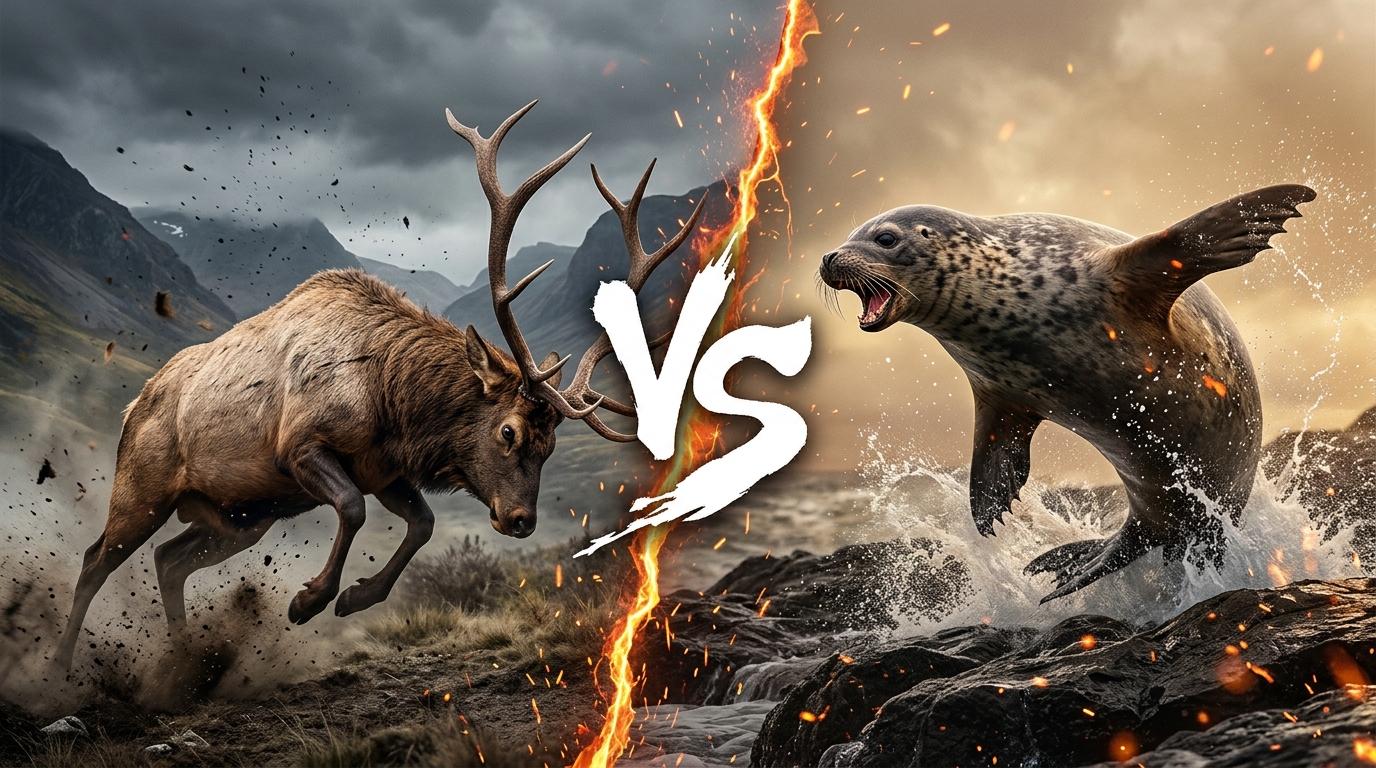
Elk vs Seal: Who Actually Wins?
Elk vs seal: who would win? A biology-first breakdown of antlers, blubber, terrain, and why the elk takes this matchup on land, while the seal rules the water.
Elk vs Seal
Matchup winner
Elk
Quick verdict
Start with the direct answer, then use the structured comparison below to see what changes the outcome.
The elk wins this matchup overall. A bull elk weighs roughly 320–330 kg (700+ lb), stands about 1.5 m at the shoulder, and carries a rack of antlers built for shoving matches with other bulls. It can also strike hard with its front hooves and run near 65 km/h. Most seals are clumsy on land. They move by humping their bodies forward, and their main weapons are a bite and a thick layer of blubber. Size depends on the species: a harbor seal is around 70–150 kg, while a grey seal bull can pass 300 kg. A realistic meeting between these two would happen on a shoreline, beach, or river mouth. On that ground the elk has the reach, the mobility, and the weapons to control the encounter. The seal's real advantage only appears in deep water, where the elk is a swimmer and the seal is the expert. In most frames people actually picture, the elk is the clear winner.
Read the full explanation
Elk win on land thanks to antlers, hooves, height, and far better mobility.
Seals are aquatic specialists. On land they are slow and have little reach.
In deep water, the seal holds the edge and the elk would rather leave.
Overall verdict: Elk, roughly 82% confidence.
Reader vote
Who do you think wins?
Pick a side — no account needed. Results update live.
No votes yet — be the first to call it.
Editorial note
Why people disagree
'Seal' covers many species. A 300+ kg grey seal bull is a very different opponent from a 90 kg harbor seal.
Explosive power
The elk can deliver its full body weight through its antlers. A seal on land cannot generate a comparable burst of force.
Land mobility
On land, the fighter who can move freely decides the angles. The elk does, and the seal mostly cannot.
Reach and weapons
The elk can strike from a distance where the seal's bite cannot reach it.
Read the full explanation +
Blubber looks like armor, but it was built to hold in heat. It cushions blows but does little to stop a strike from a hoof.
Some people picture the fight in water, which flips the outcome. Elk do swim well, but they are not built for fighting while submerged.
Comparison FAQ
Short, direct answers to the next questions readers usually ask after the headline verdict.
Would an elk beat a seal in a fight?+
Yes, on land. Antlers, hooves, and speed give the elk control, and the seal's main defense is to retreat into the water.
Which is stronger, an elk or a seal?+
A bull elk is generally stronger and more powerful on land. Only the largest seals, such as grey seal bulls, come close in weight, and none match the elk's ability to fight on land.
Why is the seal still dangerous?+
A seal has a strong bite with sharp canines, and its blubber cushions blows. In water it is far more agile than the elk and could injure an elk that followed it in.
Would a seal win in water?+
Most likely, yes. In deep water the seal has the advantage, so an elk's best move is to head back to shore.
Head-to-head species stats
These are the same core AnimalDex stat dimensions used on the dedicated animal pages, pulled side by side so the matchup is faster to scan.
Elk
Tier BSeal
Tier BTrait-by-trait comparison
Only the categories that matter to this matchup are included. The goal is not filler stats, but the real design differences that change the result.
Antler charge plus driving legs
Explosive power
Elk
Short lunge and bite
Explosive power
Elk
Gallops near 65 km/h, pivots fast
Land mobility
Elk
Galumphing crawl, low agility
Land mobility
Elk
Antler tines and striking front hooves
Reach and weapons
Elk
Canine teeth, close range only
Reach and weapons
Elk
Dense neck muscle, thick hide
Close-range durability
Seal
Blubber cushioning and a stocky body
Close-range durability
Seal
Capable swimmer, surface-bound
Aquatic control
Seal
Elite diver, agile underwater
Aquatic control
Seal
Rut-hardened sparring fighter
Dominance drive
Elk
Defensive, prefers retreat to water
Dominance drive
Elk
How the verdict forms
Verdict timeline
01 · Explosive power
Elk
02 · Land mobility
Elk
03 · Reach and weapons
Elk
04 · Close-range durability
Seal
05 · Aquatic control
Seal
06 · Dominance drive
Elk
Change the conditions
Scenario breakdown
This is where shallow battle content usually fails. Terrain, spacing, timing, and engagement style can change the answer.
Scenario lean
Elk
Verdict confidence
82%
Elk dominates.
On firm open ground the elk has every advantage: speed, height, antlers, and hooves. The seal cannot close distance fast enough to use its bite, and it cannot escape fast enough to avoid repeated strikes.
AnimalDex field profiles
Explore these animals
Elk
Cervus canadensis
mountain meadow, open forest, valley grassland, and river-edge habitat
Seal
Pinnipedia
coastline, ice edge, estuary, and offshore sea
Systems Intelligence & Hidden Purpose
See the animals behind this comparison as engineered biological systems: what each one is built to do, where it gains leverage, and why the matchup changes by scenario.
Specialized Hardware
huge sweeping antlers on males, deep bugling breeding calls, and long-distance herd travel give the Elk a body plan tuned for its niche.
Systems Script
Elks operate through mountain meadow, open forest, valley grassland, and river-edge habitat Their design links movement, shelter, and feeding into one workable survival system.
Strategic Insight
A far-carrying signal matters most when a system is spread over a large space.
Final take
The elk wins this matchup. A bull elk is a land fighter shaped by the rut, with reach, mass, mobility, and weapons that a seal cannot answer on solid ground.
Read the full explanation
The seal is not a pushover, though. Its blubber absorbs blows, its bite is real, and in deep water it becomes the stronger animal. The outcome depends heavily on where the encounter happens, and most realistic settings favor the elk.
Collect both animals in AnimalDex
Track the species behind this matchup, compare their real traits, and build the rivalry into your AnimalDex collection.
Related comparisons
Continue with nearby matchups to compare more real-world animal traits without dropping into junky who-wins filler.
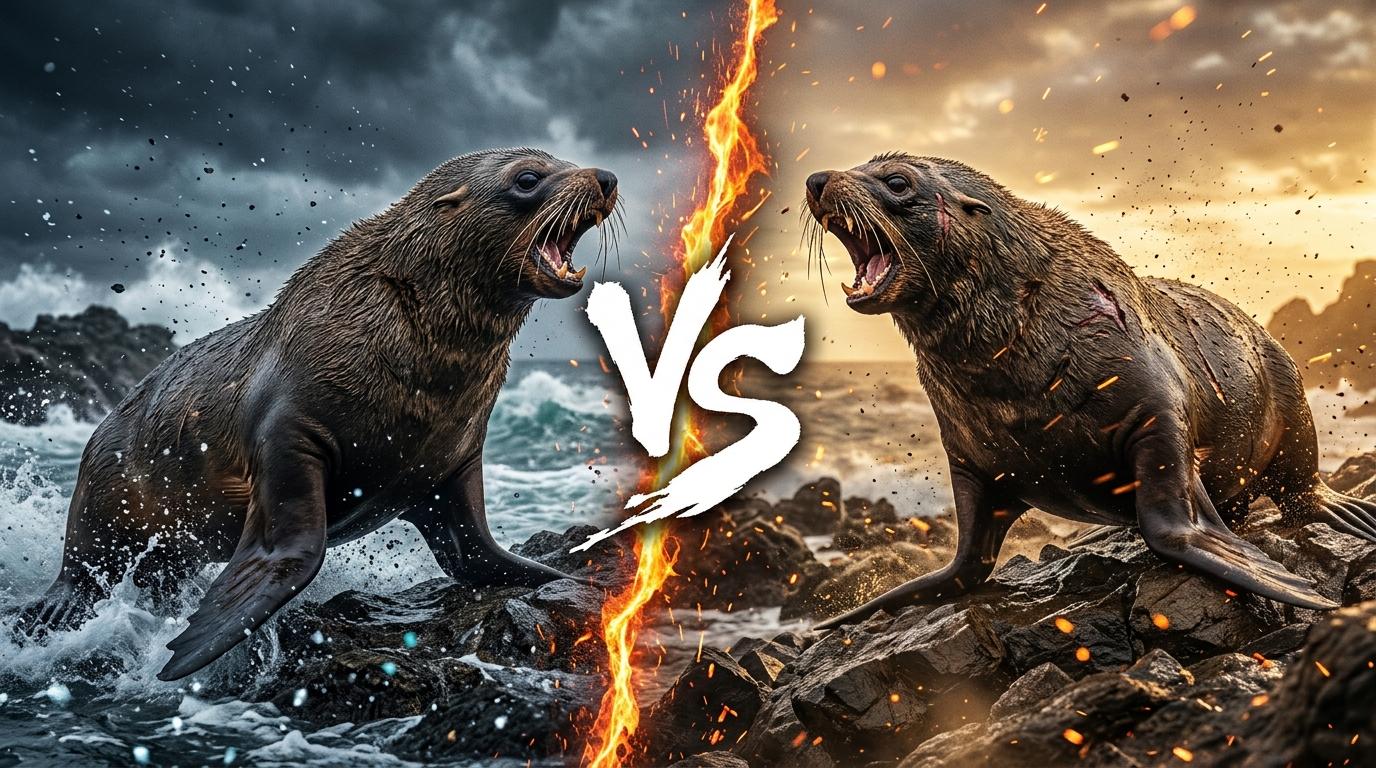
New Zealand Fur Seal vs Seal: Who Actually Wins?
The New Zealand fur seal wins most realistic matchups against a comparable-sized generic 'seal' (a true, earless phocid such as a harbor seal). The fur seal is an eared seal (otariid). It can rotate its hind flippers forward and walk, gallop, and pivot on land. Breeding bulls are hardened by seasons of shoving and biting matches over rocky beach territory. A typical true seal moves on land in a belly-flop lunge and tends to avoid conflict rather than seek it. Size is roughly even in this framing. The deciding factors are mobility, territorial aggression, and combat practice, and all three favor the fur seal. The true seal's best chance is in open water, where its powerful hind-flipper propulsion and blubber padding make it slippery and hard to pin down.
Read comparison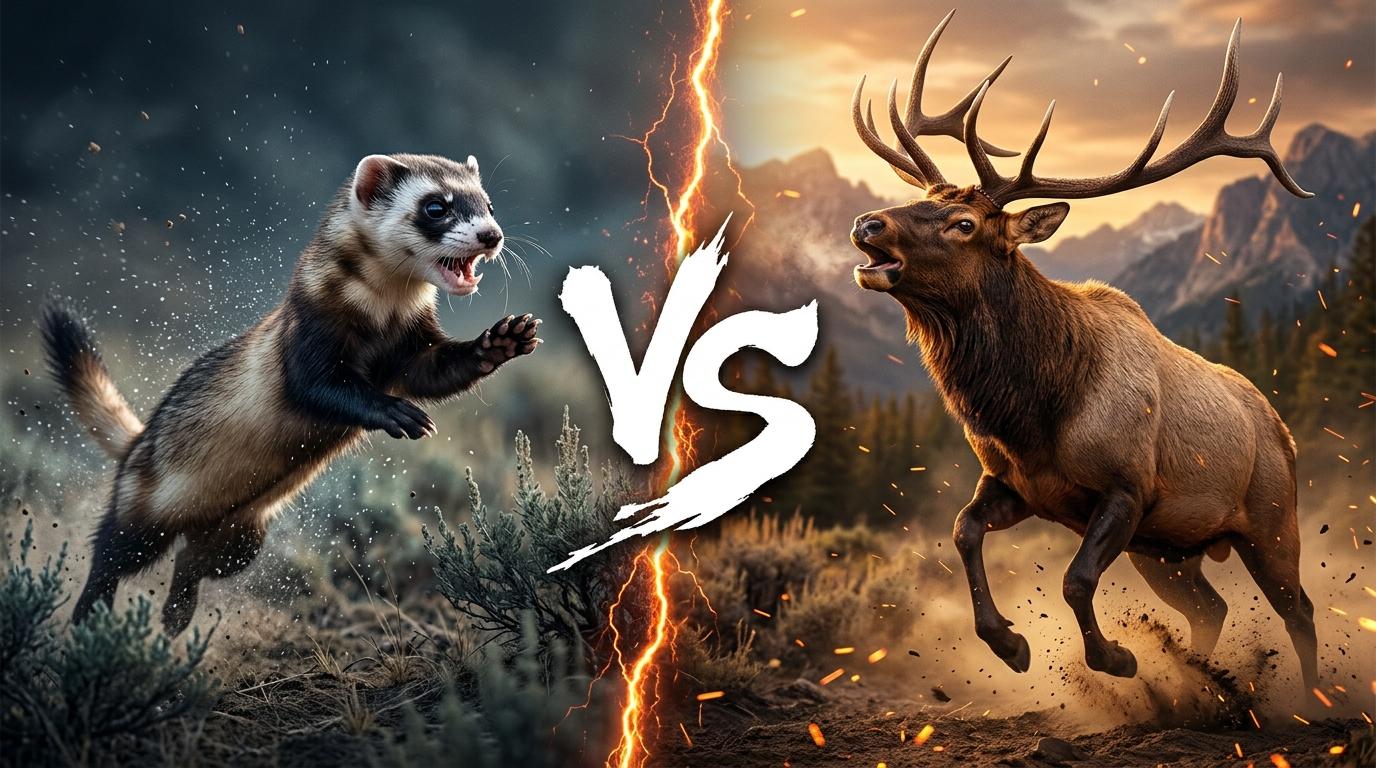
Black-footed Ferret vs Elk: Who Actually Wins?
The elk wins, and it is not close. A bull elk can weigh 300–450 kg against a black-footed ferret's roughly 1 kg, carries antlers and sharp hooves, and runs over 60 km/h. The ferret is a superb specialist at hunting prairie dogs in the dark of their burrows, but it has no tool for injuring an animal hundreds of times its size, and nothing in its behavior pushes it to try. In any realistic meeting the elk either ignores the ferret, steps away, or drives it off with a stamp, and the ferret's best outcome is a quick retreat underground.
Read comparison
Dusky Dolphin vs Seal: Who Actually Wins?
The Dusky Dolphin wins this matchup overall. In open water, where almost any real encounter would happen, the dusky dolphin is faster, more maneuverable and more coordinated. It is a 70–85 kg acrobat built for bursts above 30 km/h, and it rarely acts alone. Its main tools are sustained speed, a hydrodynamic body that can ram with its rostrum and head, and pod-level teamwork that lets it control the engagement instead of trading blows. The seal is the better biter and the more flexible brawler at close range, and on rocks, in kelp or in shallow haul-out zones it holds a real edge. Seals are a broad group, but in dusky dolphin waters the realistic opponent is a fur seal, and fur seals have been reported attacking dusky dolphins, mostly young ones. That is why the seal is never harmless. But a healthy adult dusky dolphin in open water usually sets the terms, and setting the terms decides this fight.
Read comparison
Barbary Macaque vs Elk: Who Actually Wins?
The elk wins, and it isn't close in a direct confrontation. A bull elk weighs around 320–330 kg (700+ lb) and carries antlers that can span more than a meter. Even a cow, at roughly 225 kg, outweighs a 10–15 kg Barbary macaque by about fifteen to twenty times. Elk fight with forehoof strikes and antler thrusts that are built to deter wolves and rival bulls. The macaque's best tools are a sharp mouthful of canines, quick hands and a socially savvy brain. Those make it formidable among primates but give it no real way to injure something that size. The macaque's realistic victory condition is escape: up a cedar, onto a cliff ledge, or into its troop. That's survival, not a win.
Read comparison
Discussion
What do you think?
Share your reasoning with other readers. Be civil and stick to the animals.
Sign in to join the discussion.
Sign inNo comments yet. Start the conversation.