

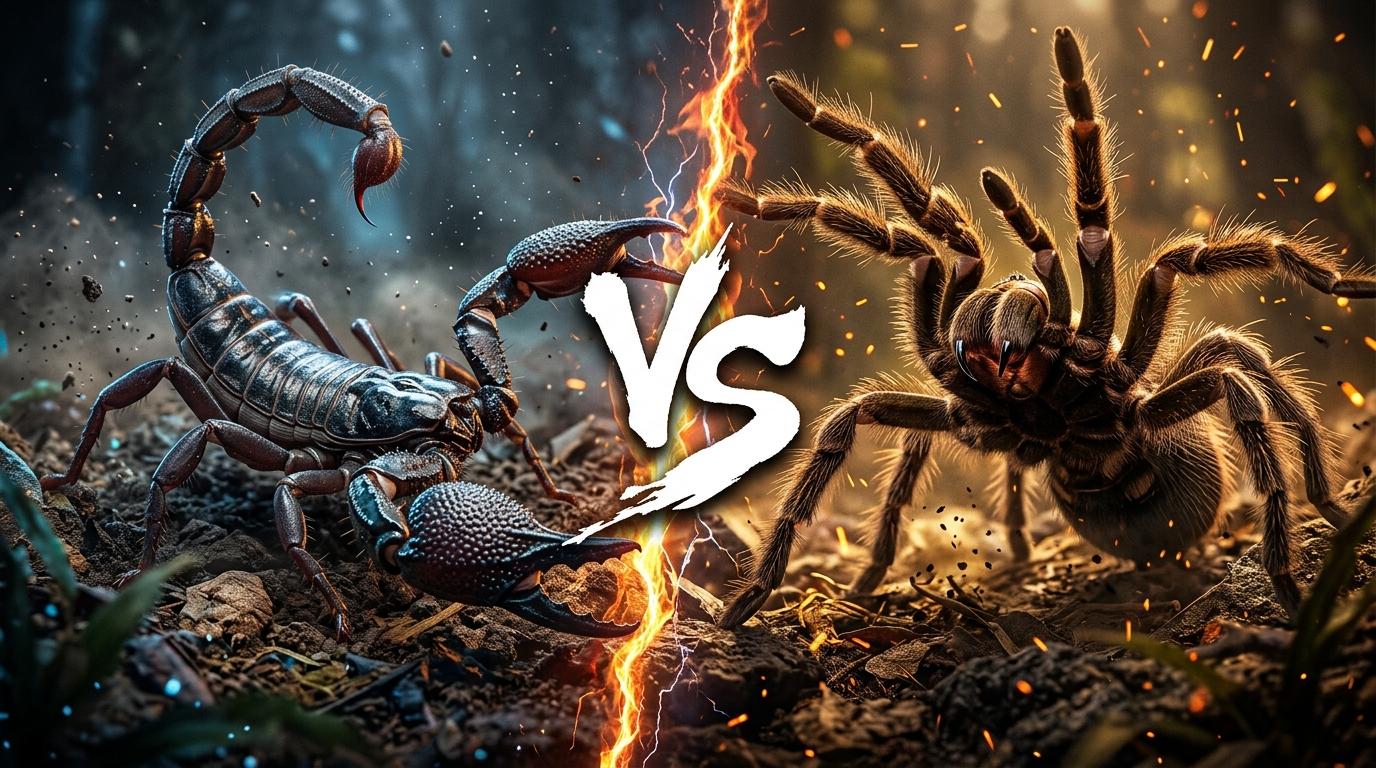
Emperor Scorpion vs Goliath Birdeater: Who Actually Wins?
Emperor scorpion vs Goliath birdeater: armored pincers against the world's heaviest spider. A biology-first breakdown of size, fangs, venom, and who wins.
Emperor Scorpion vs Goliath Birdeater
Matchup winner
Goliath Birdeater
Quick verdict
Start with the direct answer, then use the structured comparison below to see what changes the outcome.
The Goliath Birdeater wins this matchup. It is the heaviest spider on Earth, with adults reaching roughly 170 g and a leg span near 30 cm, while a large Emperor Scorpion weighs about 30 g at around 20 cm long. That mass gap matters at close range. The tarantula's fangs, often 2 cm or more, can drive through scorpion cuticle, especially at joints and along the softer underside. Its venom is built to subdue prey. The Emperor Scorpion's real weapon is not its sting, which is mild and mostly used on small prey, but its huge crushing pedipalps. Those claws can pin a leg or pedipalp, yet they struggle to control an animal several times heavier that rears up, strikes downward, and can flick irritating hairs. The scorpion has heavier armor and a more patient grappling style, but the spider's size, fang leverage, and kill-focused bite decide most realistic encounters.
Read the full explanation
The Goliath Birdeater wins in most encounters because it outweighs the scorpion by roughly five times.
Its long fangs can pierce scorpion armor at joints and on the softer underside.
The Emperor Scorpion's main weapon is its crushing claws, not its weak sting, and the claws can't hold a much heavier opponent for long.
The scorpion's best chance is a spider that has just molted, or one it pins by a leg in tight cover.
Reader vote
Who do you think wins?
Pick a side — no account needed. Results update live.
No votes yet — be the first to call it.
Editorial note
Why people disagree
The word 'scorpion' suggests deadly venom, but Emperor Scorpion venom is mild. Its power is in the claws, which surprises many readers.
Mass and leverage
In arthropod grappling, weight decides who can pin, flip, and press down a bite. The spider's mass gap is the largest single factor in this fight.
Primary weapon
Claws control and crush, but fangs inject and can end a fight. A bite that gets through armor beats a grip that can't hold the opponent still.
Close-range durability
The scorpion can survive more glancing contact. Its armor is the main reason it stays dangerous for longer than its size suggests.
Read the full explanation +
Scorpion armor looks impenetrable, but tarantula fangs are made to punch through tough arthropod cuticle, especially where plates meet.
People compare length instead of mass. A 20 cm scorpion sounds close to a 30 cm spider until you learn the spider can be five times heavier.
Comparison FAQ
Short, direct answers to the next questions readers usually ask after the headline verdict.
Would an Emperor Scorpion beat a Goliath Birdeater?+
Usually not. The Goliath Birdeater wins most encounters because of its much greater mass and armor-piercing fangs.
Which is stronger, the Emperor Scorpion or the Goliath Birdeater?+
The Emperor Scorpion has stronger crushing claws relative to its size, but the Goliath Birdeater is far heavier overall, and that gives it more total fighting power.
Is Emperor Scorpion venom dangerous?+
It is mild. For most people it causes local pain, roughly like a bee sting. The scorpion relies mainly on its pincers.
Why is the Emperor Scorpion still dangerous to the spider?+
Its thick armor resists glancing bites, and its claws can pin and crush a leg or pedipalp. Against a spider that has just molted, it can win outright.
Is the Goliath Birdeater dangerous to humans?+
Its bite is painful but not considered medically serious for most people. Its irritating hairs can cause skin and eye irritation.
Head-to-head species stats
These are the same core AnimalDex stat dimensions used on the dedicated animal pages, pulled side by side so the matchup is faster to scan.
Emperor Scorpion
Tier DGoliath Birdeater
Tier BTrait-by-trait comparison
Only the categories that matter to this matchup are included. The goal is not filler stats, but the real design differences that change the result.
~20 cm long, around 30 g
Mass and leverage
Goliath Birdeater
~30 cm leg span, up to ~170 g
Mass and leverage
Goliath Birdeater
Massive crushing pedipalps
Primary weapon
Goliath Birdeater
2+ cm downward-striking fangs
Primary weapon
Goliath Birdeater
Thick, plated exoskeleton
Close-range durability
Emperor Scorpion
Softer, hairy body and abdomen
Close-range durability
Emperor Scorpion
Mild sting, rarely decisive
Venom utility
Goliath Birdeater
Prey-subduing venom that comes with a deep bite
Venom utility
Goliath Birdeater
Claw threat display, raised tail
Defensive tricks
Goliath Birdeater
Urticating hairs, loud hissing (stridulation), rearing posture
Defensive tricks
Goliath Birdeater
Excellent pin-and-hold claws
Grapple control
Emperor Scorpion
Leg mass plus a bite from above
Grapple control
Emperor Scorpion
How the verdict forms
Verdict timeline
01 · Mass and leverage
Goliath Birdeater
02 · Primary weapon
Goliath Birdeater
03 · Close-range durability
Emperor Scorpion
04 · Venom utility
Goliath Birdeater
05 · Defensive tricks
Goliath Birdeater
06 · Grapple control
Emperor Scorpion
Change the conditions
Scenario breakdown
This is where shallow battle content usually fails. Terrain, spacing, timing, and engagement style can change the answer.
Scenario lean
Goliath Birdeater
Verdict confidence
82%
The Goliath Birdeater wins the burrow-mouth clash.
Both species shelter in or near burrows on the rainforest floor. In a contested hollow, the tarantula's size lets it fill the space and strike downward. The scorpion's claws have little room to swing wide, so leverage favors the heavier animal.
AnimalDex field profiles
Explore these animals
Emperor Scorpion
Pandinus imperator
Humid forest floor, leaf litter, rotting logs, and burrows.
Goliath Birdeater
Theraphosa blondi
rainforest floor and humid tropical burrow habitat
Systems Intelligence & Hidden Purpose
See the animals behind this comparison as engineered biological systems: what each one is built to do, where it gains leverage, and why the matchup changes by scenario.
Specialized Hardware
Large glossy black body, heavy front pincers, and curved tail with stinger give the Emperor Scorpion a body plan tuned for its niche.
Systems Script
Emperor Scorpions operate in humid forest floor, leaf litter, rotting logs, and burrows. Their design helps them match food access, shelter, and timing inside that environment.
Strategic Insight
Visible strength can prevent unnecessary escalation when it is clear and believable.
Specialized Hardware
huge tarantula body, hair-flicking defense, and burrow-based rainforest life give the Goliath Birdeater a body plan tuned for its niche.
Systems Script
Goliath Birdeaters operate through rainforest floor and humid tropical burrow habitat Their design links movement, shelter, feeding, and survival into one workable system.
Strategic Insight
Even giant hunters need a safe base and a good warning system.
Final take
The Goliath Birdeater is the clear overall winner. Fights between arthropods come down to mass, leverage, and getting a weapon through armor. The spider leads on all three, and the scorpion's sting is not powerful enough to make up the gap.
Read the full explanation
The Emperor Scorpion still deserves respect. Its armor and pin-and-crush claws mean it is never easy prey, and a scorpion that catches a leg, or meets a spider right after molting, can turn the fight around. Overall, though, the heavier hunter with long fangs wins.
Collect both animals in AnimalDex
Track the species behind this matchup, compare their real traits, and build the rivalry into your AnimalDex collection.
Related comparisons
Continue with nearby matchups to compare more real-world animal traits without dropping into junky who-wins filler.
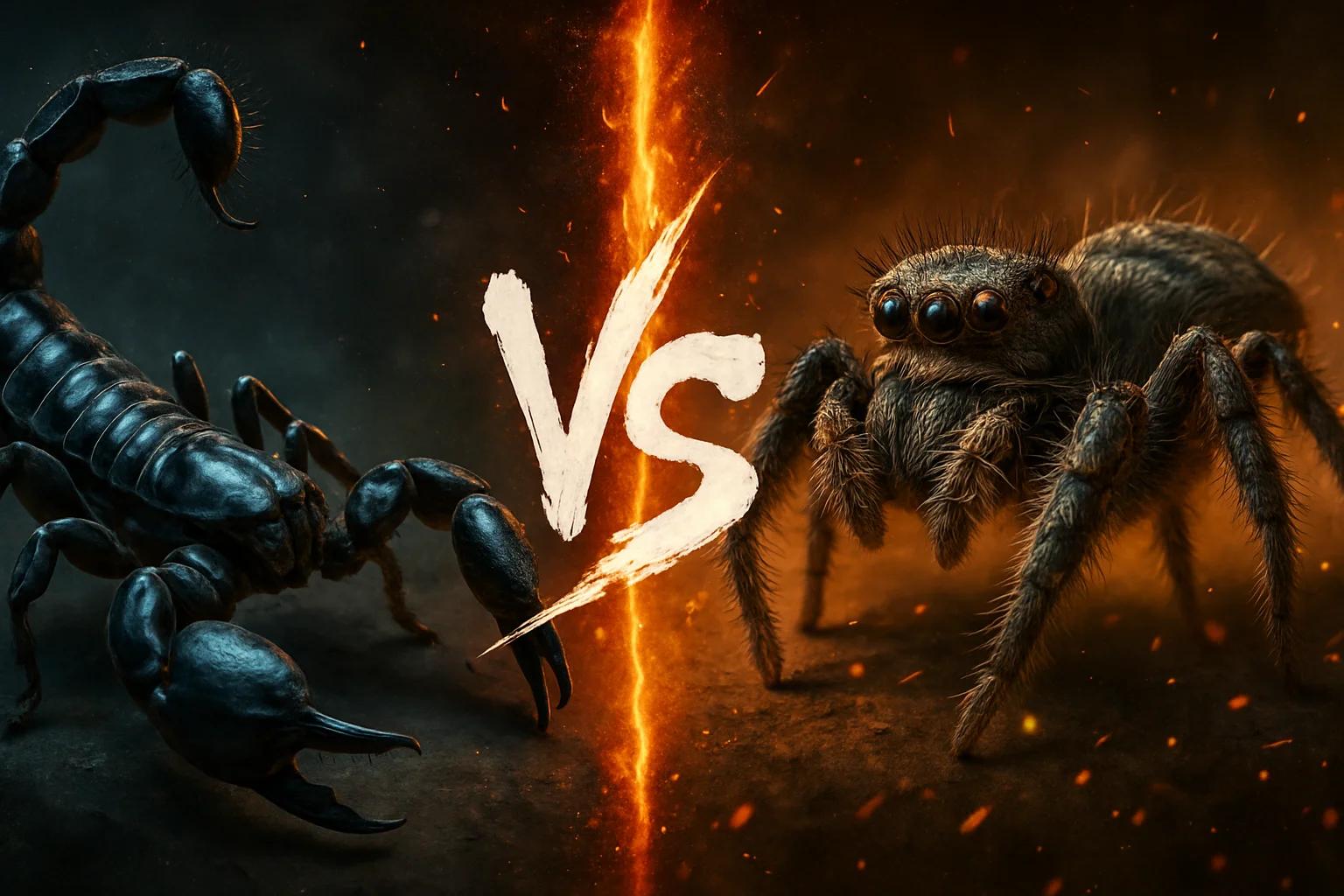
Emperor Scorpion vs Jumping Spider: Who Actually Wins?
The emperor scorpion wins, and it isn't close in a real encounter. Pandinus imperator can reach about 15–20 cm and 30 grams or more. Platycryptus undatus, the tan jumping spider, is roughly 1 cm long and weighs a fraction of a gram. That is a mass gap of well over a hundred to one. The scorpion's thick exoskeleton shrugs off the spider's small fangs, and its massive pedipalps can pin and crush the spider in one grab. The jumping spider has the better vision and the sharper hunting brain, so it is far more likely to see the scorpion first and leap away than to land a meaningful bite. In a forced, contained fight, armor plus crushing force beats precision plus agility at this scale. The spider's best result is surviving by not engaging at all.
Read comparison
Discussion
What do you think?
Share your reasoning with other readers. Be civil and stick to the animals.
Sign in to join the discussion.
Sign inNo comments yet. Start the conversation.