


King Cobra vs Asian Water Monitor: Who Actually Wins?
King Cobra vs Asian Water Monitor: a biology-first breakdown of venom, bite force, armor, and terrain to decide who would win a fight between Asia's longest venomous snake and its heaviest common lizard.
King Cobra vs Water Monitor
Matchup winner
King Cobra
Quick verdict
Start with the direct answer, then use the structured comparison below to see what changes the outcome.
The King Cobra wins more often than not, but the margin is narrower than its reputation suggests. A large Asian Water Monitor is the heavier, sturdier animal. Big individuals can outweigh even a very large cobra several times over. The monitor also carries serrated teeth, raking claws, and a powerful tail. The cobra's edge is chemical rather than physical. A King Cobra delivers some of the largest venom yields of any snake, and its potent neurotoxins can stop a large animal's breathing. It strikes from a raised posture at head height, so it can land a bite before the monitor closes the distance. The monitor needs a sustained bite-and-shake to win. The cobra needs one well-placed, deep bite and the patience to retreat while the venom works. In most realistic encounters, that asymmetry favors the snake. The monitor's best path is a head-first ambush on a small or distracted cobra.
Read the full explanation
King Cobra wins most encounters by landing one high-dose neurotoxic bite.
The Asian Water Monitor is heavier, tougher, and better armed physically.
The monitor wins if it pins the cobra's head first or meets a smaller snake.
Water and dense riverbank cover tilt the odds toward the monitor.
Reader vote
Who do you think wins?
Pick a side — no account needed. Results update live.
No votes yet — be the first to call it.
Editorial note
Why people disagree
Monitor lizards do eat snakes, so some readers assume the snake-eater must win. Most of those snakes are smaller or non-venomous, not 3-4 m King Cobras.
Lethal payload
The cobra can win from a single bite. The monitor has to win through accumulated physical damage.
Body mass and grappling weight
If the fight turns into a pinning contest, the monitor's mass dominates.
First-contact reach
Whoever touches first shapes the fight, and the cobra's elevated strike gets there sooner.
Read the full explanation +
Weight comparisons favor the monitor heavily. Venom yield and strike reach decide fights that never become wrestling matches.
Claims that monitors are venom-proof are often overstated. Their resistance to cobra neurotoxins is poorly documented, and a big dose still matters.
Comparison FAQ
Short, direct answers to the next questions readers usually ask after the headline verdict.
Would a King Cobra beat an Asian Water Monitor?+
Usually, yes. In most land-based encounters between adults, the cobra's elevated strike and very high venom yield give it the decisive first hit.
Which is stronger, a King Cobra or a water monitor?+
The water monitor is physically stronger, with more mass, sturdier limbs, a powerful tail, and tougher hide. The cobra is more dangerous because its strength lies in venom rather than muscle.
Are water monitors immune to King Cobra venom?+
There is no strong evidence that Asian Water Monitors are immune to King Cobra venom. Any partial tolerance would still be tested by the King Cobra's large venom dose.
Why is the water monitor still dangerous even if it loses?+
Its serrated teeth, claws, and tail can seriously injure a cobra, and its ambush skill in water lets it win on its own terms. Monitors also prey on snakes when the size matchup favors them.
Do King Cobras eat monitor lizards?+
King Cobras feed mainly on other snakes. Lizards, including monitors, are occasional prey rather than a staple.
Head-to-head species stats
These are the same core AnimalDex stat dimensions used on the dedicated animal pages, pulled side by side so the matchup is faster to scan.
King Cobra
Tier BWater Monitor
Tier CTrait-by-trait comparison
Only the categories that matter to this matchup are included. The goal is not filler stats, but the real design differences that change the result.
Massive neurotoxic venom yield
Lethal payload
King Cobra
Mild oral secretions, serrated cutting teeth
Lethal payload
King Cobra
Very long but slender, typically under 10 kg
Body mass and grappling weight
Water Monitor
Stocky, large adults often 20+ kg
Body mass and grappling weight
Water Monitor
Rears a third of its body upright and strikes from height
First-contact reach
King Cobra
Must close to jaw range at ground level
First-contact reach
King Cobra
Long, exposed body with no armor
Close-range durability
Water Monitor
Bead-like scales, thick hide, strong limbs
Close-range durability
Water Monitor
Bite only, backed by hood display and hissing
Weapon variety
Water Monitor
Bite, claws, and whip-like tail
Weapon variety
Water Monitor
A dedicated predator of other large reptiles
Combat specialization
King Cobra
Opportunistic generalist scavenger-hunter
Combat specialization
King Cobra
How the verdict forms
Verdict timeline
01 · Lethal payload
King Cobra
02 · Body mass and grappling weight
Water Monitor
03 · First-contact reach
King Cobra
04 · Close-range durability
Water Monitor
05 · Weapon variety
Water Monitor
06 · Combat specialization
King Cobra
Change the conditions
Scenario breakdown
This is where shallow battle content usually fails. Terrain, spacing, timing, and engagement style can change the answer.
Scenario lean
King Cobra
Verdict confidence
82%
The cobra rears, reads the approach, and lands the first bite.
In leaf litter and undergrowth, the cobra's height advantage lets it track the monitor's head and strike downward before the lizard can bite. Once the bite lands, the cobra can disengage. Neurotoxins act on the nervous system and need time, not continued grappling, so retreating costs the snake nothing.
AnimalDex field profiles
Explore these animals
King Cobra
Ophiophagus hannah
Tropical forest, swamp forest, bamboo thicket, agricultural edge, and streamside cover with abundant snakes.
Water Monitor
Varanus salvator
mangrove, riverbank, swamp edge, and urban canal
Systems Intelligence & Hidden Purpose
See the animals behind this comparison as engineered biological systems: what each one is built to do, where it gains leverage, and why the matchup changes by scenario.
Specialized Hardware
Long-range chemosensory tracking, elevated striking posture, large venom yield, and a body built to move efficiently through forest structure make the king cobra specialized anti-snake hardware.
Systems Script
King cobras sit high in reptile food chains and apply pressure to other snake populations. They occupy a narrow but strategic niche, proving that specialization can stabilize a system by targeting one hard problem well.
Strategic Insight
Broad competence is useful, but deep specialization can create uncontested territory. Pick the problem where precision matters more than popularity.
Final take
The King Cobra is the overall winner because its win condition is cheaper: one deep bite, then distance. The Asian Water Monitor's win condition is expensive, because it has to close, seize the head, and hold on while avoiding fangs.
Read the full explanation
The monitor is no pushover, though. It is heavier, better armored, and lethal in water or against smaller snakes. If you shift the fight to a riverbank or shrink the cobra, the result flips. On a typical forest floor between two adults, bet on the snake.
Collect both animals in AnimalDex
Track the species behind this matchup, compare their real traits, and build the rivalry into your AnimalDex collection.
Related comparisons
Continue with nearby matchups to compare more real-world animal traits without dropping into junky who-wins filler.
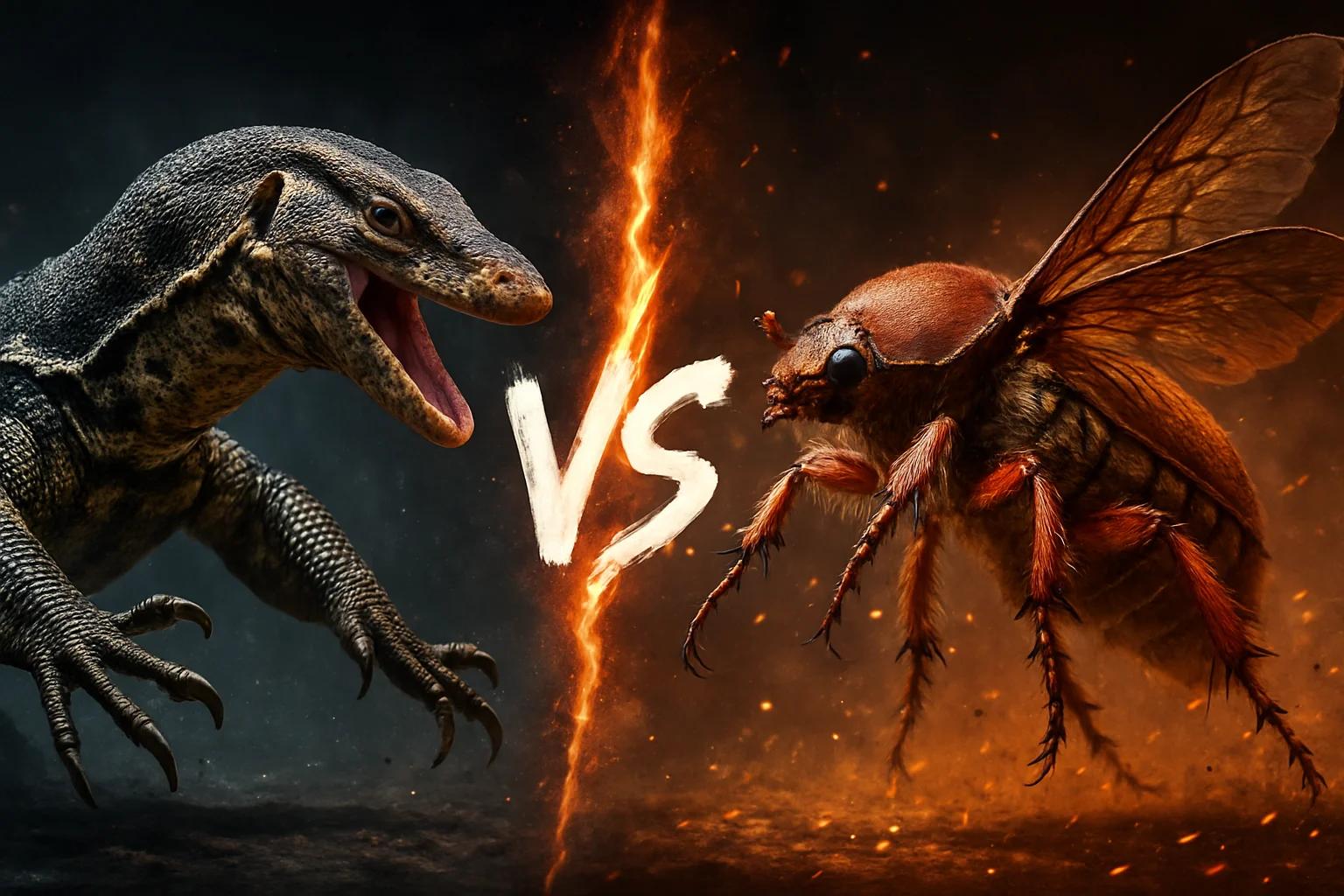
Water Monitor vs June Beetle: Who Actually Wins?
The Water Monitor decisively wins against the June Beetle due to its larger size, superior intelligence, and predatory prowess, allowing it to dominate in various combat scenarios.
Read comparison
Water Monitor vs Domestic Dog: Who Actually Wins?
In a battle between the Water Monitor and the Domestic Dog, the Water Monitor emerges as the overall winner due to its superior dominance, agility in ambush, and natural predatory capabilities, despite the dog's advantages in speed and intelligence.
Read comparison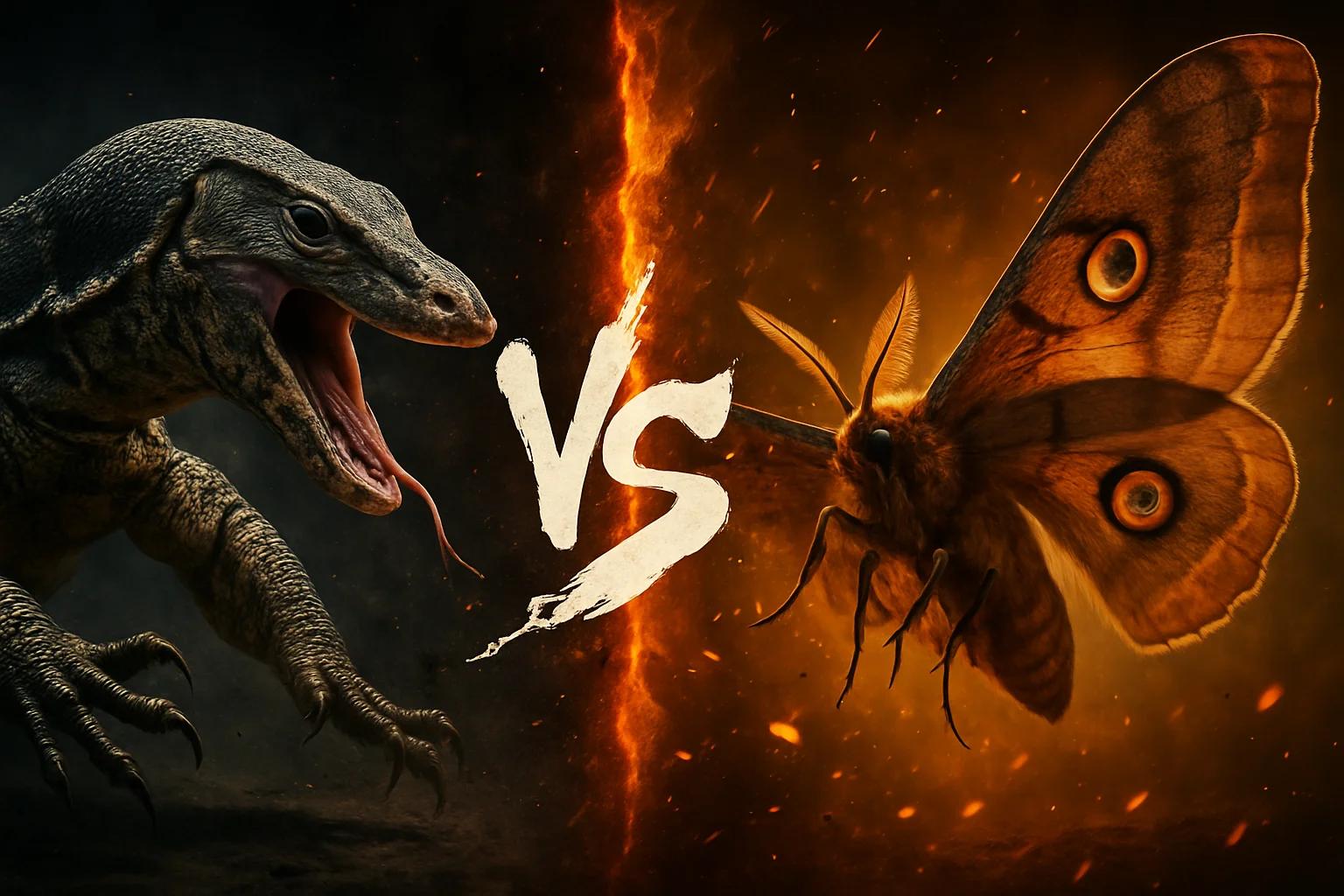
Water Monitor vs Polyphemus Moth: Who Actually Wins?
In the contest between the Water Monitor and the Polyphemus Moth, the Water Monitor decisively takes the lead due to its superior size, dominance, and predatory skills. While the Polyphemus Moth has its own unique adaptations, it simply cannot match the Water Monitor's physical prowess and ecological role as an apex predator.
Read comparison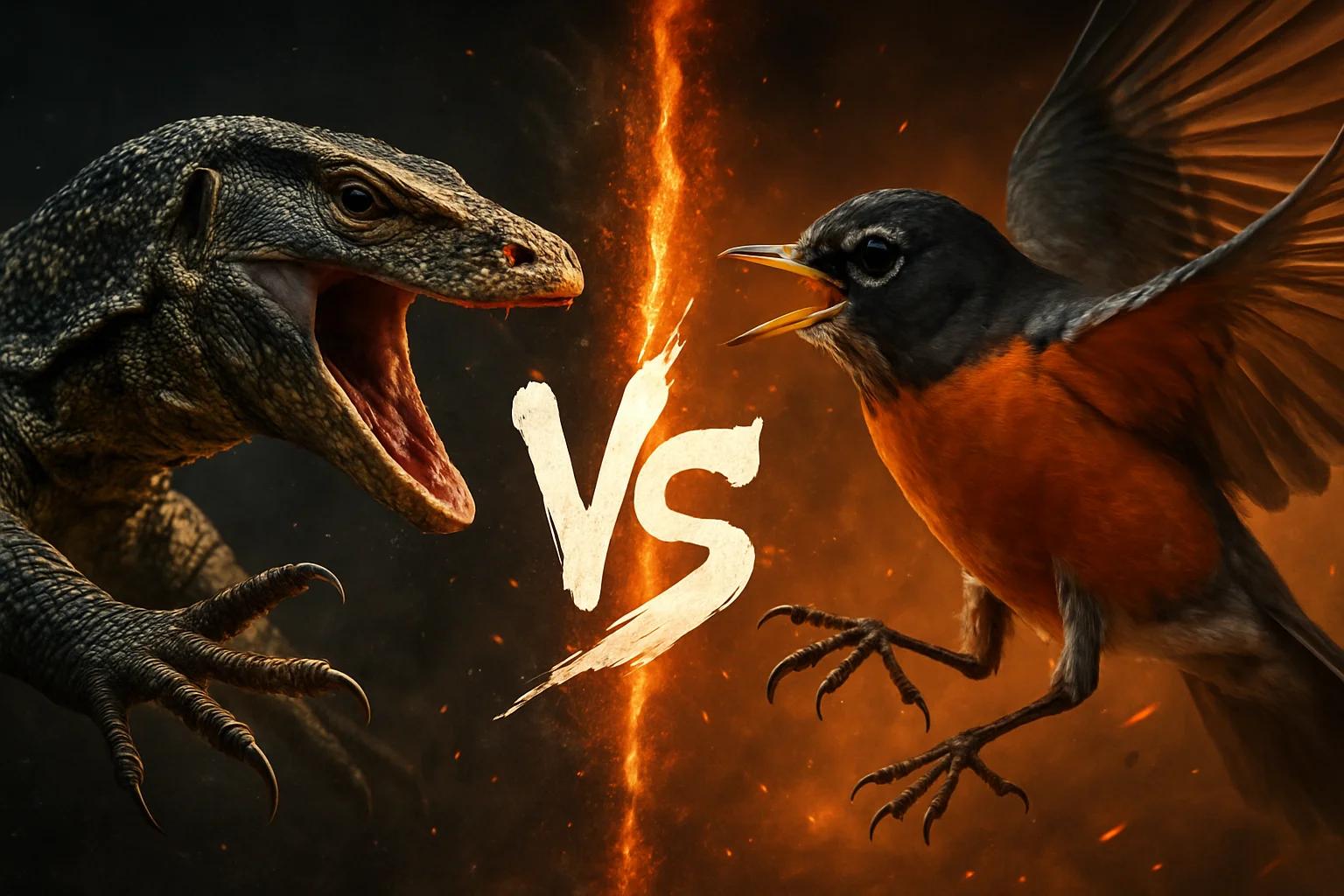
Water Monitor vs American Robin: Who Actually Wins?
In a face-off between the Water Monitor and the American Robin, the Water Monitor emerges as the clear winner due to its superior dominance, size, and strength. While the American Robin is agile and cunning, it lacks the physical attributes necessary to compete effectively against the formidable Water Monitor, whose predatory nature and adaptability make it a top contender in this matchup.
Read comparison
Discussion
What do you think?
Share your reasoning with other readers. Be civil and stick to the animals.
Sign in to join the discussion.
Sign inNo comments yet. Start the conversation.