


Onager vs Sand Cat: Who Actually Wins?
Onager vs sand cat: a 200–260 kg desert wild ass against a 2–3 kg dune cat. Here is who wins, why the size gap decides it, and where the sand cat still shines.
Onager vs Sand Cat
Matchup winner
Onager
Quick verdict
Start with the direct answer, then use the structured comparison below to see what changes the outcome.
The onager wins, and it isn't close. This Asiatic wild ass weighs roughly 200–260 kg, about a hundred times more than a 1.5–3.4 kg sand cat. It can sprint around 60–70 km/h and backs that speed with hard hooves, powerful kicks, and the biting and striking style wild equids use to drive off wolves and rival stallions. The sand cat is a superb small predator. It hunts gerbils, jerboas, and even venomous vipers, and it can live without drinking water. But nothing in its hunting kit is built to injure an animal the size of a horse. Its best move against an onager is to avoid it, and in almost any forced encounter the equid's mass, hooves, and stamina win.
Read the full explanation
Onager wins decisively, with roughly a 100x weight advantage.
Hooves and kicks can kill a cat-sized animal in one strike; the sand cat's bite can't seriously hurt a 200+ kg equid.
The sand cat wins only by not fighting: hiding in burrows, freezing, and using the night.
These two share desert habitats but don't compete. The cat hunts rodents, and the onager grazes.
Reader vote
Who do you think wins?
Pick a side — no account needed. Results update live.
No votes yet — be the first to call it.
Editorial note
Why people disagree
"Cats are apex predators" thinking overrates the sand cat. It is a rodent and reptile specialist, not a big-game killer.
Size and mass
A gap this large settles physical contests almost by itself. The cat cannot topple, pin, or wound an onager meaningfully.
Explosive power
One well-placed hoof strike would end the encounter. The cat's burst is built for prey that weighs a few dozen grams.
Speed and endurance
In open terrain the onager controls distance completely and can run down or outlast the cat.
Read the full explanation +
People underrate how dangerous wild equids are. Onagers kick, bite, and stomp hard enough to repel wolves.
Survival toughness gets confused with combat strength. The sand cat is arguably the better desert survivor, but that isn't the same as winning a fight.
Comparison FAQ
Short, direct answers to the next questions readers usually ask after the headline verdict.
Would an onager beat a sand cat in a fight?+
Yes, decisively. The onager outweighs the sand cat by about 100 times and can kill it with a single kick or stomp. The sand cat has no realistic way to seriously injure it.
Which is stronger, an onager or a sand cat?+
The onager, by a huge margin. Its kicks and bites are strong enough to drive off wolves, while the sand cat's strength is built for catching rodents and small reptiles.
Why is the sand cat still dangerous even though it loses?+
Within its own scale, the sand cat is a lethal hunter. It is fast-reflexed enough to kill venomous vipers, and its stealth, burrowing, and nocturnal habits make it very hard to catch. It is dangerous to small prey, and it is too elusive for a large animal to pin down.
Do onagers and sand cats live in the same places?+
Their ranges can overlap in parts of Central Asia and the Middle East, but they don't compete. Onagers graze on open plains, while sand cats hunt rodents in sandy desert.
Would a sand cat ever attack an onager?+
No. Sand cats hunt prey weighing grams, not hundreds of kilograms. An adult or even a newborn onager is far outside their prey range.
Head-to-head species stats
These are the same core AnimalDex stat dimensions used on the dedicated animal pages, pulled side by side so the matchup is faster to scan.
Onager
Tier BSand Cat
Tier BTrait-by-trait comparison
Only the categories that matter to this matchup are included. The goal is not filler stats, but the real design differences that change the result.
~200–260 kg, horse-sized frame
Size and mass
Onager
~1.5–3.4 kg, house-cat scale
Size and mass
Onager
Hind-leg kicks and stomps from a heavy body
Explosive power
Onager
Quick pounce tuned for rodents
Explosive power
Onager
Sprints ~60–70 km/h, long-distance runner
Speed and endurance
Onager
Short bursts, digs and stalks rather than chases
Speed and endurance
Onager
Hard hooves, strong incisors, biting and kicking
Close-range weaponry
Onager
Small claws and a bite sized for jerboas
Close-range weaponry
Onager
Highly visible herd animal, relies on vigilance
Ambush and concealment
Sand Cat
Sand-colored, furred paw pads leave faint tracks, low profile, nocturnal
Ambush and concealment
Sand Cat
Tolerates heat but needs to reach water
Desert self-sufficiency
Sand Cat
Gets most of its moisture from prey, uses burrows to escape heat
Desert self-sufficiency
Sand Cat
How the verdict forms
Verdict timeline
01 · Size and mass
Onager
02 · Explosive power
Onager
03 · Speed and endurance
Onager
04 · Close-range weaponry
Onager
05 · Ambush and concealment
Sand Cat
06 · Desert self-sufficiency
Sand Cat
Change the conditions
Scenario breakdown
This is where shallow battle content usually fails. Terrain, spacing, timing, and engagement style can change the answer.
Scenario lean
Onager
Verdict confidence
82%
Total onager control.
On flat steppe or gravel plain the onager's speed, height, and vigilance dominate. It spots the cat early, controls spacing, and can charge and stomp. The cat has nowhere to hide and no weapon that matters.
AnimalDex field profiles
Explore these animals
Onager
Equus hemionus
desert plain, dry steppe, and salt-flat edge
Sand Cat
Felis margarita
sand desert, stony plain, and arid scrub
Systems Intelligence & Hidden Purpose
See the animals behind this comparison as engineered biological systems: what each one is built to do, where it gains leverage, and why the matchup changes by scenario.
Specialized Hardware
lean desert equid build, large alert ears, and high-speed dryland movement give the Onager a body plan tuned for its niche.
Systems Script
Onagers operate through desert plain, dry steppe, and salt-flat edge. Their design links movement, feeding, shelter, and timing into one workable survival system.
Strategic Insight
Harsh places reward efficiency, timing, and bodies that waste very little.
Specialized Hardware
furred foot pads, broad low-set ears, and desert-night hunting give the Sand Cat a body plan tuned for its niche.
Systems Script
Sand Cats operate through sand desert, stony plain, and arid scrub. Their design links movement, feeding, shelter, and timing into one workable survival system.
Strategic Insight
Harsh places reward efficiency, timing, and bodies that waste very little.
Final take
The onager is the clear winner. This is a horse-sized, hoofed, wolf-repelling grazer against a palm-sized rodent hunter, and the physics settle the matchup.
Read the full explanation
The sand cat still deserves respect. It is one of the most specialized small cats on Earth, with furred feet for scorching sand, enhanced hearing for prey hidden underground, and near-total independence from drinking water. Its real victory is never being caught in this fight at all.
Collect both animals in AnimalDex
Track the species behind this matchup, compare their real traits, and build the rivalry into your AnimalDex collection.
Related comparisons
Continue with nearby matchups to compare more real-world animal traits without dropping into junky who-wins filler.
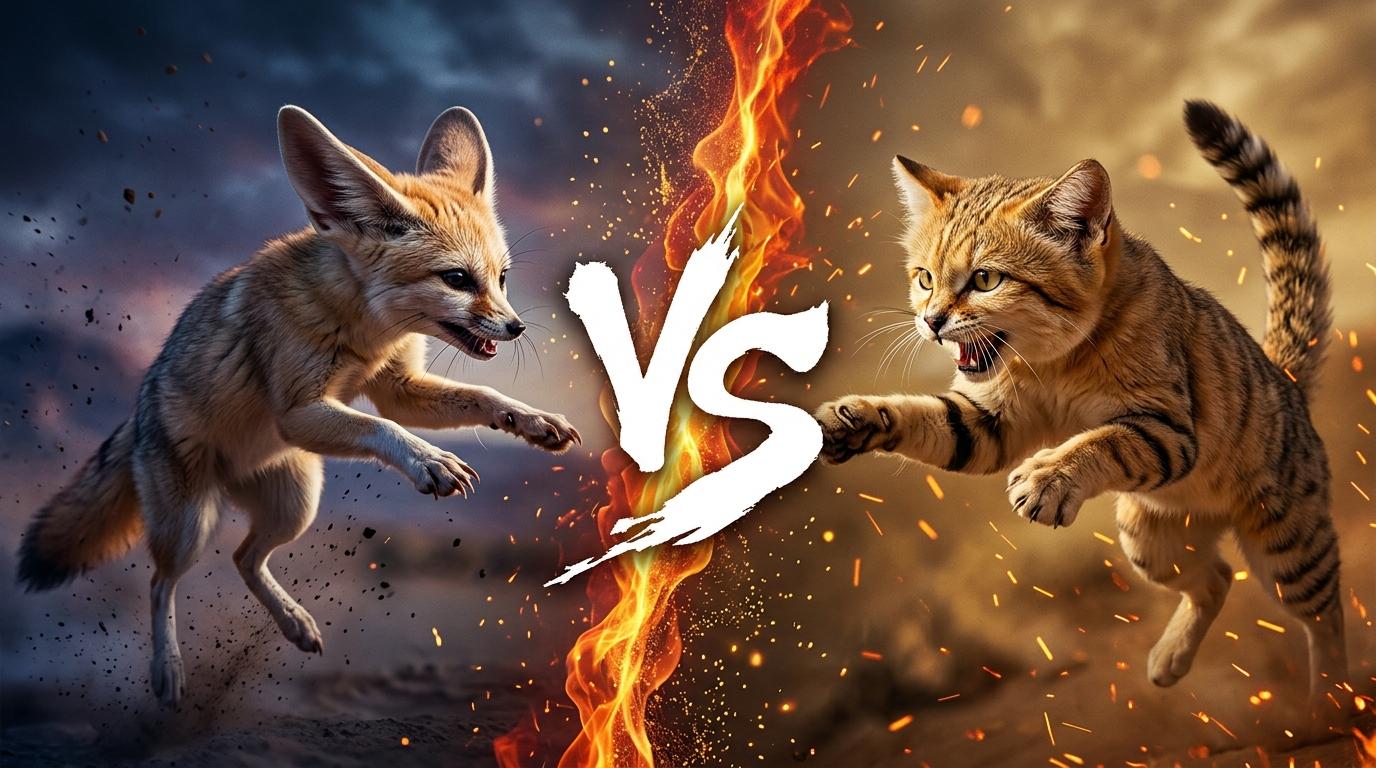
Fennec Fox vs Sand Cat: Who Actually Wins?
The sand cat wins. Both animals are pocket-sized Saharan specialists, but the sand cat carries roughly 1.5–3.4 kg of dense, low-slung felid muscle against the fennec's roughly 0.7–1.6 kg frame, which is mostly ears, fur and fine bone. That weight edge comes with a predator's toolkit. The cat has retractable claws for gripping, a short, powerful jaw built for a killing bite, and a temperament hardened by hunting venomous vipers. The fennec is quicker to turn, smarter about escape, and backed by a family burrow network, but its canid design favors digging, foraging and fleeing over grappling. In a committed close-range clash, the cat's grip-and-bite system outclasses the fox's snap-and-retreat defense.
Read comparison
Jerboa vs Onager: Who Actually Wins?
The onager wins, and it is not close in any real contest of force. An adult onager (Equus hemionus) weighs roughly 200–260 kg, runs at up to about 65–70 km/h, and fights with hard hooves and a strong bite. The lesser Egyptian jerboa (Jaculus jaculus) weighs about 40–70 g. That is a mass difference of several thousand to one, and the jerboa has no weapon that could injure an animal that size. The jerboa's real strength is staying out of reach. It is nocturnal, lives in burrows, and escapes with erratic two-legged leaps. That makes it nearly impossible for a hoofed animal to pin down, but avoiding a fight is not the same as winning one. In any frame where one animal must overpower the other, the onager wins.
Read comparison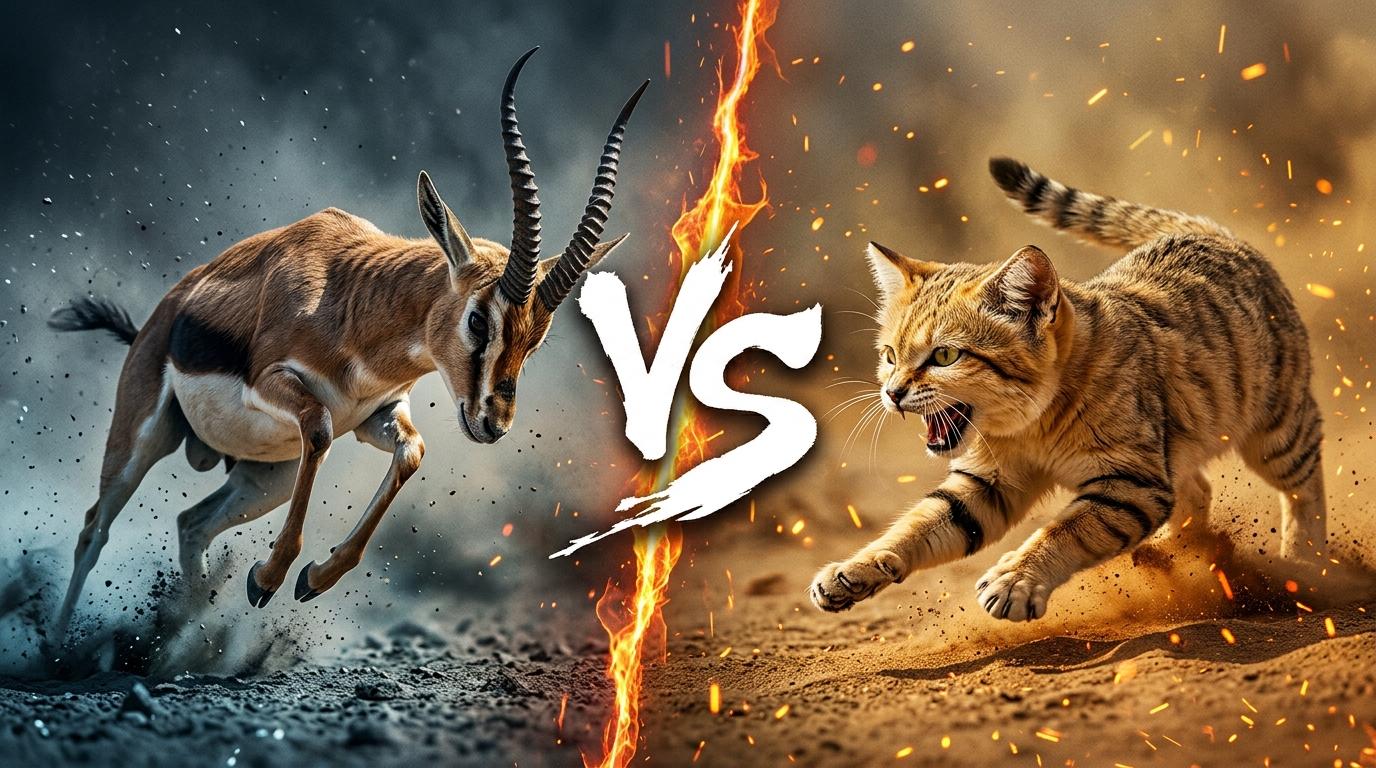
Goitered Gazelle vs Sand Cat: Who Actually Wins?
The goitered gazelle wins this matchup clearly, and it isn't close on physics. An adult goitered gazelle weighs roughly 18–40 kg, carries ridged horns (males), and can sprint at around 60 km/h. The sand cat is one of the smallest wild cats on Earth at about 1.5–3.4 kg. It is a superb hunter of gerbils, jerboas, birds and venomous snakes, but it has no realistic way to kill or even seriously control an animal ten times its mass. In the wild these two share Central Asian and Middle Eastern deserts and essentially never fight. The cat doesn't hunt adult gazelles, and the gazelle has no reason to engage. If forced into contact, the gazelle's mass, sharp hooves, horns and ability to simply leave decide it. The sand cat's best realistic outcome is escaping unharmed into a burrow.
Read comparison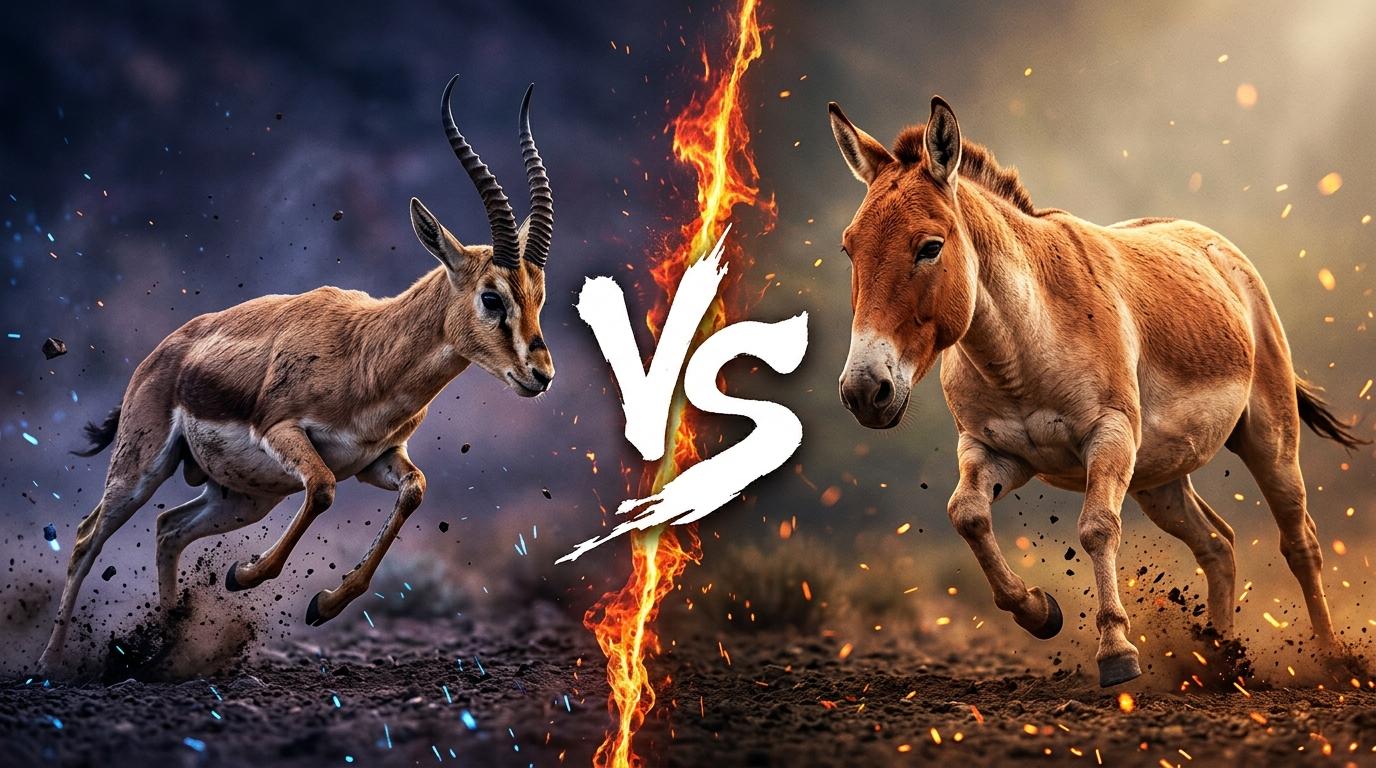
Goitered Gazelle vs Onager: Who Actually Wins?
The onager wins clearly. This Asiatic wild ass weighs roughly 200–260 kg against the goitered gazelle's 18–40 kg, so it carries six to ten times the mass. It also brings a full equid weapons kit: hard hooves that strike forward and kick backward, and a bite strong enough that stallions use it to settle serious territorial fights. The gazelle is a superb sprinter with sharp, ridged horns (on males), but those horns evolved for ritualized shoving between rival bucks, not for stopping a heavy, aggressive equid. In nearly any forced confrontation, the onager's mass, durability, and willingness to fight decide it. The gazelle's real victory condition is never fighting at all.
Read comparison
Discussion
What do you think?
Share your reasoning with other readers. Be civil and stick to the animals.
Sign in to join the discussion.
Sign inNo comments yet. Start the conversation.