

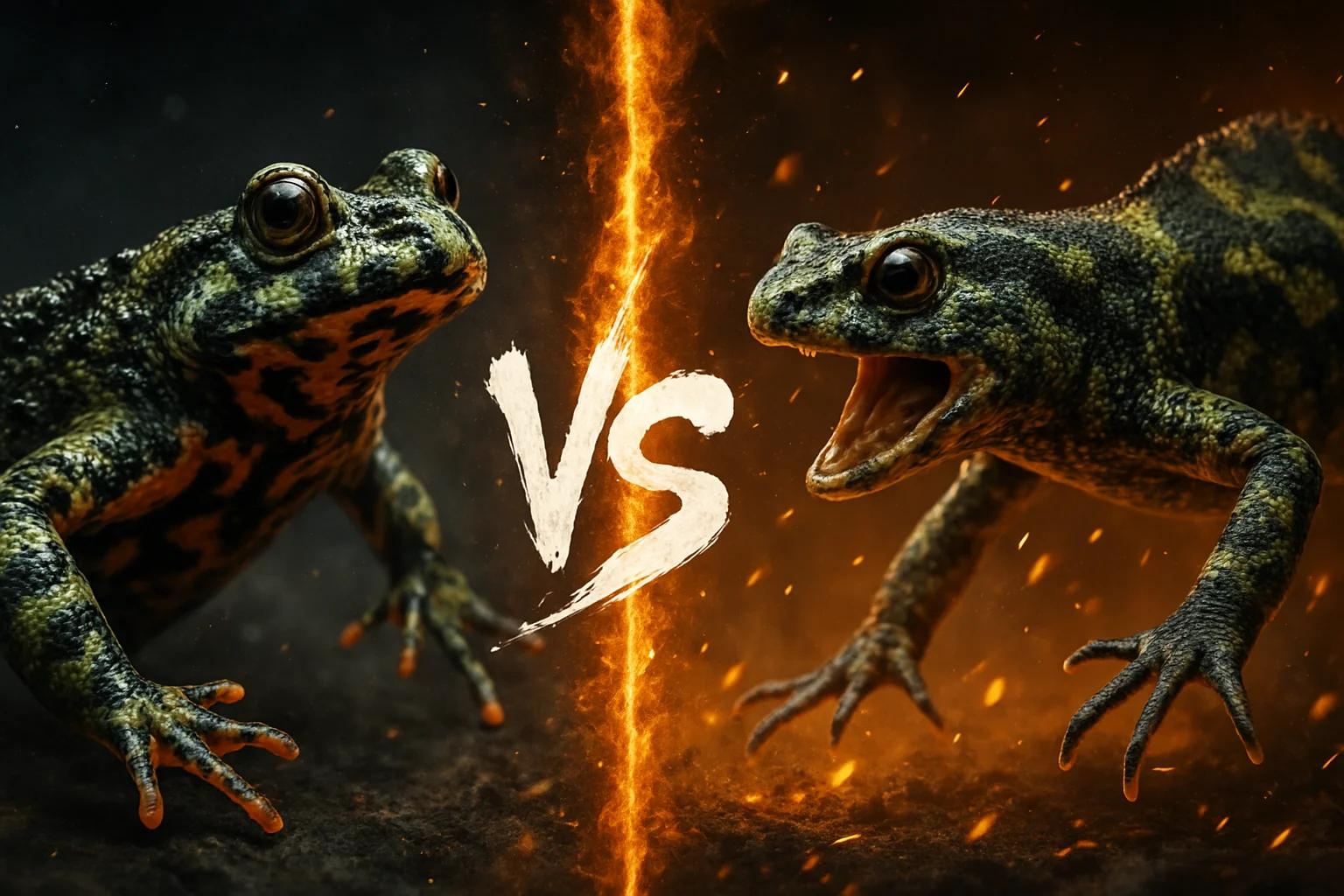
Oriental Fire-bellied Toad vs Marbled Newt: Who Actually Wins?
Oriental fire-bellied toad vs marbled newt: a biology-first breakdown of size, toxins, defense and behavior to decide which amphibian comes out on top.
Oriental Fire-bellied Toad vs Marbled Newt
Matchup winner
Marbled Newt
Quick verdict
Start with the direct answer, then use the structured comparison below to see what changes the outcome.
The Marbled Newt wins this matchup overall, mainly because it is bigger. A typical adult Triturus marmoratus runs roughly 12–16 cm long, while Bombina orientalis usually tops out around 4–5 cm. Both species rely on skin toxins rather than fighting, and neither has anything like a predator's killing toolkit, so a 'fight' between them comes down to body mass, gape, reach and staying power. The newt can grab, shove and push the little toad off a contested spot, and its own skin secretions make it a poor target in return. The fire-bellied toad has sharper reactions and an excellent warning display, and its bitter, irritating secretions mean nothing that tastes it comes away comfortable. It can win short stand-offs on land, but when contact actually happens, the newt's size usually decides it.
Read the full explanation
Winner: Marbled Newt, mostly thanks to its much longer and heavier body.
Neither animal is built to kill the other. This is a contest of displacement and deterrence.
The fire-bellied toad's unken reflex and toxic skin make it costly to bite, so it is never a free meal.
In water and around shared food, the newt's reach and swimming power give it the edge.
Reader vote
Who do you think wins?
Pick a side — no account needed. Results update live.
No votes yet — be the first to call it.
Editorial note
Why people disagree
Fire-bellied toads look tougher because of their bright red-and-black warning colors, but warning colors advertise toxins. They don't add fighting strength.
Body mass and reach
At this scale, a few centimeters is a huge difference. The newt can physically outmuscle and displace the toad.
Chemical deterrence
The toad's secretions and display are fast and highly visible, which discourages repeat contact.
Bluff and warning display
A warning display can end a confrontation before it starts, which suits a small animal.
Read the full explanation +
Some people assume toxicity decides amphibian contests. In reality both species are chemically defended, so the toxins largely cancel out.
Newts seem soft and slow on land, which hides how dominant their size and gape are in water, where most interactions would happen.
Comparison FAQ
Short, direct answers to the next questions readers usually ask after the headline verdict.
Would an oriental fire-bellied toad beat a marbled newt?+
Usually not. The marbled newt is much larger and stronger in water, so it would typically win a direct contest, although the toad can hold its own briefly in dense cover.
Which is stronger, the fire-bellied toad or the marbled newt?+
The marbled newt. Its longer, heavier body and powerful swimming tail give it more physical strength at this small scale.
Is the fire-bellied toad poisonous?+
Yes. Its skin secretions are irritating and bitter. They are not dangerous to humans with normal handling, but you should wash your hands and keep the secretions away from your eyes.
Why does the losing toad stay dangerous?+
Its toxic skin and red-belly warning display punish anything that bites it. Even when the toad loses a shoving match, attacking it remains costly.
Do these amphibians actually fight in the wild?+
Not really. They come from different regions, East Asia and Western Europe. Any interaction would be about competition and deterrence, not a deliberate fight.
Head-to-head species stats
These are the same core AnimalDex stat dimensions used on the dedicated animal pages, pulled side by side so the matchup is faster to scan.
Oriental Fire-bellied Toad
Tier CMarbled Newt
Tier DTrait-by-trait comparison
Only the categories that matter to this matchup are included. The goal is not filler stats, but the real design differences that change the result.
About 4–5 cm, compact
Body mass and reach
Marbled Newt
About 12–16 cm, long-bodied
Body mass and reach
Marbled Newt
Irritating, bitter skin secretions
Chemical deterrence
Oriental Fire-bellied Toad
Toxic skin secretions
Chemical deterrence
Oriental Fire-bellied Toad
Unken reflex shows its red belly
Bluff and warning display
Oriental Fire-bellied Toad
Bold marbled camouflage, little display
Bluff and warning display
Oriental Fire-bellied Toad
Floats and shelters near the surface
Aquatic control
Marbled Newt
Strong tail-powered swimmer in the breeding season
Aquatic control
Marbled Newt
Quick hops and alert responses
Reaction speed
Oriental Fire-bellied Toad
Deliberate, slower on land
Reaction speed
Oriental Fire-bellied Toad
Small mouth, tiny invertebrate prey
Feeding gape
Marbled Newt
Wider mouth, larger invertebrate prey
Feeding gape
Marbled Newt
How the verdict forms
Verdict timeline
01 · Body mass and reach
Marbled Newt
02 · Chemical deterrence
Oriental Fire-bellied Toad
03 · Bluff and warning display
Oriental Fire-bellied Toad
04 · Aquatic control
Marbled Newt
05 · Reaction speed
Oriental Fire-bellied Toad
06 · Feeding gape
Marbled Newt
Change the conditions
Scenario breakdown
This is where shallow battle content usually fails. Terrain, spacing, timing, and engagement style can change the answer.
Scenario lean
Oriental Fire-bellied Toad
Verdict confidence
82%
The toad holds its ground with bluff and agility.
In cluttered cover, the toad's quick reactions and unken-reflex display let it deter or slip away from the slower-moving newt. The newt's size matters less when it cannot line up clean contact.
AnimalDex field profiles
Explore these animals
Oriental Fire-bellied Toad
—
Habitat details are not published on a dedicated AnimalDex species page yet.
Species guide coming soon.
Marbled Newt
Triturus marmoratus
pond edge, cork oak woodland, and damp meadow
Systems Intelligence & Hidden Purpose
See the animals behind this comparison as engineered biological systems: what each one is built to do, where it gains leverage, and why the matchup changes by scenario.
Specialized Hardware
green-and-black marbled pattern, orange dorsal stripe in breeding season, and pond-to-woodland seasonal movement give the Marbled Newt a body plan tuned for its niche.
Systems Script
Marbled Newts operate through pond edge, cork oak woodland, and damp meadow. Their design links movement, feeding, shelter, and timing into one workable survival system.
Strategic Insight
Dense environments reward precision, patience, and the ability to read layered cover.
Final take
The Marbled Newt takes this one. Neither amphibian is a fighter in any dramatic sense, and both lean on skin toxins to stay off menus. In a direct contest, though, the newt's roughly threefold advantage in length and much greater mass carries the day, especially in the water where these animals would actually meet.
Read the full explanation
The Oriental Fire-bellied Toad is far from helpless. Its alarm display, quick reactions and irritating secretions make it a classic example of small-animal deterrence, and it can win brief stand-offs in cover. Over most realistic contexts, though, mass and aquatic control give the edge to the newt.
Collect both animals in AnimalDex
Track the species behind this matchup, compare their real traits, and build the rivalry into your AnimalDex collection.
Related comparisons
Continue with nearby matchups to compare more real-world animal traits without dropping into junky who-wins filler.
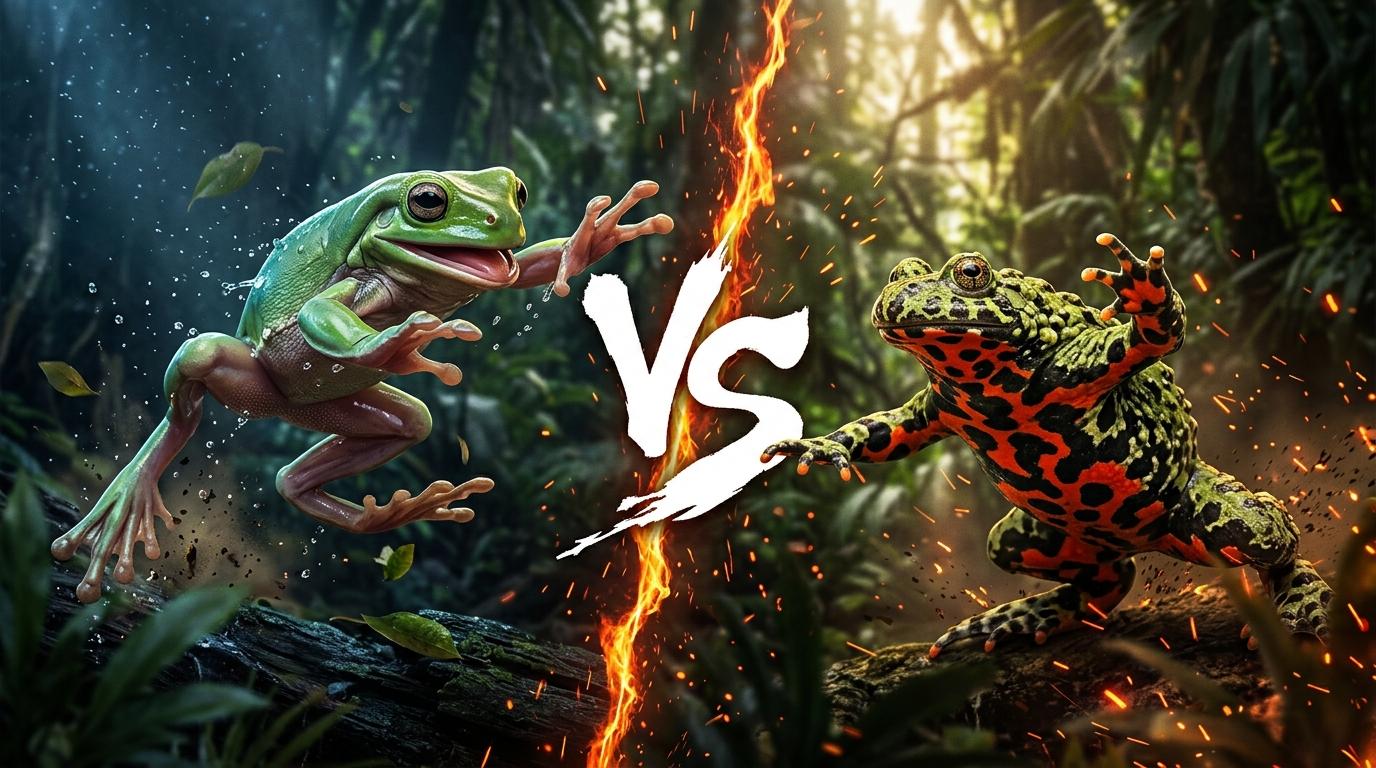
Australian Green Tree Frog vs Oriental Fire-bellied Toad: Who Actually Wins?
The Australian Green Tree Frog wins this one. At roughly 7–10 cm and up to about 80+ g, it is several times heavier than the 4–5 cm Oriental Fire-bellied Toad. It also has a wide gape that lets it swallow nearly anything that fits, including small frogs. The fire-bellied toad's real weapon is chemical. Its skin secretes irritating, bad-tasting compounds, and it shows them off with a bright red-and-black belly (the unken reflex). That makes it a poor meal and an unpleasant thing to grab. But it is a deterrent, not a way to win a fight. In a size-dominated amphibian encounter, the bigger, stronger-gripping frog controls the exchange, and the toad's best outcome is being spat out unhurt.
Read comparison
Discussion
What do you think?
Share your reasoning with other readers. Be civil and stick to the animals.
Sign in to join the discussion.
Sign inNo comments yet. Start the conversation.