

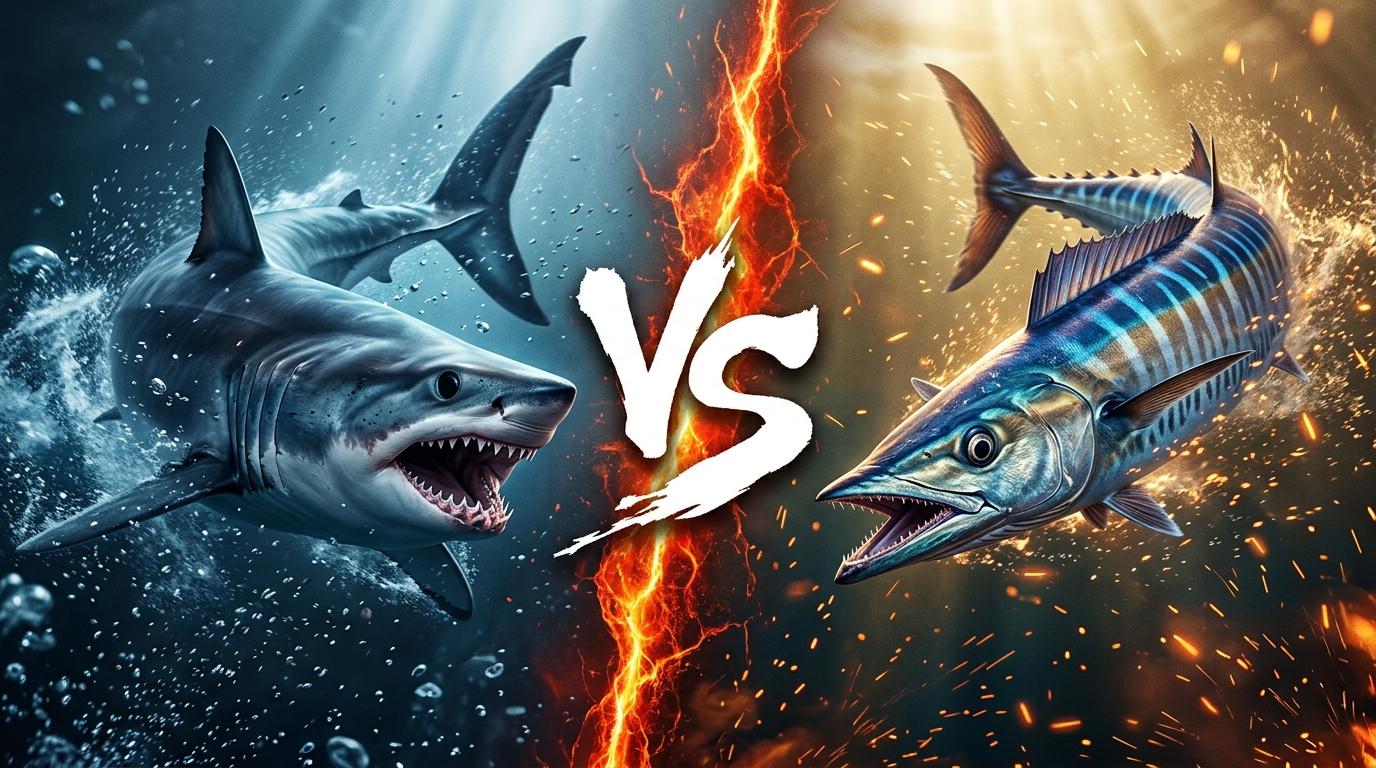
Shortfin Mako vs Wahoo: Who Actually Wins?
Shortfin mako vs wahoo: two of the ocean's fastest predators compared on speed, size, bite and endurance. See who wins and why.
Shortfin Mako vs Wahoo
Matchup winner
Shortfin Mako
Quick verdict
Start with the direct answer, then use the structured comparison below to see what changes the outcome.
The shortfin mako wins, and it is not especially close once contact happens. Both are elite open-ocean sprinters. The wahoo may match or edge the mako in short straight-line bursts, and it has a mouth full of razor-edged teeth. But the mako is a regionally endothermic shark that can outweigh a large wahoo several times over, with a jaw built to seize and shear large, fast fish. Wahoo is the bigger fish's prey archetype, not its rival. Makos are known to eat fast pelagic fish such as tuna and billfish, and a wahoo fits that menu. The wahoo's best outcome is escape, not victory.
Read the full explanation
Winner: Shortfin Mako, by size, bite and predatory design.
A large mako typically weighs 60–135+ kg, while a big wahoo is usually 15–40 kg.
Wahoo can match the mako in a burst sprint, so escape is its real win condition.
In any grappling-range encounter, the mako's jaws decide it quickly.
Reader vote
Who do you think wins?
Pick a side — no account needed. Results update live.
No votes yet — be the first to call it.
Editorial note
Why people disagree
Both fish appear on 'fastest fish' lists, so people treat it as a speed contest when it is really a size-and-bite contest.
Explosive power
Power behind the strike matters more than top speed once the gap closes.
Burst speed
This is the wahoo's lifeline. It can outrun a single committed charge.
Size and mass
The mako often has 3–5x the mass, which makes a direct clash lopsided.
Read the full explanation +
Wahoo teeth are famously sharp, which makes fans overestimate how well it fights back against a much larger shark.
Speed records for both species are debated, so arguments about who is 'faster' never fully settle.
Comparison FAQ
Short, direct answers to the next questions readers usually ask after the headline verdict.
Would a shortfin mako beat a wahoo?+
Yes. In a real encounter the mako wins easily thanks to much greater size and a bite built for large, fast fish.
Which is stronger, a mako or a wahoo?+
The mako is far stronger. It typically has several times the body mass and much more powerful jaws.
Is a wahoo faster than a mako shark?+
Possibly in short bursts. Both are among the fastest fish, and estimates vary. Speed is the wahoo's main defense.
Why is the wahoo still dangerous?+
Its razor-sharp teeth can inflict cuts, and its explosive speed lets it escape attacks. It loses fights it cannot avoid, but it avoids many.
Do makos eat wahoo?+
Makos prey on fast pelagic fish such as tuna and similar species. A wahoo fits that profile, and opportunistic predation is plausible.
Head-to-head species stats
These are the same core AnimalDex stat dimensions used on the dedicated animal pages, pulled side by side so the matchup is faster to scan.
Shortfin Mako
Tier BWahoo
Tier CTrait-by-trait comparison
Only the categories that matter to this matchup are included. The goal is not filler stats, but the real design differences that change the result.
Thick muscular body, powerful lunge-and-bite
Explosive power
Shortfin Mako
Torpedo burst, lighter frame
Explosive power
Shortfin Mako
Elite sprinter, warm-muscle boosted
Burst speed
Wahoo
Arguably peak burst among pelagics
Burst speed
Wahoo
Up to 3–4 m, often 60–135+ kg
Size and mass
Shortfin Mako
Up to ~2.5 m, usually 15–40 kg
Size and mass
Shortfin Mako
Long, hooked grasping teeth and strong jaws
Bite weaponry
Shortfin Mako
Fine serrated slicing teeth, smaller gape
Bite weaponry
Shortfin Mako
Regional endothermy keeps muscle warm
Thermal engine
Shortfin Mako
Ectothermic, efficient but cooler
Thermal engine
Shortfin Mako
Tough skin, cartilaginous resilience
Close-range durability
Shortfin Mako
Slim body, vulnerable to a solid bite
Close-range durability
Shortfin Mako
How the verdict forms
Verdict timeline
01 · Explosive power
Shortfin Mako
02 · Burst speed
Wahoo
03 · Size and mass
Shortfin Mako
04 · Bite weaponry
Shortfin Mako
05 · Thermal engine
Shortfin Mako
06 · Close-range durability
Shortfin Mako
Change the conditions
Scenario breakdown
This is where shallow battle content usually fails. Terrain, spacing, timing, and engagement style can change the answer.
Scenario lean
Wahoo
Verdict confidence
82%
The wahoo can escape if it sees the mako first.
In blue water with early detection, the wahoo's burst speed and quick turns let it break contact. Predators fail many chases. A wahoo that refuses engagement survives, which counts as a win in this context.
AnimalDex field profiles
Explore these animals
Shortfin Mako
Isurus oxyrinchus
bluewater ocean and offshore pelagic hunting routes
Wahoo
Acanthocybium solandri
bluewater current, offshore reef edge, and pelagic sea
Systems Intelligence & Hidden Purpose
See the animals behind this comparison as engineered biological systems: what each one is built to do, where it gains leverage, and why the matchup changes by scenario.
Specialized Hardware
torpedo-fast open-water body, crescent tail for speed, and sharp conical teeth give the Shortfin Mako a body plan tuned for its niche.
Systems Script
Shortfin Makos operate through bluewater ocean and offshore pelagic hunting routes. Their design links movement, feeding, shelter, and timing into one workable survival system.
Strategic Insight
In moving water, the best systems use flow, visibility, and depth instead of fighting every current.
Specialized Hardware
torpedo-shaped blue body, tiger-like flank bars, and blistering open-water chase give the Wahoo a body plan tuned for its niche.
Systems Script
Wahoos operate through bluewater current, offshore reef edge, and pelagic sea. Their design links movement, feeding, shelter, and timing into one workable survival system.
Strategic Insight
In moving water, the best systems use flow, visibility, and depth instead of fighting every current.
Final take
The shortfin mako is the clear winner. This is a predator-versus-prey matchup between two fast fish, not a duel between equals. The mako's size, warm-muscle engine and grasping jaws make any real contact one-sided.
Read the full explanation
The wahoo deserves respect as one of the ocean's great sprinters. Its whole survival strategy is to avoid the fight entirely, and in open water it often succeeds. That is why it stays dangerous to underestimate, even as the loser on paper.
Collect both animals in AnimalDex
Track the species behind this matchup, compare their real traits, and build the rivalry into your AnimalDex collection.
Related comparisons
Continue with nearby matchups to compare more real-world animal traits without dropping into junky who-wins filler.
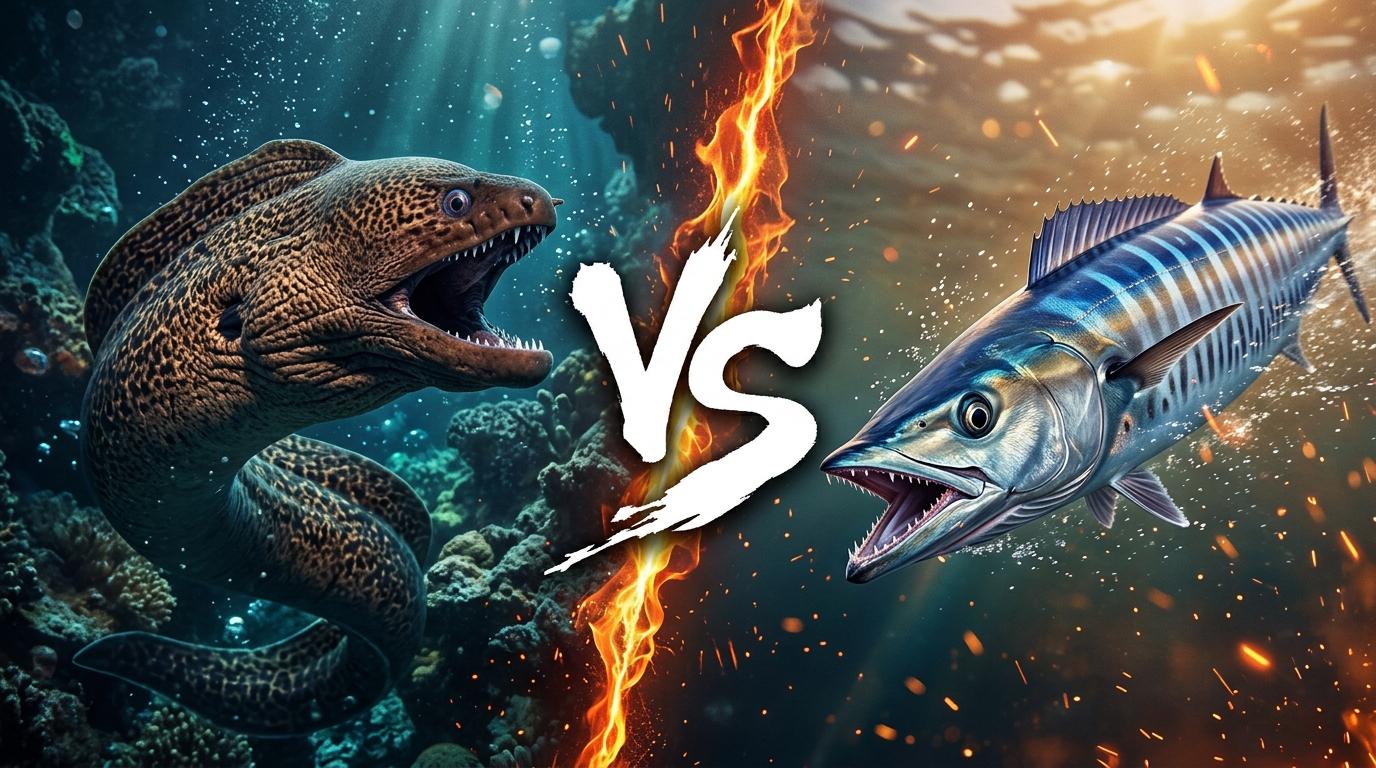
Giant Moray vs Wahoo: Who Actually Wins?
The giant moray wins a real confrontation. At up to roughly 3 m and well over 30 kg, Gymnothorax javanicus carries more mass and a thick, muscular body. It also has a second set of pharyngeal jaws that drag prey inward once its fanged front jaws close. It can also spin its whole body to tear food apart. The wahoo is a 60+ mph-class burst specialist with razor-edged, tightly packed teeth built for slashing schooling fish at speed, not for grappling an armored, snake-bodied opponent. Any engagement close enough to count happens on the moray's terms: near structure, at short range, where one bite and a twist decides things. The wahoo's real advantage is that it never has to show up.
Read comparison
Discussion
What do you think?
Share your reasoning with other readers. Be civil and stick to the animals.
Sign in to join the discussion.
Sign inNo comments yet. Start the conversation.