

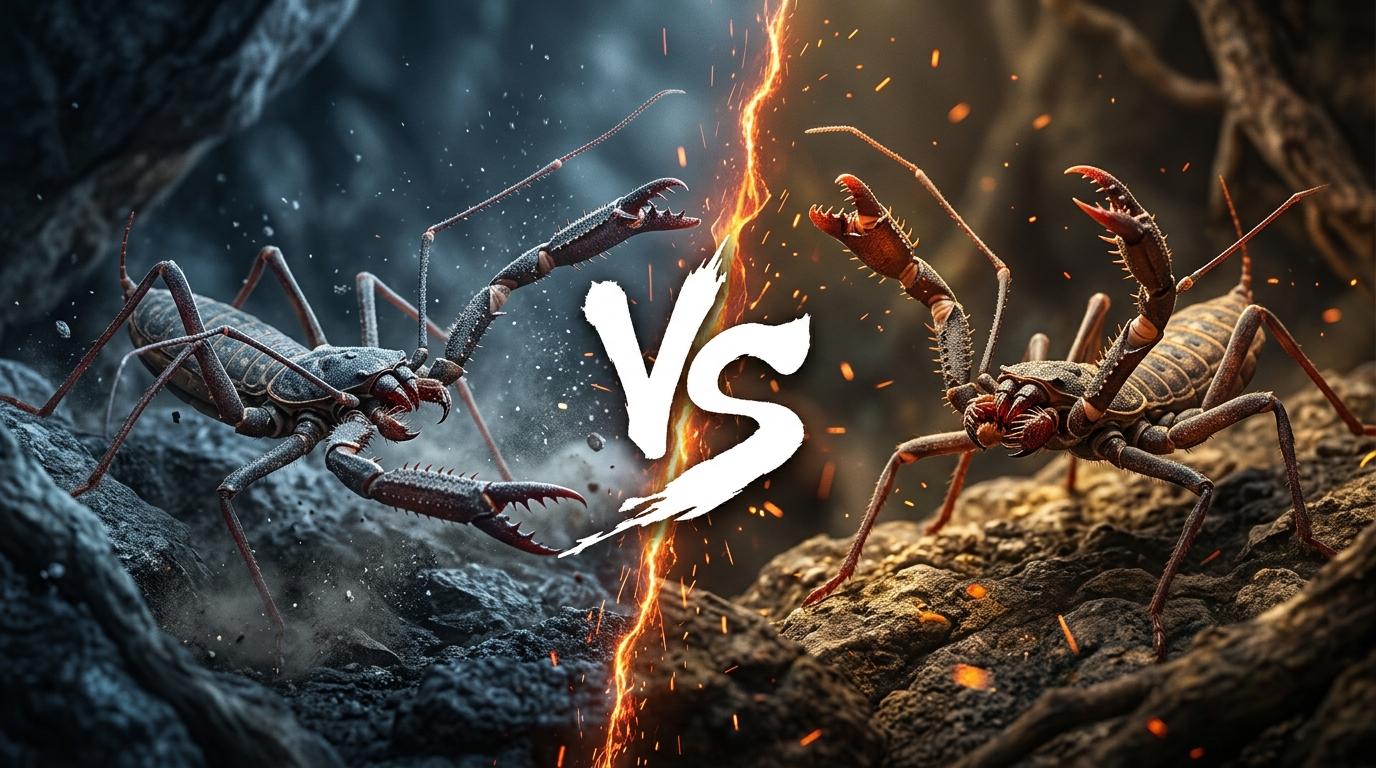
Tailless Whip Scorpion vs Florida Tailless Whip Scorpion: Who Actually Wins?
Damon diadema vs Phrynus marginemaculatus: a biology-first breakdown of two amblypygids, covering size, raptorial pedipalps, sensory whips and who wins a real clash.
Tailless Whip Scorpion vs Tailless Whip Spider
Matchup winner
Tailless Whip Scorpion
Quick verdict
Start with the direct answer, then use the structured comparison below to see what changes the outcome.
The Tailless Whip Scorpion (Damon diadema) wins clearly. Both are amblypygids: venomless, silkless arachnids that hunt with spiny, folding raptorial pedipalps and feel the world through elongated antenna-like first legs. That means the matchup comes down almost entirely to scale and reach. Damon diadema is an East African rock and cave species. It has a much larger body and a dramatically wider leg span. Its long, heavily spined pedipalps can strike and pin from a distance the little Florida species (Phrynus marginemaculatus) cannot match. Amblypygid contests are usually ritualized displays in which the bigger animal wins by reach and pedipalp size before real grappling starts. By that measure, the Florida whip scorpion is outclassed in nearly every frame. Its real edges are compact agility in tight crevices and the option to retreat.
Read the full explanation
Damon diadema wins thanks to a much larger body, longer pedipalps and greater reach.
Neither has venom or silk, so size and pedipalp leverage decide everything.
Amblypygid disputes are usually settled by display, and the bigger animal typically wins those.
The Florida species' best play is slipping into a crack too narrow to follow.
Reader vote
Who do you think wins?
Pick a side — no account needed. Results update live.
No votes yet — be the first to call it.
Editorial note
Why people disagree
Both share the 'tailless whip scorpion' name, so people assume they're near-equals. In reality, Damon diadema is a much bigger animal.
Frame and reach
Amblypygid fights are reach contests, and the longer pedipalps land first and control the exchange.
Pedipalp lockdown
The pedipalps are the only real weapon either one has. Bigger spined palps grip and pin harder.
Sensory whip radar
Longer feelers detect an opponent sooner, which gives the first move in the dark.
Read the full explanation +
Many readers think amblypygids are venomous. Neither is, so nobody gets a 'one sting' upset.
Small crevice specialists can look tougher than they are, because their defense is escape, not combat.
Comparison FAQ
Short, direct answers to the next questions readers usually ask after the headline verdict.
Would a Tailless Whip Scorpion beat a Florida Tailless Whip Scorpion?+
Yes. Damon diadema's much larger size and longer raptorial pedipalps give it a decisive edge in almost every realistic encounter.
Which one is stronger?+
Damon diadema. Its larger body and heavily spined pedipalps let it grip and pin harder than the small Phrynus marginemaculatus.
Are either of them venomous?+
No. Amblypygids have no venom glands and no silk. They are harmless to people and rely on their pedipalps to catch prey.
Why does the Florida species stay dangerous despite losing?+
To insects it is a fast, efficient ambush predator. In a contest, its small size lets it escape into cracks a larger rival can't enter, so it rarely gets cornered.
Are tailless whip scorpions spiders or scorpions?+
Neither. They belong to their own arachnid order, Amblypygi.
Head-to-head species stats
These are the same core AnimalDex stat dimensions used on the dedicated animal pages, pulled side by side so the matchup is faster to scan.
Tailless Whip Scorpion
Tier DTailless Whip Spider
Tier CTrait-by-trait comparison
Only the categories that matter to this matchup are included. The goal is not filler stats, but the real design differences that change the result.
Larger body, very wide leg span
Frame and reach
Tailless Whip Scorpion
Small body, compact span
Frame and reach
Tailless Whip Scorpion
Long, heavily spined raptorial palps
Pedipalp lockdown
Tailless Whip Scorpion
Short, effective but small palps
Pedipalp lockdown
Tailless Whip Scorpion
Extremely long antenniform legs
Sensory whip radar
Tailless Whip Scorpion
Shorter antenniform legs
Sensory whip radar
Tailless Whip Scorpion
Fast lateral dash
Sideways burst
Tailless Whip Scorpion
Quick, but shorter stride
Sideways burst
Tailless Whip Scorpion
Needs wider rock gaps
Crevice escape fit
Tailless Whip Spider
Slips under bark and limestone seams
Crevice escape fit
Tailless Whip Spider
How the verdict forms
Verdict timeline
01 · Frame and reach
Tailless Whip Scorpion
02 · Pedipalp lockdown
Tailless Whip Scorpion
03 · Sensory whip radar
Tailless Whip Scorpion
04 · Sideways burst
Tailless Whip Scorpion
05 · Crevice escape fit
Tailless Whip Spider
Change the conditions
Scenario breakdown
This is where shallow battle content usually fails. Terrain, spacing, timing, and engagement style can change the answer.
Scenario lean
Tailless Whip Scorpion
Verdict confidence
82%
Damon diadema controls the wall.
On a vertical rock surface, both settle into the classic flattened amblypygid stance. Damon's longer whips locate the rival first. Its pedipalp display covers a span the Florida species can't answer, so the smaller animal is usually pushed off or forced to retreat.
AnimalDex field profiles
Explore these animals
Tailless Whip Scorpion
Damon diadema
rock crevice, cave entrance, and dry woodland shelter
Tailless Whip Spider
Phrynus marginemaculatus
cave entrance, tree bark, and rocky shelter
Systems Intelligence & Hidden Purpose
See the animals behind this comparison as engineered biological systems: what each one is built to do, where it gains leverage, and why the matchup changes by scenario.
Specialized Hardware
whip-like sensory front legs, flattened wall-clinging body, and cave-and-bark night stalking give the Tailless Whip Scorpion a body plan tuned for its niche.
Systems Script
Tailless Whip Scorpions operate through rock crevice, cave entrance, and dry woodland shelter. Their design links movement, feeding, shelter, and timing into one workable survival system.
Strategic Insight
Harsh places reward efficiency, timing, and bodies that waste very little.
Specialized Hardware
flattened wall-hugging body, whip-like sensory front legs, and cave-and-bark night stalking give the Tailless Whip Spider a body plan tuned for its niche.
Systems Script
Tailless Whip Spiders operate through cave entrance, tree bark, and rocky shelter. Their design links movement, feeding, shelter, and timing into one workable survival system.
Strategic Insight
Small systems become powerful when signal, timing, and specialization stay tightly linked.
Final take
The Tailless Whip Scorpion (Damon diadema) is the clear winner. Among venomless amblypygids, body size, pedipalp length and sensory reach all compound into one dominant advantage.
Read the full explanation
The Florida Tailless Whip Scorpion is a superb small crevice hunter, but in a direct contest its best strategy is escape. Bigger palps, longer whips and a wider stance give Damon control in almost every realistic frame.
Collect both animals in AnimalDex
Track the species behind this matchup, compare their real traits, and build the rivalry into your AnimalDex collection.
Related comparisons
Continue with nearby matchups to compare more real-world animal traits without dropping into junky who-wins filler.

Joro Spider vs Tailless Whip Scorpion: Who Actually Wins?
The tailless whip scorpion wins most realistic encounters. Damon diadema is a dedicated ground and wall hunter. Its spiny raptorial pedipalps snap shut like a folding trap. Its long antenna-like front legs read vibration and chemistry before contact, and its flattened body moves sideways in fast, unpredictable bursts. The Joro spider is a superb orb-weaver with real venom, but it is built to sit in an aerial web and let prey come to it. On a surface, away from its silk, it is a slow, long-legged target with a small body. Damon diadema has no venom at all, yet it does not need any. If it can pin the spider before the spider bites, the fight is over. The only frame where the Joro clearly flips the result is inside its own web.
Read comparison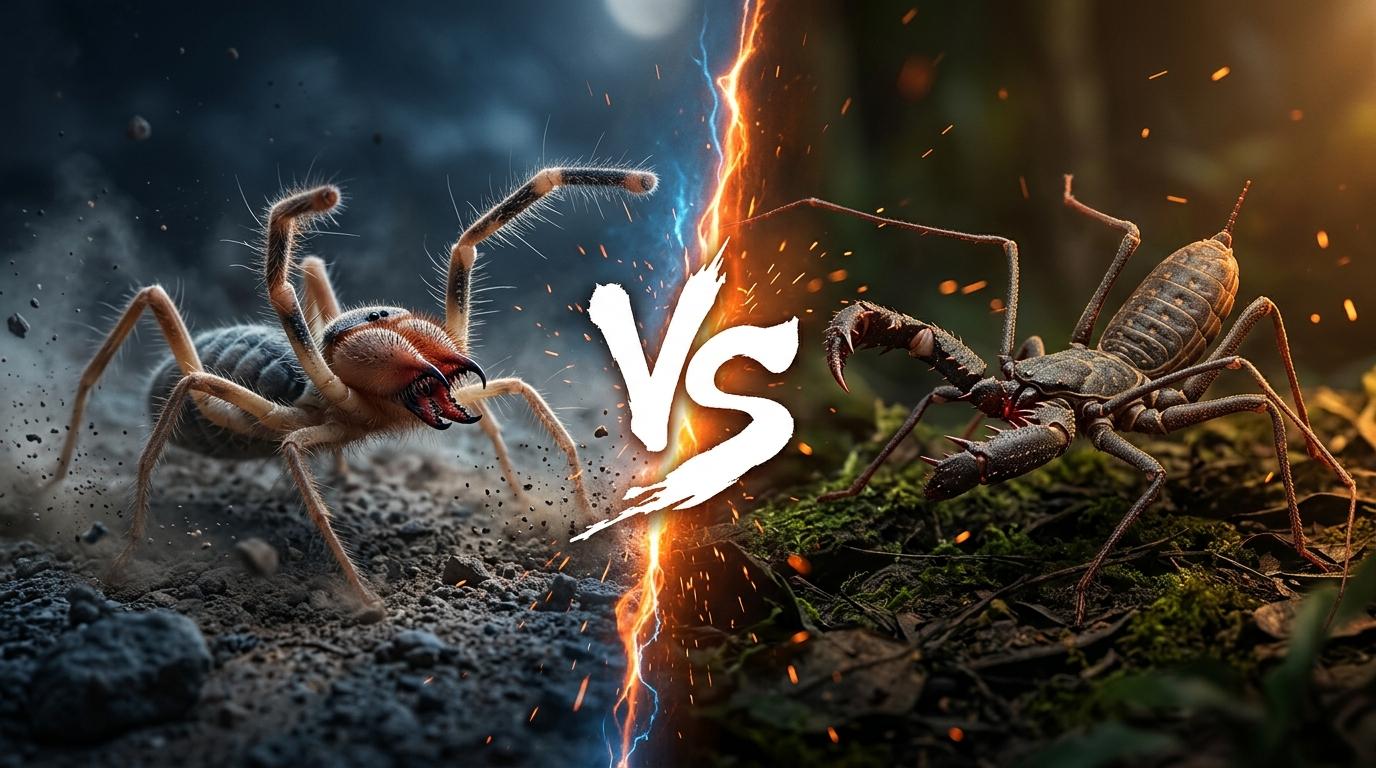
Camel Spider vs Tailless Whip Scorpion: Who Actually Wins?
The camel spider wins this matchup clearly. Galeodes arabs is a fast, aggressive solifuge with some of the largest jaws relative to body size of any arachnid. Its chelicerae work like a pair of crushing, slicing pincers, and it attacks with a sprint-and-grab style that suits its desert hunting life. The tailless whip scorpion (Damon diadema) is a sensory specialist. It has spiny raptorial pedipalps built to snap shut on insects, and very long antenna-like front legs that read the air and the ground. It is calm, flat-bodied and patient, but it has no venom and no sting, and its body is not armored against chelicerae that can crush prey. If the camel spider makes contact, its jaws do decisive damage before the whip scorpion's palps can control the fight. The amblypygid's best weapon is avoidance: detect early and slip into a crevice.
Read comparison
Discussion
What do you think?
Share your reasoning with other readers. Be civil and stick to the animals.
Sign in to join the discussion.
Sign inNo comments yet. Start the conversation.