

How Barn Owls Hunt in the Dark: Sound, Silence, and Survival Strategy
Learn how barn owl behavior, hearing, silent flight, and ecosystem role make this nocturnal predator one of nature’s sharpest intercept systems.
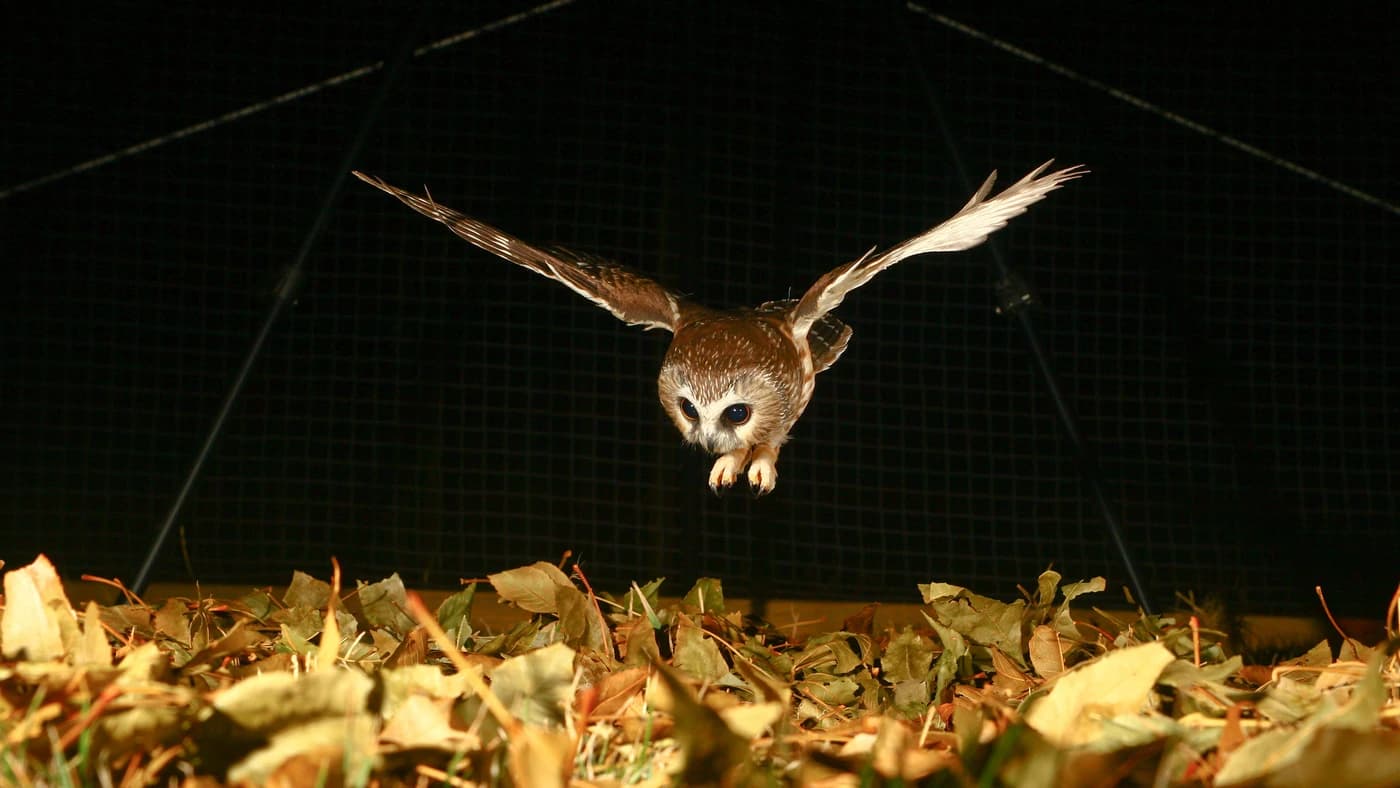
Why the barn owl feels almost engineered for night work
Barn owls stand out because their animal behavior is built around low-light efficiency rather than visual dominance. They hunt in spaces where most animals become less certain and less precise.
That makes them useful for understanding how survival strategy changes when the environment becomes acoustically rich and visually poor.
What makes a barn owl unique?
The barn owl’s facial disc is not decorative. It functions as acoustic hardware that funnels sound toward asymmetrical ears capable of three-dimensional prey localization.
Add silent flight feathers and the result is unusually clean interception. The owl hears movement, approaches without announcing itself, and closes the gap before the prey has much time to revise its plan.
How barn owls survive
Barn owl survival depends on converting darkness into confidence. They patrol grassland, field margins, and open country where small mammals create audio clues that are more reliable than quick visual snapshots.
That means the owl’s hunting success comes from patient sensing and efficient execution rather than frantic searching.
The ecosystem role of a barn owl
Barn owls help regulate rodent populations across agricultural and semi-open habitats. Their ecosystem role matters because they remove persistent prey pressure without needing the heavy, visible footprint of larger predators.
They are a reminder that quiet predators can do significant structural work in a system without looking dramatic while they do it.
What humans can learn from barn owls
The barn owl teaches the value of reducing your own noise. Quiet systems perceive more, and perception quality often matters more than motion volume.
That is the practical insight: if you improve signal capture and lower operational noise, the right move becomes easier to see.
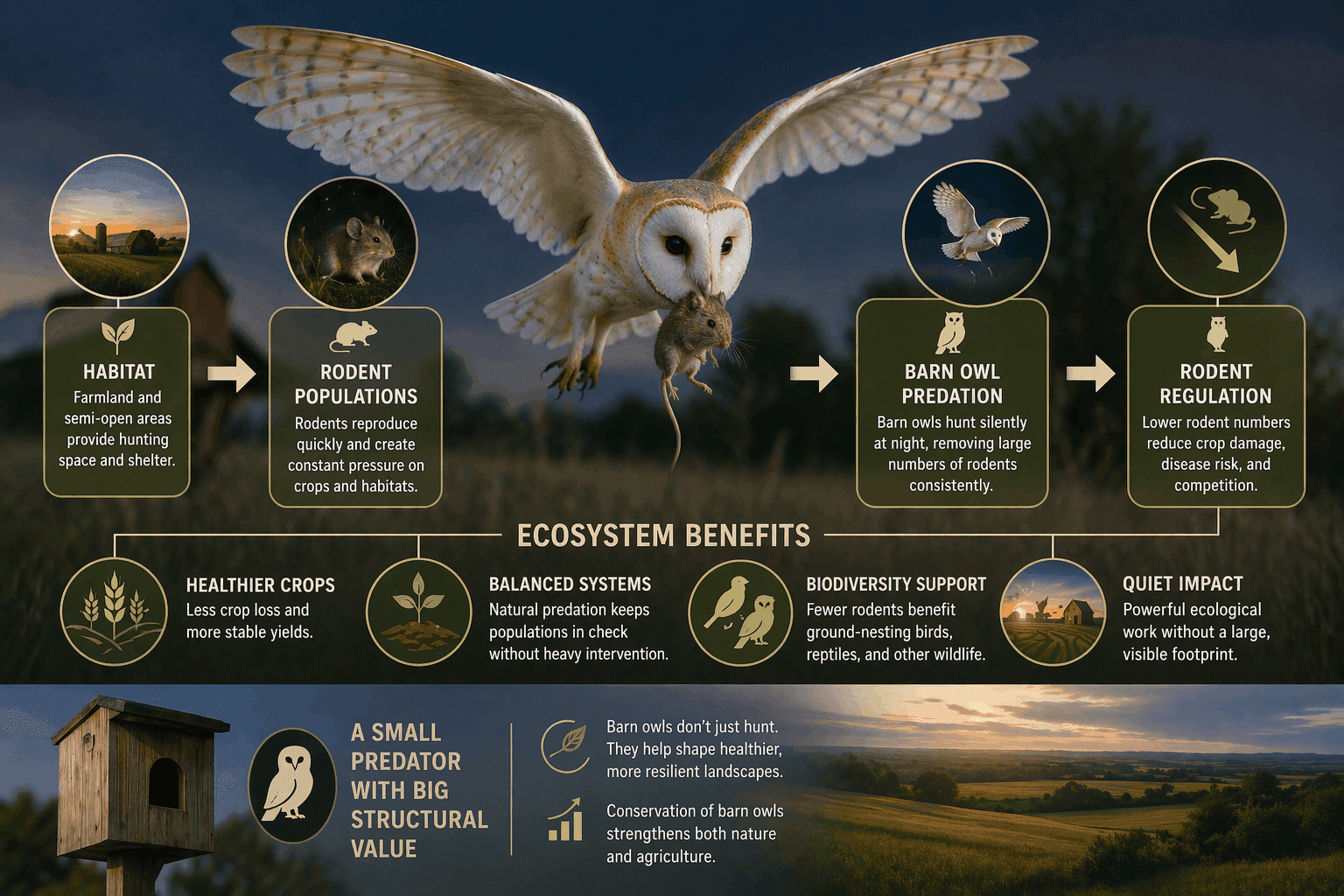
Systems Intelligence & Hidden Purpose
See these animals as engineered biological systems: what they are built to do, how they fit the wider environment, and what their design can teach us.
System Role
The Acoustic Intercept Platform
Barn Owl
Specialized Hardware
A facial disc that funnels sound, asymmetrical ears that triangulate prey in three dimensions, and feather geometry built for near-silent flight make the barn owl elite nocturnal capture hardware.
Systems Script
Barn owls convert darkness into rodent control. They reduce small-mammal pressure in grassland, farmland, and edge habitats while proving that low-noise predators can reshape a system without announcing themselves.
Strategic Insight
If you want cleaner decisions, lower your own signal first. Quiet systems detect more than loud ones.
Animals mentioned
Jump from this article into the species pages behind the examples, systems notes, and field-guide references.
Answer guides related to this topic
If you want direct comparisons and clear recommendations, continue with these answer-focused pages.
Best Animal Identification App
Looking for the best animal identification app? Learn how AnimalDex combines AI scanning, collecting, rarity tracking, and field-guide learning in one app.
Read answer guideWhat Is Animal Collecting
Learn what animal collecting means in modern apps and how AnimalDex turns real-world sightings into cards, sets, rarity, and species learning.
Read answer guidePokemon-Like Animal App
Looking for a Pokemon-like animal app with real species? AnimalDex combines creature-collection energy with AI scanning and wildlife learning.
Read answer guideTurn what you learn into a real animal collection
Keep going in AnimalDex with the species behind this guide, real-world sighting context, and a collection that grows beyond the article.
Related guides
What Makes Crows So Intelligent? Systems, Behavior, and Survival Strategy
Learn what makes crows so intelligent, from memory and tool use to adaptive behavior, survival strategy, and their ecosystem role in changing environments.
Read articleHow Octopus Intelligence Works: Nature’s Most Advanced Problem Solver
Explore octopus intelligence through animal behavior, flexible nervous systems, camouflage, survival strategy, and the octopus ecosystem role.
Read articleHow Honey Bees Keep Ecosystems Running: Pollination, Behavior, and Survival Strategy
Understand honey bee behavior, pollination logistics, colony intelligence, ecosystem role, and how honey bees survive as one of nature’s most important networks.
Read article