

How Honey Bees Keep Ecosystems Running: Pollination, Behavior, and Survival Strategy
Understand honey bee behavior, pollination logistics, colony intelligence, ecosystem role, and how honey bees survive as one of nature’s most important networks.
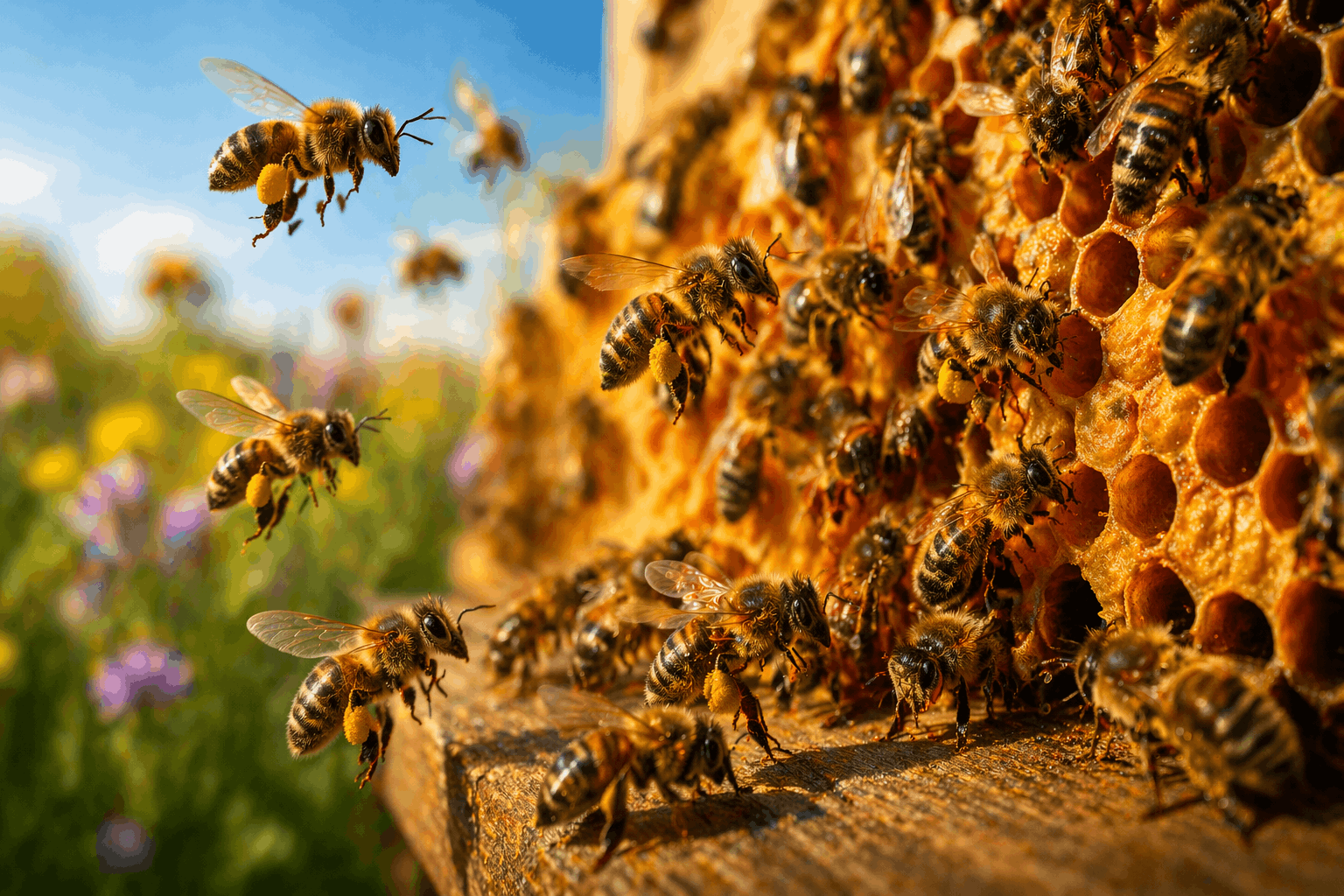
Why honey bees matter beyond honey
Honey bees matter because they sit at the intersection of animal behavior, plant reproduction, and food systems. They are easy to romanticize, but the more useful view is operational: they are logistics hardware for pollen and plant success.
That makes them one of the clearest examples of a species whose ecosystem role spills directly into human agriculture and landscape stability.
What makes a honey bee unique?
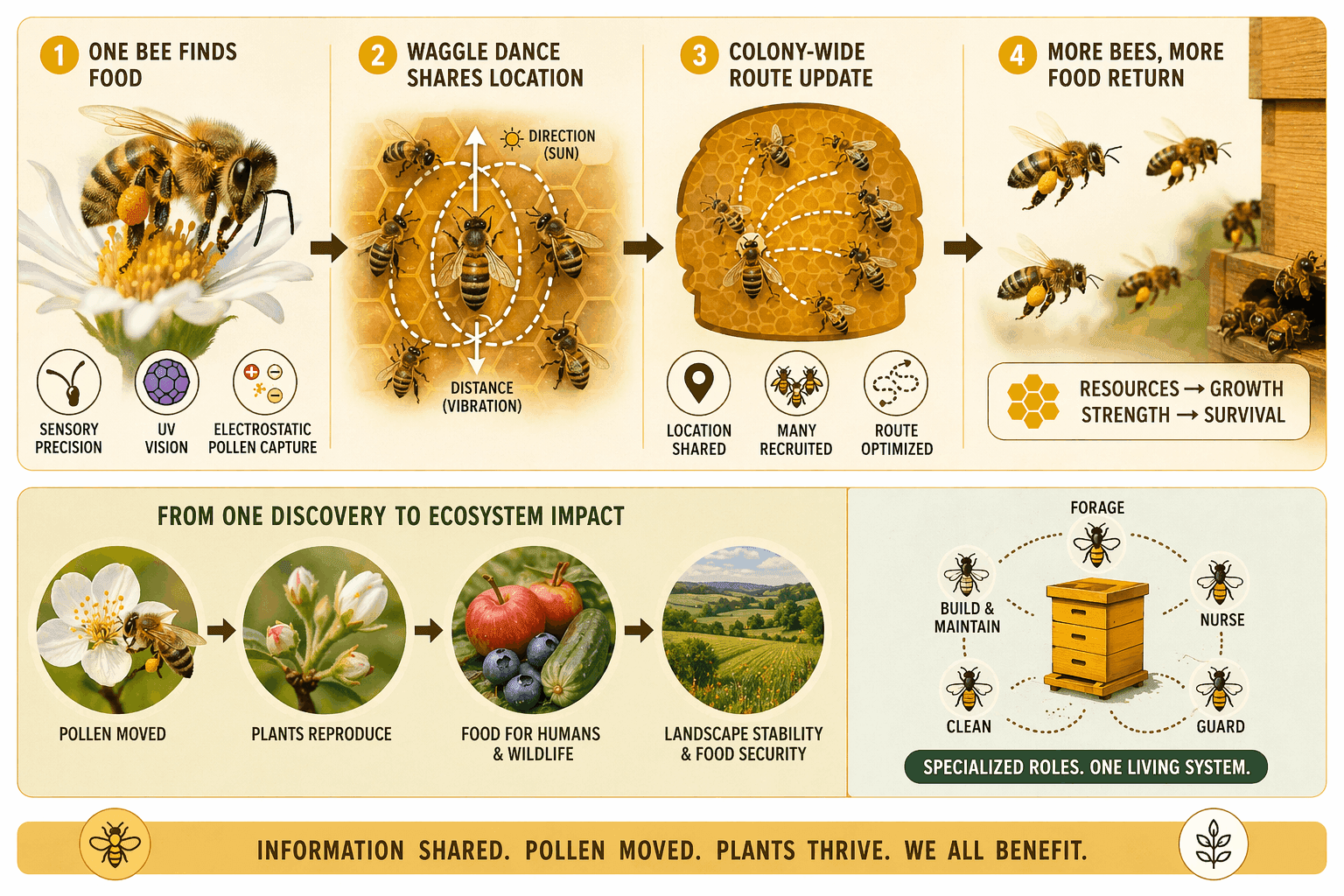
A honey bee is not powerful as an individual unit. Its edge comes from sensory precision, electrostatic pollen capture, ultraviolet vision, and communication that turns one food discovery into a colony-wide route update.
The waggle dance matters here because it converts private knowledge into shared movement. That is rare, efficient, and very easy to underestimate.
How honey bees survive as a colony system
Honey bee survival is collective. Workers, drones, brood, and queen are not interchangeable parts; they are specialized roles inside one living operational stack.
That changes how we should read bee behavior. A bee foraging, cooling the hive, guarding an entrance, or feeding larvae is not performing random busyness. It is keeping the larger system from degrading.
The ecosystem role of honey bees
Honey bees help move pollen between flowering plants, which supports seed set, fruit production, and downstream food-web stability. Their ecosystem role is especially visible where plant density and agricultural yield depend on consistent pollination.
They are not the only pollinators and should not be mistaken for the whole pollination story, but they are a major part of the reproductive logistics layer that keeps landscapes productive.
What humans can learn from honey bee systems
Honey bees show the advantage of routing useful signal quickly. When a worker finds a strong resource patch, the colony benefits because the information does not stay trapped in one body.
That is the practical lesson: high-performing systems scale when discovery, location, and quality data move faster than ego.
Systems Intelligence & Hidden Purpose
See these animals as engineered biological systems: what they are built to do, how they fit the wider environment, and what their design can teach us.
System Role
The Pollination Logistics Network
Honey Bee
Specialized Hardware
Ultraviolet-sensitive vision, electrostatic body hairs, pollen baskets, and the waggle dance give honey bees precise hardware for locating, collecting, and routing floral resources.
Systems Script
Honey bees help translate flowers into fruit, seed, and agricultural yield. They sit inside a massive reproductive logistics layer that links plant success to food webs, landscapes, and human food systems.
Strategic Insight
Do not just report outcomes. Share routes, quality signals, and location data so the rest of the system can move faster.
Animals mentioned
Jump from this article into the species pages behind the examples, systems notes, and field-guide references.
Answer guides related to this topic
If you want direct comparisons and clear recommendations, continue with these answer-focused pages.
Best Animal Identification App
Looking for the best animal identification app? Learn how AnimalDex combines AI scanning, collecting, rarity tracking, and field-guide learning in one app.
Read answer guideWhat Is Animal Collecting
Learn what animal collecting means in modern apps and how AnimalDex turns real-world sightings into cards, sets, rarity, and species learning.
Read answer guidePokemon-Like Animal App
Looking for a Pokemon-like animal app with real species? AnimalDex combines creature-collection energy with AI scanning and wildlife learning.
Read answer guideTurn what you learn into a real animal collection
Keep going in AnimalDex with the species behind this guide, real-world sighting context, and a collection that grows beyond the article.
Related guides
What Makes Crows So Intelligent? Systems, Behavior, and Survival Strategy
Learn what makes crows so intelligent, from memory and tool use to adaptive behavior, survival strategy, and their ecosystem role in changing environments.
Read articleHow Octopus Intelligence Works: Nature’s Most Advanced Problem Solver
Explore octopus intelligence through animal behavior, flexible nervous systems, camouflage, survival strategy, and the octopus ecosystem role.
Read articleHow Barn Owls Hunt in the Dark: Sound, Silence, and Survival Strategy
Learn how barn owl behavior, hearing, silent flight, and ecosystem role make this nocturnal predator one of nature’s sharpest intercept systems.
Read article