

How Wolves Hunt, Survive, and Shape Ecosystems
A clear guide to wolf behavior, pack intelligence, survival strategy, and ecosystem role, with a systems view of how wolves reshape landscapes.
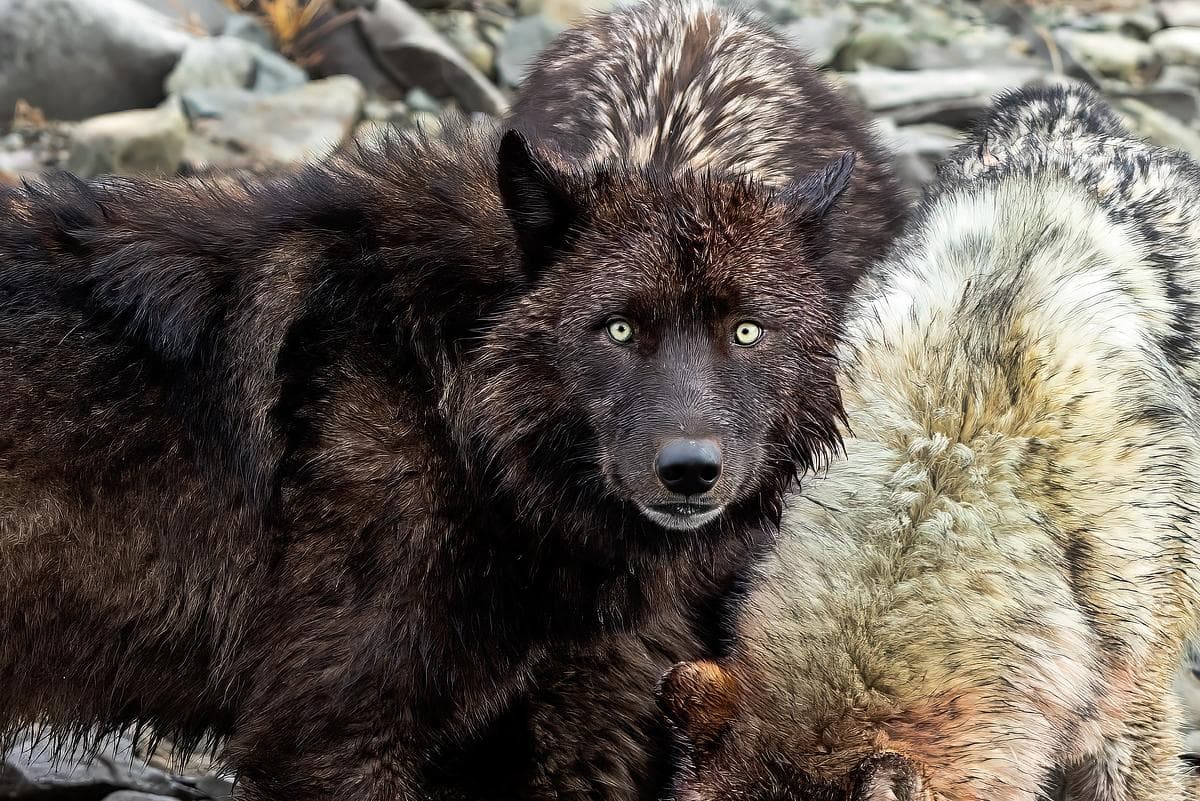
Why wolves attract so much attention
Wolves matter because they are one of the clearest examples of how animal behavior scales from individual action to landscape-level impact. A pack is not just a social group. It is a moving decision system.
That is why wolf discussions keep returning to intelligence, coordination, and ecosystem role. Few predators make those connections so visible.
What makes a wolf unique?
A wolf combines endurance movement, long-range scenting, social communication, and role-based hunting behavior without needing the rigid specialization of social insects.
That balance matters. Wolves are coordinated, but they remain flexible enough to hunt different prey, move across huge territory, and adjust to changing conditions.
How wolves survive and hunt
Wolf survival is built on cooperation, patience, and attrition. They test prey, read weakness, and let distance and pressure do part of the work before the final commitment.
In animal behavior terms, that means wolves often win by making the prey system spend more energy than it wanted to spend. The hunt is not just force. It is managed fatigue.
The ecosystem role of wolves
Wolves shape herbivore movement, browsing pressure, and risk distribution across forests, valleys, and river corridors. Their ecosystem role is partly about what they kill and partly about what they make other animals stop doing so casually.
That is why wolves can influence vegetation and habitat recovery without needing to erase prey populations. They alter behavior, and behavior changes landscapes.
What humans can learn from wolf systems
Wolves are a good reminder that disciplined coordination beats isolated brilliance over time. Clear roles, good signaling, and patient pressure can outperform raw intensity.
The deeper lesson is strategic: some systems win by staying synchronized long enough for the terrain itself to start helping.
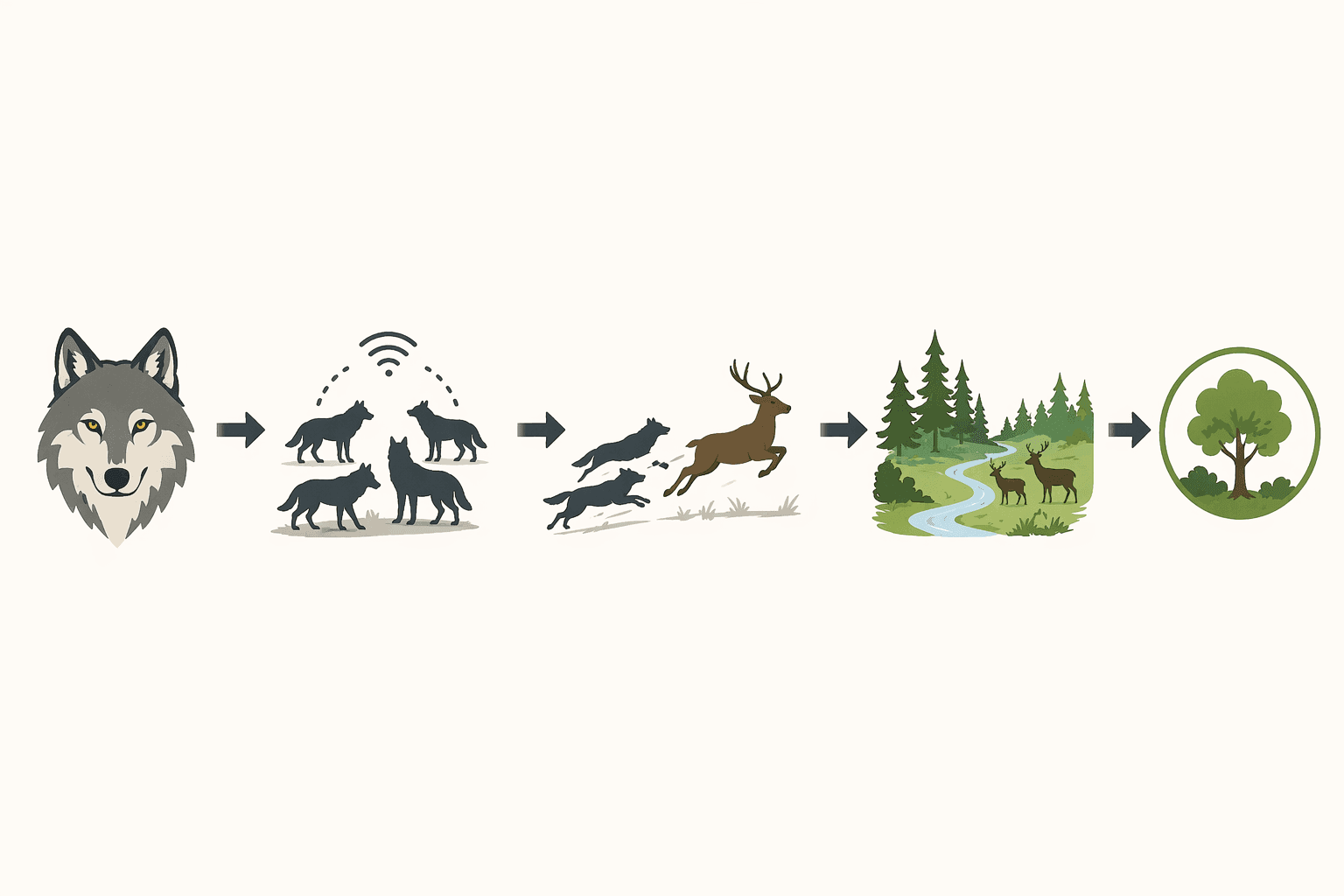
Systems Intelligence & Hidden Purpose
See these animals as engineered biological systems: what they are built to do, how they fit the wider environment, and what their design can teach us.
System Role
The Cooperative Territory Governor
Wolf
Specialized Hardware
Long-distance scent detection, endurance locomotion, social signaling, and coordinated pack behavior give wolves durable hardware for tracking, testing, and wearing down prey across large territories.
Systems Script
Wolves apply top-down pressure that changes prey distribution, browsing intensity, and risk behavior. They remind ecosystems that movement patterns matter as much as raw population numbers.
Strategic Insight
Endurance and coordination beat isolated bursts of talent. A disciplined group with shared direction can reshape a landscape over time.
Animals mentioned
Jump from this article into the species pages behind the examples, systems notes, and field-guide references.
Related comparisons
Continue with structured animal-vs-animal comparison pages connected to the species in this guide.
Cougar vs Wolf: Which Predator Has the Edge?
Cougar gets the edge in a clean one-on-one because the cat is built for ambush, grappling, and fast finishing contact. Wolf becomes more dangerous the moment the scenario includes pack pressure, pursuit, or repeated harassment.
Read comparisonDeer vs Wolf: Which Side Usually Wins?
Wolf is the stronger overall predation answer, but deer survives plenty of encounters through awareness, escape timing, and terrain. As a one-on-one body contest, the deer is more dangerous than people often assume.
Read comparisonDhole vs Wolf: Which Wild Canid Has the Better Matchup?
Wolf gets the stronger direct-fight verdict because it is larger and more robust. Dhole stays impressive through pack cohesion, persistence, and coordinated pursuit in rougher terrain.
Read comparisonElk vs Wolf: Which Side Has the Real Advantage?
A healthy adult elk is the stronger one-body answer, but wolves get the stronger overall predation verdict because pack coordination and winter pressure change the problem.
Read comparisonAnswer guides related to this topic
If you want direct comparisons and clear recommendations, continue with these answer-focused pages.
Best Animal Identification App
Looking for the best animal identification app? Learn how AnimalDex combines AI scanning, collecting, rarity tracking, and field-guide learning in one app.
Read answer guideWhat Is Animal Collecting
Learn what animal collecting means in modern apps and how AnimalDex turns real-world sightings into cards, sets, rarity, and species learning.
Read answer guidePokemon-Like Animal App
Looking for a Pokemon-like animal app with real species? AnimalDex combines creature-collection energy with AI scanning and wildlife learning.
Read answer guideTurn what you learn into a real animal collection
Keep going in AnimalDex with the species behind this guide, real-world sighting context, and a collection that grows beyond the article.
Related guides
Animal Experiments They Won’t Repeat — Ethics or Cover-Up?
Explore the forbidden animal files: CIA spy cats, bat bombs, planarian memory, Rupert Sheldrake, animal death instincts, Kirlian photography, medieval bestiaries, and ancient animal symbolism.
Read articleWhy Elephants Never Stop Reshaping Landscapes
Explore elephant behavior, memory, survival strategy, ecosystem role, and the systems biology behind how elephants reshape habitats over time.
Read articleHow King Cobras Survive and Hunt Other Snakes
Explore king cobra behavior, specialized hunting strategy, ecosystem role, and how this predator survives by focusing on one of the hardest niches in the forest.
Read article