

What Makes Crows So Intelligent? Systems, Behavior, and Survival Strategy
Learn what makes crows so intelligent, from memory and tool use to adaptive behavior, survival strategy, and their ecosystem role in changing environments.
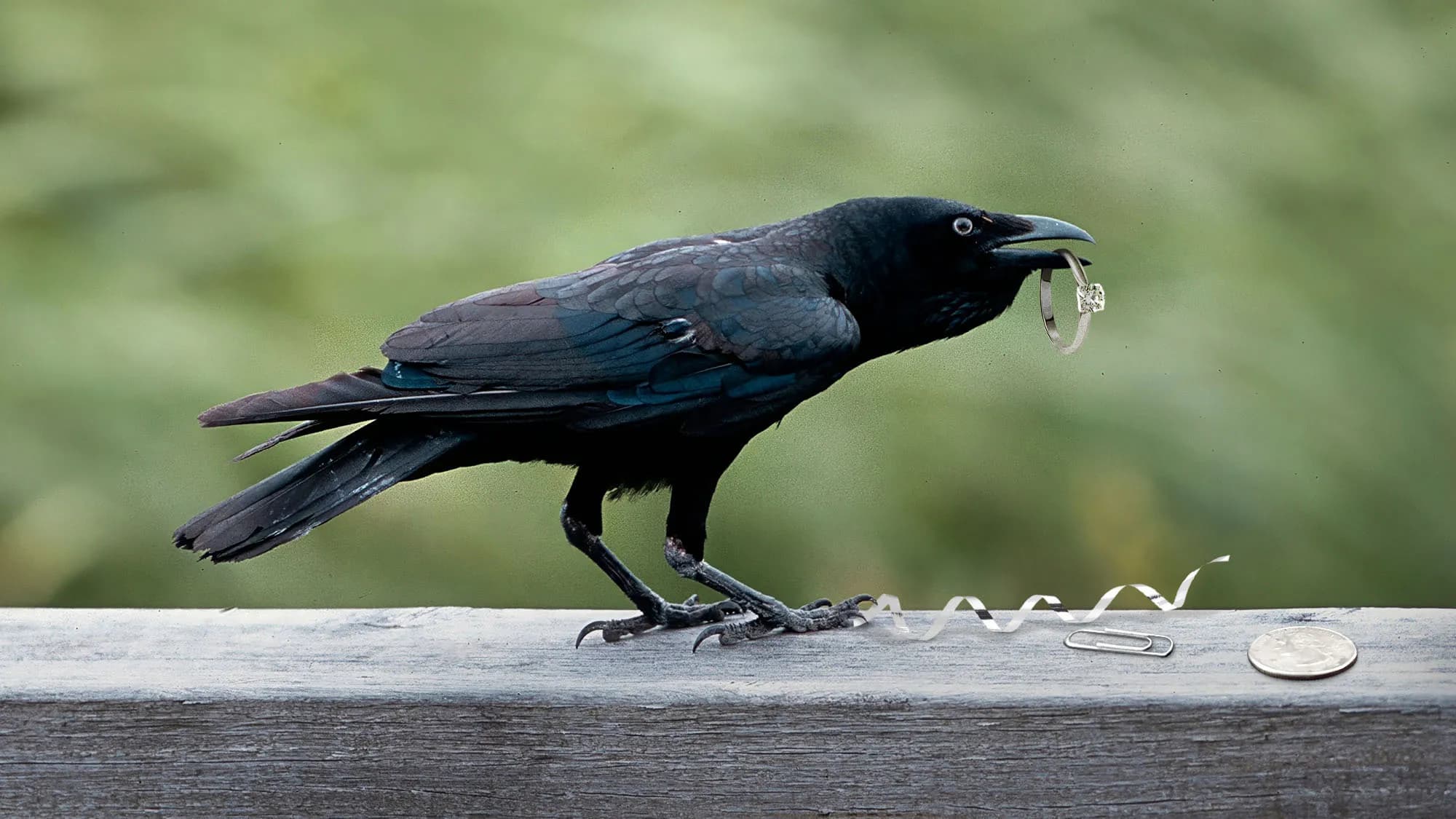
Why crows keep showing up in animal intelligence conversations
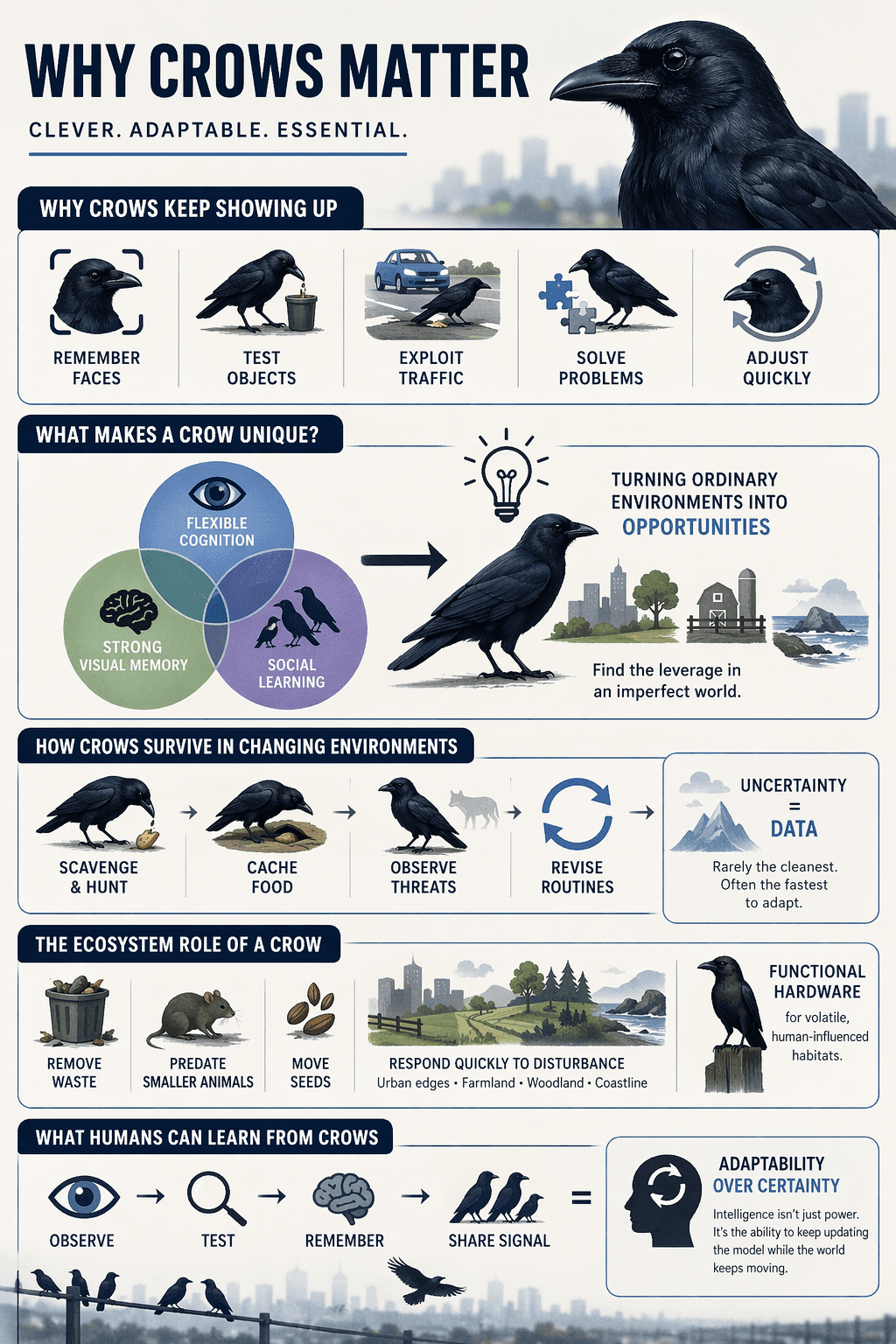
Crows matter because they keep solving problems in public. They remember faces, test objects, exploit traffic, and adjust quickly when the environment changes.
That makes them useful for more than curiosity. If you want to understand animal intelligence in a real-world, messy-environment context, crows are one of the strongest case studies available.
What makes a crow unique?
A crow is not the fastest flier, strongest predator, or most specialized for one niche. Its edge comes from flexible cognition, strong visual memory, and social learning that lets one bird benefit from what another bird already discovered.
That combination turns ordinary urban and rural environments into a constant stream of testable inputs. Crows do not need a perfect system. They are good at finding the leverage hidden inside an imperfect one.
How crows survive in changing environments
Crow survival strategy is built on behavioral range. They scavenge, hunt, cache food, observe threats, and revise routines quickly when humans or predators change the rules.
In animal behavior terms, that means crows treat uncertainty as data rather than paralysis. They are rarely the cleanest system in the landscape, but they are often the fastest to adapt when the landscape gets weird.
The ecosystem role of a crow
Crows sit in a useful middle layer of the environmental operating system. They remove waste, prey on smaller animals, move seeds, and respond quickly to disturbance across urban edges, farmland, woodland, and coastline.
That ecosystem role is why they matter beyond intelligence headlines. A crow is not just clever; it is functional hardware for volatile, human-influenced habitats.
What humans can learn from crows
Crows show that adaptable systems do not wait for perfect clarity. They observe, test, remember, and circulate useful signal through the group.
That is the durable lesson. Intelligence is not just raw processing power. It is the ability to keep updating the model while the world keeps moving.
Systems Intelligence & Hidden Purpose
See these animals as engineered biological systems: what they are built to do, how they fit the wider environment, and what their design can teach us.
System Role
The Opportunistic Forensics Analyst
Crow
Specialized Hardware
A large relative brain, strong visual memory, versatile beak use, and social learning make crows excellent at pattern detection, tool use, and rapid behavioral updates.
Systems Script
Crows work the ecosystem's edge cases: scavenging waste, moving seeds, preying on smaller animals, and extracting signal from human-altered environments. They thrive where flexibility matters more than purity.
Strategic Insight
General intelligence scales when memory, experimentation, and information sharing stay connected. Learn fast, keep the useful parts, and drop the vanity.
Animals mentioned
Jump from this article into the species pages behind the examples, systems notes, and field-guide references.
Related comparisons
Continue with structured animal-vs-animal comparison pages connected to the species in this guide.
Raven vs Crow Intelligence: Which Bird Is Smarter?
There is no clean knockout winner. Ravens often get the edge in complex solo problem solving and object play, while crows often shine in urban adaptation, social flexibility, and tool-linked reputation.
Read comparisonAnswer guides related to this topic
If you want direct comparisons and clear recommendations, continue with these answer-focused pages.
Best Animal Identification App
Looking for the best animal identification app? Learn how AnimalDex combines AI scanning, collecting, rarity tracking, and field-guide learning in one app.
Read answer guideWhat Is Animal Collecting
Learn what animal collecting means in modern apps and how AnimalDex turns real-world sightings into cards, sets, rarity, and species learning.
Read answer guidePokemon-Like Animal App
Looking for a Pokemon-like animal app with real species? AnimalDex combines creature-collection energy with AI scanning and wildlife learning.
Read answer guideTurn what you learn into a real animal collection
Keep going in AnimalDex with the species behind this guide, real-world sighting context, and a collection that grows beyond the article.
Related guides
How Octopus Intelligence Works: Nature’s Most Advanced Problem Solver
Explore octopus intelligence through animal behavior, flexible nervous systems, camouflage, survival strategy, and the octopus ecosystem role.
Read articleHow Honey Bees Keep Ecosystems Running: Pollination, Behavior, and Survival Strategy
Understand honey bee behavior, pollination logistics, colony intelligence, ecosystem role, and how honey bees survive as one of nature’s most important networks.
Read articleHow Barn Owls Hunt in the Dark: Sound, Silence, and Survival Strategy
Learn how barn owl behavior, hearing, silent flight, and ecosystem role make this nocturnal predator one of nature’s sharpest intercept systems.
Read article