dinosaursfossilspalaeontology
Dinosaur Blood Found? The 115-Million-Year-Old Bone Fight
Scientists found heme inside cell-shaped minerals in a 115-million-year-old Brazilian dinosaur bone. Is it really blood? Here is why experts are split.
Dalam panduan ini
- Was dinosaur blood found in a 115-million-year-old bone?
- What dinosaur was Aratasaurus, and how big was it?
- How could red blood cells survive 115 million years?
- Why don't all scientists believe it's dinosaur blood?
- Hasn't dinosaur blood been found before?
- Could scientists clone a dinosaur from this blood?
- Which living animals help scientists read dinosaur blood?
The short answer
Quick answer
Not exactly. In November 2026, a team led by Kliti Grice at Curtin University reported heme-derived molecules, the chemical remains of haemoglobin, inside mineralised cell-shaped structures in a 115-million-year-old Brazilian dinosaur bone. No liquid blood, intact cells, haemoglobin or DNA was found, and leading soft-tissue expert Mary Schweitzer doubts the structures are red blood cells.
The find
Was dinosaur blood found in a 115-million-year-old bone?
The red blood cells in this dinosaur are made of rock. Inside a 115-million-year-old leg bone from northeastern Brazil, chemists found tiny cell-shaped blobs packed into the bone's old blood channels, turned into a manganese mineral called hausmannite (Mn₃O₄). Locked inside those blobs were chemical traces of heme, the iron-carrying part of haemoglobin.
The study, led by geochemist Kliti Grice of Curtin University in Perth, was published online in PNAS on 2 November 2026. Grice, founding director of Curtin's WA-Organic and Isotope Geochemistry Centre, did not hedge when she spoke to ABC News: 'No-one's actually found heme inside a fossil blood cell ever.'
Curtin calls the hausmannite 'a natural time capsule'. The team worked in situ, analysing the bone itself with scanning electron microscopy, pyrolysis and mass spectrometry so each chemical signal could be tied to a specific structure. According to the paper, finding heme inside the structures 'reduces the likelihood of contamination'.
They also found amino acids from collagen, the structural protein of bone. Grice told the ABC that 'the bone was almost 80 per cent heme', a striking line that comes from her interview, not the paper's abstract, so treat it as her description rather than a published measurement.
What they did not find matters just as much: no liquid blood, no squishy cells, no intact haemoglobin and no DNA. Outside expert Mauricio Barbi of the University of Regina put it plainly: 'We are not talking about intact blood cells or preserved haemoglobin.'
The red blood cells in this dinosaur are made of rock.
The animal
What dinosaur was Aratasaurus, and how big was it?
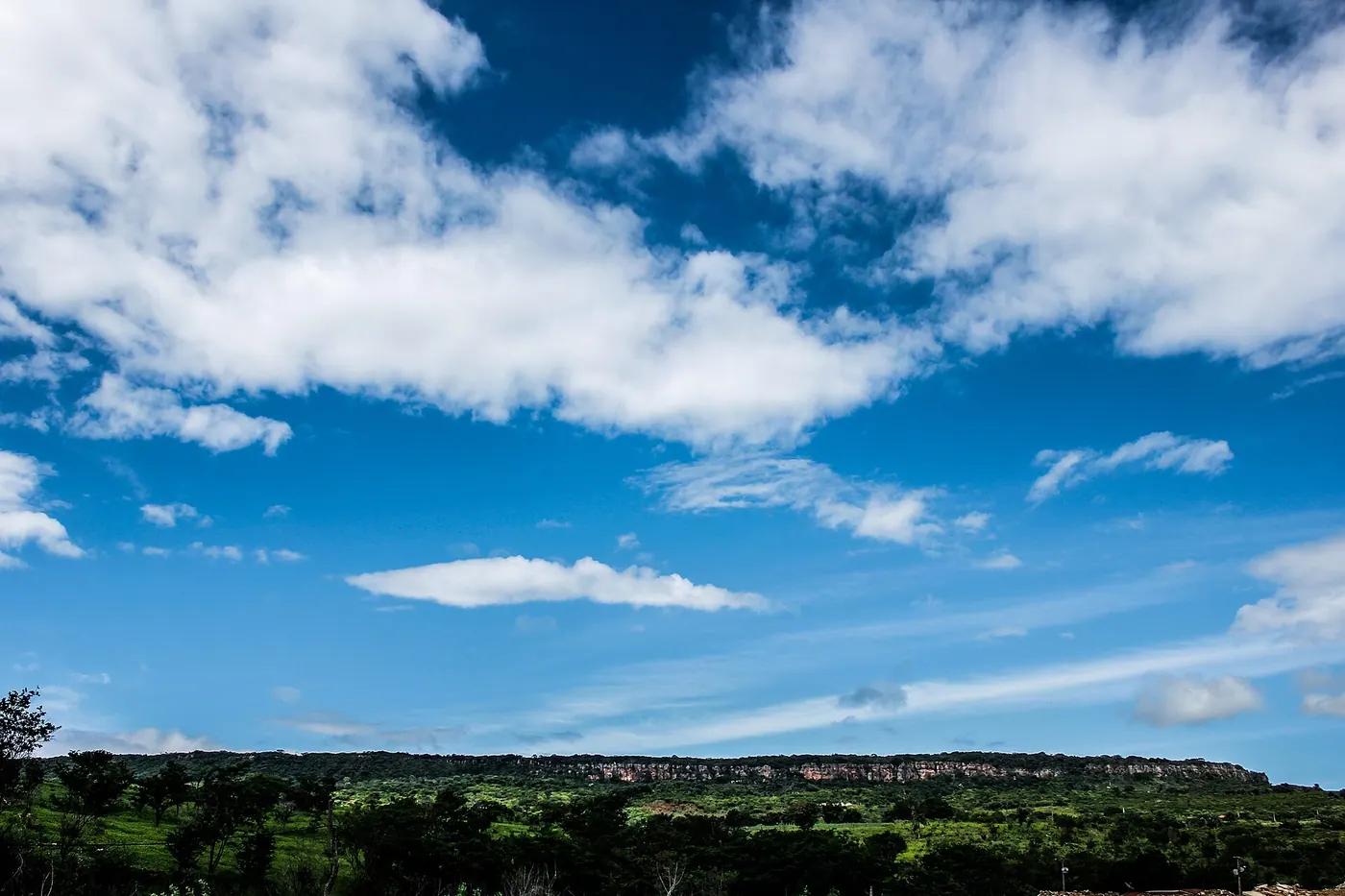
The bone belongs to Aratasaurus museunacionali, a small feathered dinosaur that lived in what is now northeastern Brazil about 115 million years ago. It was a coelurosaurian theropod, part of the mostly meat-eating, two-legged group that includes T. rex and Velociraptor.
This one died young. Researchers estimate it was about 4 years old, weighed around 34 kg and measured 3.1 m from head to tail.
Everything we know about it comes from a single partial right leg, dug out of a mine in 2008 and formally named in 2020. The specimen, MPSC R 2089, came from dark shale at the base of the Romualdo Formation in the Araripe Basin, and it is the only tetrapod fossil known from that layer.
Nobody was hunting for blood. Brazilian scientists sent pieces of femur, tibia and foot to Grice's lab in Perth for chemical analysis. 'They had no idea that there was going to be blood cells or heme inside,' Grice said. 'It didn't look too special.'
Time capsule
How could red blood cells survive 115 million years?
Short answer: not as cells. Grice thinks the manganese mineral moved in early, stabilising or copying the cells 'before they were completely destroyed'. What survived is less a blood cell than a stone cast of one, with some of its chemistry trapped inside.
The likely accomplice is slime. The dinosaur probably died on, and was quickly buried in, low-oxygen microbial mats: thin layers of bacteria and archaea. Low oxygen and rapid burial are the conditions the team thinks let mineralisation win the race against decay.
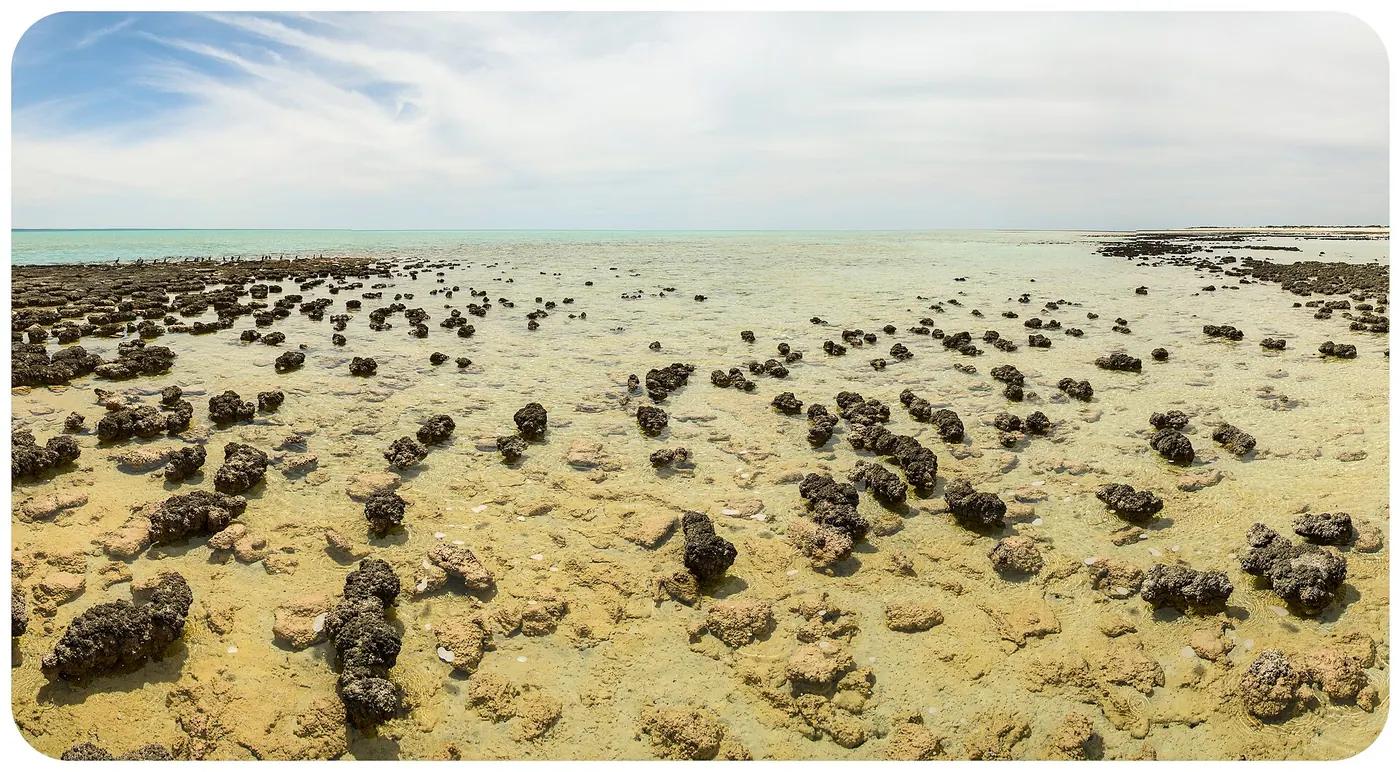
Curtin is now testing that idea as directly as possible, by trying to mineralise human blood in microbial mats from Shark Bay, Western Australia. If it works, it would show the process can actually happen, not just that it might have.
Blood itself may also act as a preservative. In 2013 Mary Schweitzer of North Carolina State University found iron nanoparticles bound up with soft tissue from T. rex and Brachylophosaurus, and proposed that iron from blood cross-links proteins much as formaldehyde does.
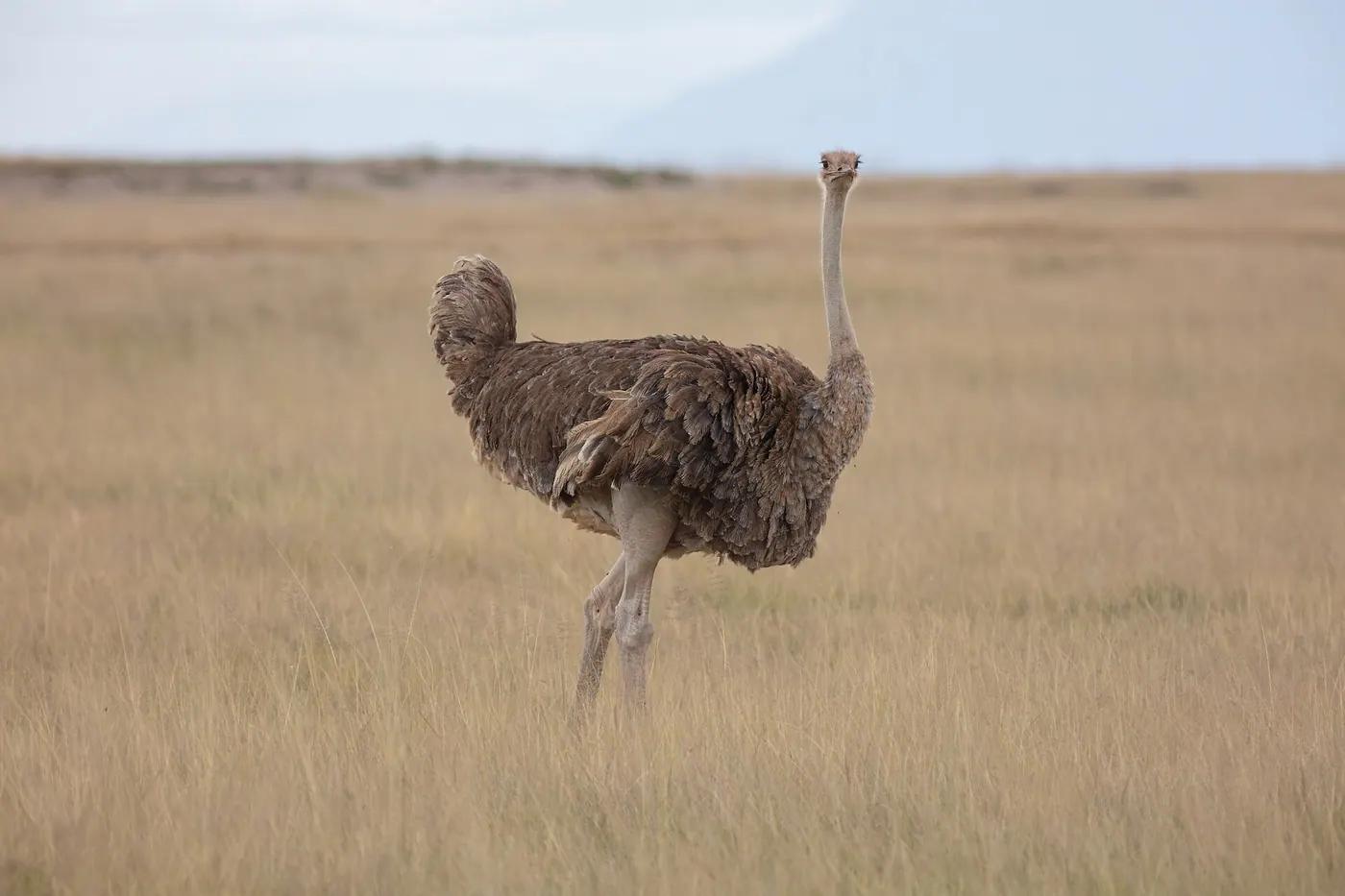
She tested it on ostrich blood vessels. Left in water, they fell apart within days. Soaked in an iron-rich liquid made from red blood cells, they still looked intact after more than two years.
Blood may be its own embalming fluid.
The doubter
Why don't all scientists believe it's dinosaur blood?
The sharpest objection comes from the person you would expect to cheer loudest. Mary Schweitzer is the scientist who, in 2005, dissolved a T. rex bone and found flexible, see-through blood vessels inside. On the new structures, she told Live Science: 'I am not convinced that the images they figure are remnant RBCs.'
Her reason is anatomy. Unlike ours, bird and reptile red blood cells keep their nucleus, which makes a visible bulge, and the Aratasaurus structures are concave with no bulge. Schweitzer also put one imaged structure at about 15 microns, which she calls 'smaller than almost all non-mammalian red blood cells'.
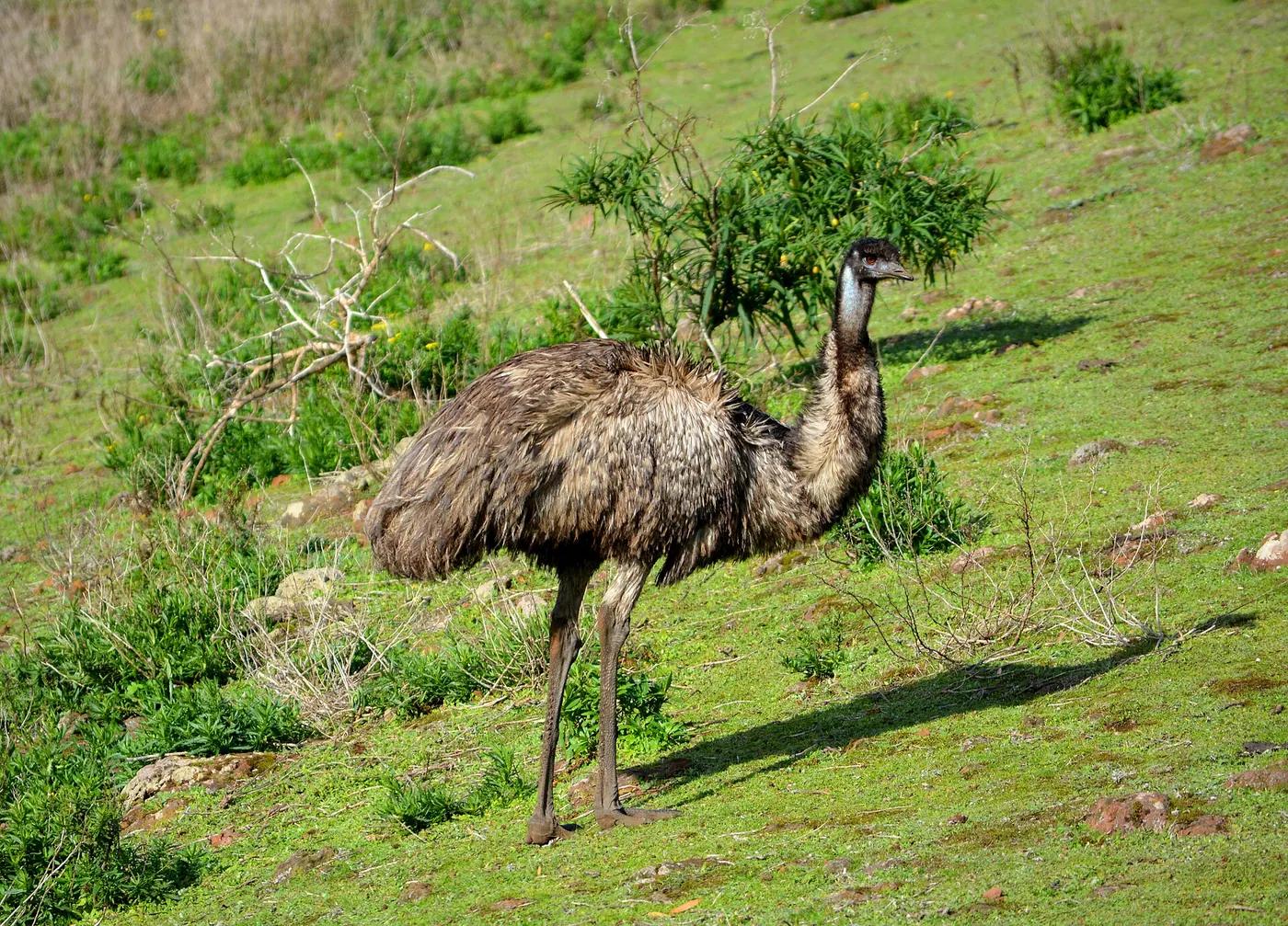
Size arguments cut both ways in this debate. A 2015 study put bird red blood cells at 9 to 15 microns long and measured emu cells at around 9. A rival team in 2008 found iron mineral spheres called framboids in dinosaur bone at about 10 microns, almost exactly blood-cell size.
Crucially, Schweitzer does not dispute the chemistry. 'I have no problem with the presence of heme and collagen in the bone matrix,' she said. The fight is over shape, not substance: is the heme sitting inside fossil red blood cells, or inside something that merely looks like them?
Others are warmer. Barbi called the structures convincingly consistent with red blood cells while adding that identifying them 'still involves some interpretation', and New Atlas called it 'one of the more compelling cases' for blood remnants in dinosaur bone. When Live Science quoted an outside critic saying the team had skipped a test called resonance Raman spectroscopy, it had to correct the story: they had done it.
Even the official wording splits. Curtin's press release calls the result 'unequivocal evidence', while the peer-reviewed abstract says the structures are 'inferred to be red blood cells'. That one word, inferred, is where the argument lives.
That one word, inferred, is where the argument lives.
Déjà vu
Hasn't dinosaur blood been found before?
Scientists have been claiming fossil blood cells since 1907, when a researcher named Seitz made one of the earliest claims, and the track record is messy. In 2021 a PeerJ study re-examined red spheres in the bone of the dinosaur Beipiaosaurus and found no heme, no pyrite and clay-filled canals, plus similar spheres in nearby petrified wood. The verdict was that they were most likely clay-mineral structures, not cells.
The modern fight began in 2005, when Schweitzer's team reported 'transparent, flexible, hollow blood vessels' holding small round structures inside a 68-million-year-old T. rex. In 2008 Thomas Kaye and colleagues argued in PLoS ONE that the 'soft tissue' was modern bacterial biofilm and the round structures were framboids, raspberry-shaped iron spheres.
In 2015 Bertazzo and colleagues found red-blood-cell-like structures and collagen fibres in eight ordinary, not exceptionally preserved, Cretaceous dinosaur bones about 75 million years old. Their chemical spectra were 'surprisingly similar' to emu blood.
So what is actually new? According to the PeerJ authors, most claimed fossil red blood cells were never tested with chemical tools at all. The Aratasaurus team tied heme chemistry to the structures themselves, in a bone 40 million years older than the 2015 samples and 47 million years older than Schweitzer's T. rex.
There is an uncomfortable footnote. Young-earth creationists have used soft-tissue finds to argue that fossils are only thousands of years old, an idea mainstream scientists reject. Iron cross-linking and rapid mineralisation are the proposed explanations for how this material lasts.
No Jurassic Park
Could scientists clone a dinosaur from this blood?
No. The team tested the samples for ancient DNA, and the result was negative. What survived is chemistry, heme-derived molecules and collagen amino acids, not a genetic blueprint.
The real prize is different. Grice says the finding challenges 'longstanding assumptions that certain biomolecules such as haemoglobin cannot survive deep time', and she hopes to study the evolution of blood, metabolism and 'even activity levels' in extinct animals. Schweitzer, sceptical about the cells, agrees on the bigger point: the textbook idea that organic material cannot last beyond about a million years is 'now being routinely challenged'.
Grice wants museums to open their drawers. 'We'll be able to completely ask new questions of these fossils that have been in museums for decades,' she said. Her head of school, Martin Van Kranendonk, goes further, saying the work could matter for astrobiology and the search for ancient life elsewhere in the universe.
Myth: they found dinosaur blood
Not literally. They found mineralised structures holding heme-derived molecules, with no liquid blood, intact cells or haemoglobin.
Myth: first dinosaur blood ever
Red-blood-cell-like structures were reported in 2005 and 2015. The new claim is heme inside the cells.
Myth: every red sphere is a cell
Some have turned out to be clay or iron minerals, including the Beipiaosaurus spheres.
Myth: soft tissue means young fossils
Mainstream science rejects this. Iron cross-linking and rapid mineralisation are the proposed explanations.
Your turn
Which living animals help scientists read dinosaur blood?
Every argument in this story is settled by comparing fossils with living animals. Schweitzer's preservation test used ostrich blood vessels, Bertazzo's chemistry matched emu blood, and the nucleus bulge Schweitzer is looking for sits in every bird and reptile red blood cell, from a backyard chicken to a crocodile on a riverbank.
Brazil, home of Aratasaurus, and Australia, where its bones were analysed, both have plenty of wildlife worth tracking down. Look for the big flightless birds and the reptiles first: they are the reference library for every claim about dinosaur blood.
When you meet one, point your phone at it: AnimalDex identifies the species from a live camera capture and adds it to your collection. An emu card is a small way to carry a piece of this argument in your pocket, a living animal whose blood helped scientists read a 75-million-year-old bone.
And if fossil detective stories are your thing, try the crocodile fossil that is missing its nose, just like the Great Sphinx.
BrazilAustraliacrocodile fossil that is missing its nose
Pertanyaan singkat
Jawaban ringkas untuk pertanyaan yang paling sering muncul pada topik ini.
- Has dinosaur blood actually been found?
- Not liquid blood. In 2026 a Curtin University-led team reported heme-derived molecules inside mineralised, cell-shaped structures in a 115-million-year-old Aratasaurus bone. No intact cells, haemoglobin or DNA were found.
- Can red blood cells survive 115 million years?
- Not as living, soft cells. The team argues the cells were replaced or copied early by the manganese mineral hausmannite, possibly helped by low-oxygen microbial mats, and that some heme chemistry survived inside these mineral casts.
- Could scientists clone a dinosaur from blood or DNA?
- No. The Aratasaurus samples were tested for ancient DNA and the result was negative. What survived is chemical traces, not genetic material.
- What dinosaur was Aratasaurus, and how big was it?
- Aratasaurus museunacionali was a small feathered coelurosaurian theropod from northeastern Brazil, about 115 million years ago. This individual was about 4 years old, weighed around 34 kg and measured 3.1 m from head to tail.
- Why don't all scientists believe the blood-cell claim?
- Mary Schweitzer says bird and reptile red blood cells keep a nucleus that makes a bulge, while these structures are concave with none, and she thinks one is too small. She accepts the heme and collagen chemistry but not that the shapes are red blood cells.
- Did T. rex have soft tissue preserved?
- In 2005 Schweitzer's team reported flexible, hollow blood vessels in a 68-million-year-old T. rex bone. In 2008 Kaye and colleagues argued this was bacterial biofilm, and in 2013 Schweitzer proposed that iron from blood helped preserve the proteins.
Sources and further reading
- PNAS: Heme signatures in mineralized red blood cells within vascular canals of a 115-million-year-old dinosaur bone
- Curtin University: Dinosaur blood – oldest discovery rewrites what fossils can reveal about the past
- ABC News: Mineralised 'red blood cells' detected in 115-million-year-old dinosaur bone
- Live Science: Traces of ancient blood found in 115 million-year-old dinosaur fossil, new study claims
- PeerJ: Putative fossil blood cells reinterpreted as diagenetic structures
- Nature Communications: Fibres and cellular structures preserved in 75-million–year-old dinosaur specimens
- PLoS ONE: Dinosaurian Soft Tissues Interpreted as Bacterial Biofilms
- NBC News: Controversial T. Rex Soft Tissue Find Finally Explained
- Science: Soft-Tissue Vessels and Cellular Preservation in Tyrannosaurus rex
- Scientific Reports (via PMC): Sayão et al. 2020, Aratasaurus museunacionali
Panduan jawaban terkait topik ini
Kalau kamu ingin perbandingan langsung dan rekomendasi yang jelas, lanjutkan ke halaman jawaban berikut.
Best Animal Identification Apps
Compare the best animal identification apps by features like photo/video identification, species coverage, collection capabilities, offline use, and more.
What Is Animal Collecting
Learn what animal collecting means in modern apps and how AnimalDex turns real-world sightings into cards, sets, rarity, and species learning.
Pokemon-Like Animal App
Looking for a Pokemon-like animal app with real species? AnimalDex combines creature-collection energy with AI scanning and wildlife learning.